
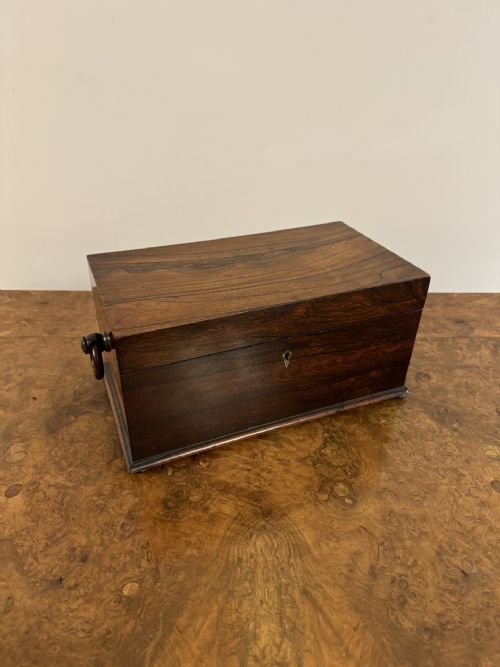
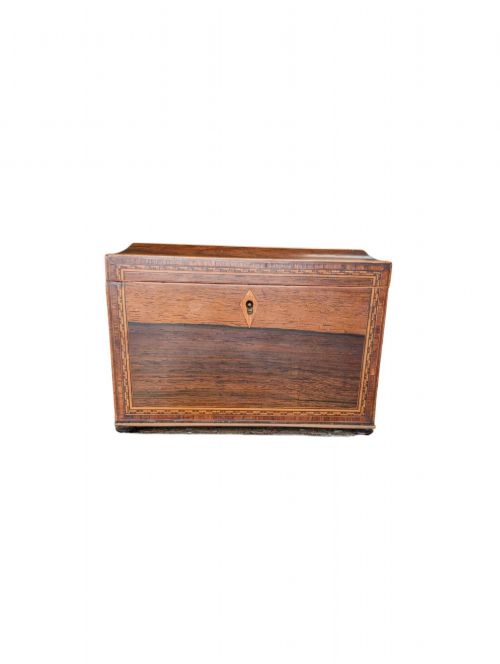
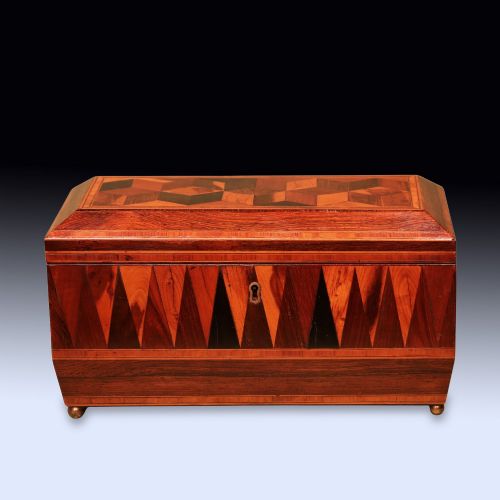
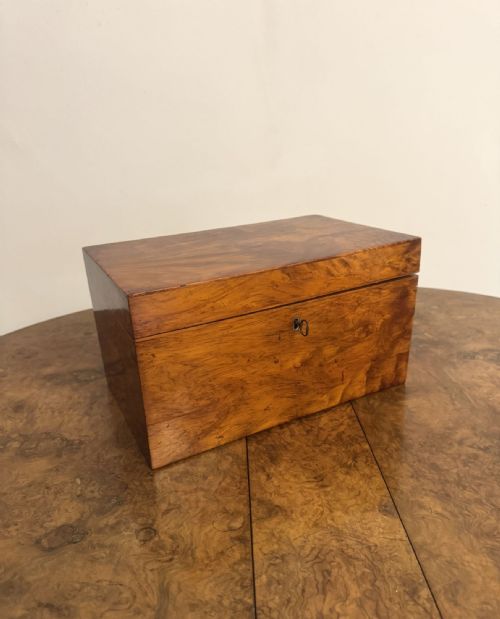


Regency Tea Box
A regency tea box holds the high-value leaf of the period in timber chests designed for the formal parlour.
Regency Tea Box
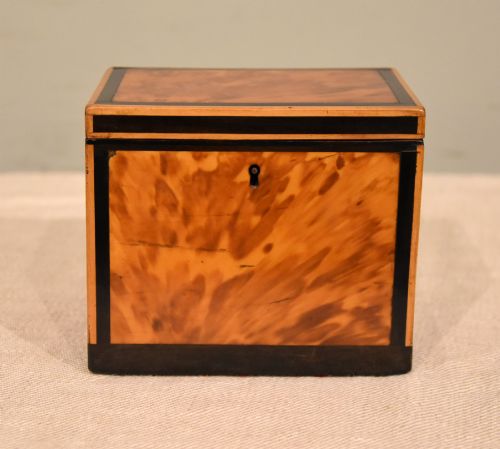
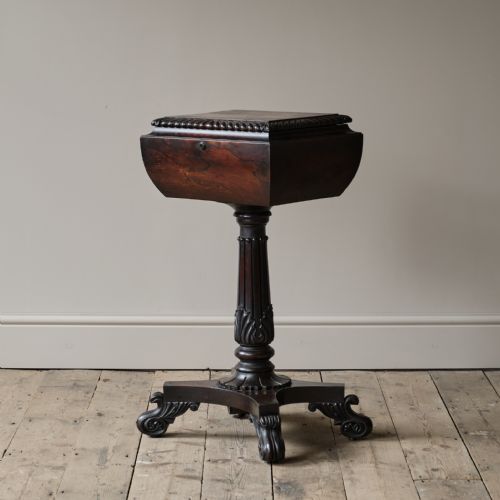
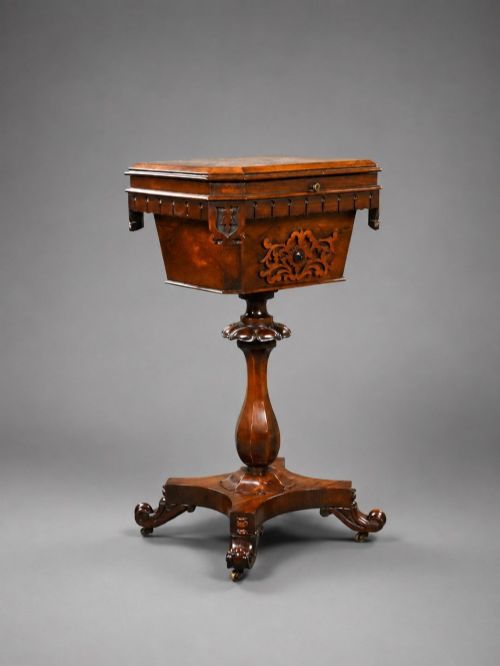
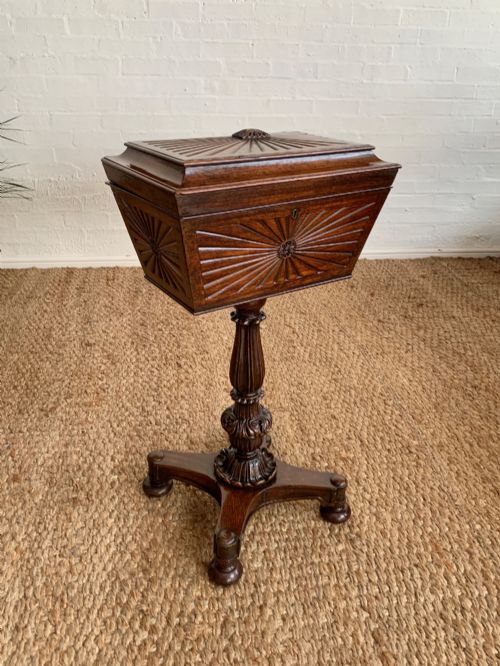
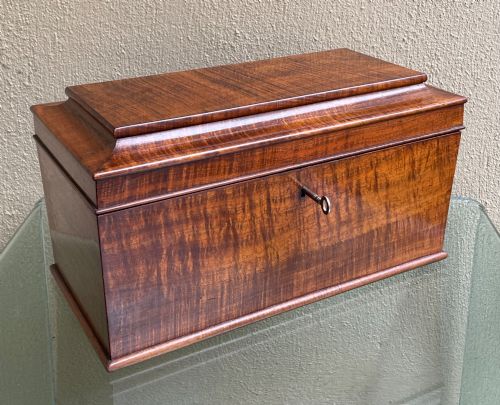
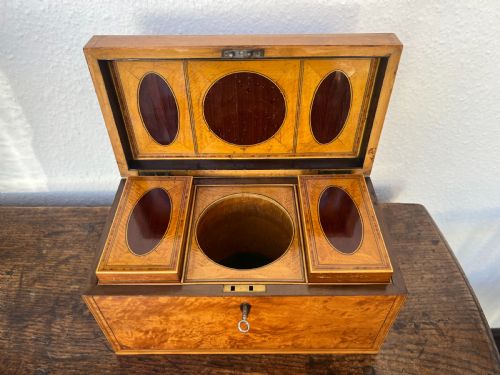
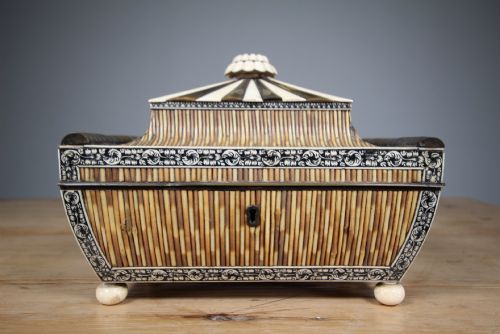
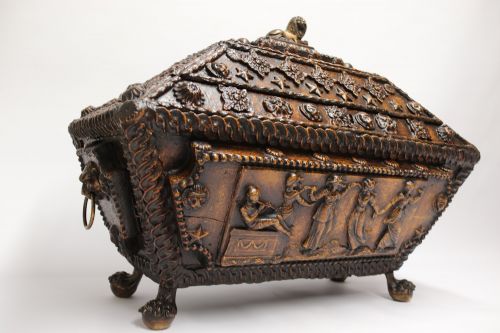
A regency tea box on this page typically appears as a sarcophagus-shaped chest, a double tea caddy, or a freestanding teapoy from the Georgian, Regency, or William IV eras. These vessels were made to secure valuable black and green teas under lock, often containing fitted internal compartments and glass mixing bowls.
The selection ranges from compact mahogany and rosewood boxes to elaborate examples finished in tortoiseshell, satinwood, and parquetry. Buyers also encounter related occasional tables and miniature sideboard caddies designed to serve tea in the drawing room.
Materials and Construction
Cabinet makers built these boxes using dense tropical hardwoods such as rosewood, mahogany, and coromandel, frequently over a firmer pine or oak carcass. Surfaces were often decorated with contrasting veneers, including satinwood, burr yew, and gonçalo alves, alongside geometric boxwood and ebony stringing.
Many examples feature delicate brass inlay, mother-of-pearl, or gesso decoration, while interiors retain original elements like glass mixing bowls, bone handles, and lidded canisters. Specialist techniques such as Tunbridge Ware mosaic work and tortoiseshell application appear on the most finished pieces.
Several boxes arrive complete with their original mixing sticks alongside the tea canisters.
Distinctions in Quality
The standard of a regency tea box depends heavily on the precision of the cabinet work and the selection of figured veneers. Pieces featuring complex parquetry, unblemished tortoiseshell, and intact internal fittings demonstrate superior original manufacture.
Condition and completeness separate everyday examples from the finest survivals. Boxes retaining working locks, original glass bowls, and matching internal lidded canisters hold greater integrity for collectors.
The Regency Tea Box Glossary
- Sarcophagus
- A box shape featuring a domed or sloping lid and a wider base, heavily favoured by cabinet makers during the Regency period for tea caddies.
- Teapoy
- A pedestal table or large standing box fitted with interior compartments for storing tea, sugar, and mixing bowls.
- Tunbridge Ware
- Small wooden objects decorated with intricate mosaic patterns made from tiny coloured wood blocks arranged to form geometric or pictorial designs.
- Parquetry
- A geometric mosaic of wood veneers laid down in regular patterns on furniture surfaces and tea boxes.
- Stringing
- Narrow inlay lines of contrasting wood, such as boxwood or ebony, used to outline panels and borders on boxes.
Regency Tea Box: Frequently Asked Questions
What went inside a regency tea box?
These boxes housed different varieties of loose leaf tea, kept separate in lidded internal canisters to preserve their aroma and flavour. A central glass bowl was often included for blending leaves or holding sugar.
Locks were fitted to the exterior because tea was an expensive commodity in the Georgian and Regency eras, strictly managed by the head of the household.
How do I tell a tea caddy from a teapoy?
A tea caddy is a table-top box designed to be lifted and moved, whereas a teapoy is a substantial piece of furniture supported by a central pillar and plinth, or four legs.
Both served the same primary function of storing and dispensing tea, but teapoys provided a dedicated freestanding station within the drawing room.
Are original glass bowls common?
Original glass mixing bowls and rinse basins survive in a portion of the boxes listed, though many were lost or broken over centuries of use. Finding a box with its matching period glass liner adds significantly to its completeness.
Replacements are frequently seen, so collectors look for exact fits and period-appropriate glass characteristics when assessing the interior.
Which woods indicate a Regency date?
Rosewood, pollard oak, coromandel, and satinwood became especially popular during the Regency and William IV periods, often contrasted with ebony and boxwood stringing. Earlier Georgian pieces leaned more towards standard flame mahogany and walnut.
Exotic veneers reflected global trade routes of the early nineteenth century and help differentiate these boxes from later Victorian reproductions.