



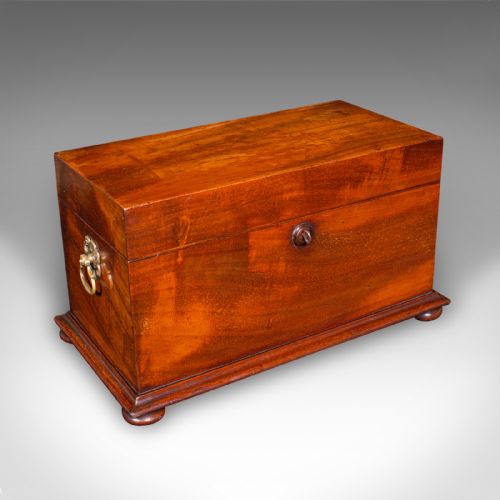


Tea Leaf Box
These tea leaf box examples are timber and metal vessels designed to store dry leaves safely, offering tactile charm for any tabletop.
Tea Leaf Box
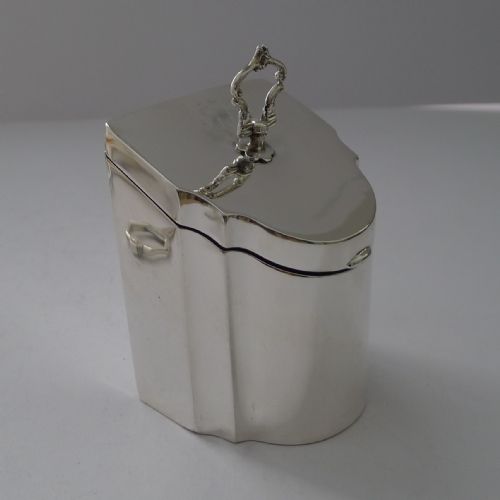
A tea leaf box is a functional receptacle built to preserve aromatic leaves, taking the form of sarcophagus cases, knife boxes, or simple canisters. These items emerge from various historical periods, including the Georgian, Regency, and Victorian eras, reflecting shifting domestic habits.
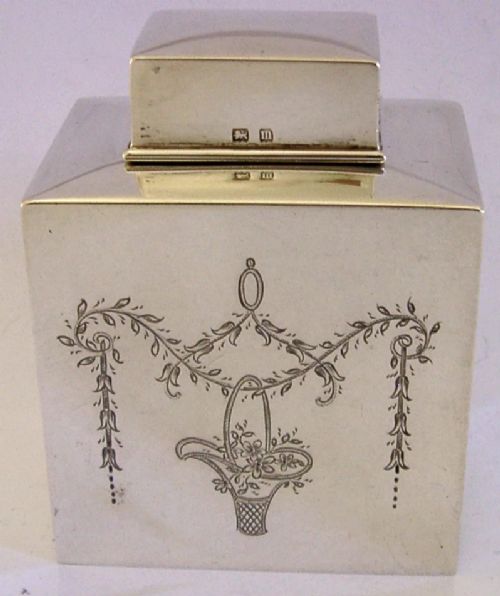
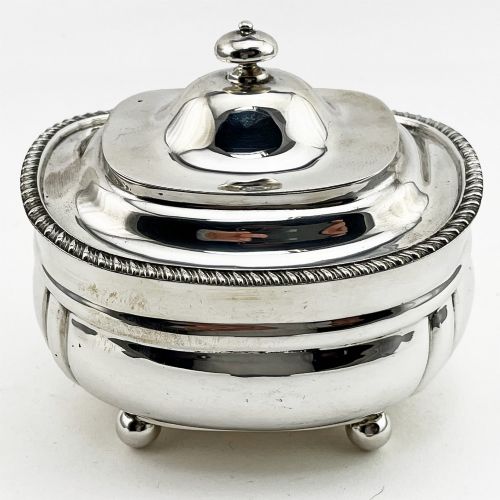
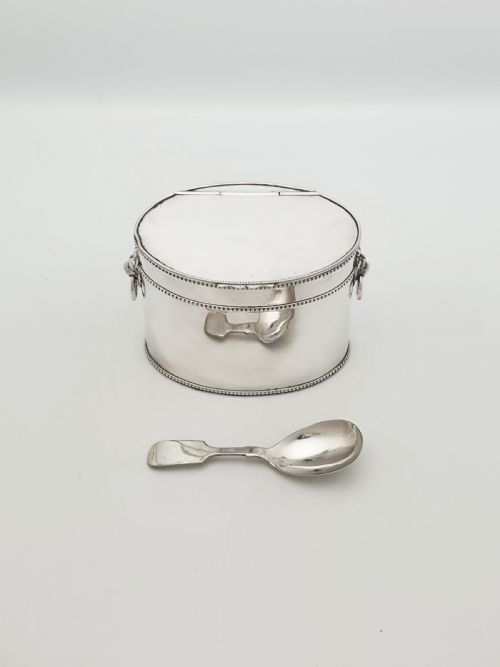
The versions most commonly met on this page include sterling silver canisters, rosewood sarcophagus cases, and mahogany dual-compartment beverage containers. Makers designed these objects to sit securely in drawing rooms, managing loose leaf storage with fitted lids and internal compartments.
How They Were Made
Craftsmen built wooden examples using timbers such as rosewood, mahogany, satinwood, ebony, and boxwood, often shaping them into substantial sarcophagus profiles. Cabinetmakers incorporated brass handles and detailed inlay to finish the exteriors.
Metal pieces utilise sterling silver, silver plate, and brass, sometimes featuring lion mask handles or hallmarks from assay offices in Sheffield and Birmingham. Silversmiths hammered, cast, and engraved these metals to create durable, lidded receptacles.
Tea Leaf Box Retail Price Guide 2026
Typical asking prices for tea leaf box among the pieces listed under this phrase on Sellingantiques today, from the lower quarter to the upper quarter. They describe what is for sale here now, not the wider market.
Some boxes kept the leaves so secure they required a tiny key, protecting the precious leaves from unauthorized afternoon visits.
What Varies in Quality
Quality separates simple containers from exceptional drawing room pieces through the precision of the woodwork and the weight of the metal. Heavier sterling silver and finely figured rosewood or satinwood indicate superior original manufacture.
Internal fittings also distinguish finer examples, where intact mixing glasses, dual compartments, and original spoons remain with the box. The sharpness of cast details, such as lion mask handles, marks the difference between standard production and masterwork execution.
Zimmermann·Ernest Druiff & Co
The Tea Leaf Box Glossary
- Sarcophagus
- A box style featuring a sloping, heavy-lidded shape reminiscent of classical stone tombs. This form was particularly popular during the Regency period.
- Canister
- A small vessel designed specifically for holding dry tea leaves. These often feature tight-fitting lids to preserve aroma.
- Silver Plate
- A thin layer of silver applied to a base metal core. This technique offered the appearance of solid silver at a lower cost.
- Mixing Glass
- A glass vessel fitted inside a tea caddy used for blending different leaf varieties. It sits securely within a dedicated wooden compartment.
- Hallmark
- An official stamp applied to precious metals indicating purity, maker, and assay office. These marks help verify the date and origin of silver pieces.
Tea Leaf Box: Frequently Asked Questions
How were they used?
Households used these vessels to store valuable loose tea leaves under lock and key when tea was an expensive commodity. Servants or hosts retrieved leaves from the compartments for daily brewing.
Some examples included mixing glasses and internal canisters for blending different varieties before serving.
How do I date a tea leaf box?
Dating relies on examining the materials, construction methods, and any accompanying metal hallmarks. Silver pieces often carry assay office marks and date letters corresponding to specific years.
Stylistic cues, such as the heavy proportions of Regency sarcophagus cases or the clean lines of Edwardian silver, also indicate the period of manufacture.
How do I clean a silver tea box?
Cleaning requires gentle care to preserve the original metal surface and any historical patina. Use a soft cloth and a mild polish formulated specifically for silver.
Avoid abrasive materials that can scratch the metal or wear down engraved details and hallmarks.
Are wooden boxes lined?
Wooden examples often feature fitted interiors lined with foil, paper, or secondary timbers to keep the contents dry. Some retain multiple compartments for different leaf types.
These internal arrangements help distinguish specific period styles, particularly in Regency and Victorian designs.