


Brown Mahogany Caddy
These brown mahogany caddy examples are fine wooden tea chests designed to preserve expensive leaf, holding their place on a Georgian sideboard.
Brown Mahogany Caddy
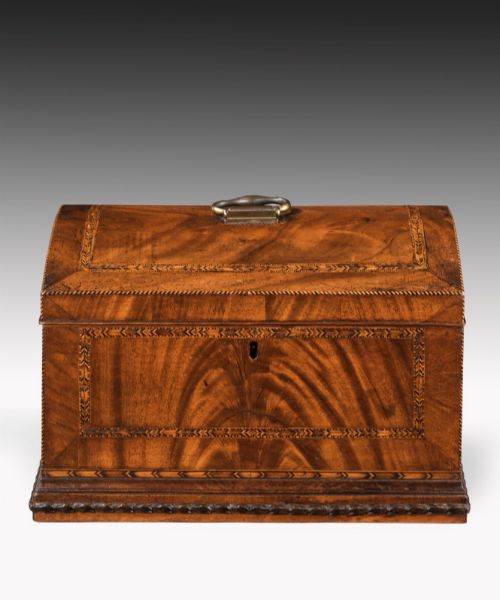
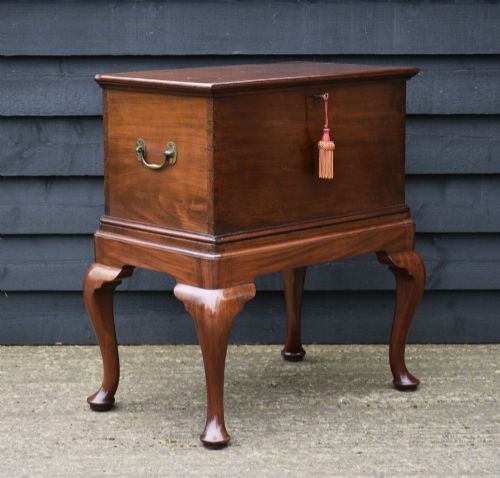
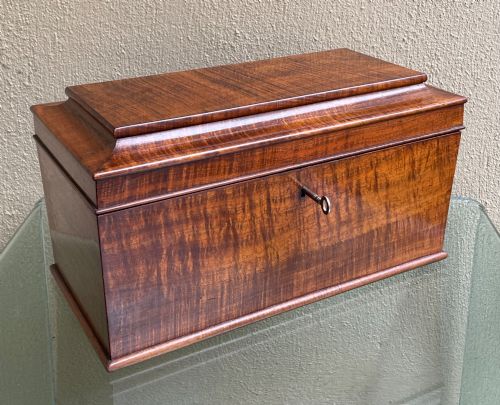
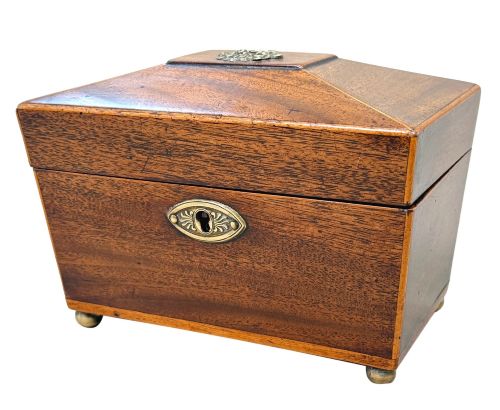
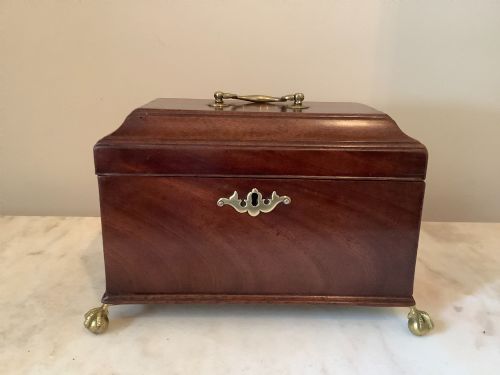
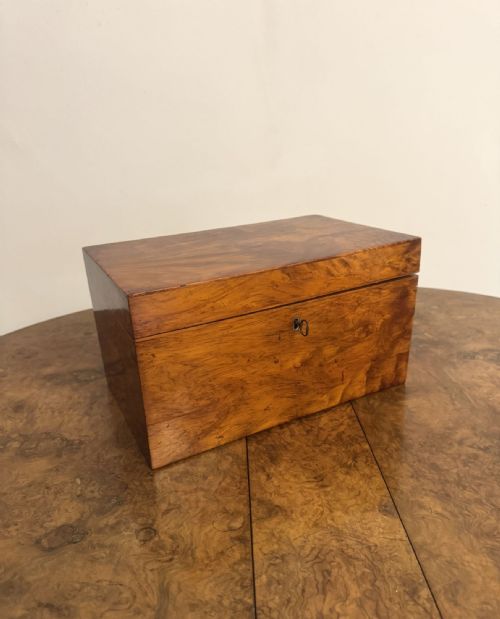
A brown mahogany caddy is a small timber chest designed originally to store and protect dry tea leaves under lock and key. The pieces seen here span periods from the eighteenth century through the Victorian era, taking forms such as sarcophagus shapes, hexagonal boxes, and domed caddies.
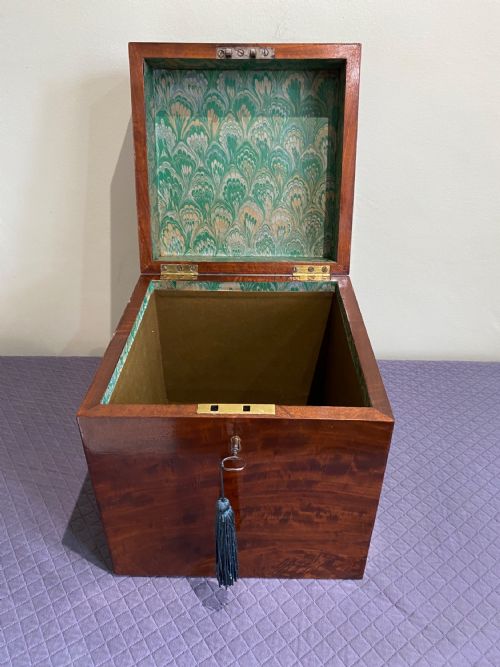
The utility of these boxes once centred on the domestic management of precious imported tea, but today they serve as decorative tabletop pieces. Their interior compartments often retain traces of foil lining or fitted spaces that once held glass mixing bowls.
How they were made
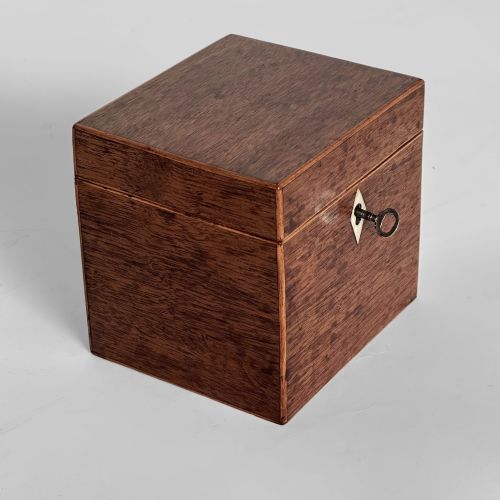
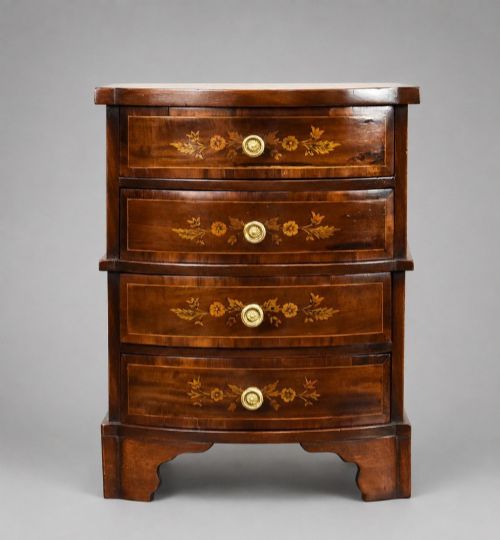
Cabinet makers built these caddies using solid mahogany timbers or applied veneers over secondary woods, shaping them into rectangular, oval, or sarcophagus forms. Fine stringing in boxwood or contrasting woods often defines the edges and lid margins.
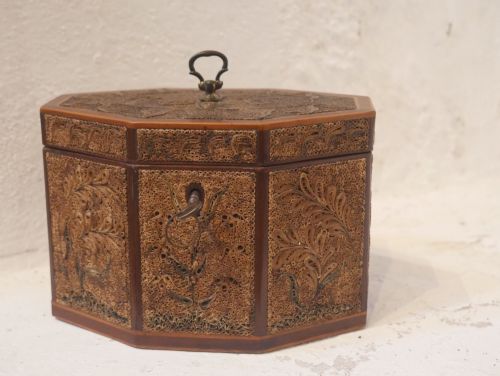
Internal elements frequently incorporate bone escutcheons for the locks, alongside fitted wooden lids for interior canisters. Brass handles and cast feet appear on grander Regency specimens, while paper filigree or painted decoration surfaces on specific eighteenth-century pieces.
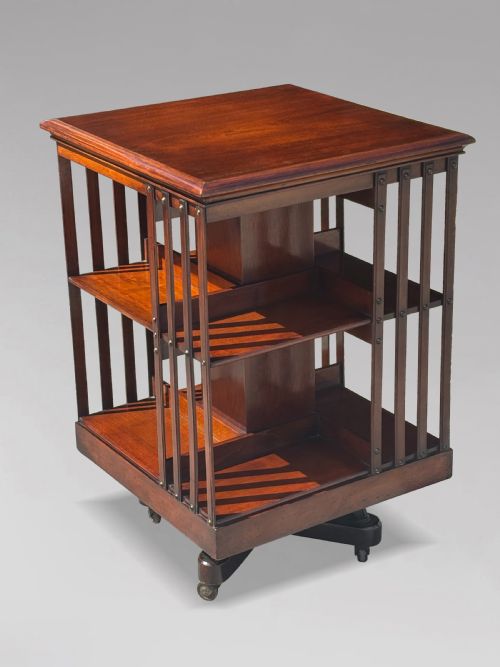
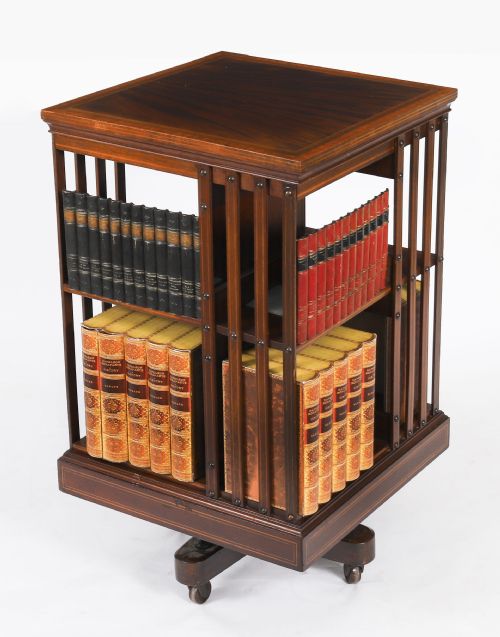
Listings feature mahogany tea caddies spanning the Georgian, Regency, and Victorian eras, alongside related items like revolving bookcases and cellarettes.
What varies in quality
The calibre of a brown mahogany caddy rests upon the choice of timber figure, such as the use of flame mahogany veneers versus plain grain boards. Crispness in the execution of inlaid stringing and the retention of original brass hardware elevate certain pieces above standard utility boxes.
Internal complexity marks the upper tier of production, particularly caddies featuring secret drawers, original mixing bowls, or multiple internal compartments with matching lidded canisters. The survival of functioning locks with working keys also distinguishes superior examples.
Mappin and Webb
The Brown Mahogany Caddy Glossary
- Caddy top
- A moulded tabletop edge profile reminiscent of the domed or stepped lid found on a traditional tea caddy.
- Sarcophagus form
- A monumental box shape featuring an inverted stepped base and sloping lid, popular during the Regency period.
- Escutcheon
- A small plate of brass or bone surrounding the keyhole to protect the surrounding timber from wear.
- Flame mahogany
- A decorative veneer cut from timber where the grain creates a flickering, flame-like pattern.
- Stringing
- Thin inlaid lines of contrasting wood used to outline panels and geometric borders on cabinet work.
Brown Mahogany Caddy: Frequently Asked Questions
What is a brown mahogany caddy used for today?
Modern collectors utilise these timber boxes as decorative objects on sideboards or coffee tables, valuing their rich wood tones and historical craftsmanship.
They also function well for storing small keepsakes, jewellery, or stationery while maintaining a period aesthetic in a room.
How do I date a brown mahogany caddy?
Dating relies on observing the overall form, such as the characteristic sarcophagus shapes of the Regency period or the simpler rectangular boxes of the eighteenth century.
Secondary indicators include the presence of boxwood stringing, the style of the brass feet, and the construction methods visible inside the compartments.
Did all tea caddies have mixing bowls?
Not every caddy included a bowl, but many Regency and Georgian examples featured a central space designed to hold a cut glass bowl.
This bowl was used for blending different teas or rinsing the leaves before brewing, and surviving examples with their original glass add considerable interest.
Why are some caddies locked?
Tea was an expensive and heavily taxed commodity in the eighteenth and nineteenth centuries, making it a valuable household commodity that required secure storage.
Households kept the caddy locked to prevent domestic staff from helping themselves to the leaf, entrusting the key only to the mistress of the house.