



Regency Style Rosewood Bookcase
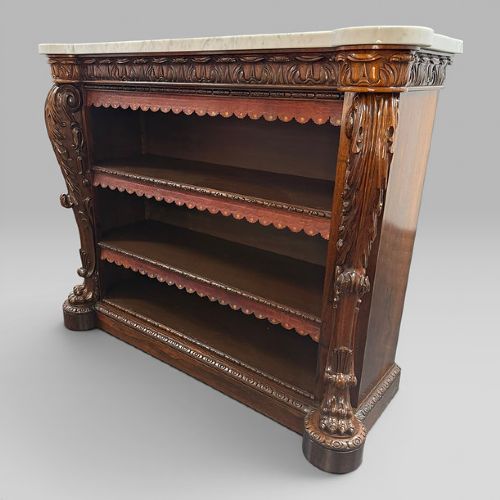
A regency style rosewood bookcase brings rich grain and architectural restraint to a room, offering both display and storage.
Regency Style Rosewood Bookcase
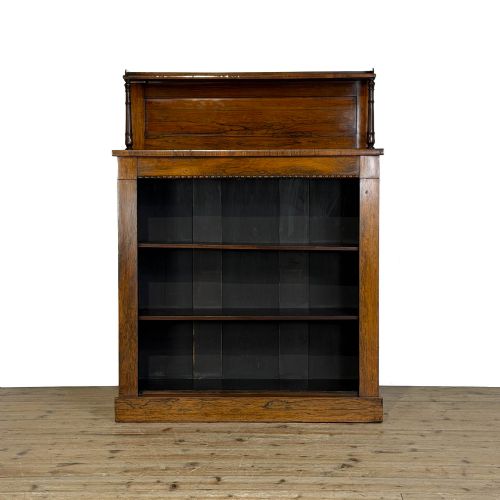
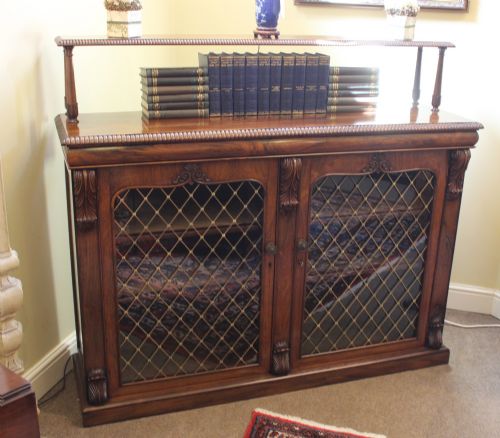
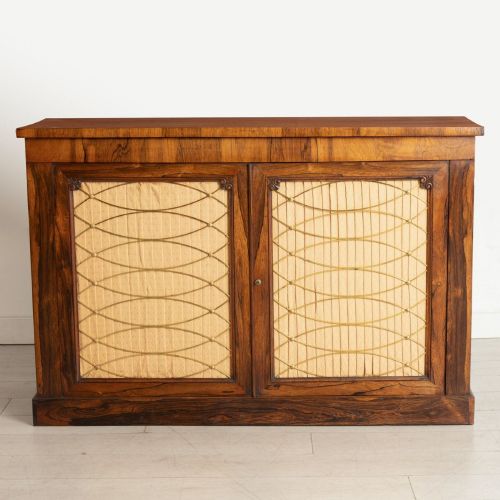
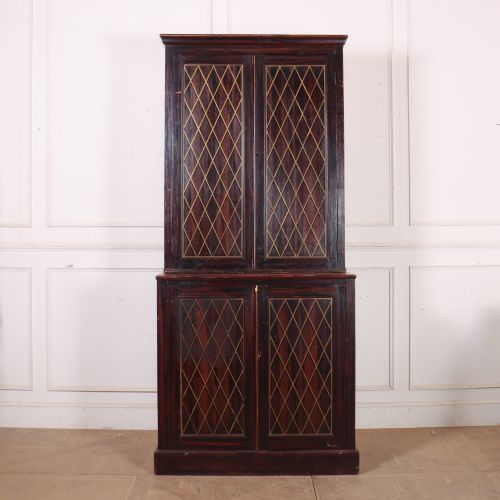
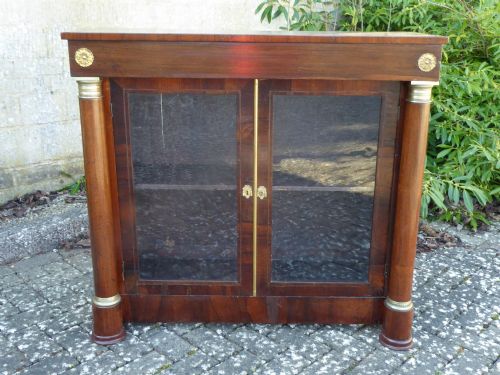
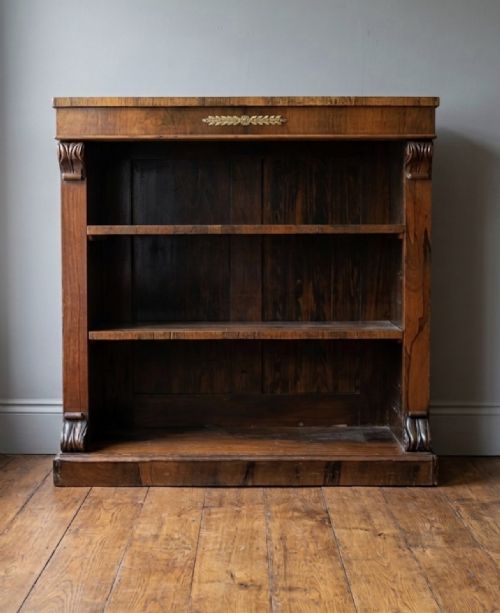
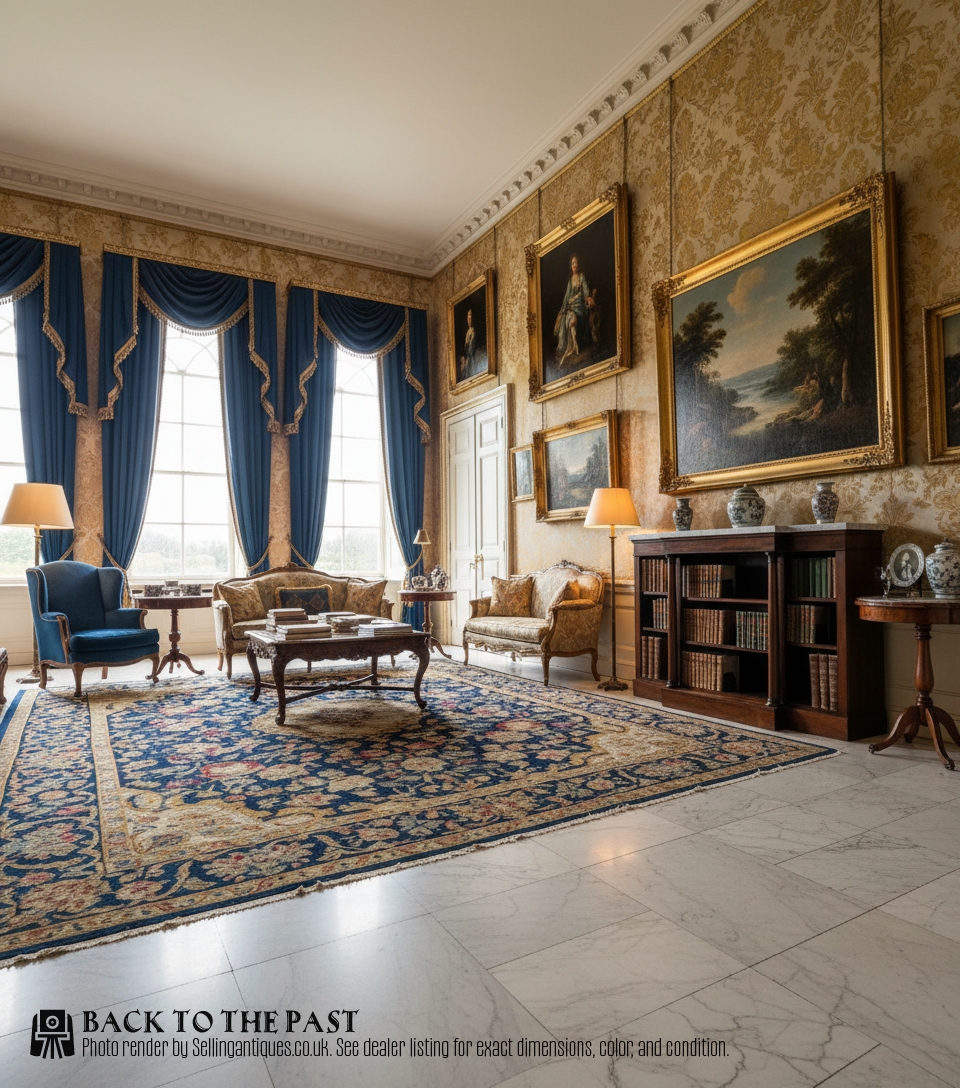
A regency style rosewood bookcase brings together open shelving, brass details, and rich dark timbers designed to anchor a formal interior. You will most frequently meet open bookcases, chiffoniers, and low cabinets spanning the nineteenth century through to the revival periods.
The selection ranges from architectural open bookcases with adjustable shelves to enclosed side cabinets and tiered whatnots. Pieces appear in solid rosewood or with fine veneers over secondary woods like pine, often enhanced by marble tops or gilded wooden mounts.
Origins stretch from the authentic Regency and William IV eras into later Victorian interpretations and twentieth-century revival pieces. Each form serves the dual purpose of holding a library while displaying decorative objects upon its upper surface.
What varies in quality
Quality reveals itself in the selection of the rosewood veneer, where continuous matching grain across doors and drawer fronts indicates superior craftsmanship. Finer examples display crisper carving, more substantial brass mounts, and heavier marble or timber tops.
The integrity of the internal construction, including the thickness of the shelving and the precision of the joints, separates standard production from exceptional cabinet work. Attribution to known workshops like Gillows elevates a piece through documented finesse in proportion and detail.
Some cabinets hide their true purpose behind rows of leather dummy books, fooling guests into seeing a library where storage lives.
Gillows
The Regency Style Rosewood Bookcase Glossary
- Rosewood
- A dense, heavily grained dark timber prized for cabinet making during the nineteenth century. Its natural oil content allows for a high polished finish.
- Chiffonier
- A low sideboard or cabinet featuring enclosed cupboards below, often surmounted by a shelf or a raised back. This form developed for dining rooms and parlours to store tableware or books.
- Whatnot
- A set of open shelves supported by slender columns or pillars, used for displaying ornaments and small volumes. They appear frequently in multiple tiers.
- Breakfront
- A piece of furniture where the central section projects forward from the flanking wings. This architectural arrangement creates depth and shadow on large bookcases.
- Dummy books
- Faux book spines attached to cupboard doors or drop-fronts to conceal storage space behind a uniform library facade. They appear in decorative Regency cabinetry.
Regency Style Rosewood Bookcase: Frequently Asked Questions
How do I spot a true period piece?
Examine the secondary woods inside the carcass, such as pine or oak, alongside the hand-cut dovetailing on drawer construction. Period pieces show natural ageing in the timber grain and patination on the brass fixings rather than uniform modern finishes.
Compare the proportion and weight of the shelving against standard nineteenth-century dimensions. Revival pieces from later decades often utilise machine-sawn elements and different internal structuring.
Can adjustable shelves be found?
Many open bookcases and chiffoniers feature movable shelving supported by wooden rack strips or brass studs. This flexibility accommodated varying heights of leather-bound volumes in period libraries.
Check the interior uprights for the original notches or peg holes. Later adaptations sometimes replace missing wooden supports with modern brass fittings.
How do I care for rosewood?
Maintain a stable room temperature away from direct sunlight and heat sources to prevent the rosewood veneer from drying or splitting. Dust regularly with a dry lint-free cloth and apply high-quality beeswax sparingly when the grain appears dry.
Avoid commercial silicone sprays or excessive moisture on polished surfaces. Marble tops require gentle cleaning with a damp cloth and mild soap to protect the stone from staining.
What is the difference between open and closed?
Open bookcases present books directly to the room with uninterrupted shelving, making them suited for frequent reading rooms. Closed cabinets and chiffoniers use panelled, glazed, or brass-grille doors to protect contents from dust and light.
Closed variants often incorporate lower cupboards for concealed storage beneath display areas. Both styles serve different functional requirements within a traditional interior layout.