
Regency Style Desk Chair
These pieces are a regency style desk chair, offering traditional seating built for work and study with distinct period lines.
Regency Style Desk Chair
A regency style desk chair brings together forms designed for study and library work from the nineteenth century onward. Buyers examining these pieces find variations spanning genuine period examples alongside later revivals from the Edwardian and Victorian eras.
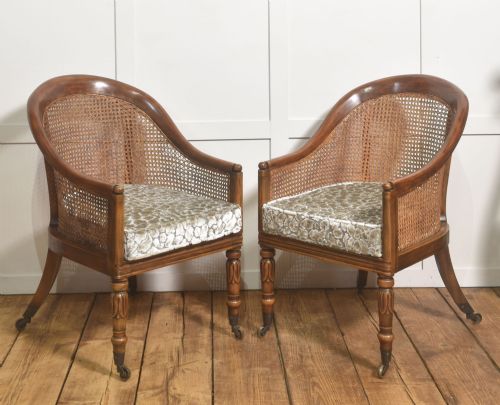
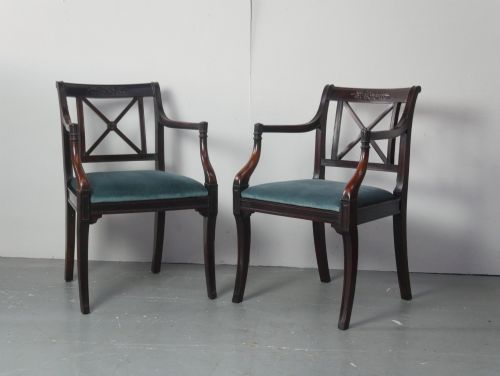
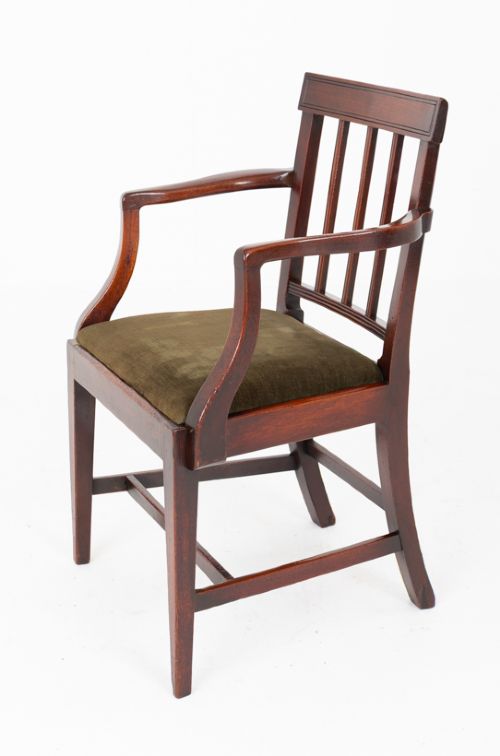
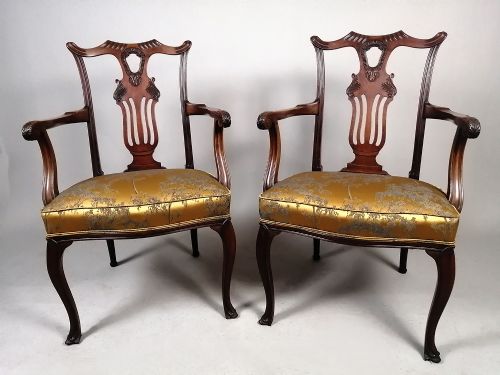
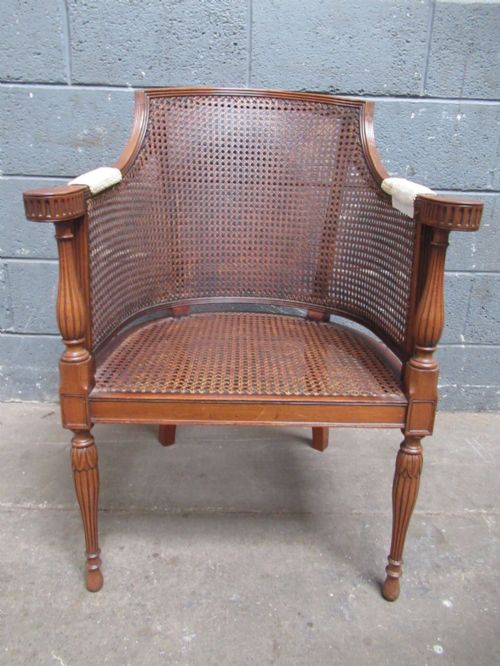
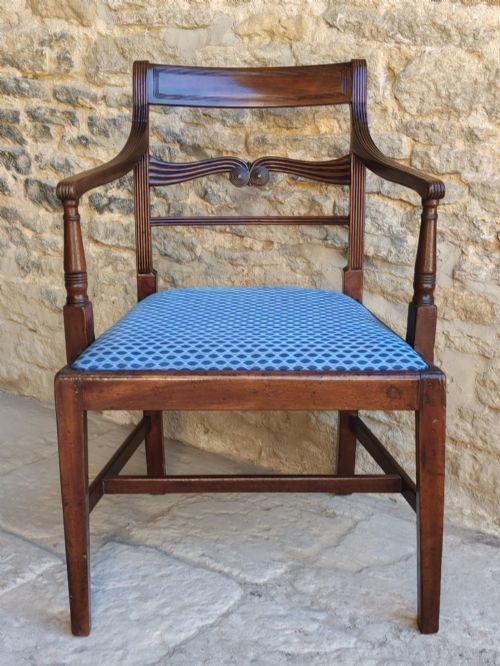
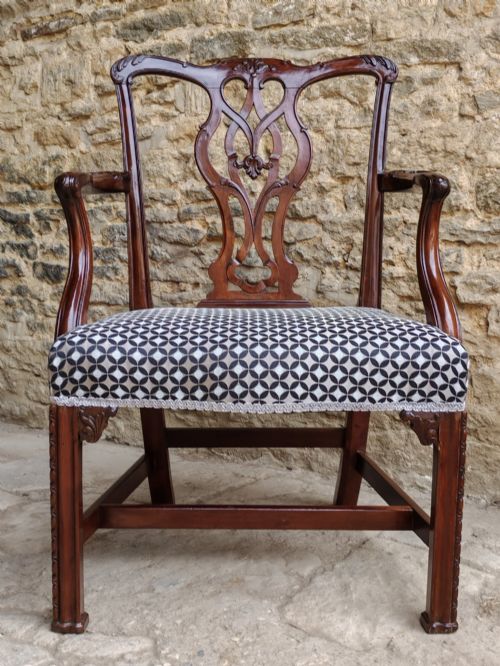
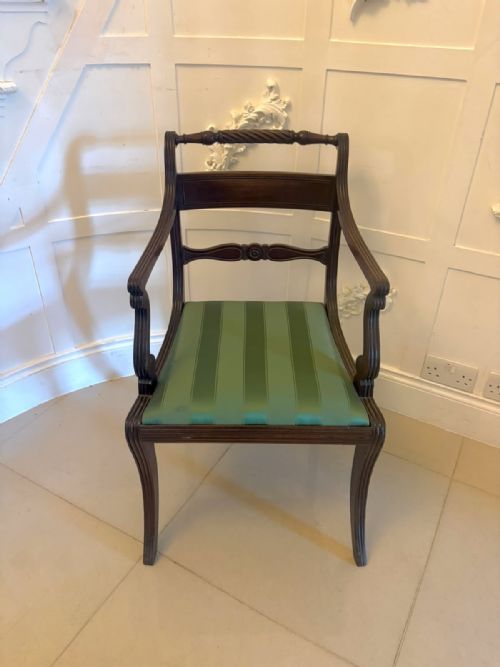
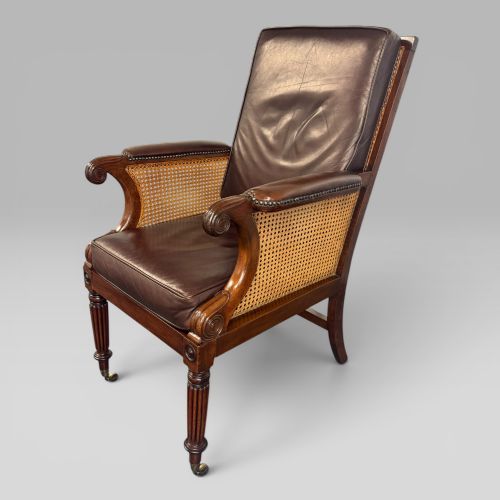
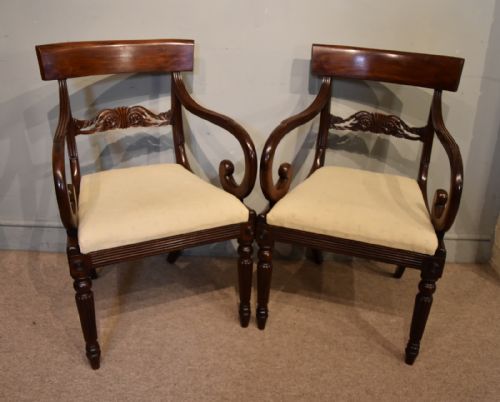
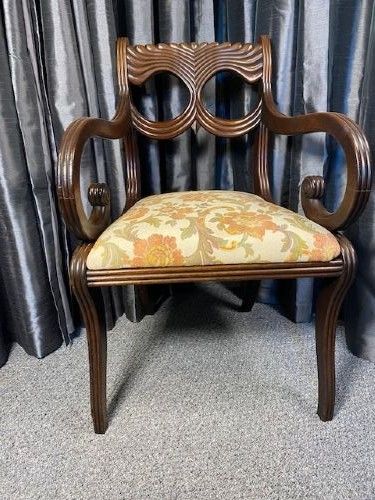
The selections on this page appear as armchairs, carver chairs, and library bergères rather than standard dining seats. These formats typically incorporate supportive armrests and sturdy timber frames intended for prolonged daily use at a desk or writing table.
Materials and construction methods
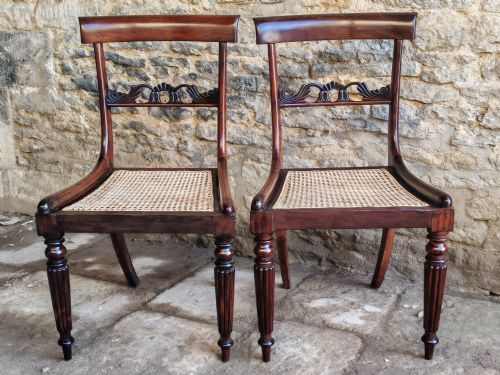
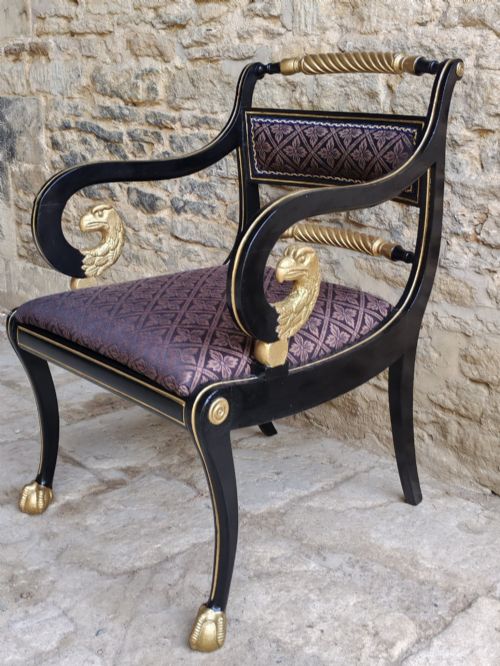
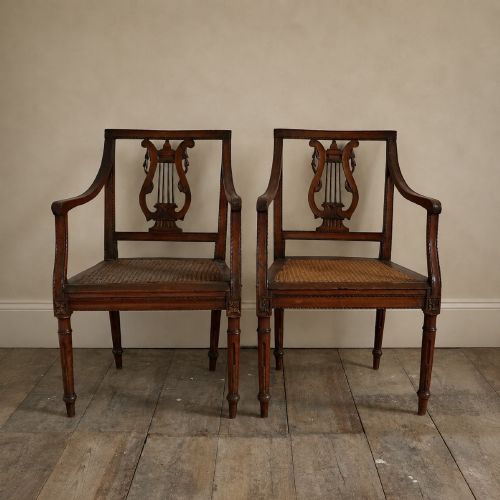
Makers relied primarily on mahogany and rosewood, shaping dense timbers into curved scroll arms and distinctive lyre or bar backs. Brass inlays and delicate brass mountings often accentuate the dark wood surfaces.
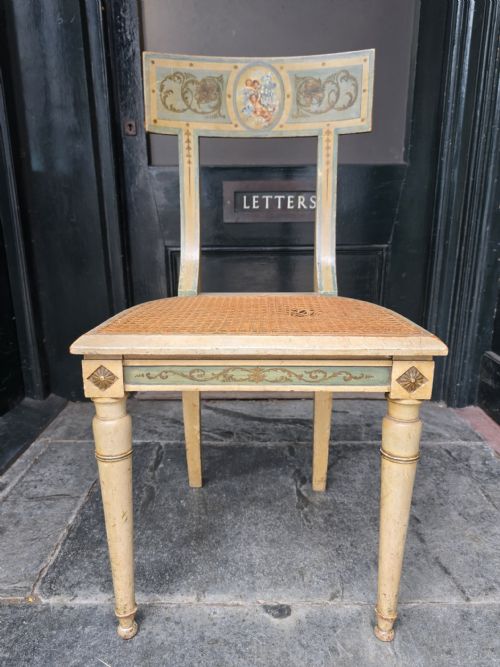
Seating portions utilise woven cane, leather, and various upholstery fabrics, sometimes secured with traditional studded detailing. Frames frequently feature sabre legs or turned supports characteristic of the period and its later revivals.
The inventory spans the early nineteenth century through to Edwardian and twentieth-century revivals.
Judging execution and finish
Quality rests in the crispness of the timber carving and the integrity of structural joints built to withstand weight and movement. Superior examples display carefully matched grain patterns and precise brass inlay work.
The execution of caning and the selection of secondary timbers inside the frame distinguish fine workshops from mass production. Well-preserved surfaces retain a warm polished patina developed through decades of careful maintenance.
Gillows·Waugh and Son
The Regency Style Desk Chair Glossary
- Bergère
- An enclosed upholstered armchair with cane or solid sides that provides deep seating comfort. These often feature drop-in cushions covered in leather or fabric.
- Carver chair
- An armchair designed to match a set of dining or desk chairs, traditionally positioned at the head of a table. They offer broader proportions and supportive armrests.
- Sabre leg
- A concave tapering leg that curves outward toward the floor in the manner of a cavalry sword. This form provides stable support while maintaining a light silhouette.
- Lyre back
- A chair back splat shaped in the symmetrical outline of an ancient stringed instrument. It appears frequently in nineteenth-century mahogany seating.
- Scroll arm
- An armrest carved into a continuous inward-curling spiral shape. This profile defines many classic library and desk chairs.
Regency Style Desk Chair: Frequently Asked Questions
How do I identify a true period piece?
Examine the timber species, construction joinery, and wear patterns on the underside of the frame. Genuine nineteenth-century items display hand-cut joints and appropriate material ageing.
Compare the proportions and decorative details against documented examples from the same decade. Later revivals often replicate the style accurately while using standardised machine-cut components.
Are these chairs suitable for daily desk work?
These seats were originally constructed for writing tables and libraries, making them well-suited for modern desk use. Their supportive armrests and upright posture encourage comfortable working.
Ensure the seat height and lumbar support align with your personal workspace requirements. Many examples feature sturdy wooden or upholstered seats that withstand regular daily use.
How should I care for the leather and wood?
Maintain the timber surfaces by applying appropriate wax polish periodically to preserve the natural grain and moisture. Keep the furniture away from direct heat sources and sunlight to prevent cracking.
Treat leather upholstery with specialised conditioners to maintain flexibility and prevent drying out over time. Clean cane panels gently with a damp cloth without saturating the woven fibres.
What is the difference between an armchair and a carver?
An armchair generally stands alone as a primary seat for a library, desk, or salon space. They feature decorative upholstery and substantial frames intended for standalone placement.
A carver chair originates as part of a dining or office suite, designed to accompany matching side chairs. They provide functional arm support while maintaining a consistent design language with the surrounding seating.