
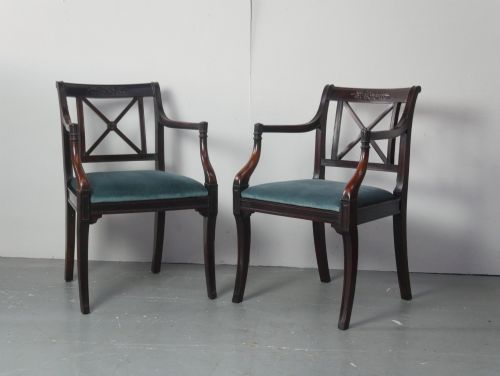
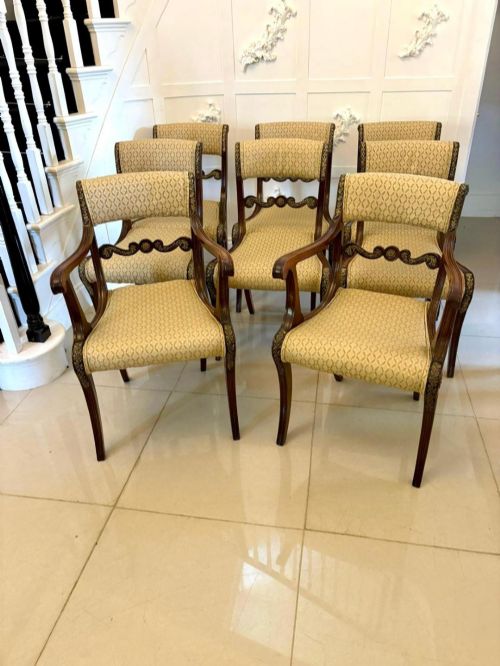
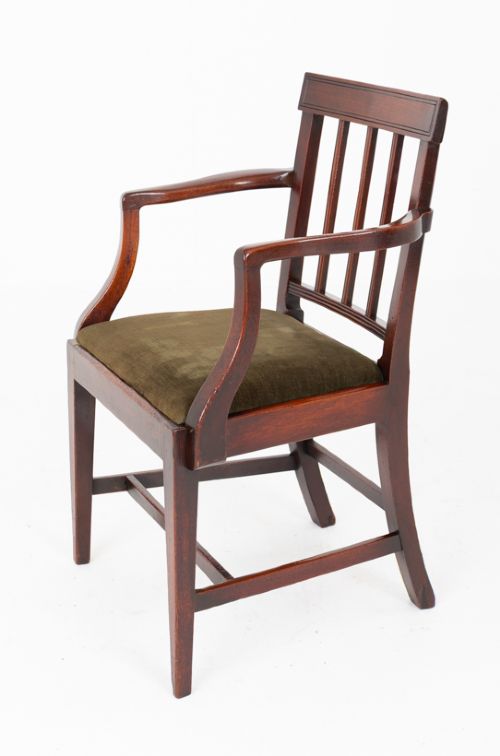
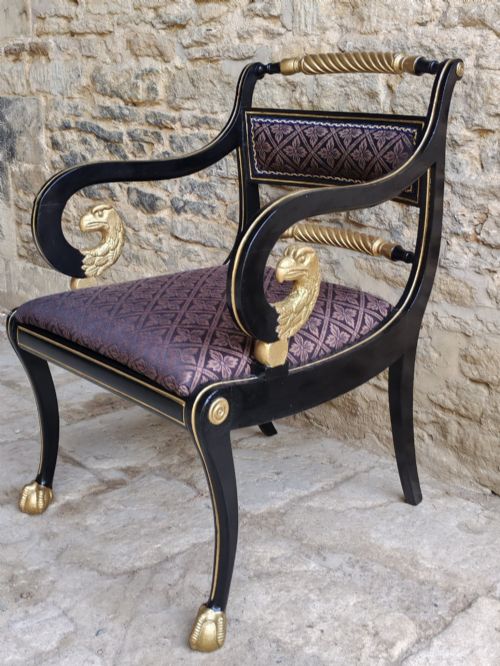
Regency Style Carver Chairs
Regency style carver chairs are architectural dining and library armchairs designed with classical restraint and made for formal interiors.
Regency Style Carver Chairs
Regency style carver chairs draw on classical motifs and structural clarity originating in the early nineteenth century. When searching for regency style carver chairs, buyers encounter pieces ranging from period originals to twentieth-century revivals.
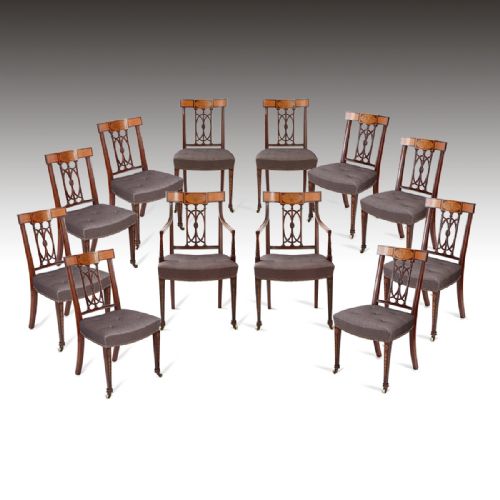
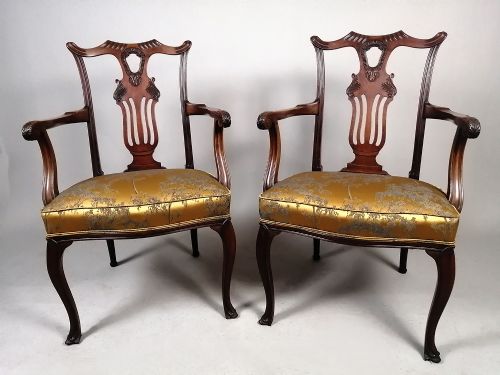
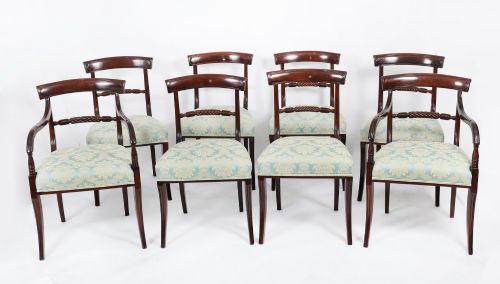
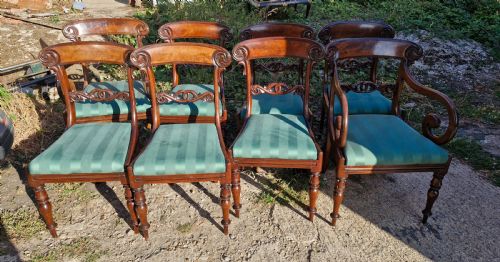
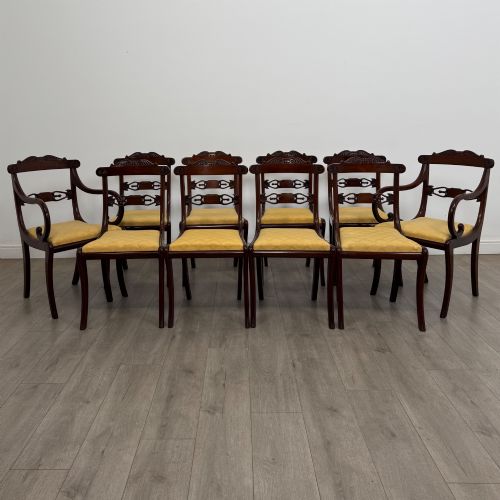
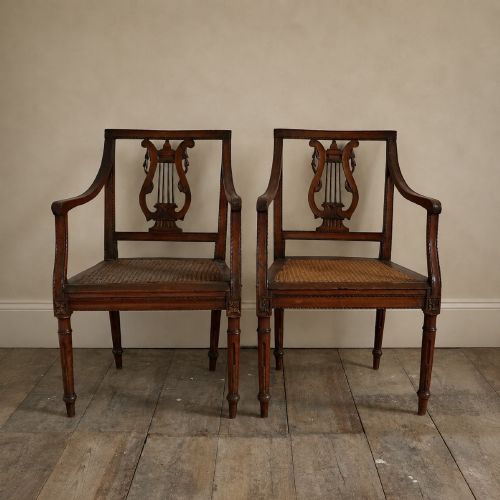
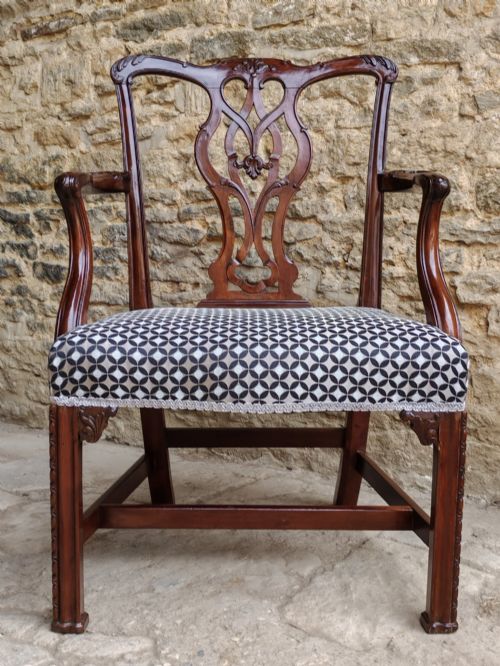
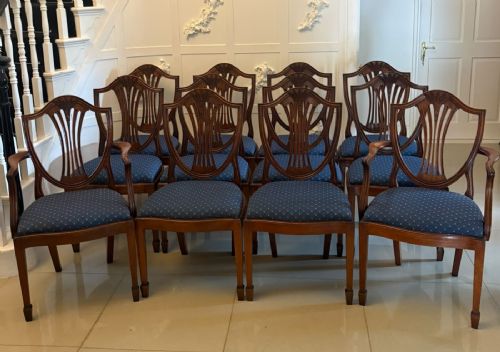
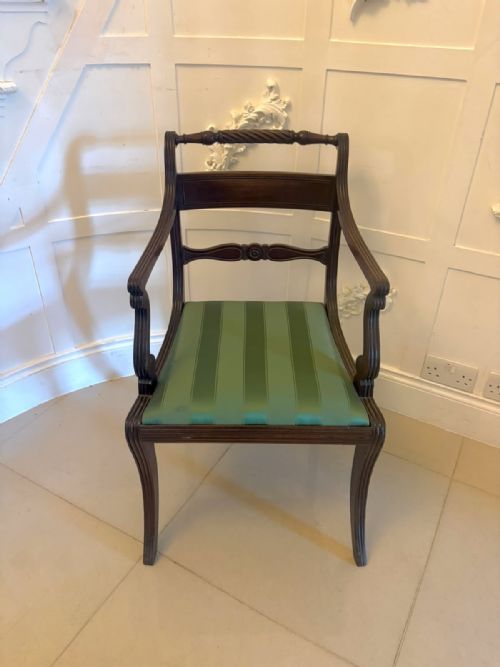
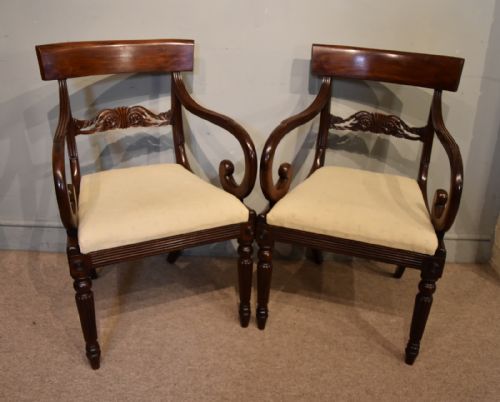
The inventory on this page spans single armchairs, pairs, and larger sets incorporating carvers alongside standard dining chairs. Forms include scroll arms, lyre backs, and open armchairs suited for desks and dining tables.
Origins represented in the evidence include Georgian, Regency, William IV, and Edwardian periods. Twentieth-century revivals sit alongside pieces dated directly to the 1800s and 1820s.
Materials and construction
Mahogany forms the primary structural timber across the selection, complemented by satinwood, rosewood, and maple. Cabinetmakers utilised these dense hardwoods to achieve slender, strong framing and crisp carved details.
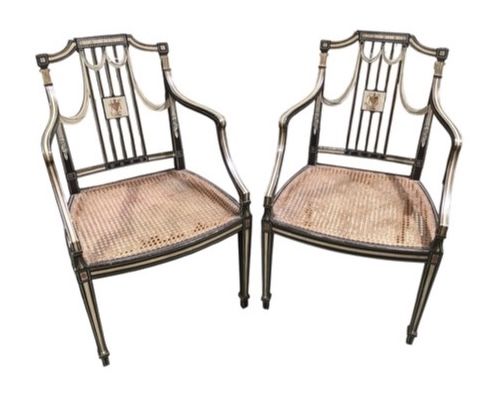
Inlays of brass provide linear contrast to dark woods, while cane panels offer woven support for seats. Upholstery materials include leather, velvet, fabric, and plain textile coverings fixed with studs.
Listings feature mahogany construction paired with brass inlay, cane seats, and leather upholstery across periods spanning the Georgian era to the 1920s.
Distinctions in quality
Quality rests upon the crispness of carved elements such as scroll arms and lyre splats. Superior examples demonstrate fluent joinery and carefully selected timber grain that aligns naturally across structural joints.
Scale and proportion separate standard utilitarian seating from exhibition quality pieces designed for formal dining rooms. The integration of brass inlay and secondary woods indicates greater workshop investment.
The Regency Style Carver Chairs Glossary
- Carver chair
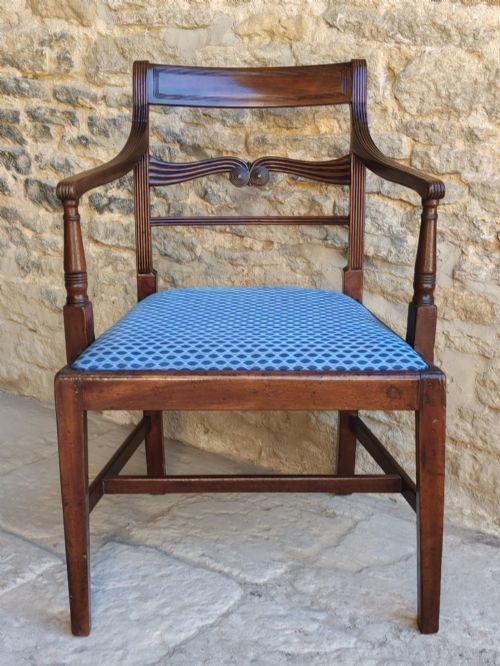
- An armchair designed to sit at the head of a dining table or function as a desk chair. These seats feature open arms to accommodate formal dress.
- Lyre back
- A chair back featuring an open splat shaped like an ancient Greek lyre. This motif appears frequently in Regency furniture design.
- Scroll arm
- An armrest curving outward and downward in a spiral formation. Cabinetmakers carved these forms directly from solid mahogany.
- Brass inlay
- Thin strips of brass let flush into the timber surface to form geometric or classical patterns. This technique defines high-status Regency pieces.
- Barback
- A chair back featuring a horizontal top rail shaped like the crossbar of a classical lyre or architectural frieze.
Regency Style Carver Chairs: Frequently Asked Questions
What is a carver chair?
A carver chair is an armchair traditionally placed at the head of a dining table or utilised at a writing desk. The open arms distinguish them from standard single dining chairs.
They share the stylistic vocabulary of the surrounding dining set while offering broader proportions and armrests for seated comfort.
How do I date a regency style chair?
Dating relies on timber selection, structural joinery, and stylistic markers recorded in the specific design. Period pieces from the early nineteenth century contrast with Edwardian and twentieth-century revivals.
Examination of the underside and joint construction reveals whether a piece belongs to the Regency era or a later revival period.
Were these chairs used only for dining?
While frequently found in dining sets alongside single chairs, these armchairs also served as library and desk seating. Their sturdy frames and supportive armrests suited multiple domestic rooms.
Pairs often functioned as conversational seating flanking a fireplace or console table.
What is the difference between original and revival pieces?
Original pieces date from the Regency and Georgian eras of the early nineteenth century. Revival pieces date from later periods such as Edwardian production and the 1920s.
Both categories utilise mahogany and classical design motifs, but analytical inspection of the timber ageing and hardware separates the eras.