


Mahogany Lyre Back Armchairs
Mahogany lyre back armchairs bring neoclassical balance to a room, offering the graceful curves of a musical instrument translated into solid timber.
Mahogany Lyre Back Armchairs
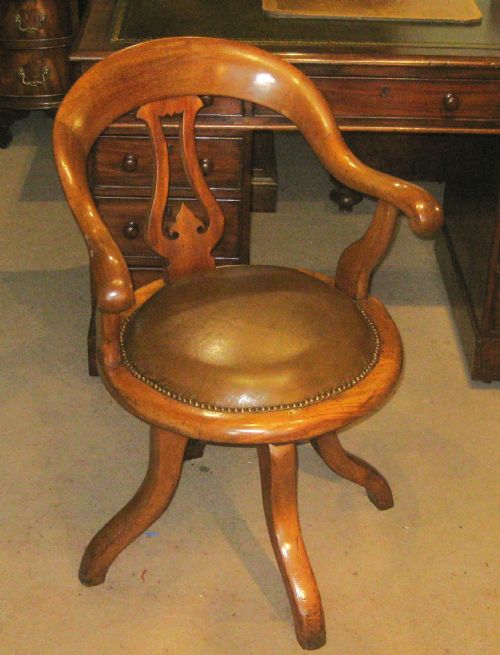
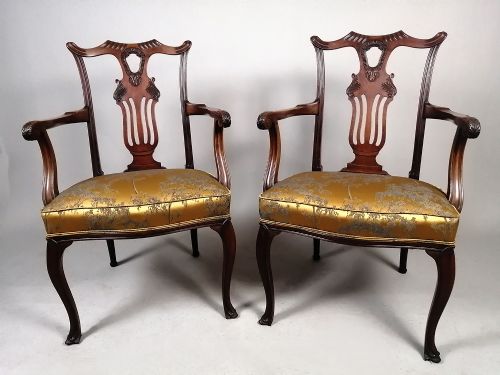
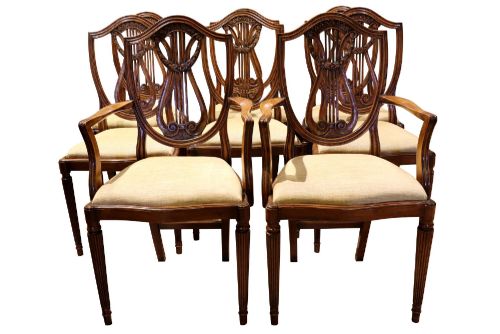
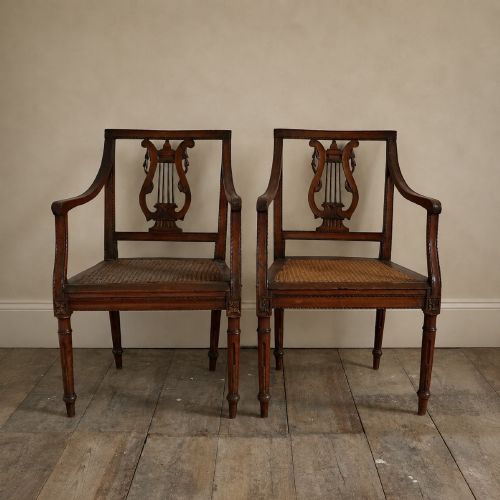
These mahogany lyre back armchairs draw on neoclassical design, featuring the distinct lyre-shaped splat that mimics the ancient stringed instrument. Pieces range from nineteenth-century library and desk chairs to twentieth-century revival dining sets in the Hepplewhite and Chippendale manner.
How they were made
Makers utilised solid mahogany, shaping the timber to form the characteristic curved arms and central lyre splat. Construction often incorporated carved details, giltwood highlights, and turned components.
Seating areas utilised varied materials including cane, fabric, leather, and velvet. Upholstery techniques suited the intended function of each piece, from revolving desk chairs to formal dining carvers.
Some nineteenth-century desk chairs allowed scholars to spin around while pondering their poetry.
What varies in quality
The refinement of the carving on the central lyre splat and arms dictates much of the visual distinction. Crisp detailing in the timber indicates superior workshop execution.
The integrity of the mahogany and the choice of secondary materials, such as brass fittings or cane work, separate standard production from finer examples.
The Mahogany Lyre Back Armchairs Glossary
- Lyre back
- A chair back featuring a central splat shaped like an ancient Greek lyre. This motif emerged during the neoclassical revival.
- Carver chair
- An armchair, traditionally placed at the head of a dining table, featuring supportive side arms. These pieces matched the simpler side chairs in a set.
- Neoclassical
- A style drawing inspiration from classical antiquity, prominent in furniture design through symmetrical forms and architectural motifs. It influenced both Regency and later revival periods.
- Cane seat
- A seating surface woven from rattan or similar plant material. This technique provides a light, flexible base often found on nineteenth-century chairs.
Mahogany Lyre Back Armchairs: Frequently Asked Questions
Where do mahogany lyre back armchairs work best?
These chairs fit naturally around a formal dining table or beside a writing desk as an executive seat. Their architectural lines also allow them to stand alone in a study or library.
Matching a pair of elbow chairs to simpler dining chairs creates a balanced arrangement without overcrowding the room.
How do I care for the mahogany timber?
Keep the wood away from direct heat sources and strong sunlight to prevent the mahogany from drying out or fading. Regular dusting with a soft, dry cloth preserves the polished surface.
Apply a traditional wax sparingly if the timber begins to look dull, buffing it gently to maintain the natural sheen.
Are cane seats durable for daily use?
Cane work offers surprising strength and flexibility when treated with reasonable care. Avoid kneeling on the seat or placing concentrated heavy loads on the woven surface.
Keeping the cane lightly hydrated with a damp sponge prevents brittleness over the years.
How do I distinguish nineteenth-century pieces from later revivals?
Examine the timber grain, tool marks, and construction joints beneath the seat or behind the frame. Nineteenth-century examples often show hand-cut joinery and deeper patina in the mahogany.
Later twentieth-century revivals generally display more uniformity in the timber stock and machine-finished carving details.