
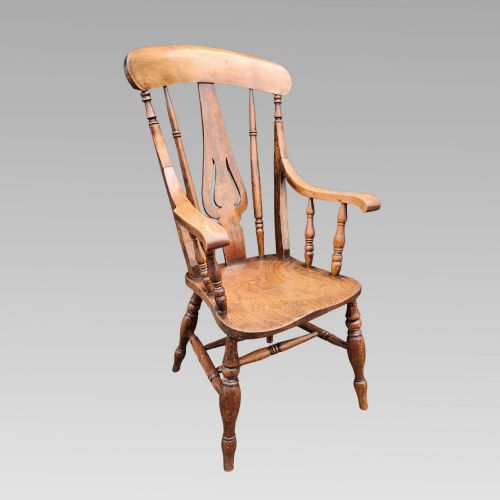
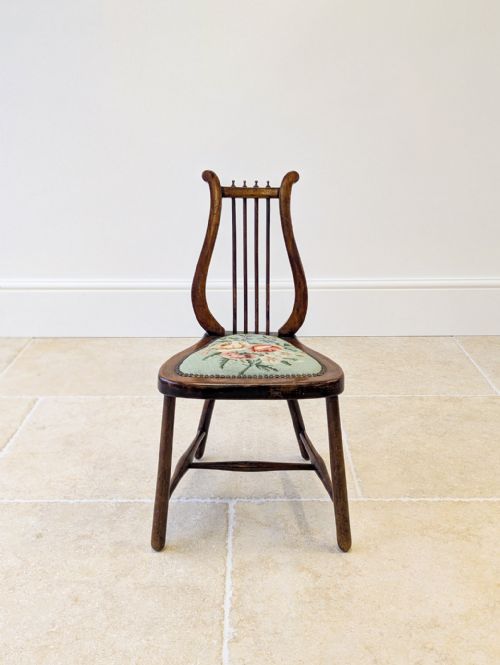


Carved Lyre Back Chairs
These carved lyre back chairs bring classical music motifs into domestic seating, offering homeowners a sculptural focal point that suits both historic dining rooms and modern libraries.
Carved Lyre Back Chairs
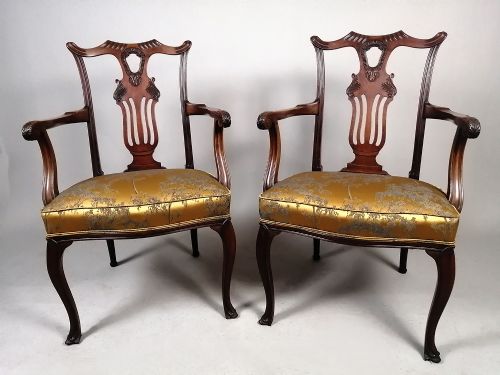
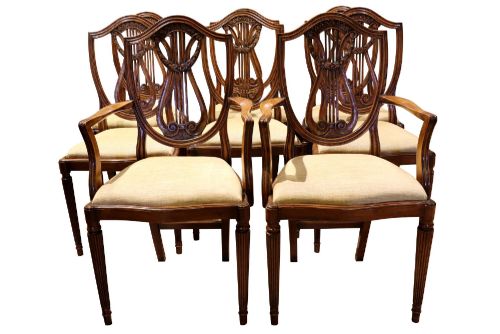
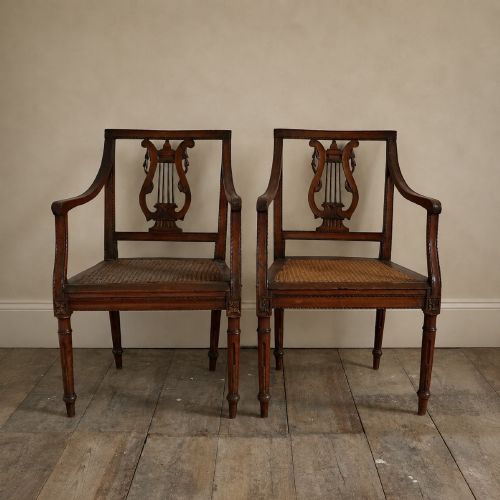
When you search for carved lyre back chairs, you encounter seating distinguished by a central splat shaped like an ancient Greek lyre. These pieces emerge chiefly in mahogany, walnut, and beech, spanning periods from the Regency era through to the early twentieth century.
The selection here encompasses dining chairs, armchairs, and occasional seating shaped by various design revivals. You are most likely to meet nineteenth-century mahogany examples and Edwardian interpretations alongside occasional provincial pieces.
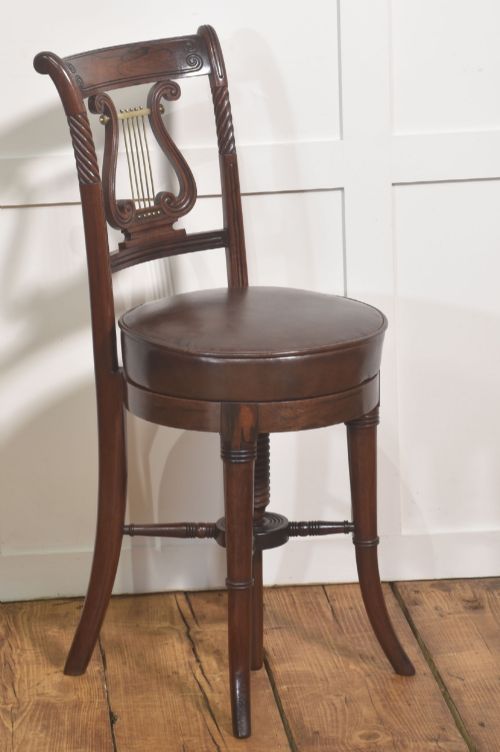
Makers adapted the musical motif across different forms, ranging from formal dining sets to intimate dressing and piano stools. The execution shifts from grand Neoclassical interpretations to simpler country house adaptations.
How they were made
Cabinetmakers constructed the primary frames of these chairs using dense timbers such as mahogany, walnut, and beech, often pairing them with carved brass details or turned wooden supports. The characteristic lyre splat required precise timber selection to ensure the delicate scrollwork remained structurally sound under daily use.
Upholstery techniques varied widely according to the intended function of the chair, incorporating drop-in fabric pads, leather seats, and intricate needlepoint or tapestry covers. Frames frequently combined traditional mortise and tenon joinery with applied carvings that reflected the prevailing neoclassical or revival tastes of the period.
Object forms represented on this page range from dining chairs and armchairs to revolving piano stools and dressing table seats.
What varies in quality
The distinction between standard production and superior examples rests upon the crispness of the wood carving and the proportional balance of the lyre splat. Finer chairs display deep, hand-carved details within the scrollwork rather than shallow machine routing.
Timber selection and structural integrity define the upper tier of these pieces, where dense grain figures in the mahogany or walnut enhance the visual weight of the frame. The tightness of the joinery and the original condition of the timber determine the enduring strength of each chair.
The Carved Lyre Back Chairs Glossary
- Lyre splat
- The central wooden upright in a chair back shaped to resemble an ancient Greek stringed instrument. It forms the defining visual feature of these pieces.
- Neoclassical manner
- A decorative style drawing inspiration from classical antiquity, prominent in furniture design through symmetrical forms and architectural motifs. This aesthetic heavily influences the proportions of the lyre back.
- Elbow chair
- An armchair featuring lower supports designed to accommodate the user's arms while seated at a desk or dining table. These often appear in matching sets alongside side chairs.
- Needlepoint
- A type of canvas work embroidery utilised historically for chair seat covers and upholstery panels. It adds texture and colour to the wooden frame.
Carved Lyre Back Chairs: Frequently Asked Questions
Are these chairs comfortable for daily dining?
Most of these chairs feature upright wooden backs designed for formal dining rather than lounging. The comfort depends largely on the padding of the seat, which ranges from firm wood to sprung upholstery.
Adding a loose cushion can adjust the seating height and softness without altering the appearance of the timber frame.
How do I date a lyre back chair?
Dating relies on identifying the timber species, secondary woods, and the specific stylistic revival present in the carving. Nineteenth-century versions often show heavier mahogany construction, while Edwardian pieces may utilise lighter beech.
Examining the joinery methods beneath the seat provides further clues regarding the manufacturing period and workshop practices.
Can I mix these chairs with modern tables?
The architectural symmetry of the lyre motif allows these chairs to pair effectively with contemporary dining tables. The dark tones of mahogany and walnut create a strong contrast against glass, metal, or light wood surfaces.
Grouping them as host chairs at either end of a modern table highlights their sculptural qualities.
How should I care for the timber?
Maintenance involves applying a quality beeswax periodically to nourish the dry wood and preserve the natural sheen of the grain. Avoid placing the chairs near direct heat sources or strong sunlight to prevent the timber from splitting.
Gentle dusting with a soft cloth keeps the carved details free from dirt accumulation.