
Regency Style Cabinets
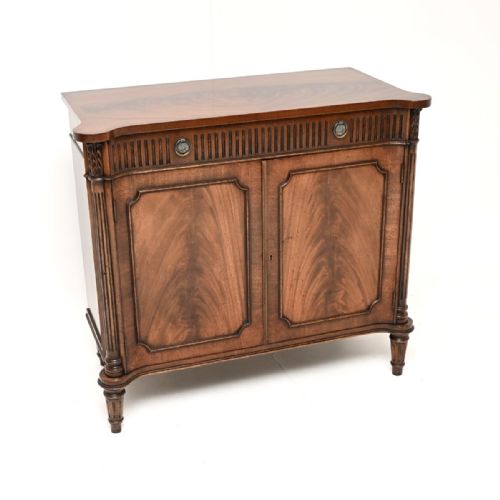
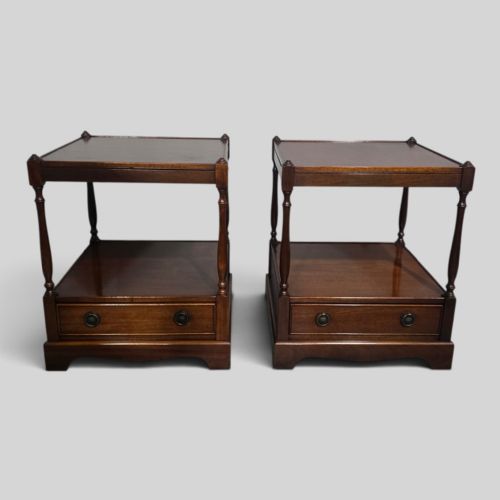
Regency style cabinets bring classical proportions and rich timbers into a room, offering refined storage through bookcases, side cabinets, and bedside tables.
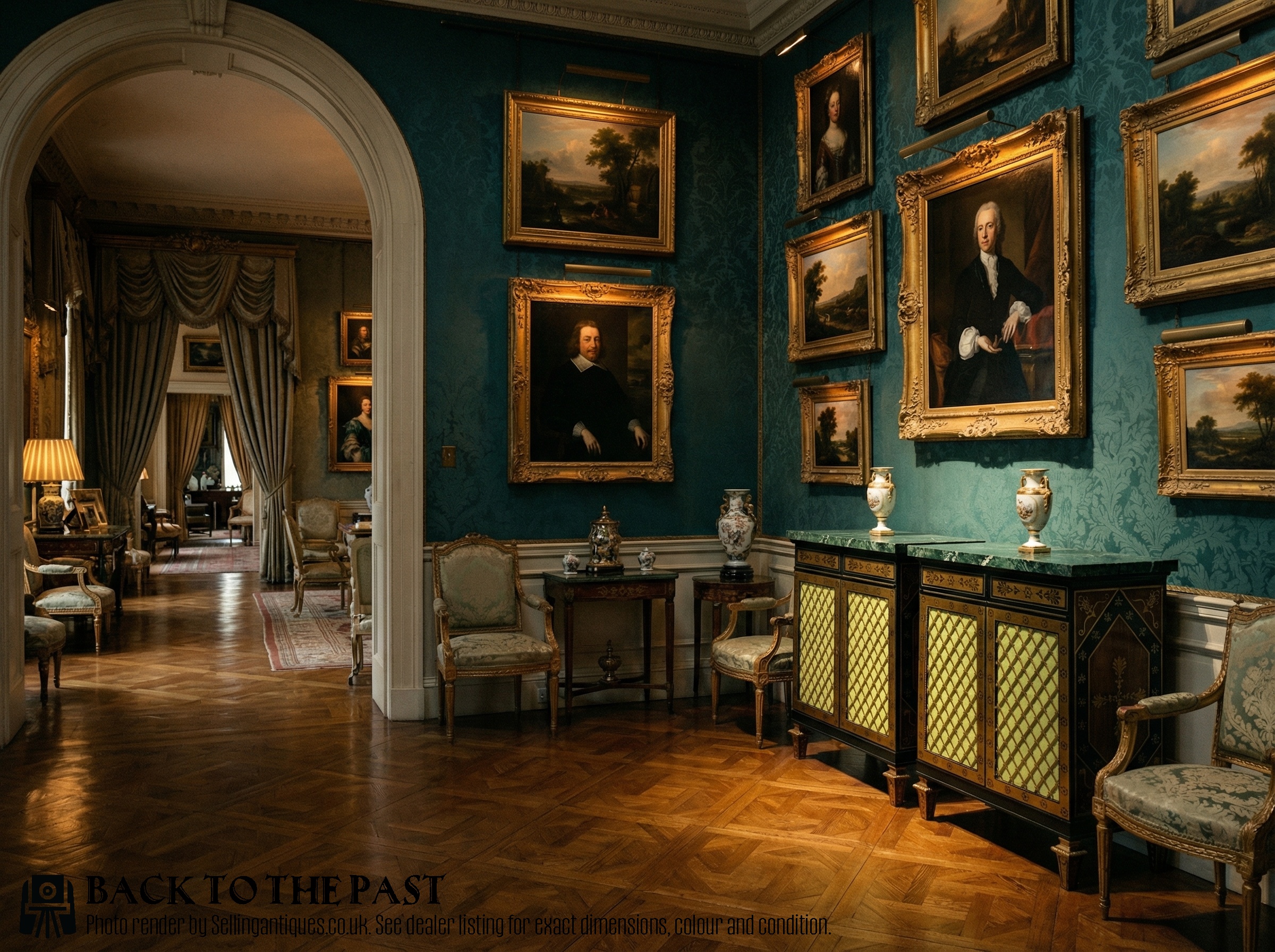
Regency Style Cabinets
Regency style cabinets encompass a variety of storage pieces, from open bookcases and side cabinets to bedside tables, reflecting classical design influences. When searching for regency style cabinets, buyers encounter both authentic pieces from the early nineteenth century and later revivals spanning the Victorian era up to the 1930s.
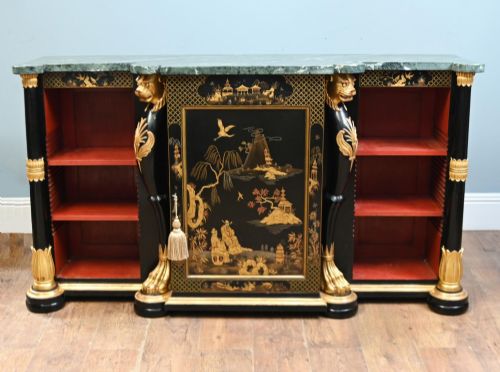
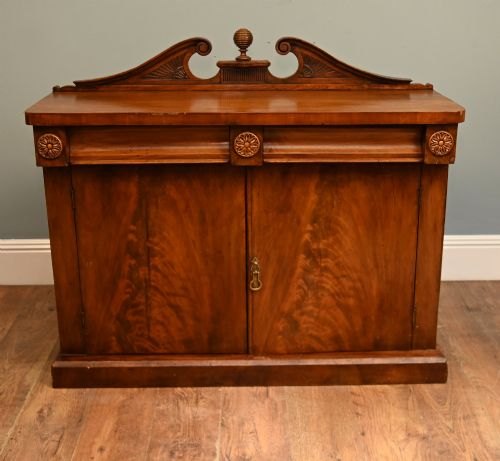
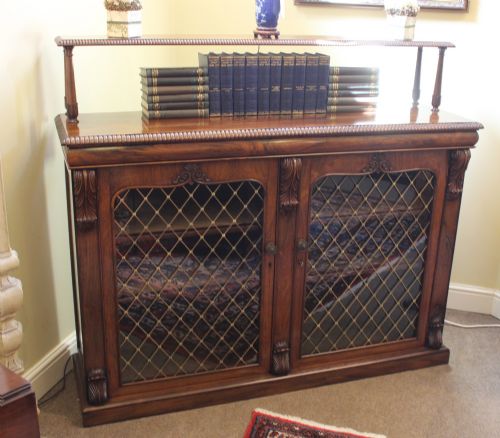
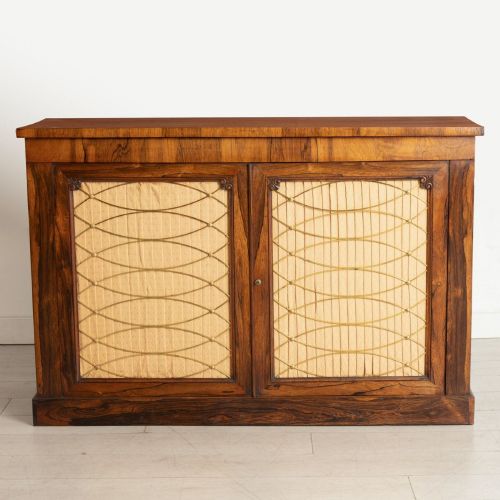
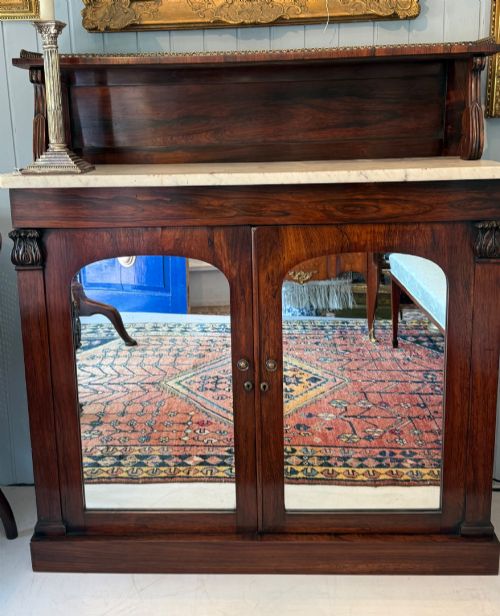
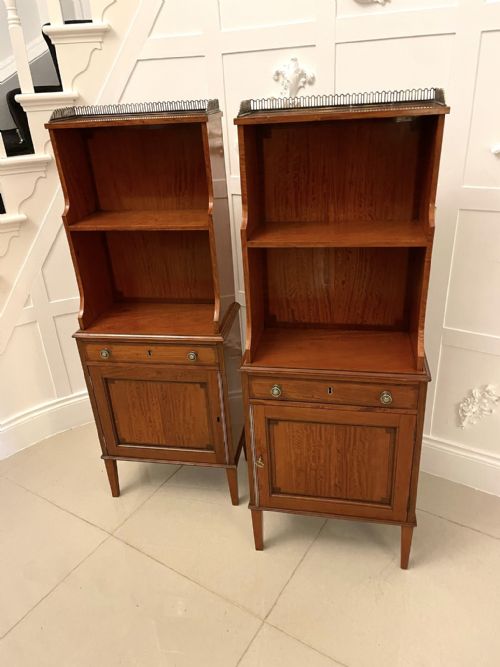
The forms frequently mirror the architectural lines of the Georgian and Regency periods, utilising balanced proportions and restrained ornamentation. Side cabinets, bookcases, and chiffoniers dominate the selection, often featuring glazed doors, open shelving, or enclosed cupboard bases.
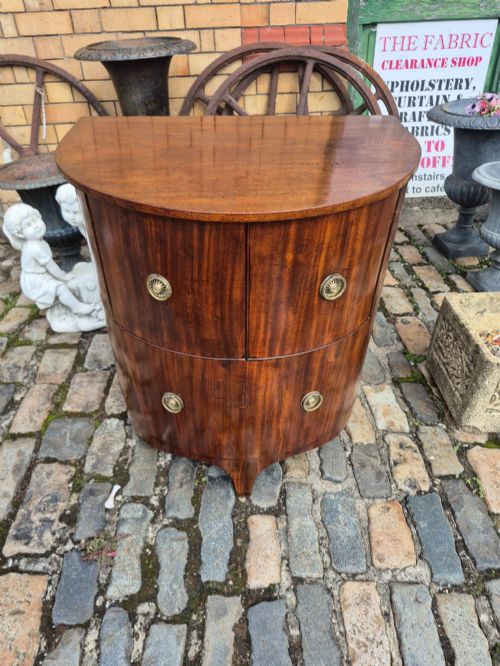
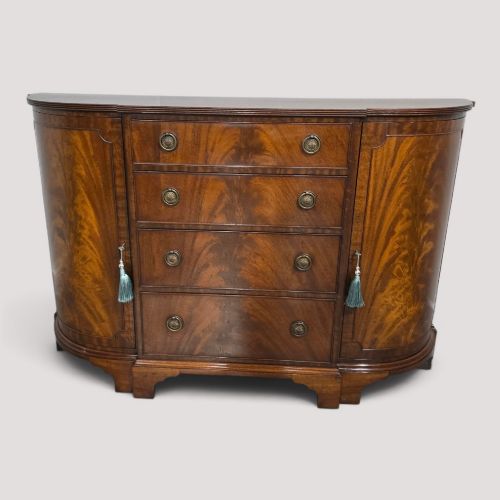
Origins stretch from genuine Regency and George IV periods through to twentieth-century revivals styled with mahogany, rosewood, and satinwood veneers. These storage items serve practical domestic functions while maintaining the aesthetic symmetry characteristic of early nineteenth-century furniture.
Materials and Technique
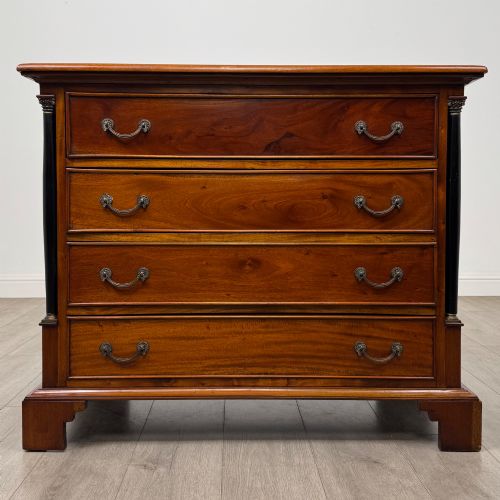
Cabinet makers relied heavily on dense hardwoods like mahogany and rosewood, frequently applying them as finely grained veneers over secondary timbers. Surface enrichment often involved intricate brass inlay, brass grilles to cabinet doors, and marble tops.
Structural methods included precise joinery, dovetailed drawer construction, and structural reinforcement using brass mounts or campaign-style fittings. Ebonised wood and painted finishes also appear, providing contrast and decorative depth to specific side cabinets and cupboards.
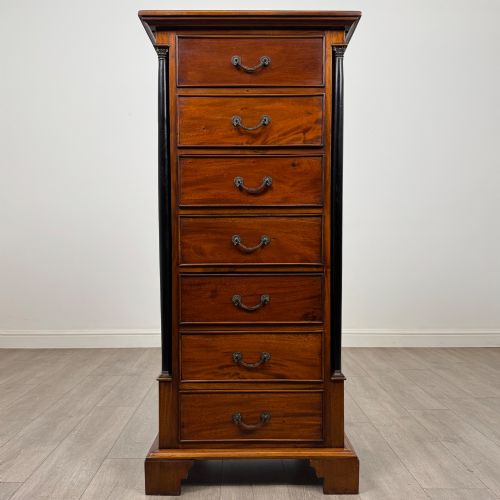
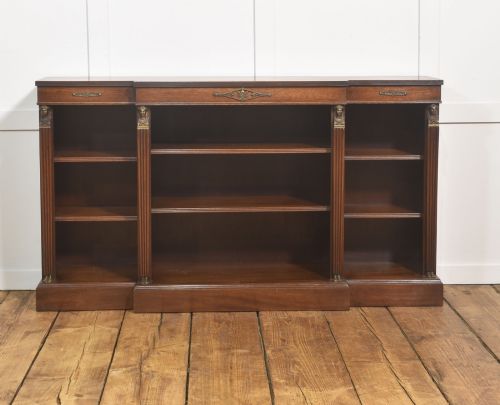
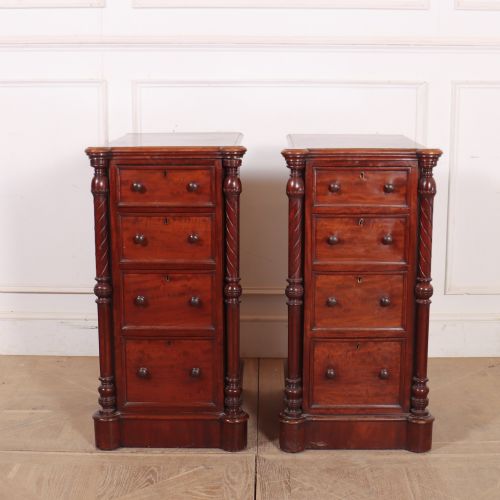
Forms range from open bookcases and chiffoniers to bedside tables, chests of drawers, and breakfront library cabinets.
Craftsmanship and Materials
Quality in these cabinets rests upon the selection of timber veneers and the precision of decorative metalwork such as brass inlays and mounts. Superior pieces display continuous grain patterns across drawer fronts and doors, alongside crisp carving and tight joinery that resists seasonal movement.
The distinction between standard production and exceptional craftsmanship often shows in internal secondary woods, the weight of the hardware utilised, and the subtlety of proportion. Original glass panels, well-fitted shelving, and integrated locks further separate standard workshop output from premier examples.
Gillows·Holland & Sons·Louis Constantin Le Gaigneur·John Davenport of Longport
The Regency Style Cabinets Glossary
- Chiffonier
- A low sideboard or cabinet featuring a combination of drawers, shelves, and enclosed lower cupboards, commonly produced in rosewood and mahogany during the nineteenth century.
- Breakfront
- A piece of furniture where the central section projects forward from the flanking outer sections, creating architectural depth on large bookcases and sideboards.
- Waterfall bookcase
- A tiered set of open bookshelves where the side panels step back progressively from bottom to top, creating a cascading profile.
- Escritoire
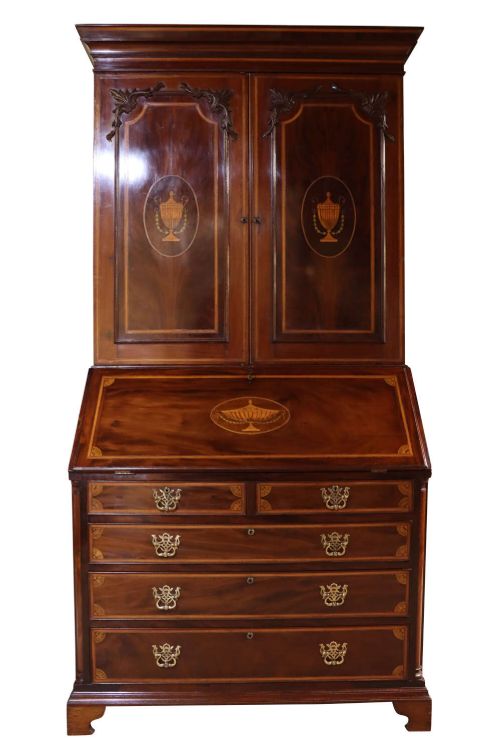
- A small writing cabinet fitted with a folding writing flap that conceals internal pigeonholes and small drawers.
- Inlay
- A decorative technique where contrasting materials such as brass or lighter timbers are embedded into recesses cut into the primary surface wood.
Regency Style Cabinets: Frequently Asked Questions
What defines a regency style cabinet?
These cabinets draw inspiration from early nineteenth-century neoclassical design, featuring balanced proportions, classical architectural motifs, and dark timbers.
They frequently incorporate materials like mahogany or rosewood, complemented by brass mounts, glass doors, or intricate inlay work.
How do I date a cabinet?
Dating relies on examining construction methods, timber selection, hardware, and secondary woods used inside drawers and back panels.
Original period pieces often display hand-cut dovetails and period-specific locking mechanisms, whereas revival pieces from the twentieth century show machine tooling.
Where should I place a side cabinet?
Side cabinets suit dining rooms, hallways, or living spaces where surface display and concealed storage are both required.
Their compact footprints allow them to sit neatly against walls beneath artwork, mirrors, or above skirting boards without dominating the room.
Are these pieces made of solid wood?
Most fine cabinets utilise high-quality wood veneers applied over stable secondary timbers to prevent warping on large expanses.
Solid sections typically appear on structural frames, mouldings, and legs, while figured veneers provide the decorative exterior surfaces.