
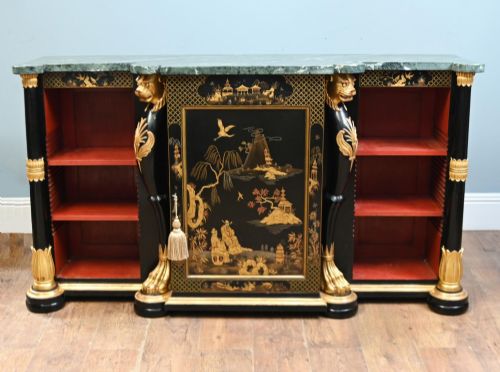
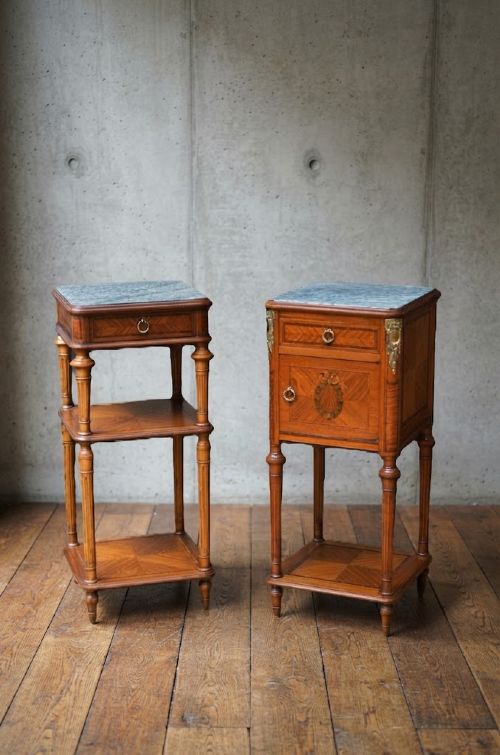


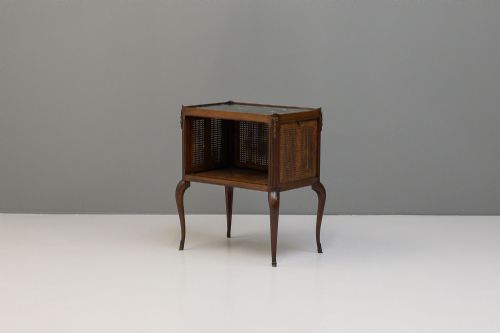


Green Marble Side Cabinet
These green marble side cabinet examples bring together substantial timber carcases and cool stone surfaces, offering practical storage with a distinct classical presence.
Green Marble Side Cabinet
When you search for a green marble side cabinet, you encounter low storage furniture designed with stone surfaces, spanning periods from the Regency era through to Edwardian times. These pieces encompass various forms including bedside cabinets, washstands, chiffoniers, and pedestal cupboards.
The materials paired with the marble include rosewood, mahogany, satinwood, and walnut, frequently accented with brass or ebony details. Styles range from French Louis XV and Neoclassical revivals to English Regency and Victorian designs.
You are most likely to meet bedside pairs and single marble-topped washstands or side tables on this page. Each item combines functional interior space with the decorative weight of a stone top.
How they were made
Cabinet makers constructed these carcases using dense timbers such as mahogany, rosewood, and walnut, often applying delicate veneers or inlay work to the exterior surfaces. Brass mounts, galleries, and handles provide structural and decorative contrast to the timber frames.
The distinctive green marble tops are cut, shaped, and polished to fit precisely onto the cabinet bases, providing a durable and smooth horizontal surface. Joinery methods of the nineteenth and early twentieth centuries ensure stable frames designed to support the heavy stone slabs.
Listings feature pieces spanning from the Regency period through the nineteenth century, Victorian era, and Edwardian times, utilising mahogany, rosewood, walnut, and satinwood.
What varies in quality
The refinement of the timber selection and the precision of the veneer work set individual examples apart. Richly figured rosewood and finely matched mahogany elevate the overall presence of the piece.
The integration of the green marble top and the crispness of any brass mounts or inlay dictate the visual success of the cabinet. Harmonious proportions between the stone slab and the wooden base distinguish the finer pieces from simpler utilitarian items.
The Green Marble Side Cabinet Glossary
- Demi-lune
- A half-moon shape used for furniture surfaces and tabletops. This curved profile allows the cabinet to sit flush against a wall while offering a softer silhouette.
- Chiffonier
- A low cabinet or sideboard featuring shelving and enclosed storage. Originating in France, this form often incorporates a marble top and brass gallery details.
- Breakfront
- A cabinet design where the central section projects forward from the flanking cupboards. This architectural arrangement creates depth and catches the light across the timber grain.
- Secretaire
- A desk form integrated into a cabinet with a drop-down writing flap concealing small drawers and pigeonholes. It combines the utility of a writing desk with the enclosed storage of a side cabinet.
- Pedestal cupboard
- A single-door cabinet built on a columnar or pedestal footprint. These vertical storage pieces frequently feature marble surfaces and classical proportions.
Green Marble Side Cabinet: Frequently Asked Questions
What rooms suit a green marble side cabinet?
These cabinets work well in living rooms, hallways, and bedrooms where a compact storage footprint is required. The stone top offers a resilient surface for lamps, decorative objects, or everyday items.
Their varied heights and widths allow them to fit into alcoves or act as focal points against plain walls. The combination of warm timber and cool green marble complements both traditional and modern interiors.
How do I care for the marble top?
The green marble surface requires regular dusting with a soft, dry cloth to prevent grit accumulation. Avoid using acidic cleaners, vinegar, or abrasive pads, as these will etch and dull the polished stone.
Spills should be blotted immediately rather than wiped to prevent staining. Applying a neutral stone sealer periodically helps protect the surface from moisture and everyday wear.
How can I tell the period of the cabinet?
Dating relies on examining the construction methods, timber choices, and stylistic vocabulary of the piece. Regency and early nineteenth-century examples often feature dense rosewood and classical brass mounts, while Edwardian pieces may utilise lighter satinwood or simpler framing.
Interior secondary woods, dovetailing techniques, and screw types offer further clues to the decade of manufacture. Comparing the decorative motifs, such as French Neoclassical or Gothic revivals, helps narrow down the historical context.
Were these cabinets used as washstands?
Many marble-topped pieces served functional washing purposes in nineteenth-century bedrooms before modern plumbing became standard. The stone surface provided a waterproof area for basins, jugs, and toiletries.
Over time, these washstands transitioned into general side cabinets and hallway furniture as bathroom arrangements evolved. Their durable tops make them equally practical for contemporary decorative use.