



Regency Style Brass Chandelier
A regency style brass chandelier brings bright illumination and classic neoclassical metalwork to a high ceiling.
Regency Style Brass Chandelier
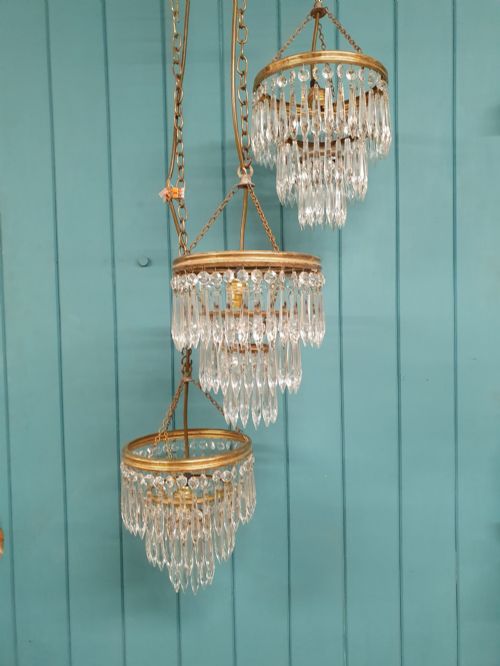
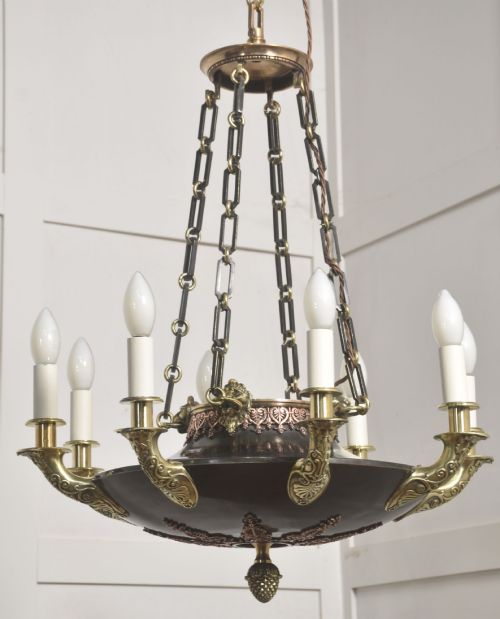
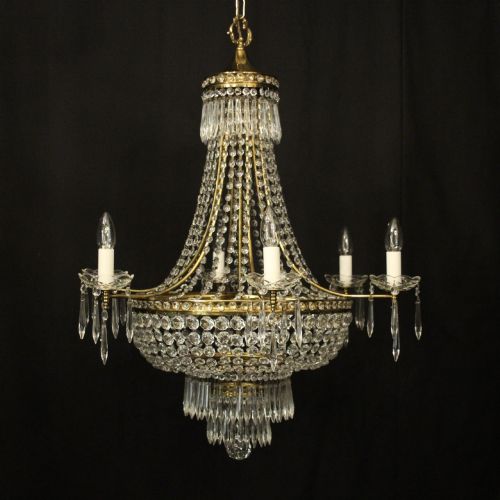
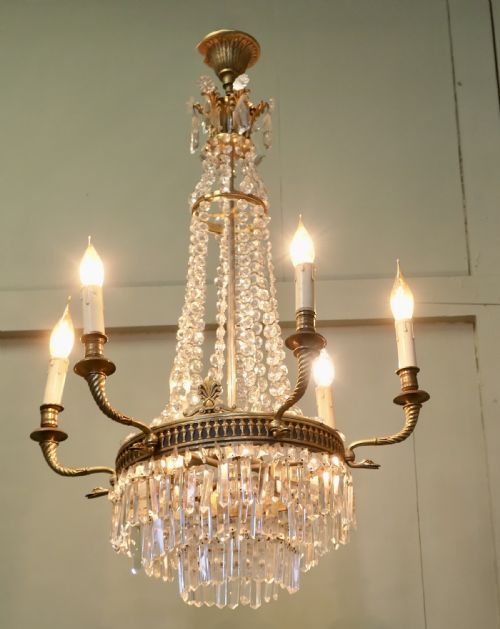
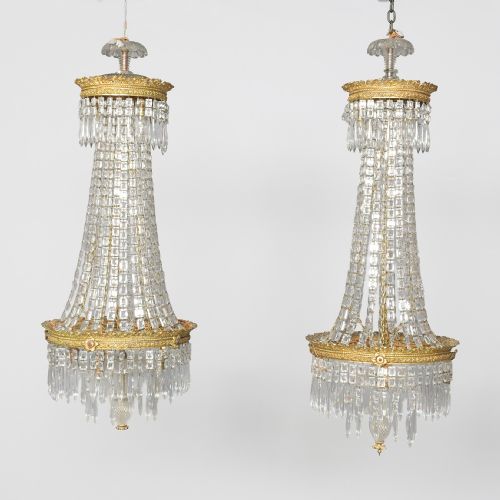
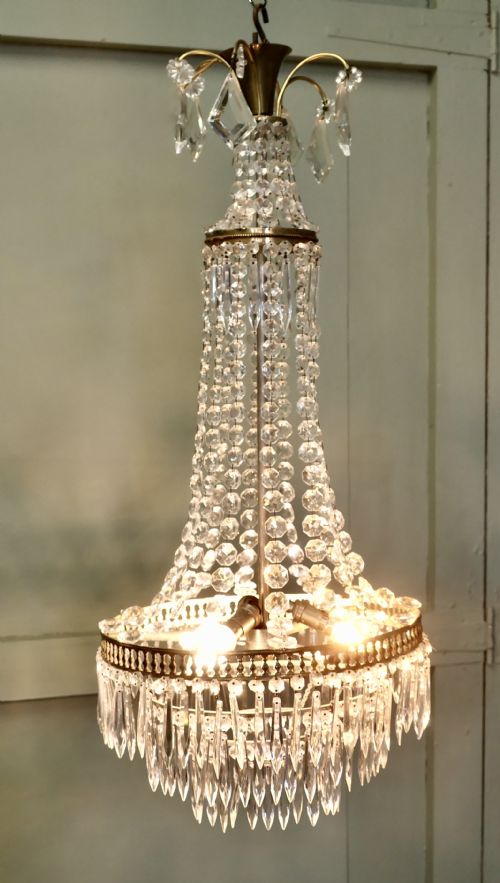
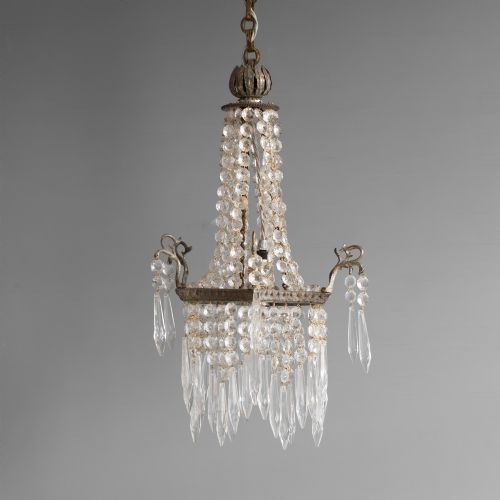
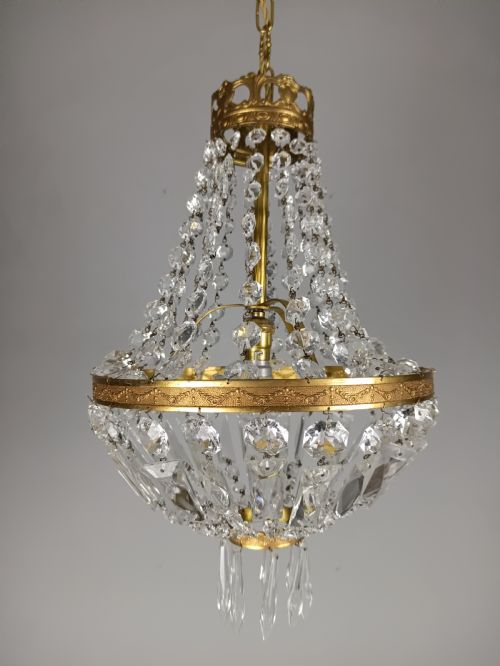
When searching for a regency style brass chandelier, you are looking at overhead lighting fixtures shaped by 19th-century tastes, French Empire influences, and later revivals from the Edwardian era and the 1930s. The versions most commonly met on this page range from compact brass and glass bag chandeliers to large multi-tiered spike and waterfall designs.
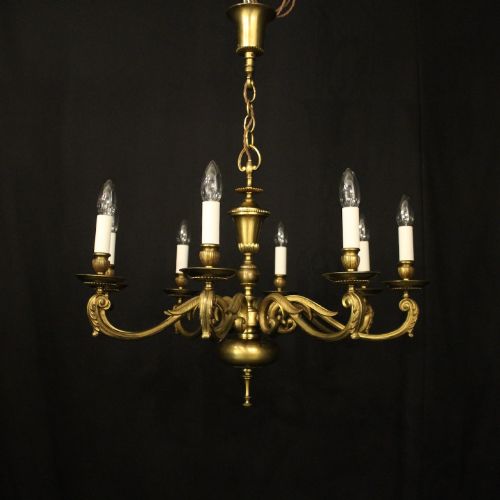
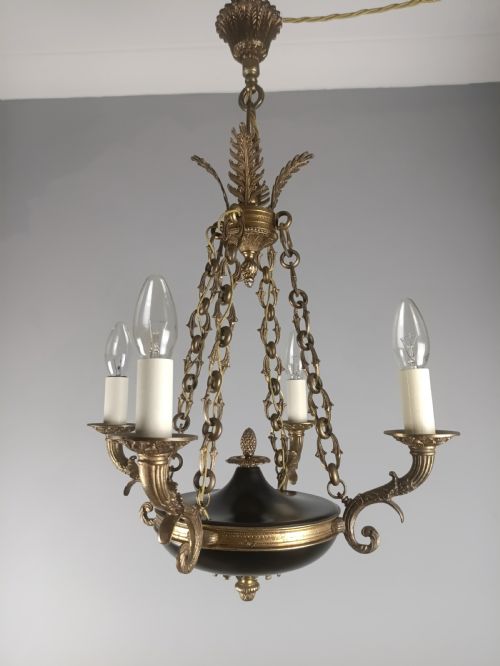
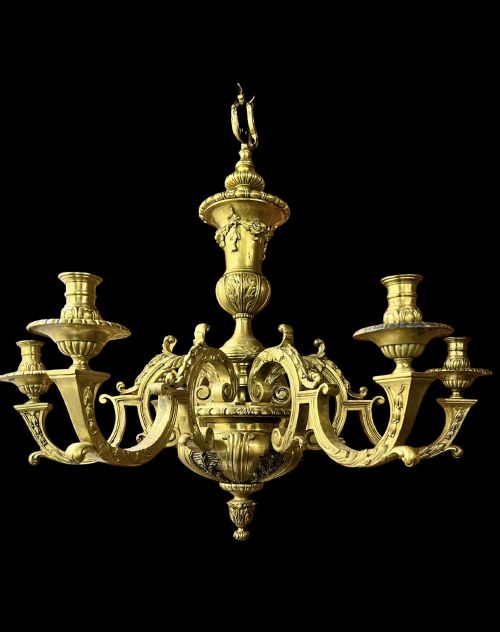
Makers and manufacturers across the decades produced these ceiling lights in various configurations, including basket forms, multi-branch fixtures, and simple pendant lights. Pieces span periods from the 19th century through the early decades of the 20th century, drawing on Georgian, French Chateau, and English Neoclassical design vocabularies.
Materials and construction
These light fittings combine brass, gilded brass, or gilt bronze frames with glass and cut glass crystal drops, swags, and beads. Metal armature work forms the structural skeleton, holding branches, hoops, and domes that support cascading glass elements.
Moulders and metalworkers constructed frames using cast or spun brass components, often applying a gilt surface finish. Crystal and cut glass drops are wired or pinned directly to the brass mounts, tents, and waterfall tiers.
Listings feature brass, cut glass, and crystal pieces spanning the 19th century, Edwardian period, and 1930s.
Quality differences
The distinction between tiers of quality rests on the crispness of the brass casting, the depth of the gilt finish, and the clarity of the cut glass crystal drops. Heavier metal frames and finely faceted crystal elements show superior craftsmanship compared to simpler, lighter assemblies.
Proportion and scale also dictate quality, as larger multi-light and multi-tier chandeliers require balanced structural engineering to support numerous glass drops and gilt arms without sagging.
The Regency Style Brass Chandelier Glossary
- Tent and waterfall chandelier
- A lighting fixture featuring an upper conical section of glass strings resembling a tent, dropping down into cascading tiers of crystals. This form creates a layered cascade of reflected light.
- Bag chandelier
- A lighting form where glass drops are gathered in a bulbous bag or basket shape beneath a brass crown or ring. It sits close to the ceiling and disperses light through dense beadwork.
- Spike chandelier
- A central vertical metal rod or spike decorated with swags, drops, or tiers of glass crystals. It directs visual weight along a central axis.
- Gilt bronze
- Metal cast in bronze and treated with a gold-coloured surface application or leaf. This material provides a warm metallic sheen to the chandelier frame.
- Cut glass
- Glass shaped and faceted on a wheel to increase light refraction. These faceted drops hang from the brass mounts and arms.
Regency Style Brass Chandelier: Frequently Asked Questions
How do I hang a brass chandelier?
These ceiling lights suspend from a ceiling hook or electrical rose using a chain or direct rod fitting. Ensure the ceiling structure supports the combined weight of the brass frame and glass crystal drops.
Professional installation is recommended for older wiring and heavy multi-tier fixtures to guarantee secure mounting and correct electrical connection.
What is the difference between Empire and Regency styles?
Empire style draws directly on Napoleonic-era French design, featuring military motifs, heavy gilt brass, and tent-and-waterfall crystal arrangements. Regency style reflects contemporaneous English interpretations of classical antiquity.
Both styles share a use of brass mounts and cut glass, though English Regency pieces often incorporate lighter neoclassical lines and restraint.
How do I date an antique chandelier?
Examine the construction of the brass frame, the style of the metal casting, and the cut of the glass crystals. Pieces from the 19th century display different casting techniques compared to 1930s revivals.
Wiring methods and ceiling attachment fittings also offer clues, though many antique fixtures have been rewired for modern use.