


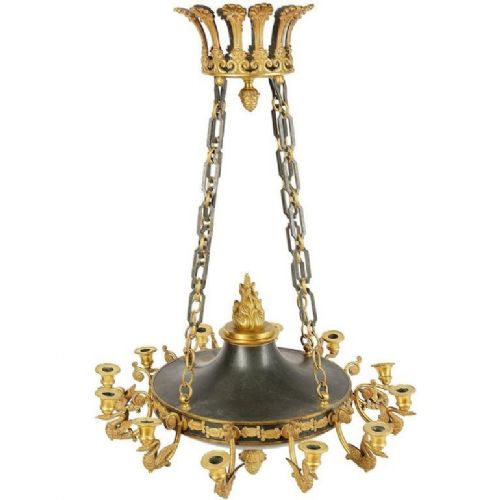


Antique Lustre Pendant Light
These antique lustre pendant light fixtures bring brilliant illumination and hanging crystal drops into a room, spanning the nineteenth century through the early twentieth century.
Antique Lustre Pendant Light
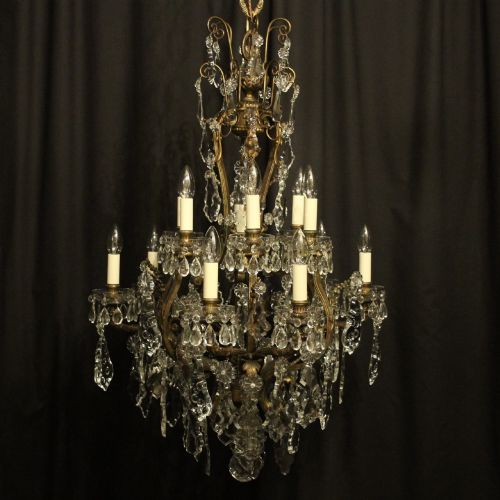
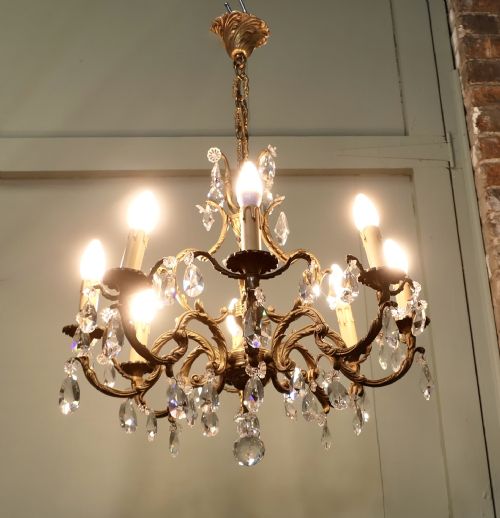
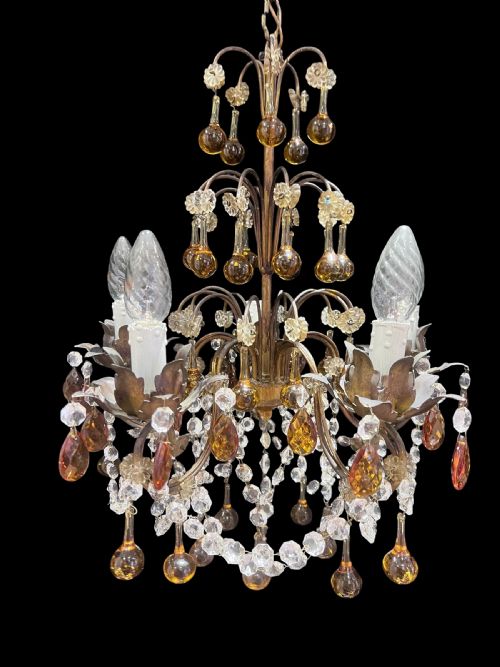
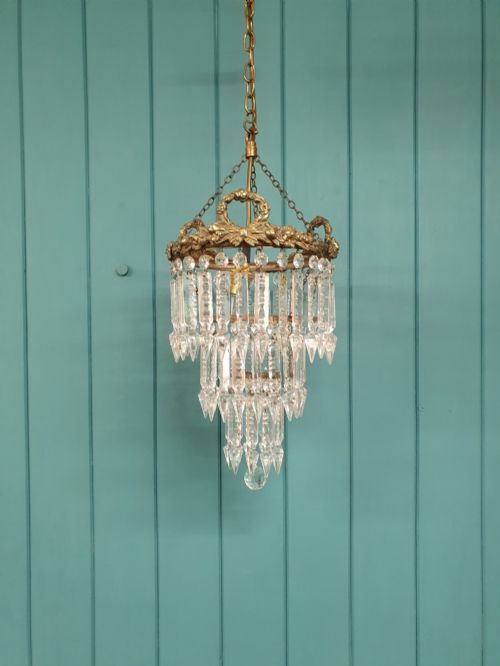
An antique lustre pendant light typically takes the form of a chandelier or ceiling light suspended from above, designed to hold multiple candles or bulbs while throwing refracted light through glass drops. The examples gathered under this term range from compact Edwardian nine-inch pieces to large nineteenth-century French and English multi-armed fixtures hung with crystal lustres.
The periods represented stretch from the late Victorian era through the Edwardian period and into the nineteen-twenties and thirties. Buyers most frequently encounter French and Italian pieces alongside English cut glass works, reflecting diverse regional tastes in domestic illumination across those decades.
Materials and construction methods
Makers built the structural frameworks of these lights using cast or forged metals, most notably brass, gilded bronze, ormolu, and gilt metal, alongside nickel plated brass. These durable metal arms and bands supported the weight of numerous branches and the rich arrays of hanging glass.
The optical brilliance comes from glass, crystal, and crystal glass, shaped into cut pendants, beads, and large lustres that caught and multiplied the illumination. Skilled hands wired or pinned these sparkling elements to the metal frames using delicate wire loops and metal pins.
The listings here include items featuring gilt metal, gilded bronze, crystal glass, and nickel plated brass across multiple decades.
Judging the quality of the work
Quality reveals itself in the crispness of the metal casting and the depth of the gilding or plating on surfaces like gilded bronze and nickel. Finer pieces display heavily chased bronze mounts and substantial metalwork that holds rigid against the pull of numerous arms.
The glass elements themselves separate basic versions from superior ones, depending on the clarity of the crystal glass and the complexity of the cutting on the individual lustres. Heavier, deeply cut drops scatter light with greater precision than thin, pressed glass alternatives.
The Antique Lustre Pendant Light Glossary
- Lustre
- A cut glass pendant or drop hung from a light fixture to reflect and refract illumination. These glass elements swing gently from the metal arms.
- Ormolu
- Ground metallic bronze applied to objects through a mercury gilding process. This technique gives the metal a rich, golden surface finish.
- Chandelier
- A branched, decorative ceiling light designed to hold multiple light sources. They range from small single-tier fixtures to massive multi-light focal points.
- Gilded Bronze
- Bronze metal that has received a thin layer of gold applied to its exterior. This treatment protects the base metal while providing a warm metallic sheen.
Antique Lustre Pendant Light: Frequently Asked Questions
Were these lights originally wired for electricity?
Most pieces originating from the nineteenth century and early Edwardian years began their lives as candle holders. Metal arms held wax tapers before conversion work adapted them for modern electrical bulbs.
Later examples from the nineteen-twenties and thirties often incorporated electrical wiring from the outset. Today, buyers usually find that older fixtures have been rewired to meet contemporary safety standards.
Where should I hang a large chandelier?
These prominent fixtures suit high ceilings in principal rooms such as dining spaces, drawing rooms, or entrance halls. Their generous spread of arms and hanging crystals requires adequate clearance beneath for safe passage.
Ensure the ceiling structure can bear the considerable combined weight of the metal frame and glass components. Professional installation guarantees secure suspension from joists rather than relying on standard plaster.
How do I identify an Edwardian chandelier?
Edwardian pieces often display lighter proportions and distinctive finishes such as nickel plated brass alongside traditional glass drops. Their design vocabulary reflects the decorative preferences popular during the reign of King Edward the Seventh.
Compare the metal framework and the cut of the crystal against pieces dated to the nineteenth century or the nineteen-thirties. Subtle shifts in arm styling and mounting hardware help distinguish this period from earlier Victorian or later interwar work.