

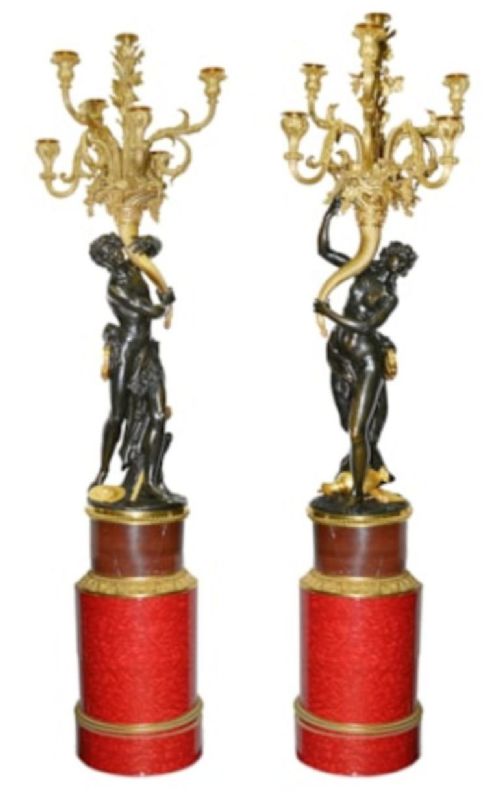
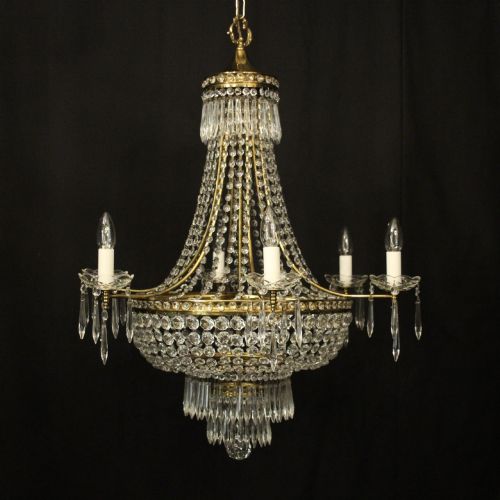
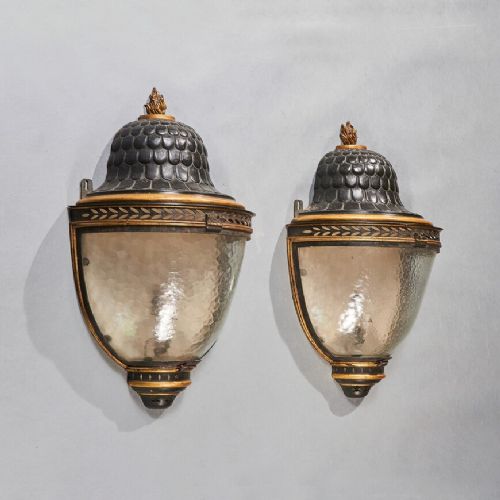
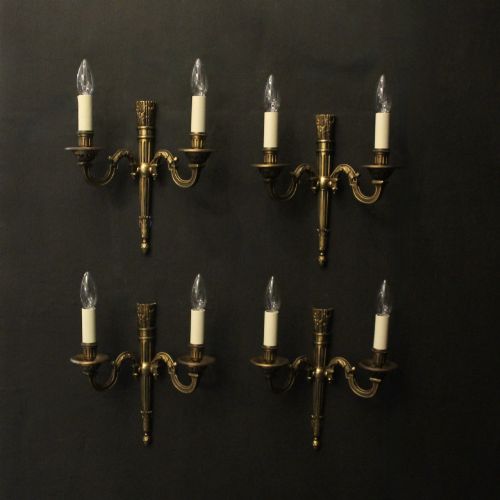
French Style Empire Lighting
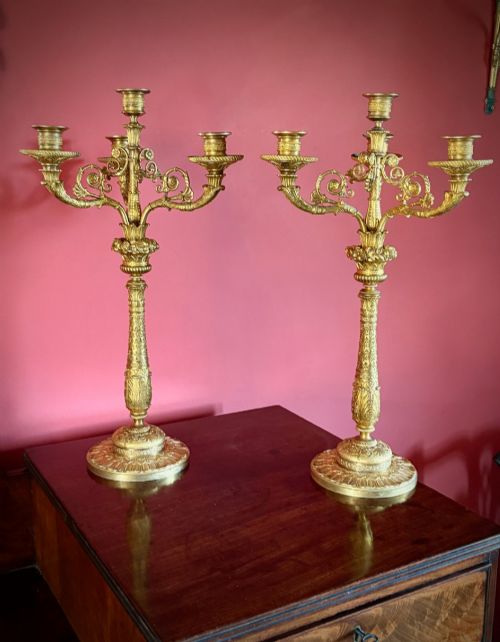
These pieces of french style empire lighting bring monumental classical presence to a room through heavy gilt bronze, crystal drops and formal symmetry.
French Style Empire Lighting
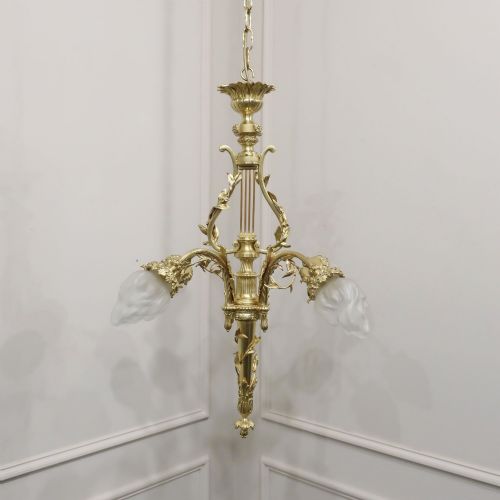
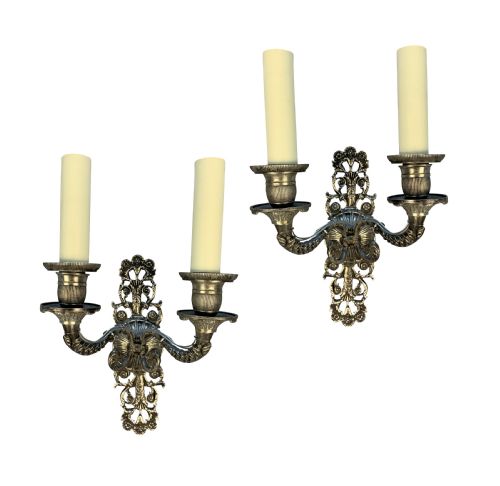
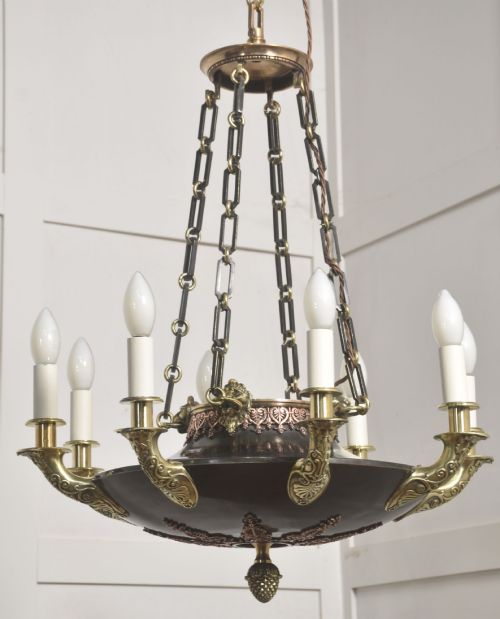
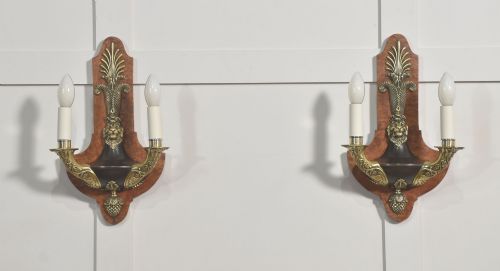
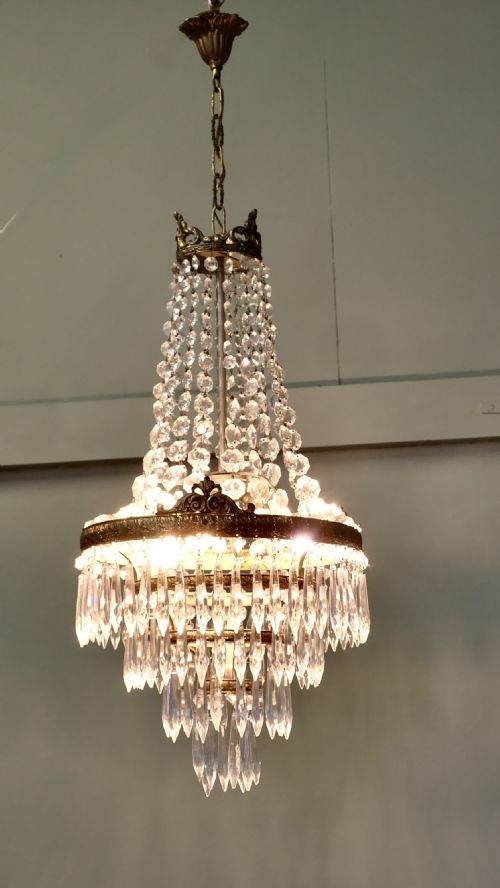
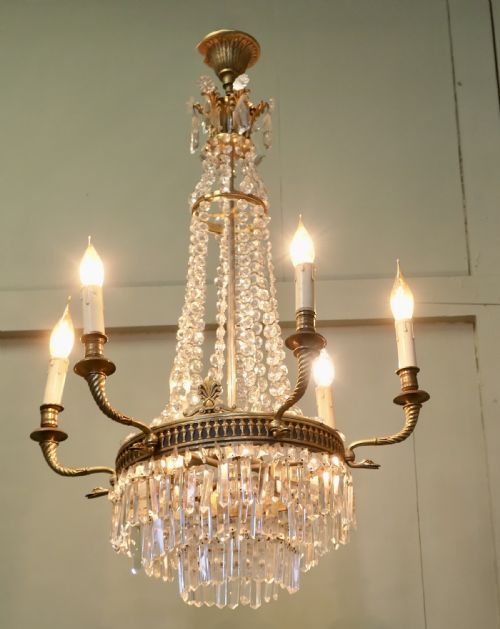
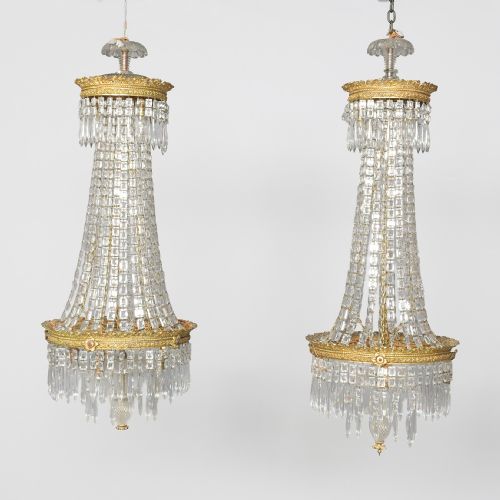
When you search for french style empire lighting, you encounter formal illumination designed to anchor grand interiors with classical dignity. The pieces span magnificent multi-light chandeliers with tent and waterfall crystal configurations alongside heavy matching wall sconces and candelabra.
You are most likely to meet 19th century and early 20th century interpretations rather than original Napoleonic pieces. These later revivals and Regency adaptations dominate the selection, bringing the same architectural columns, laurel wreaths and classical motifs into domestic spaces.
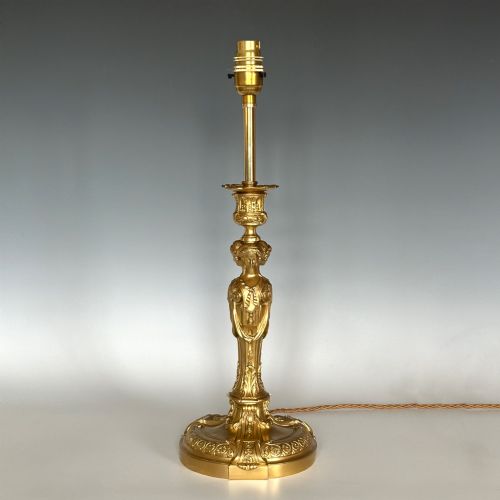
The forms divide clearly between overhead chandeliers, pairs of wall lights and heavy table lamps or floor lamps. Chandeliers often feature tiered crystal drops or multiple candle arms, whilst smaller fittings use patinated bronze, marble bases and brass mounts.
What varies in quality
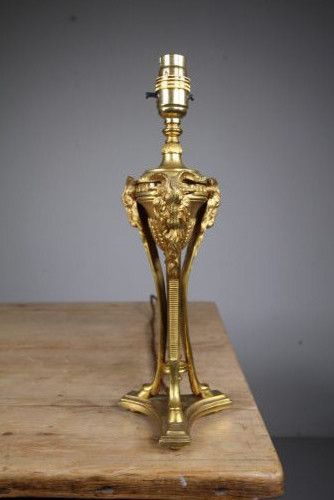
The sharpness of the metal casting dictates the refinement of each piece, distinguishing crisp chased details on acanthus leaves and figural mounts from soft, blurred casts. Heavier gauge bronze and thick fire-gilding hold their lustre and definition far better than thin plated alternatives.
The integrity of the glass and crystal elements determines overall cohesion, with hand-cut drops and polished facets creating superior light refraction compared to pressed glass. Matching sets of wall lights and balanced multi-arm chandeliers demonstrate superior workshop planning during initial assembly.
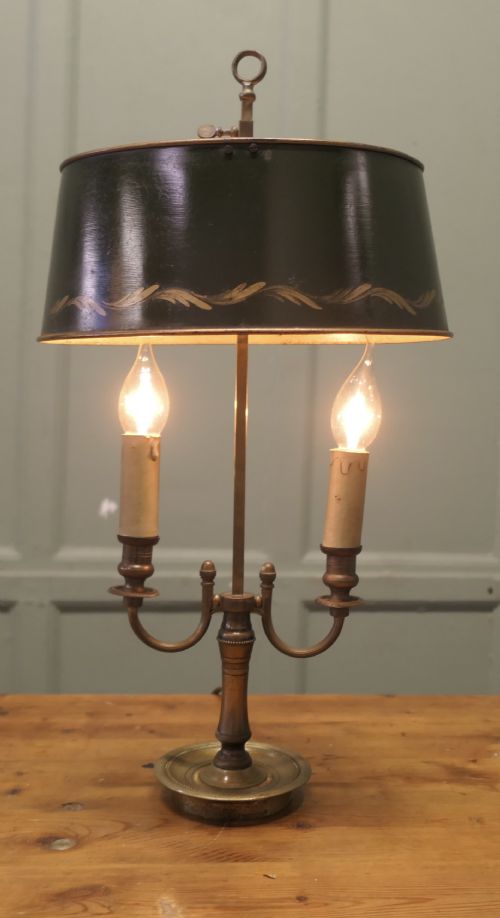
Materials across this selection include heavy ormolu, cut crystal, carved marble, and painted toleware paired with bronze.
Pierre Philippe Thomire
The French Style Empire Lighting Glossary
- Ormolu
- A gilded bronze technique involving the application of a mercury and gold amalgam to a bronze base, fired to leave a rich golden coating. This finish defines the most formal decorative lighting of the period.
- Tole Peinte
- Painted sheet metal, frequently utilised for decorative shades and lanterns in contrasting greens or dark tones. It offers a muted contrast to polished brass and gilt bronze mounts.
- Tent and Waterfall
- A chandelier arrangement featuring strings of small crystal beads gathered into a tent shape above a cascading shower of drops. This design maximises light reflection from internal candle branches.
- Pendeloque
- A hanging crystal drop, often pear or almond-shaped, suspended from chandeliers and wall lights to catch and scatter illumination. The cutting style helps date the glass components.
- Applique
- A wall-mounted light fitting, synonymous with a sconce or wall light, designed to project illumination outward using multiple candle arms. These frequently appeared in matching pairs or larger sets.
French Style Empire Lighting: Frequently Asked Questions
How do I hang a heavy chandelier safely?
Heavy fixtures require direct anchoring to a ceiling joist using an iron hook and mounting plate rated for the total weight of bronze and crystal. Professional installation is essential to bear the load securely.
Electrical wiring must also be inspected and updated to meet current safety standards before hanging older fittings in your home.
Can I convert these lamps for modern bulbs?
Most antique table lamps and wall lights accept standard modern lamp holders with minor rewiring by a qualified electrician. This preserves the original metal body whilst allowing safe daily use.
Keep low-wattage LED bulbs to mimic the soft warmth of historical candlelight without generating excessive heat near fragile crystal or painted components.
How should I clean crystal drops?
Remove delicate crystal pendeloques individually and wash them in lukewarm water with a mild detergent before drying with a lint-free cloth. Leaving them on the frame risks breakage during wiping.
Dust the bronze and ormolu framework gently with a soft dry brush, avoiding harsh chemical polishes that strip historical gilding.
How do I spot an empire revival piece?
Revival pieces from the late 19th or early 20th century often incorporate machine-threaded screws, newer electrical cord paths and standardised fixings alongside traditional cast bronze. The styling mimics earlier Napoleonic or neoclassical models precisely.
Examine the patina on the metal and the wear around mounting points to understand the true age of the construction.