


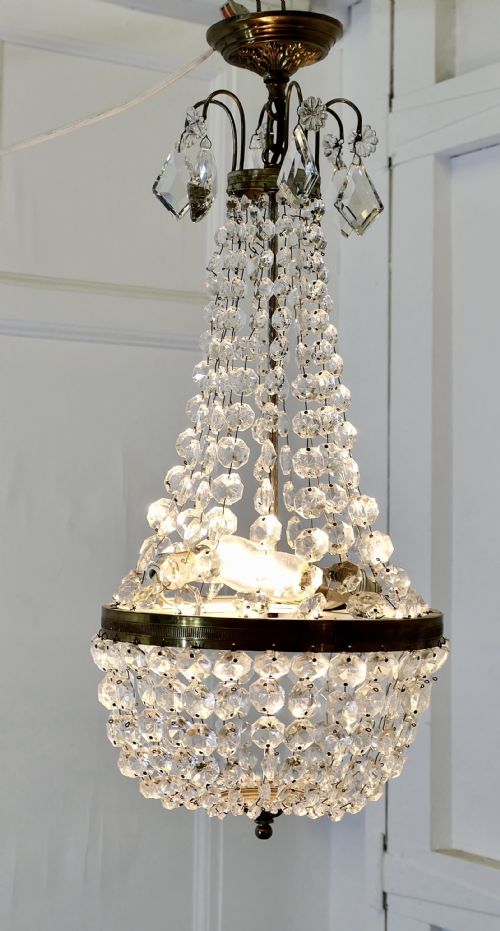

Tent and Bag Light
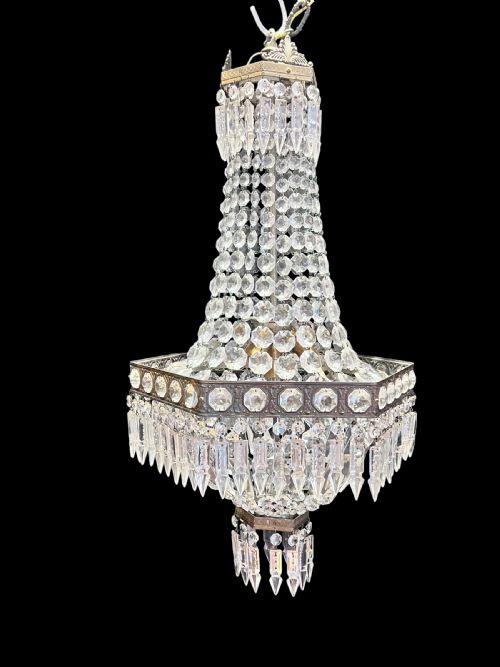
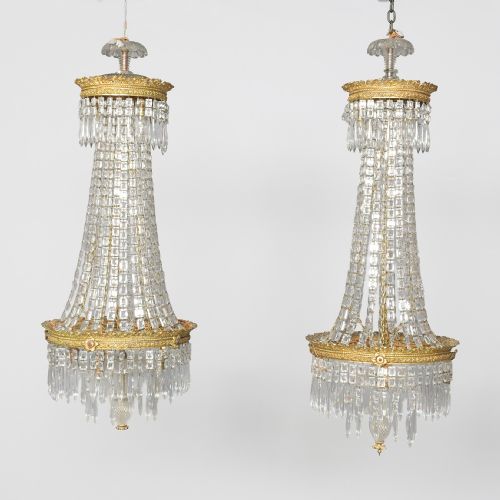
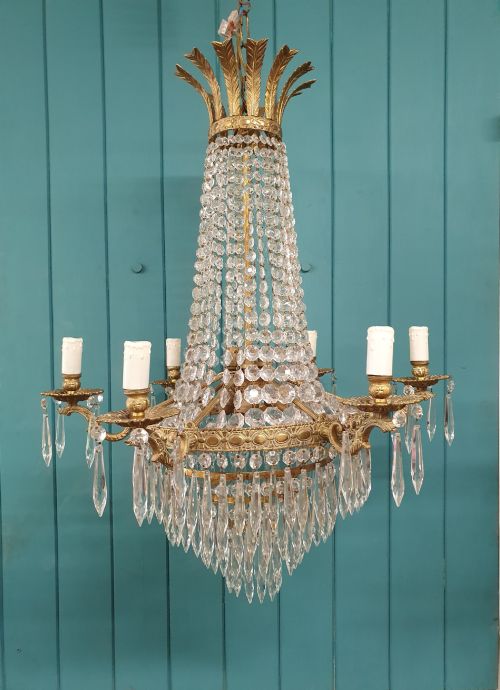
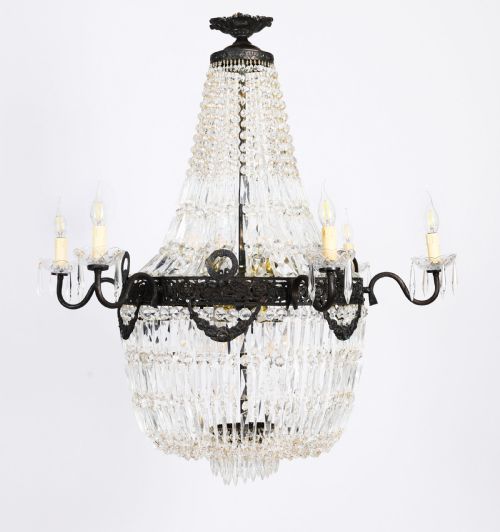
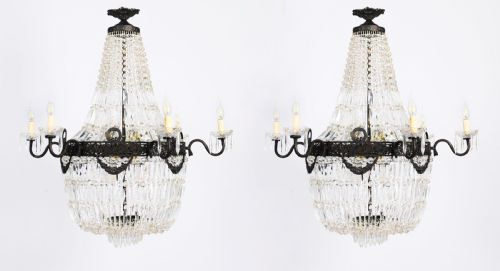
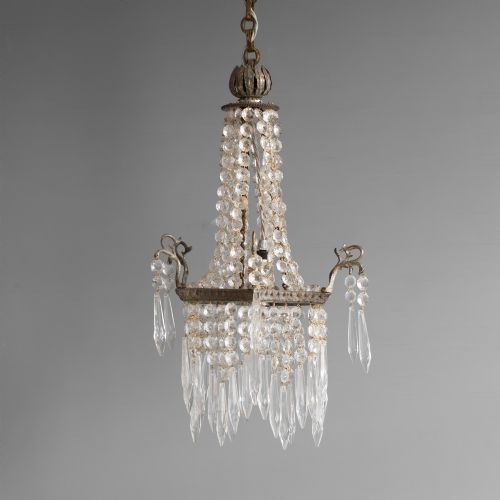
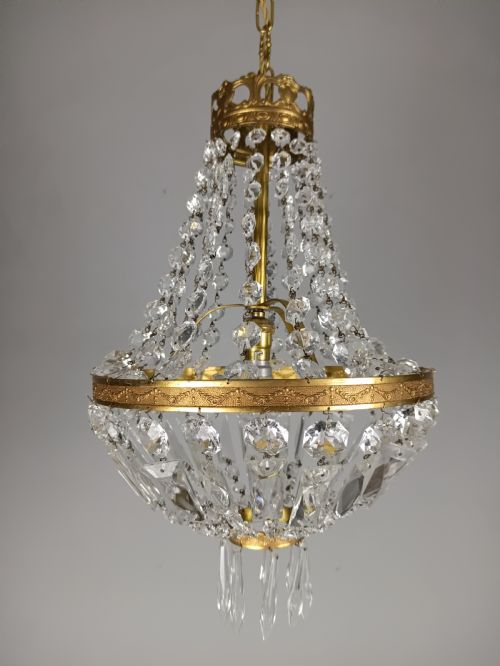
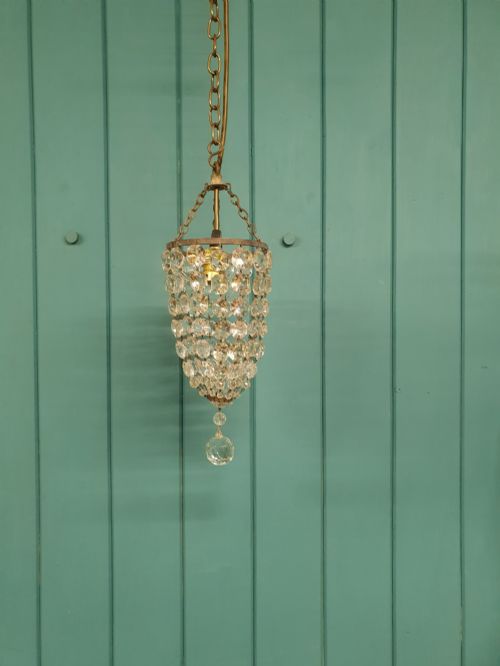
These tent and bag light fixtures combine classical framing with cascading glass crystals to transform a room with diffused illumination.
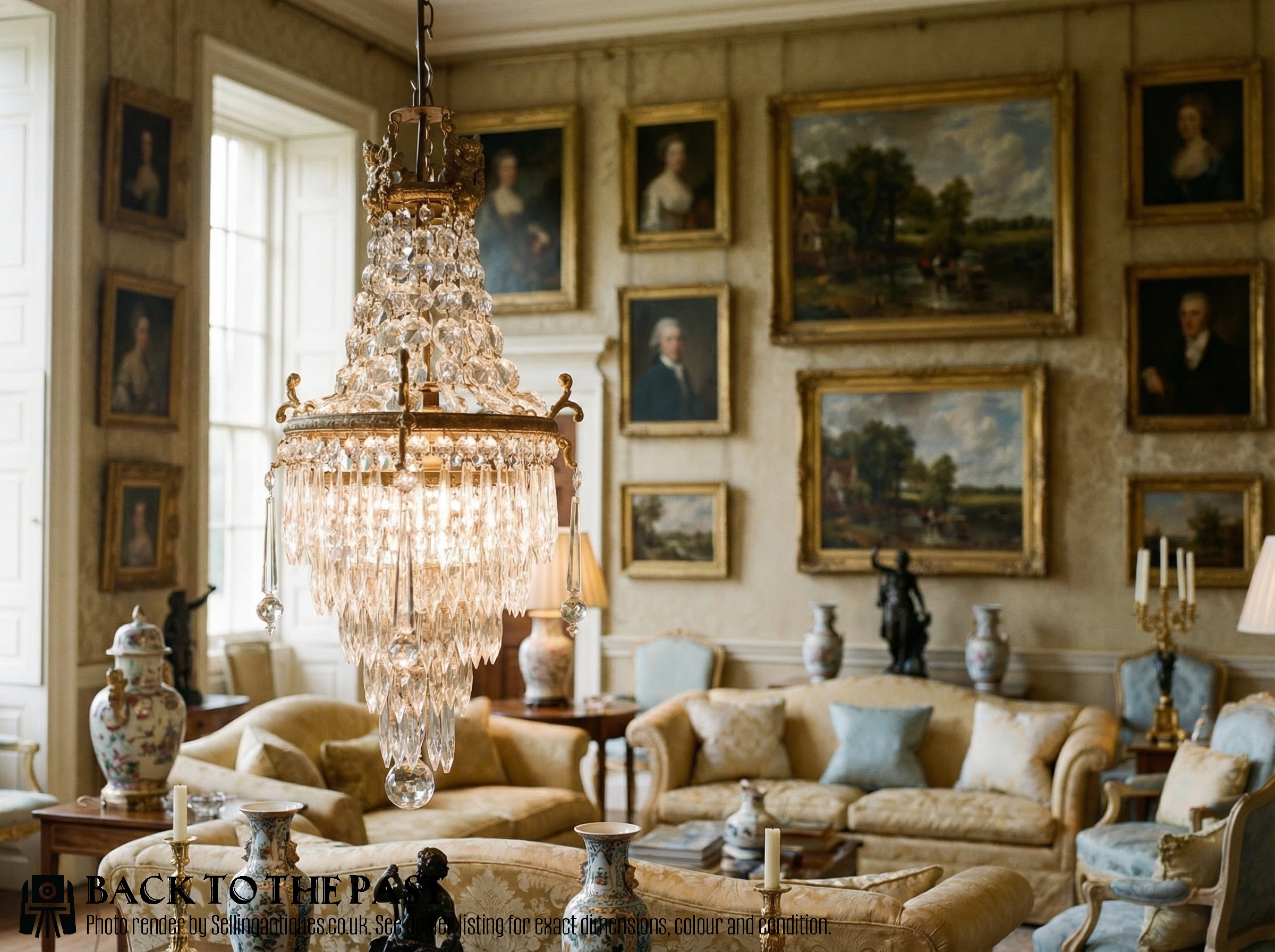
Tent and Bag Light
A tent and bag light brings together an upper canopy of strings or strands forming a tent shape above a lower gathered bag of drops. These forms appear across the eighteenth, nineteenth and early twentieth centuries, drawing heavily on French Empire, Regency and Louis Revival vocabularies.
Most examples found here span from the Edwardian era through the 1930s, alongside select nineteenth-century and eighteenth-century pieces. Alongside chandeliers, the selection includes wall lights and pendant lights configured with identical crystal swags and lower bag sections.
Makers and styles lean towards French decorative traditions, featuring gilt bronze, brass frames and ornate leaf decoration or cherub motifs. Scale varies widely, from compact five-inch bag chandeliers up to large fourteen-light ballroom fixtures.
How They Were Made
Frames rely upon cast or spun brass, patinated bronze and gilded bronze to provide a rigid structural skeleton. These metal mounts hold the upper crown and secure the individual hanging chains.
Glass elements combine cut crystal, moulded glass and clear droplets tied together to form the signature tent swags and lower bag. Precision cutting on the crystal components ensures high light refraction across the room.
Some Edwardian chandeliers finish their crystal gatherings with sharp spikes, adding an unexpected defensive edge to the sparkle.
What Varies in Quality
Metalwork execution defines the base character of the piece, distinguishing finely chased bronze mounts from simpler stamped brass frames. Heavier cast components allow for crisp leaf decoration and substantial structural integrity.
Crystal composition and cutting depth dictate how brilliantly the fixture captures and disperses light. Hand-cut crystal drops with sharp facets create a different visual depth compared to simpler moulded glass.
The Tent and Bag Light Glossary
- Tent
- The upper section of a chandelier formed by strings of beads draped from a central ring up to a crown. This canopy creates the characteristic triangular silhouette.
- Bag
- The lower gathered grouping of crystal drops resembling a small pouch or basket suspended beneath the main frame. It concentrates the visual weight at the base.
- Louis Revival
- A decorative style popular in the nineteenth and early twentieth centuries that reinterprets eighteenth-century French royal aesthetics. It employs classical symmetry and ornate casting.
- French Empire
- A neoclassical design language originating in the early nineteenth century favouring military motifs, classical laurel wreaths and heavy bronze mounts. These pieces project formal architectural grandeur.
Tent and Bag Light: Frequently Asked Questions
How do I clean a crystal tent and bag chandelier?
Maintenance involves wiping individual glass drops with a mild cleaning solution while the fixture hangs firmly from the ceiling. Careful handling prevents strain on the delicate wire connections holding the swags.
Taking time to dry each crystal piece ensures maximum sparkle and prevents water spots from forming on the cut surfaces.
Where should I hang a bag chandelier?
These compact fixtures suit hallways, dressing rooms and smaller reception spaces where ceiling height restricts larger hanging arrangements. Their lower profile provides concentrated downward illumination.
Placement over a central table or in an entryway maximises the visual impact of the cascading crystal drops.
What is the difference between French Empire and Louis Revival?
French Empire styling relates directly to the Napoleonic period, emphasising strict neoclassical symmetry and restrained military motifs. Louis Revival pieces draw from earlier royal court aesthetics with heavier ornamentation and playful Rococo elements.
Both styles utilise similar bronze and crystal construction methods but express different historical design preferences.
How do I date an antique chandelier?
Dating relies on examining the metal casting techniques, wiring methods and the specific cut of the glass components. Older pieces often show hand-cut facets and specific patination on the brass or bronze frames.
Comparing the decorative motifs, such as cherubs or leaf swags, against known period styles helps narrow down the decade of manufacture.