
Waterfall Crystal Pendant
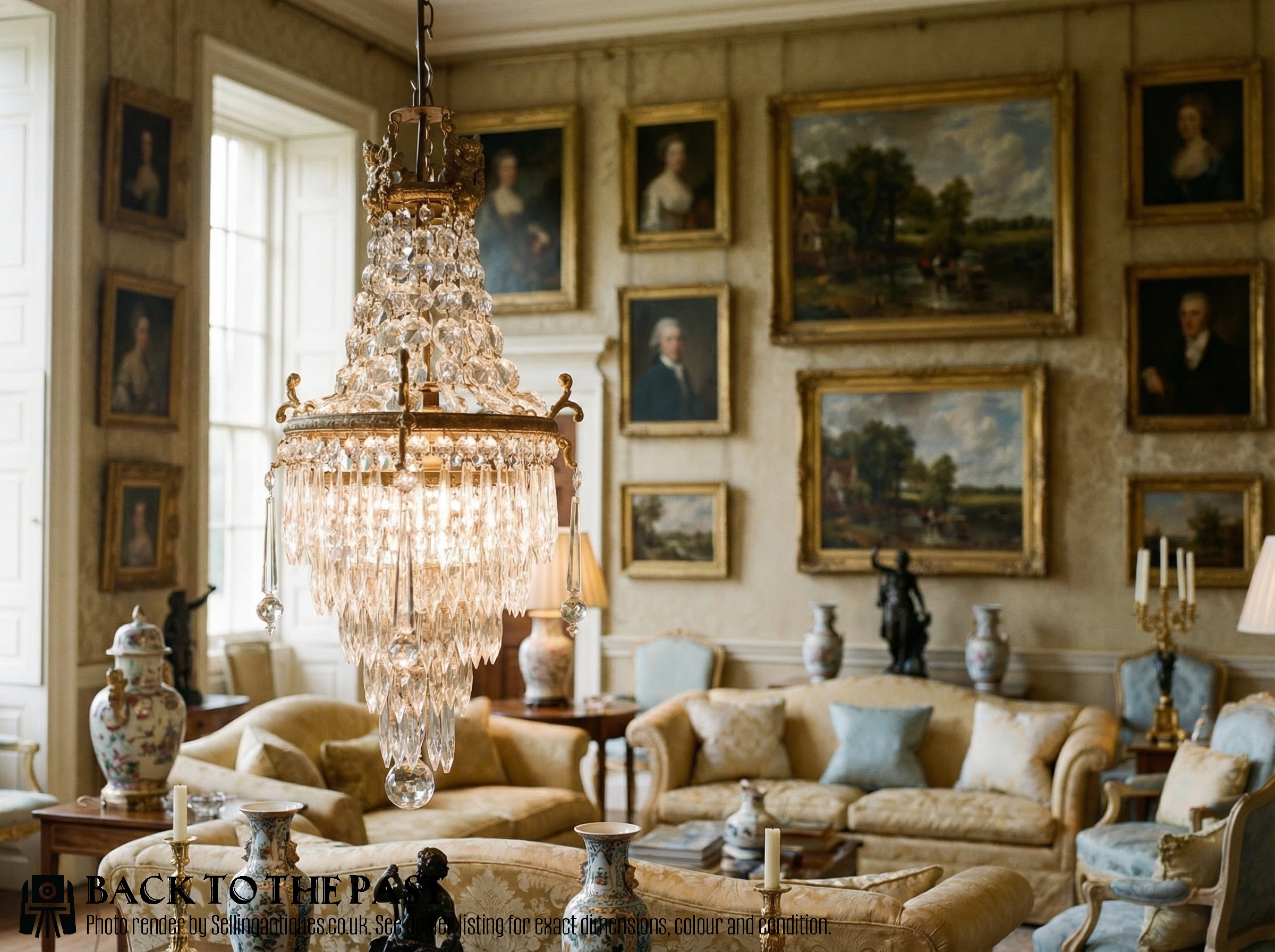
A waterfall crystal pendant brings cascading tiers of brilliant glass and metalwork into a room, channelling historical glamour from the nineteenth and early twentieth centuries.
Waterfall Crystal Pendant
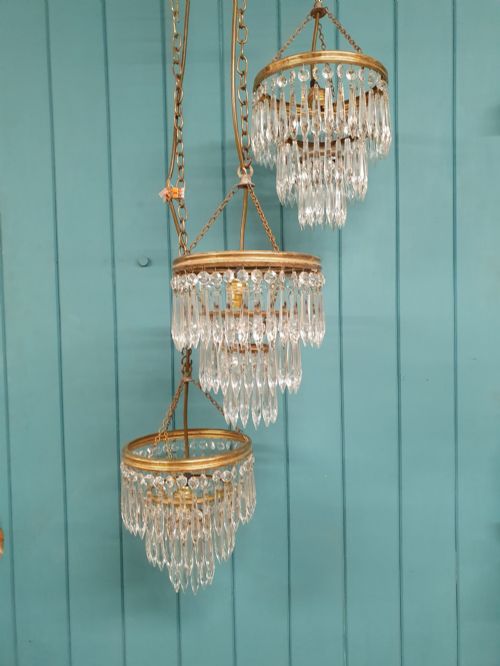
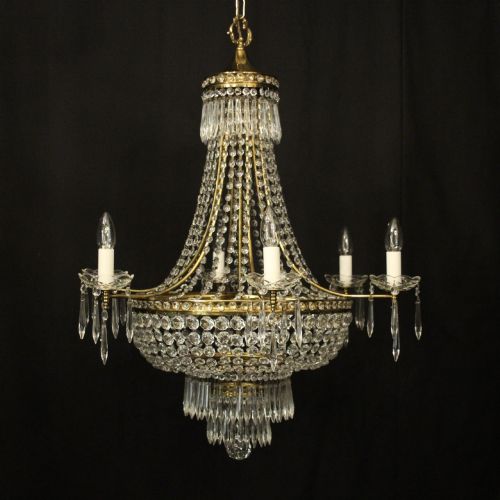
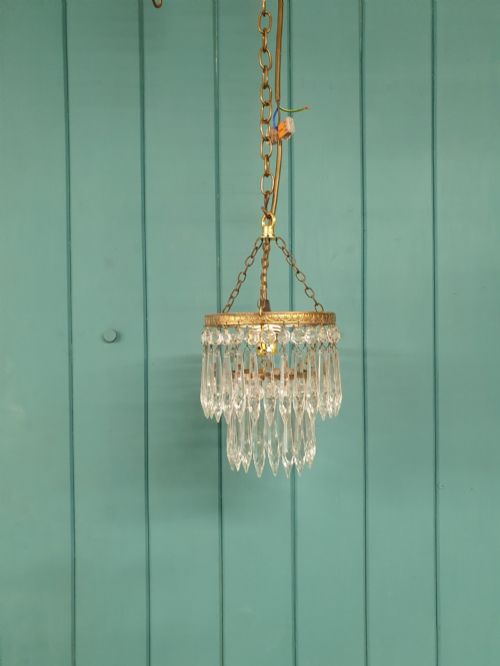
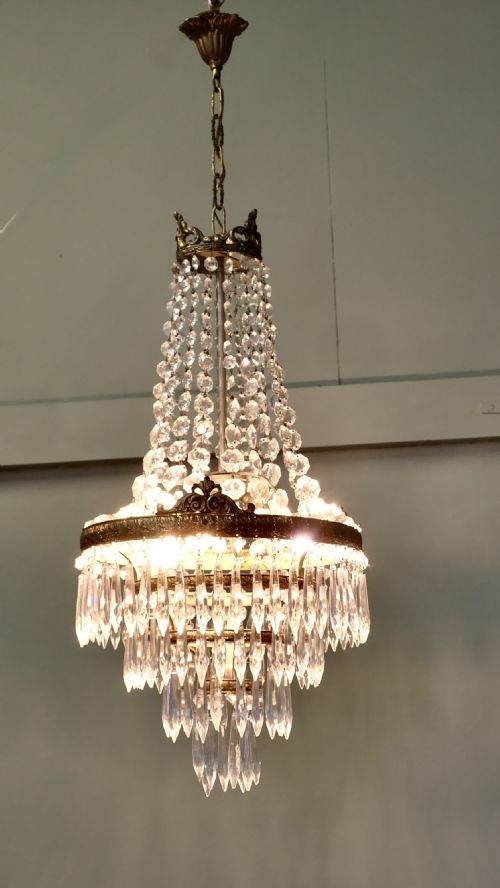
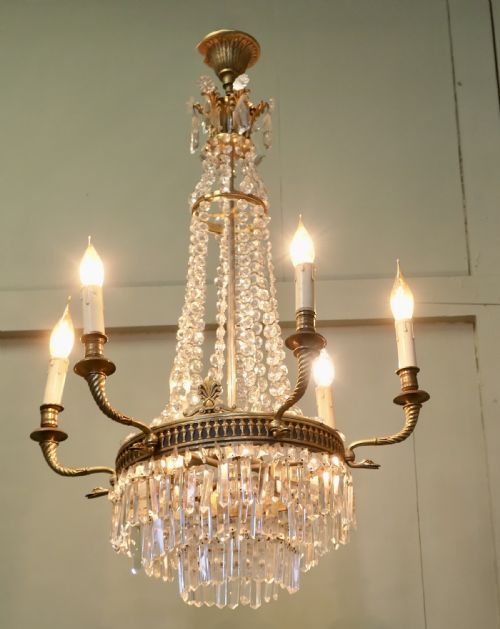
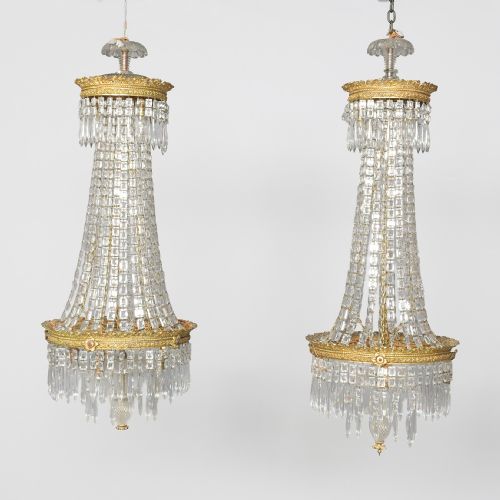
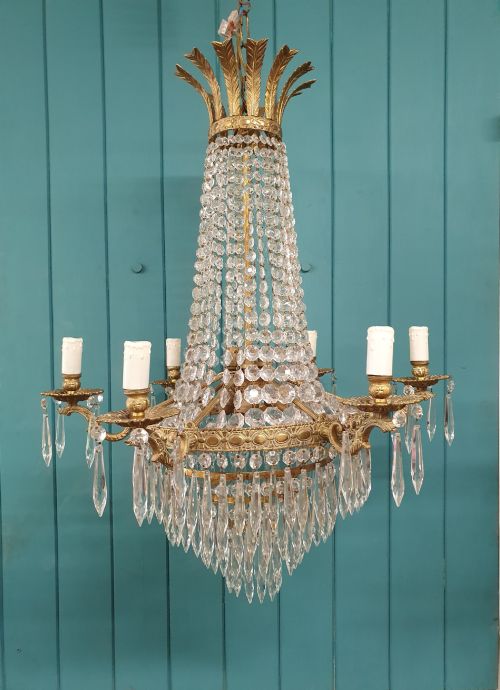
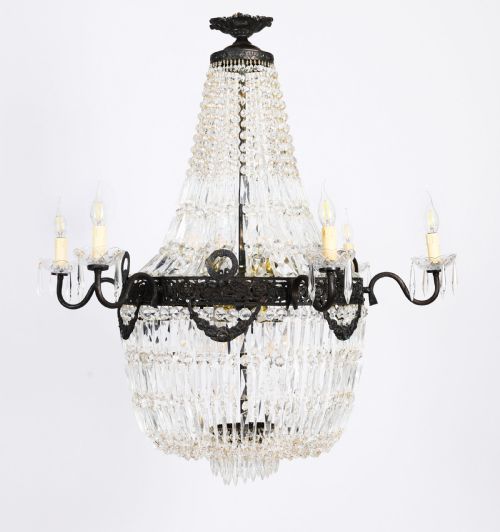
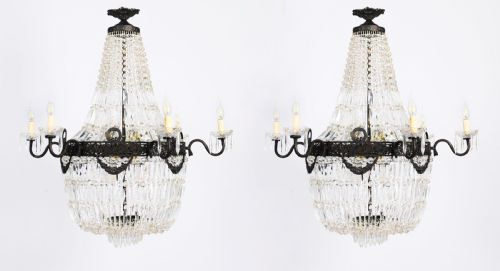
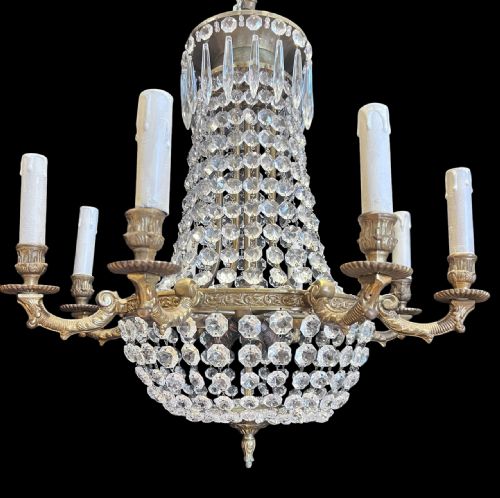
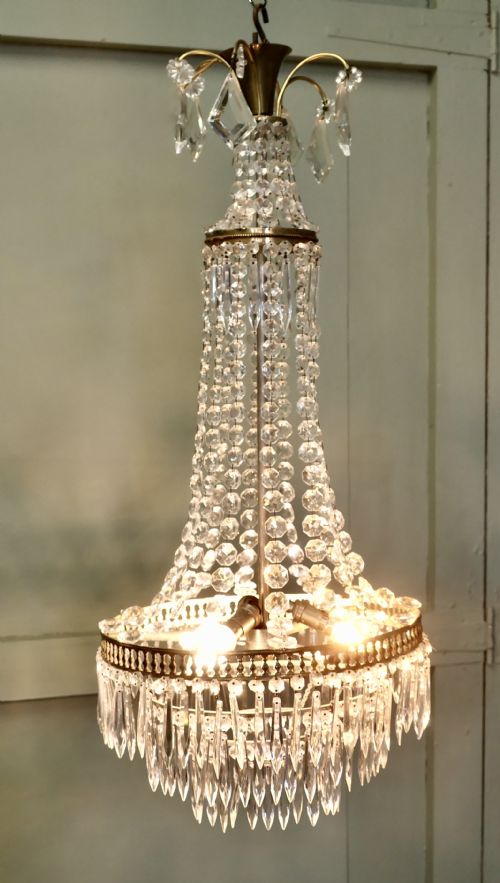
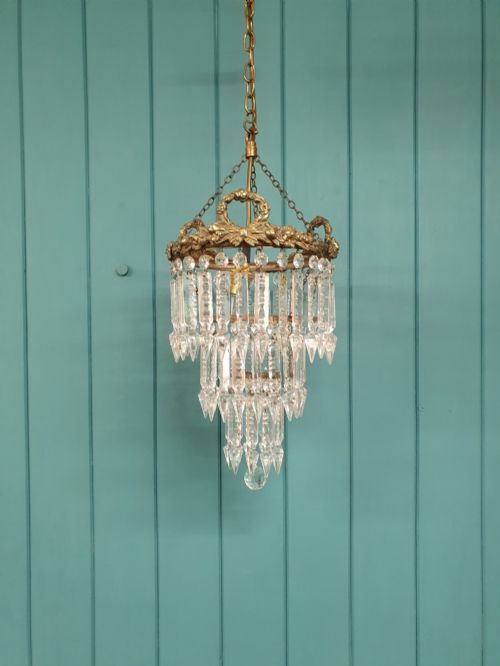
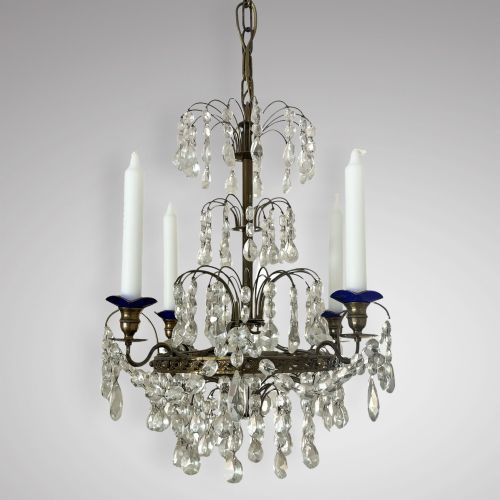
A waterfall crystal pendant is a hanging light fixture defined by cascading tiers of glass prisms, drops, and beads that resemble flowing water. These pieces draw from French Empire, Louis Revival, and Edwardian design traditions, spanning the late nineteenth century through the 1930s.
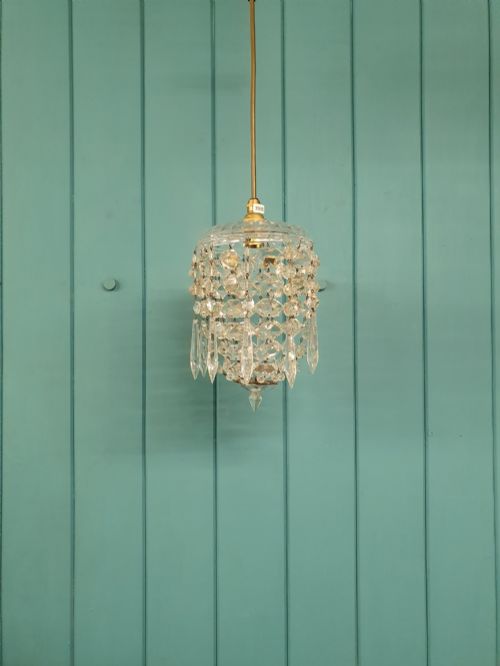
The most common formats on this page include tent and waterfall configurations, bag chandeliers, and spike or drop designs. Brass, gilt brass, and bronze frames support dense arrangements of cut glass and crystal that diffuse light across multiple tiers.
How they were made
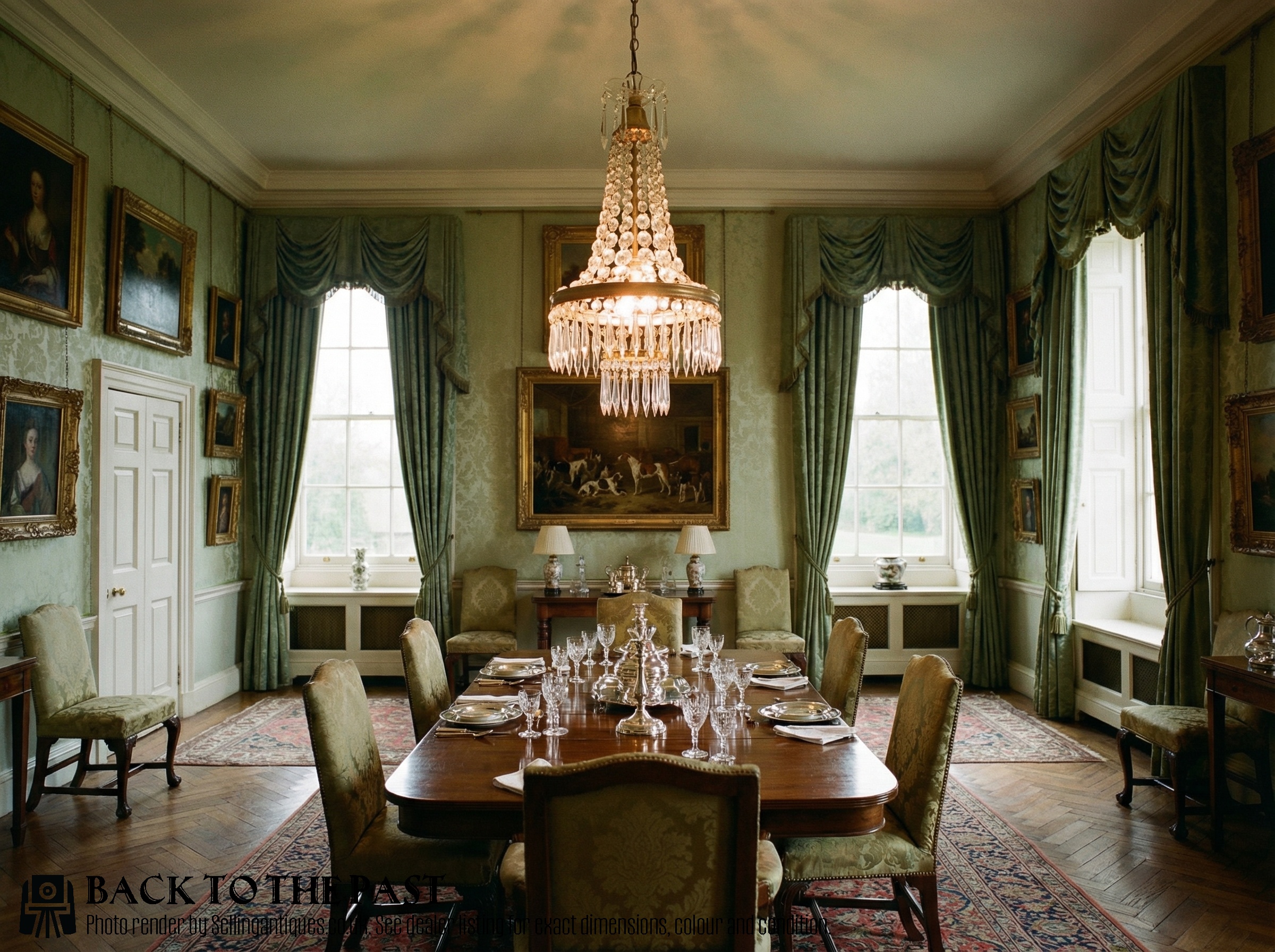
Makers constructed the structural frames of these fixtures from cast brass, gilt brass, and bronze, forming secure rings and crown mounts to hold the glass elements. These metal skeletons provide the architectural backbone for the cascading tiers.
Individual glass and crystal components, including cut prisms, beads, and teardrop drops, were hand-wired to the metal frames using brass pins or wire loops. The glass itself ranges from moulded pieces to heavily cut crystal designed to refract maximum light.
Waterfall Crystal Pendant Retail Price Guide 2026
Typical asking prices for waterfall crystal pendant among the pieces listed under this phrase on Sellingantiques today, from the lower quarter to the upper quarter. They describe what is for sale here now, not the wider market.
Materials recorded across the inventory include bronze, gilt brass, standard brass, cut glass, and heavy crystal.
What varies in quality
Quality rests heavily on the density, weight, and hand-cutting of the glass components rather than simply the size of the fixture. Finer examples utilise heavy cut crystal that catches and splits light cleanly, paired with substantial cast brass or bronze metalwork rather than thin pressed sheet metal.
The complexity of the construction also distinguishes tiers of craftsmanship, seen in multi-layered tent and bag arrangements with intricate leaf decoration or substantial gilt mounts. Coarser pieces rely on simpler moulded glass drops and lighter wire frames.
The Waterfall Crystal Pendant Glossary
- Tent and waterfall
- A lighting configuration featuring an upper conical section of strings of glass beads dropping down to a wider, cascading tier below. This layout originates in grand French Empire and Regency interior aesthetics.
- Bag chandelier
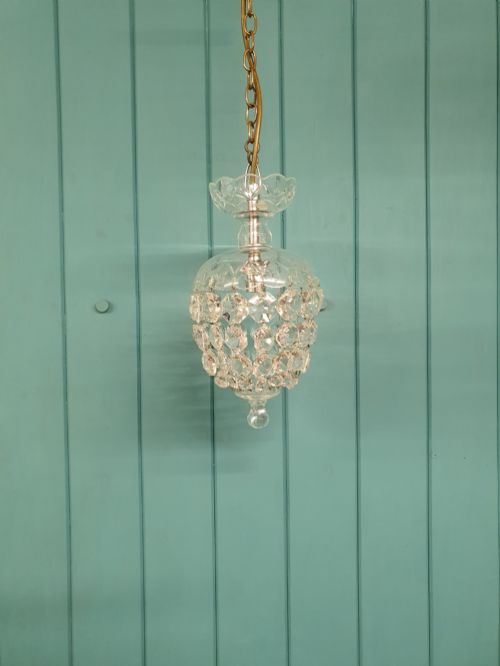
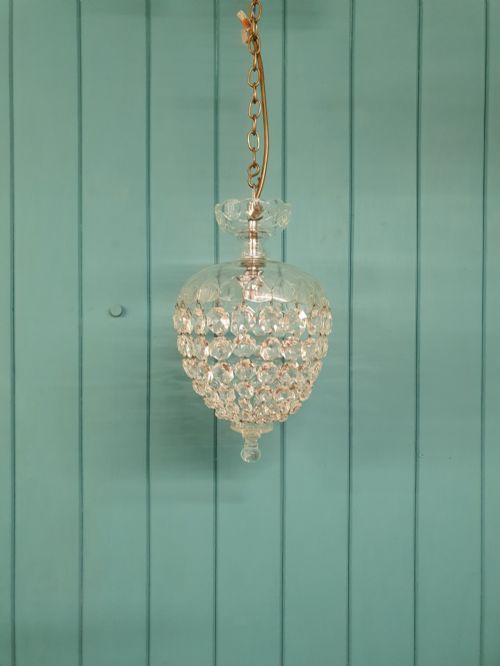
- A fixture shaped like a tapered bag or basket where glass drops cluster closely together in a rounded profile. These compact designs were popular during the Edwardian period and into the 1930s.
- Spike chandelier
- A hanging light characterised by vertical or radiating arrangements of sharp, pointed glass drops and prisms. They often appear in smaller formats suited to lower ceilings.
- Gilt brass
- Brass that has been treated with a micro-thin layer of gold or a gold-coloured finish to enhance its decorative sheen. This material forms the primary support structure for many French-influenced pieces.
- Lustre
- A hanging glass pendant or drop attached to a chandelier frame to catch and reflect illumination. The term also describes the smaller light fixtures dominated by these suspended glass elements.
Waterfall Crystal Pendant: Frequently Asked Questions
How do I hang a waterfall crystal pendant?
These fixtures suspend from the ceiling using a matching chain and ceiling rose attached to the main brass or bronze crown. Proper installation requires securing the weight safely to a ceiling joist.
Because many of these pieces date from the Edwardian era up to the 1930s, professional rewiring by an electrician ensures the internal lamp holders meet modern safety standards.
Where do I hang a waterfall crystal pendant?
These pendant lights suit spaces that benefit from focused vertical sparkle, such as above a dining table, in an entryway, or suspended in a high-ceilinged hallway. Their cascading tiers create a strong focal point in traditional or eclectic interiors.
Consider the drop length and physical diameter of the fixture relative to your room dimensions so the piece hangs clear of traffic while maintaining visual balance.
How do I clean a crystal pendant?
Maintenance involves gentle cleaning of the individual glass drops and crystal prisms using a mild soapy solution and a soft cloth while the fixture hangs in place. Support the drops from underneath to avoid straining the delicate wire connections.
Regular dusting prevents grime build-up from dulling the cut facets, preserving the bright light refraction characteristic of Edwardian and French Empire designs.
How do I date these crystal pendants?
Dating relies on stylistic markers, framing materials, and the cut of the glass, moving from nineteenth-century bronze and heavy brass structures to lighter Edwardian bag formats and 1930s spike designs. French Empire influences recur across multiple decades through revival styles.
Examining the wiring methods, joining techniques, and metal patination provides further clues to whether a piece originates from the late Victorian era or the interwar period.