

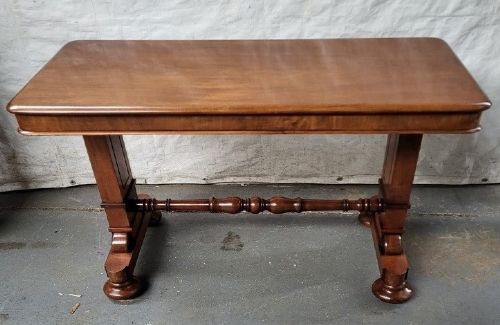
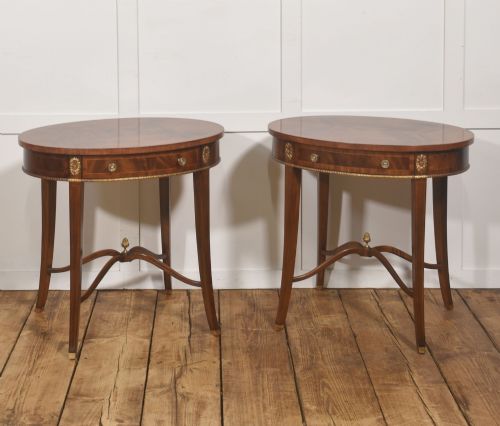
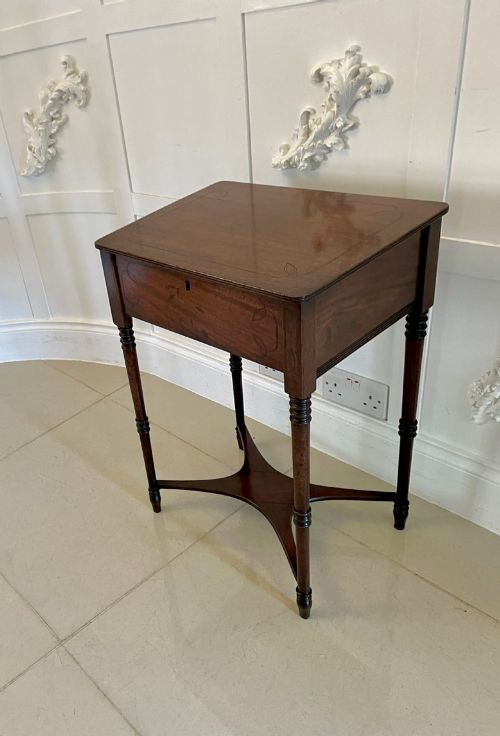
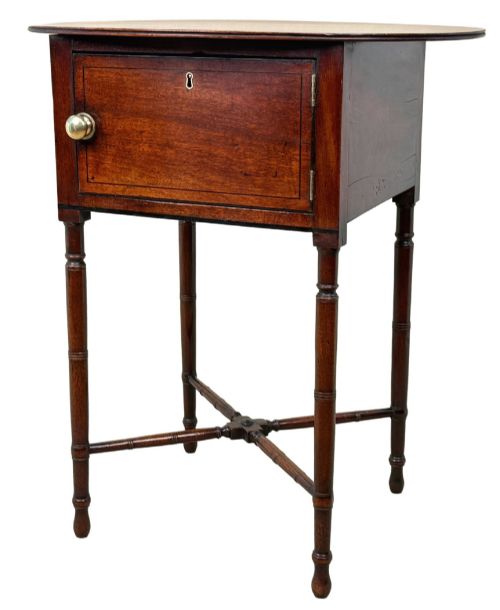
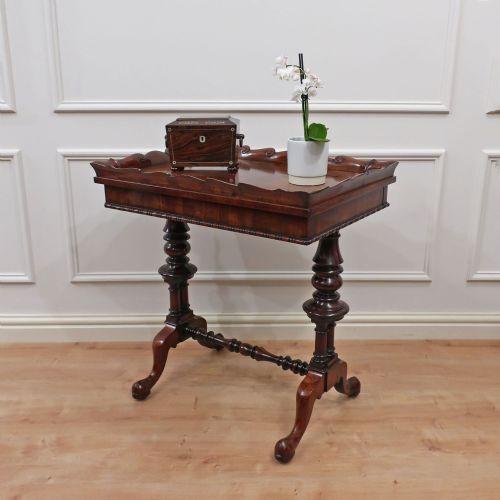

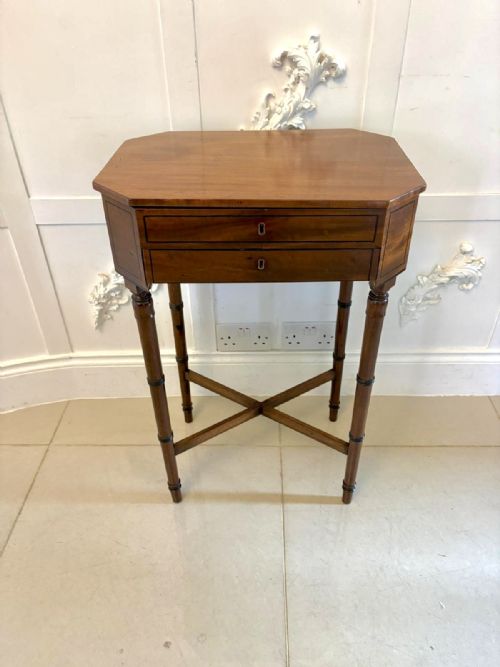


Regency Stretcher Table
These pieces are a regency stretcher table, sought after for their refined architectural framing and versatile proportions.
Regency Stretcher Table
When you search for a regency stretcher table, you are looking at domestic furniture designed primarily during the nineteenth century, the Georgian era, and the Regency period. These pieces frequently appear in forms such as side tables, occasional tables, sofa tables, and lamp tables, built to serve functional roles in sitting rooms and parlours.
The version you are most likely to meet on this page is constructed from mahogany or rosewood, often featuring distinctive under-tier bracing known as a stretcher. Styles span the Regency period itself alongside related Georgian, William IV, George III, and Sheraton designs, occasionally joined by later Regency Revival interpretations.
Materials and construction
Cabinetmakers built a regency stretcher table using dense hardwoods such as solid mahogany, flame mahogany, and rosewood, frequently enhanced with contrasting boxwood inlay or delicate bone details. Timber selection drove the visual character, pairing dark polished surfaces with subtle grain variation.
Structural integrity relied on the central stretcher connecting the legs to prevent lateral movement, while secondary treatments sometimes incorporated brass mounts, fabric inserts, or drop leaves to create compact work and sewing tables.
Regency Stretcher Table Retail Price Guide 2026
Typical asking prices for regency stretcher table among the pieces listed under this phrase on Sellingantiques today, from the lower quarter to the upper quarter. They describe what is for sale here now, not the wider market.
The listings on this site feature mahogany and rosewood alongside boxwood inlay, spanning the Georgian, Regency, and William IV periods.
Judging quality
Quality in a regency stretcher table rests upon the crispness of the joinery and the selection of figured timbers across primary surfaces. Pieces featuring rich flame mahogany or carefully figured rosewood demonstrate superior workshop selection compared to plain alternatives.
The integration of the stretcher assembly reveals the maker's hand, where tight joints and precise geometric inlay separate standard utility items from exceptionally finished pieces.
Gillows
The Regency Stretcher Table Glossary
- Sofa table
- A rectangular occasional table designed to stand in front of a sofa, typically featuring drop leaves at either end. They often incorporate double pedestal supports joined by a stretcher.
- Flame mahogany
- A decorative wood veneer harvested from the fork of the mahogany tree, showing a distinctive flickering flame pattern. Cabinetmakers used it on prominent table tops to catch the light.
- Occasional table
- A small, movable table intended for specific, intermittent tasks such as holding a lamp or needlework. These versatile pieces form a large portion of early nineteenth-century furniture.
Regency Stretcher Table: Frequently Asked Questions
What is a stretcher table?
A stretcher table is a piece of furniture that uses horizontal wooden braces connecting the legs to add stability and strength.
In Regency examples, this structural element also serves a decorative purpose, shaping the silhouette of side and occasional tables.
How do I use a lamp table?
A lamp table provides a compact surface for lighting and small decorative objects in living spaces.
Their modest footprints allow them to sit easily beside armchairs or sofas without crowding the room.
How are Regency and Georgian styles different?
Georgian furniture generally displays heavier proportions and classical carved details inspired by earlier architectural forms.
Regency design shifts toward lighter, classical revival lines influenced by ancient Greek and Roman archaeology, often incorporating brass inlay and simpler geometric stretcher frames.
Can I use a work table today?
Work tables function exceptionally well as compact side tables or bedside surfaces in modern interiors.
Their original compartments and drawers provide convenient storage for small everyday items.