


Regency Silver Plated Tureen
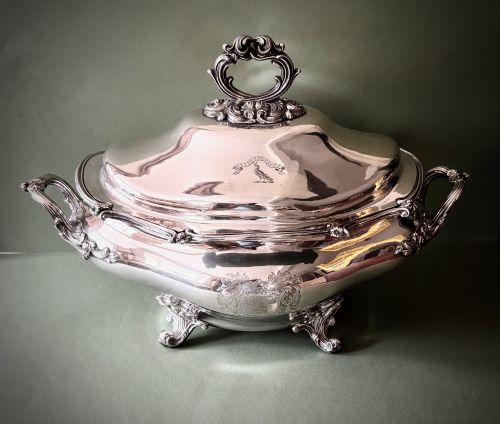
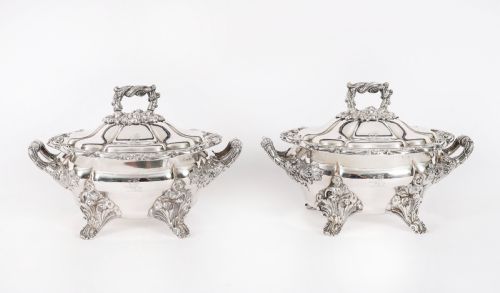
These regency silver plated tureen pieces bring Georgian dining tables to life with gleaming copper and silver plate.
Regency Silver Plated Tureen
When you search for a regency silver plated tureen, you uncover grand serveware from the nineteenth century designed for elegant dining. The items found here span the Georgian era around eighteen hundred and the wider nineteenth century.
You are most likely to meet oval lidded sauce tureens, serving dishes, entree dishes, and warming dishes on this page. These forms reflect the elaborate dining habits of the period when matching sets graced the table.
The origins and styles lean heavily into the Georgian and Regency aesthetics, often featuring crests and paired items. These objects served practical roles in keeping food warm and presenting sauces before modern heating methods existed.
Materials and construction
Old Sheffield plate forms the foundation of many pieces, fusing a thin layer of silver to a thick copper core. This technique allows the warm copper tone to occasionally show through where centuries of polishing have worn the silver layer thin.
Makers utilised metals like silver plate and copper alongside porcelain, glass, and ebony for handles or accents. Skilled artisans shaped these materials into robust warming dishes and lidded tureens designed for heavy domestic use.
Lazy Susans made an early nineteenth century appearance here, proving that spinning your dinner plate is historically sound.
Judging quality and craftsmanship
The distinction between ordinary and exceptional pieces rests in the crispness of applied crests and the integrity of the fused metal. Master silversmiths maintained sharper relief on decorative borders and heavier gauges of copper.
Survival of the original lids and matching pairs elevates a piece above single items that lost their companions over the generations. The smoothness of the silver surface and the restrained use of ornamentation define the better workshop outputs.
Cresswick·Dan Holy
The Regency Silver Plated Tureen Glossary
- Old Sheffield plate
- A method of fusing silver to a copper core by heat and pressure. This technique predates modern electroplating and leaves a distinctive edge where the base metal shows.
- Tureen
- A deep covered dish used for serving soups, sauces, or stews at the table. These vessels were central to large dining gatherings.
- Entree dish
- A shallow serving vessel often paired or fitted into warming stands. They held individual course portions during elaborate meals.
- Warming dish
- A specialised vessel designed to hold hot water beneath the food chamber. This kept gravies and meats warm throughout long dining courses.
- Crest
- An engraved or applied heraldic device marking the family ownership of the silver. These additions denote the high status of the original patrons.
Regency Silver Plated Tureen: Frequently Asked Questions
What is an old sheffield plate tureen?
An Old Sheffield plate tureen is a serving vessel made by fusing silver and copper together rather than using electrical plating methods. This early technique creates a rich depth of metal that ages gracefully.
These pieces were essential for serving sauces and warm dishes at grand nineteenth century dining tables. They combine durability with the refined appearance of solid silver.
How were warming dishes used?
Warming dishes held hot water in a lower compartment to keep food and sauces at the correct temperature during long meals. Servants brought them to the table as dining habits shifted toward extended courses.
They represent the practical engineering of the Georgian period applied to everyday hospitality. The heavy metal construction retained heat effectively.
How do I care for silver plated serveware?
Silver plate requires gentle cleaning with non-abrasive polishes to protect the thin silver layer over the copper base. Regular dusting and careful hand washing preserve the historical finish.
Avoid harsh chemical dips that strip away the aged character accumulated over centuries. Proper storage away from damp environments prevents corrosion of the underlying metals.
Are these pieces from the regency period?
The listings include items originating from the broader nineteenth century and the Georgian era around eighteen hundred. Makers applied the Regency style characterised by classical restraint and elegant proportions.
Examining the construction methods and edge seams helps confirm the period of manufacture. These items reflect the specific design vocabulary of early nineteenth century Britain.