


Antique Silver Vegetable Dish
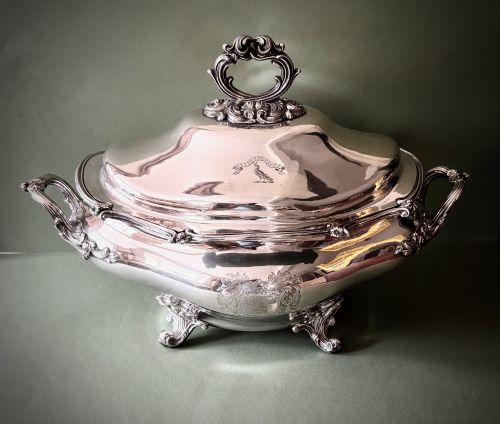
An antique silver vegetable dish brings heavy metal and gleaming plate to a dining table.
Defining an antique silver vegetable dish
When you search for an antique silver vegetable dish, you encounter serving pieces designed for grand dining tables from the Georgian period through to Edwardian times. These items include entree dishes, sauce tureens, soup tureens, and warming dishes that hold food for communal dining.
The versions you meet most frequently on this page date from nineteen hundred, the nineteenth century, the Regency era, and the Georgian period. They take the form of serving dishes, tureens, serveware, and soup tureens created in England and beyond.
Makers ranged from standard silver plating workshops to notable houses like Tiffany and Company, whose sterling silver serving vegetable dish bowl sold previously. Each object reflects the formal dining habits of its era through substantial metalwork and matching covers.
Materials and construction methods
The pieces recorded in these listings rely on a foundation of copper or nickel silver, transformed through plating techniques such as silver plate, electroplated nickel silver, EPNS, Sheffield plate, and old Sheffield plate. Makers also utilised solid sterling silver for high-end commissions.
Old Sheffield plate involves fusing a thin sheet of silver to a thicker copper core under heat, a method that creates a durable dual-metal sheet before shaping. Electroplated nickel silver relies on an electrical current to bond a silver coating onto a base metal.
Retail Price Guide 2026
Typical UK retail prices for silver vegetable dish, calculated from the Sellingantiques database of over a million retail prices indexed since 2003. This retail price guide relies exclusively on Sellingantiques data; no external sources or auction records are used, so the figures do not describe the wider market.
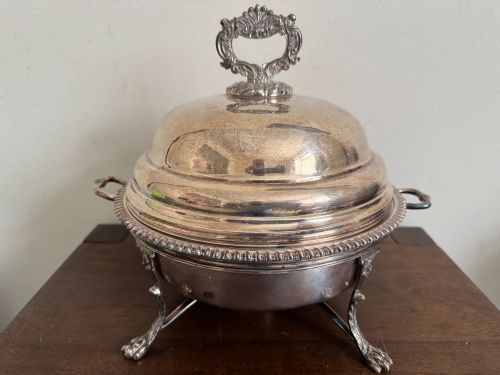
A warming dish keeps peas hot using hidden compartments for boiling water.
Distinctions in quality
Quality separates standard mass-produced plated items from exceptional masterworks through the weight of the metal and the crispness of applied decorative borders. Heavier specimens retain more of their original metal substrate over decades of polishing.
The method of plating itself dictates the longevity of the finish, with old Sheffield plate showing characteristic copper bleed at high points where the outer silver layer thinned over time. Superior pieces retain balanced proportions and secure handle joints.
Tiffany and Company
The Antique Silver Vegetable Dish Glossary
- Old Sheffield plate
- An early form of plated metal created by fusing a sheet of silver to a copper ingot before rolling them together into sheets.
- Entree dish
- A covered vessel designed to hold side dishes or secondary courses on a formal dining table.
- Tureen
- A deep, bowl-shaped serving container with a lid, used for soups, sauces, or vegetables.
- Electroplated nickel silver
- A base metal alloy of copper, nickel, and zinc coated with a layer of pure silver via electrolysis.
- Warming dish
- A specialised serving vessel featuring a compartment beneath the main bowl for hot water or coals to keep food warm.
Frequently Asked Questions
How do I date a silver vegetable dish?
Dating relies on stylistic clues like Georgian neoclassical lines, Regency motifs, or Edwardian proportions, alongside any stamped maker marks or manufacturing techniques visible on the base metal.
Older pieces in old Sheffield plate display characteristic seams and copper undertones that differ from late nineteenth-century electroplated nickel silver items.
What is the difference between plate and sterling?
Silver plate consists of a thin layer of silver applied over a base metal such as copper or nickel silver. Sterling silver is a solid precious metal alloy containing a fixed proportion of pure silver.
Plated items offer the visual weight and shine of silver at a different cost, while sterling pieces maintain solid silver composition throughout.
How were warming dishes used?
Warming dishes held hot water or heated coals in a lower chamber to keep vegetables and meats at serving temperature during long meals. They were essential for large dining rooms where food travelled from distant kitchens.
The covered upper bowl kept heat trapped inside while the base maintained the temperature from below.
Can I use antique silver daily?
These dishes function well for modern dining provided you handle them with care and clean them using non-abrasive silver polishes. Hand washing preserves the remaining silver plate or sterling surface.
Avoid dishwashers and harsh chemical cleaners to protect the historic metal layers from unnecessary wear.