
Regency Side Cupboard
A regency side cupboard brings refined storage and formal presence to a room, uniting compact utility with classical restraint.
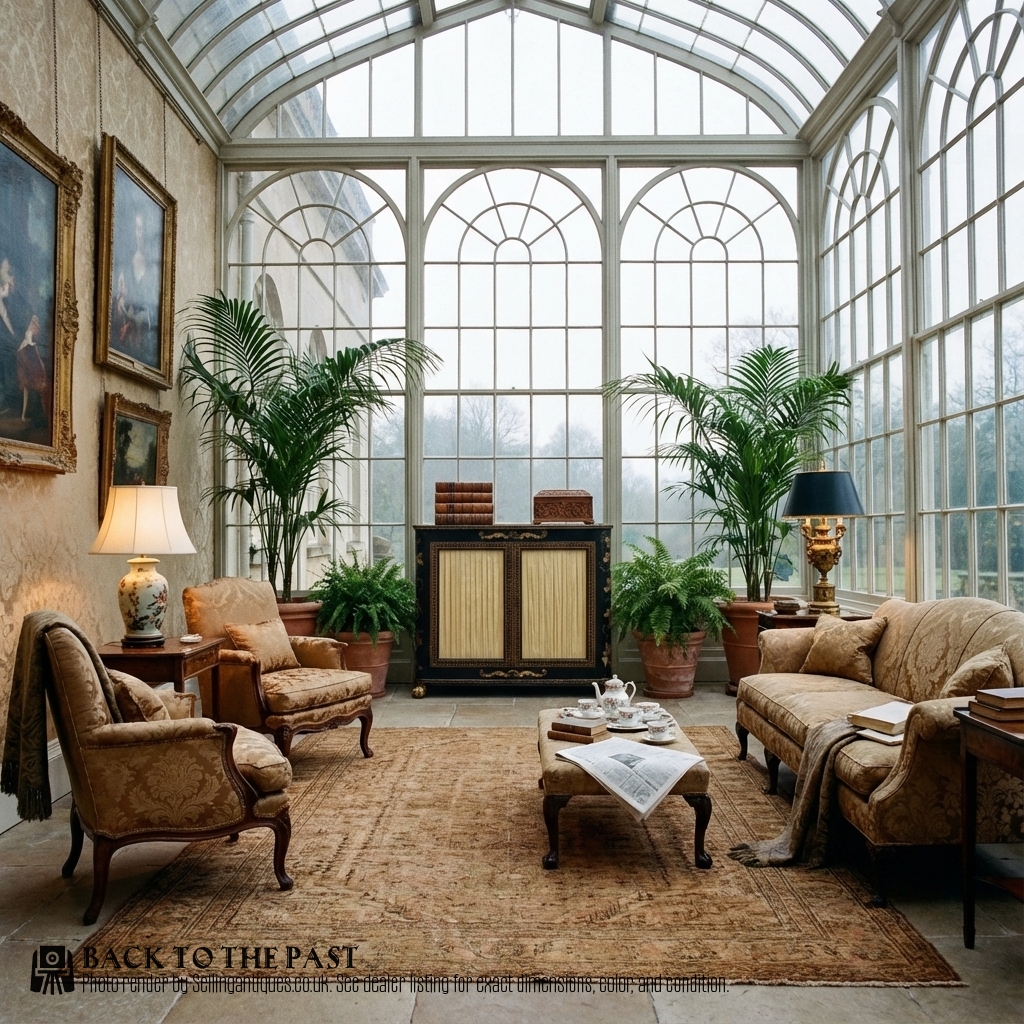
Regency Side Cupboard
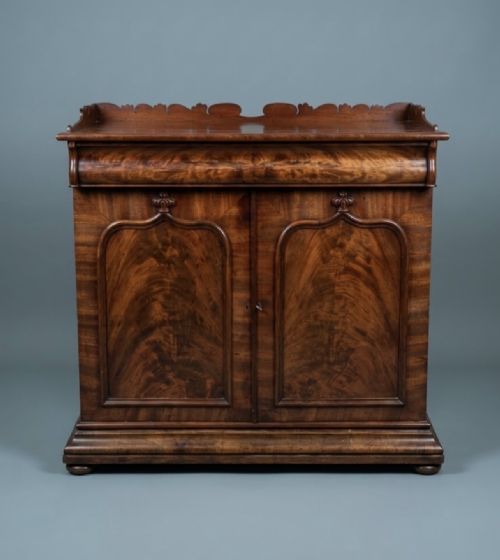
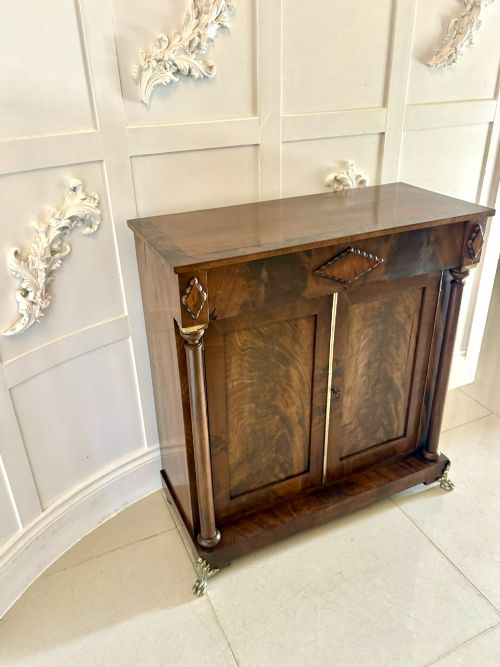
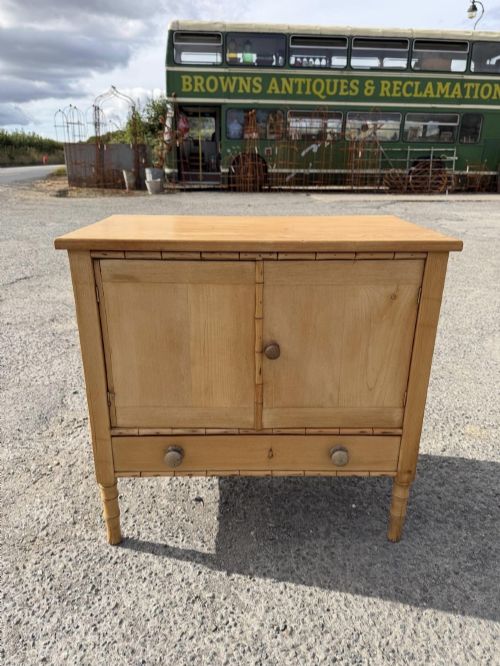
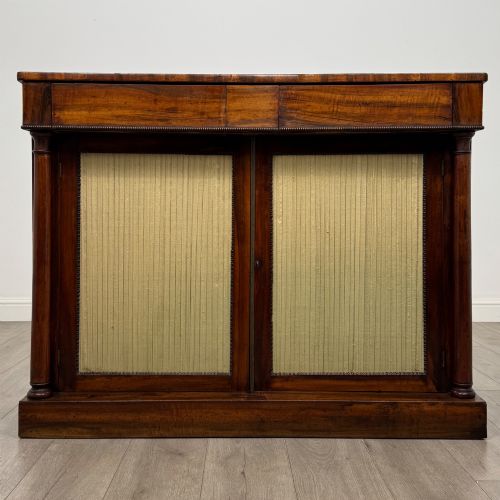
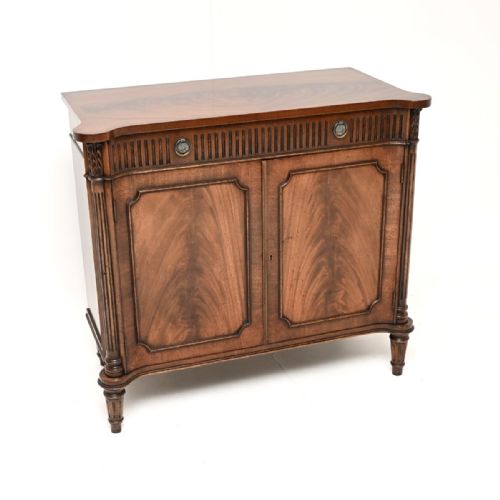
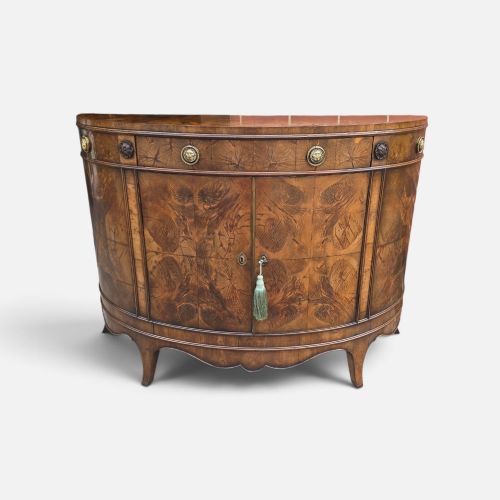
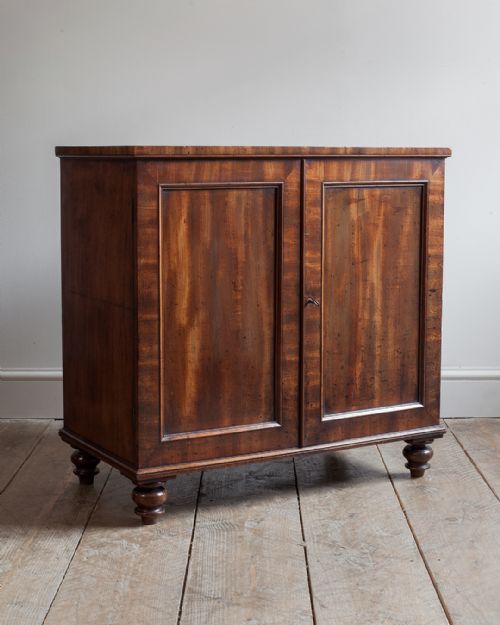
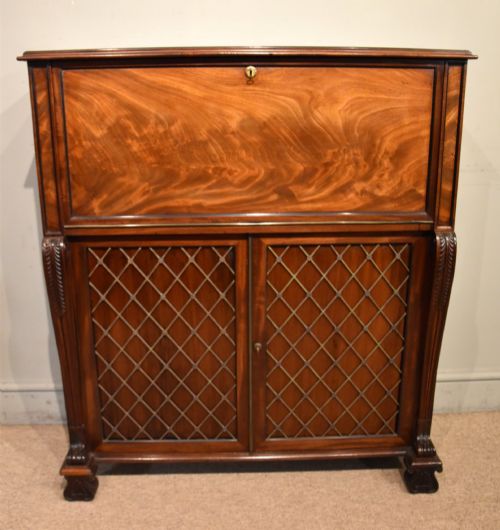
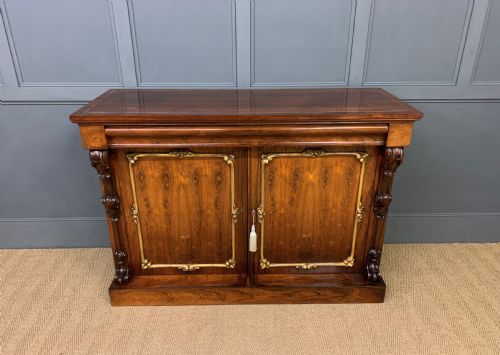
A regency side cupboard encompasses a diverse group of low storage furniture originating from the early nineteenth century, including dedicated bedside pot cupboards, larger two-door chiffoniers, and open-fronted cabinets. These pieces served practical domestic functions in drawing rooms, bedrooms, and dining spaces while displaying the architectural lines typical of the period.
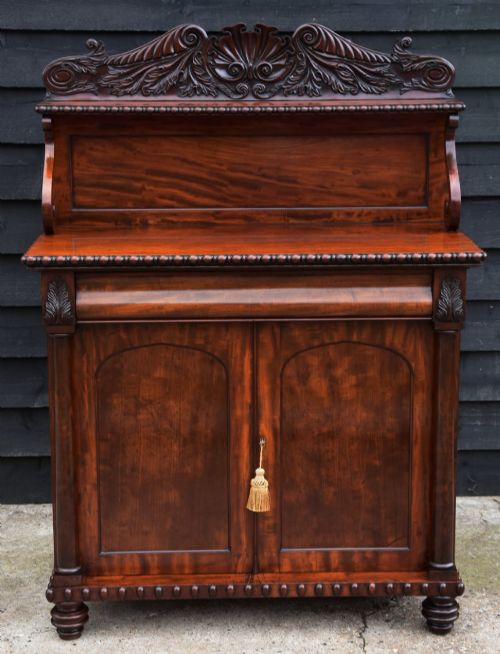
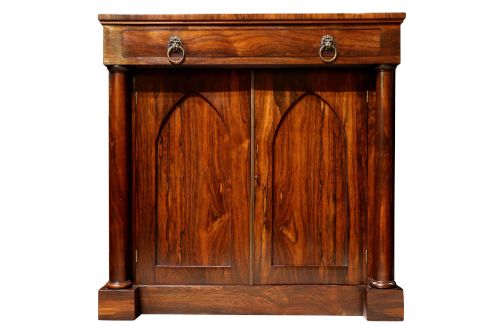
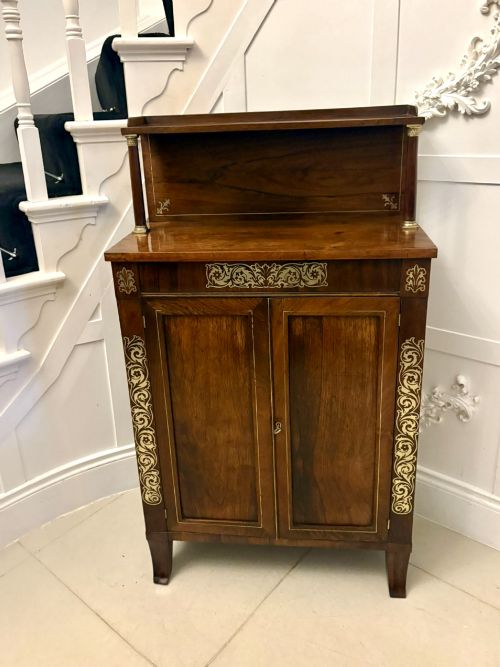
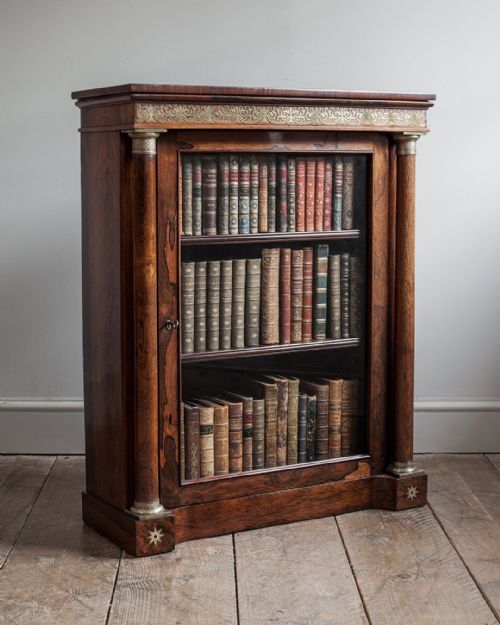
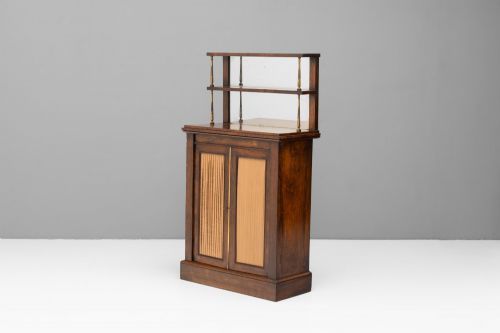
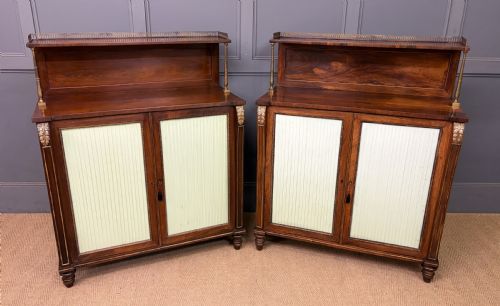
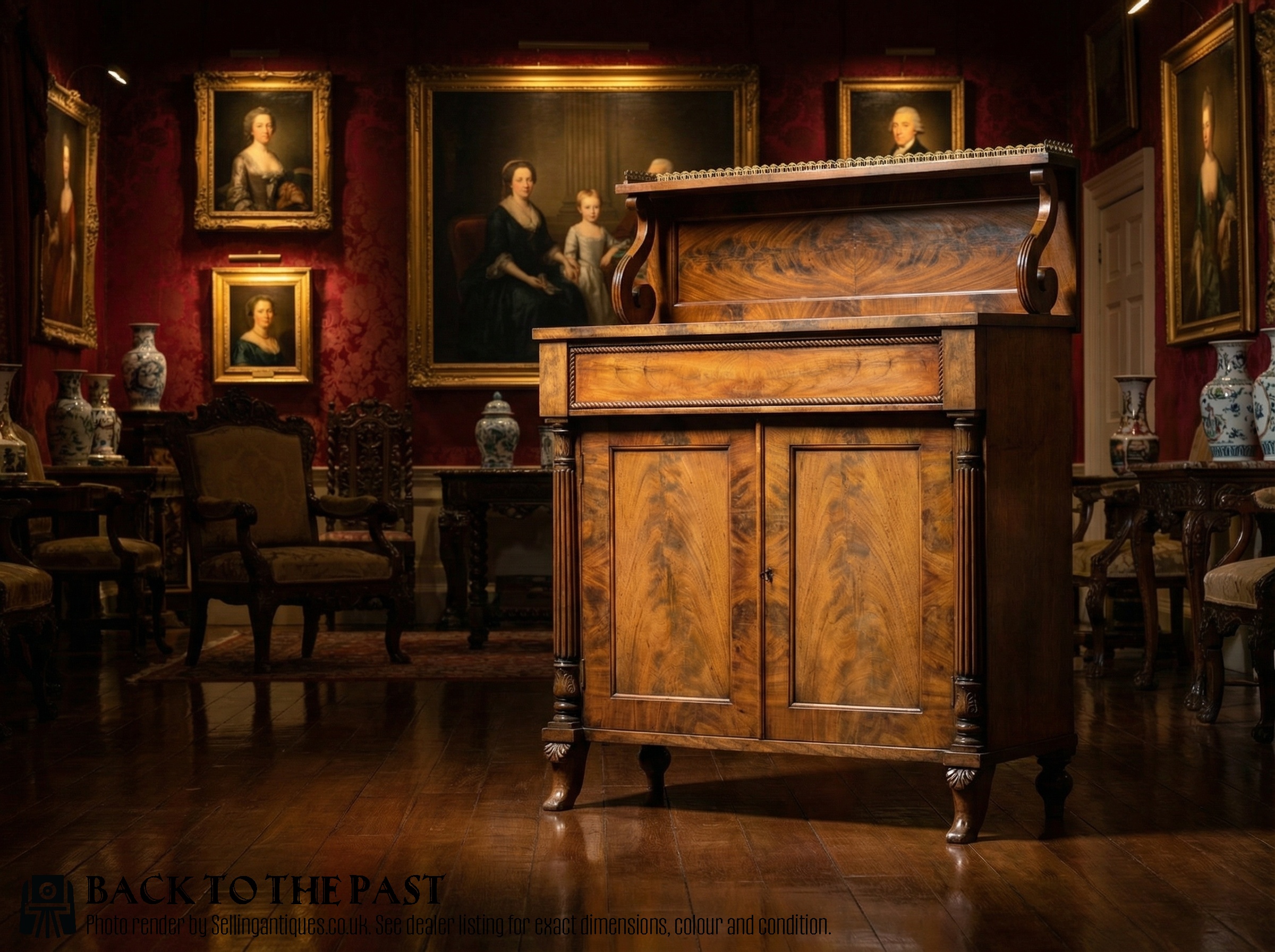
The version most commonly met on this page is the compact mahogany or rosewood bedside cupboard, often featuring a single door above slender legs or a enclosed plinth base. Alongside these, larger chiffoniers with raised back shelves and panelled doors frequently appear, reflecting the broader scope of side storage used during the Regency and William IV eras.
Materials and construction
Cabinet makers of the period relied heavily on solid mahogany and rich rosewood veneers applied to secondary softwood or oak carcases, occasionally utilising exotic timbers such as goncalo Alves, amboyna, and satinwood for decorative emphasis. Flame mahogany veneers were chosen for their swirling grain patterns, carefully matched across doors and drawer fronts to create symmetrical visual interest.
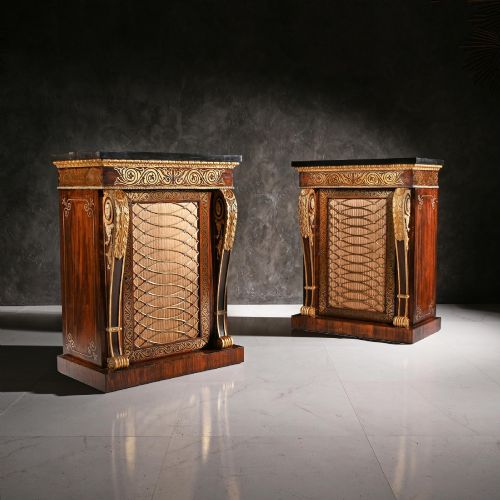
Brass inlay, delicate stringing in contrasting woods, and cast brass handles provided structural highlights that contrasted against the dark timber. Pine was also utilised for pieces intended to receive a simulated rosewood or faux bamboo painted finish, demonstrating the era's taste for alternative surface treatments.
Several miniature cupboards survive solely because cabinet makers used them to demonstrate their mastery to prospective clients before opening an entire workshop.
What separates the fine examples
The calibre of a regency side cupboard rests primarily on the selection of timber figures and the precision of internal construction, such as the use of solid secondary woods for drawer linings and hand-cut dovetail joints. Superior pieces exhibit thoughtful proportions where mouldings, brass mounts, and panel alignments work together harmoniously rather than appearing as disjointed additions.
The integrity of the surface finish and the preservation of original mounts or handles heavily influence the character of surviving examples. Subtle details like fine ebony stringing, well-executed brass inlay, and balanced door panels distinguish workshop pieces of high ambition from more utilitarian utility furniture.
Gillows·Louis Constantin Le Gaigneur
The Regency Side Cupboard Glossary
- Chiffonier
- A low cabinet featuring enclosed storage below, occasionally accompanied by a raised shelf or gallery supported on pillars above the top surface. This form gained popularity during the Regency period for use in dining rooms and parlours.
- Pot cupboard
- A small bedside cabinet designed originally to house a chamber pot behind a single hinged door, often fitted with a tray top or three-quarter gallery. They represent the most numerous survival among small Regency storage forms.
- Goncalo Alves
- A dense, highly figured tropical hardwood displaying contrasting dark brown and light golden streaks, utilised by cabinet makers for decorative veneers on select Regency furniture. It offers a striking alternative to standard rosewood or mahogany.
- Stringing
- Thin inlaid lines of contrasting timber, such as ebony or boxwood, used to edge drawer fronts, table tops, and cabinet doors during the Georgian and Regency periods. This technique outlines the geometric boundaries of the piece.
- Breakfront
- A cabinet design where the central section projects forward slightly from the flanking wings, creating visual depth and architectural rhythm across the front elevation.
Regency Side Cupboard: Frequently Asked Questions
What is a regency side cupboard used for?
These pieces functioned historically as bedside nightstands, lamp tables, or small serving cabinets for china and linens within the home. Today they serve equally well as compact side tables, hallway storage, or bedside units.
Their enclosed lower cupboards conceal modern items while the top surface provides a convenient platform for lighting or decorative objects.
How do I identify a genuine period piece?
Look for construction markers such as hand-cut dovetails on drawer boxes, timber shrinkage appropriate to the early nineteenth century, and traditional polishing methods. Secondary woods like oak or pine inside the carcase also help confirm the era.
Examine the uniformity of wear and the integration of brass mounts or stringing to ensure alterations have not been made later in the piece's life.
Are rosewood and mahogany the only woods used?
While mahogany and rosewood dominate surviving examples, makers also utilised satinwood, amboyna, goncalo Alves, and painted pine. Faux finishes, such as simulated rosewood paint over pine, were also employed during the Regency style period.
These varied material choices reflect both the global trade routes of the time and the specific decorative demands of English country houses.
How do I care for antique veneer?
Keep wooden cabinets away from direct sunlight and steady sources of artificial heat to prevent the underlying veneer from drying, splitting, or lifting. Dust regularly with a dry, soft cloth and avoid commercial silicone polishes.
Applying a traditional beeswax occasionally helps nourish the polished surface without building up residue that obscures the natural timber grain.