


Regency Serving Bowl
A regency serving bowl delivers the elegance of the early nineteenth century straight to the dining table, combining practical tableware with refined display.
Regency Serving Bowl
A regency serving bowl sits within a tradition of dining wares spanning the Georgian and nineteenth-century periods, often taking the form of tureens, vegetable dishes, or entree dishes. These pieces originate from domestic English makers as well as Indian Colonial workshops, reflecting the broader reach of the era's trade and craftsmanship.
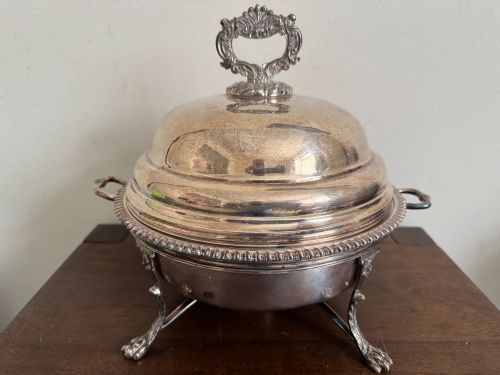
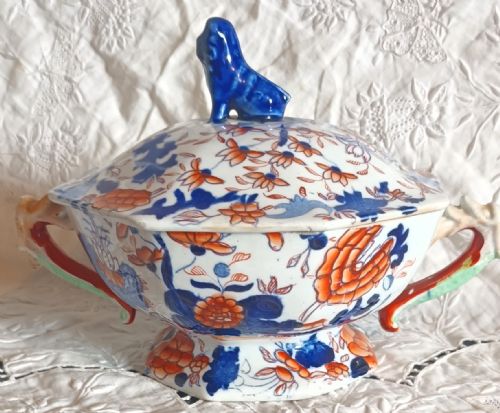
The objects gathered under this description encompass ironstone china, porcelain such as felspar and Worcester bodies, sterling silver, and Old Sheffield plate. Forms range from covered supper dishes and sauce tureens to botanical serving dishes and warming dishes designed for grand dining.
Makers utilise distinct patterns including Chinoiserie Mandarin, Union, and Peacock designs, alongside crested silver and plain gilt accents. Buyers encounter both earthenware bodies intended for daily service and porcelain or silver items reserved for formal hospitality.
Materials and construction
Potteries construct these pieces using ironstone, earthenware, and fine porcelain bodies like felspar porcelain, often applying hand-painted transfer prints in botanical or Chinoiserie styles. Metal versions employ sterling silver or fuse silver to copper in Old Sheffield plate, sometimes incorporating gold leaf and enamel details.
Makers shape metal elements through hammering, casting, and plating, whilst ceramic bodies undergo high-temperature firing before receiving polychrome enamels and gilt highlights. Lids, handles, and lampstands require precise metalwork and fitting to ensure covers rest securely on bases and tureens.
Listings feature items from the nineteenth century, Georgian period, and Regency era, constructed in materials including ironstone, sterling silver, porcelain, and enamel.
Judging quality and finish
Quality reveals itself in the crispness of the transfer printing or the precision of hand-painted botanical details on porcelain and ironstone surfaces. Stronger examples maintain vibrant enamel colours and intact gilding without heavy rubbing from past cleaning.
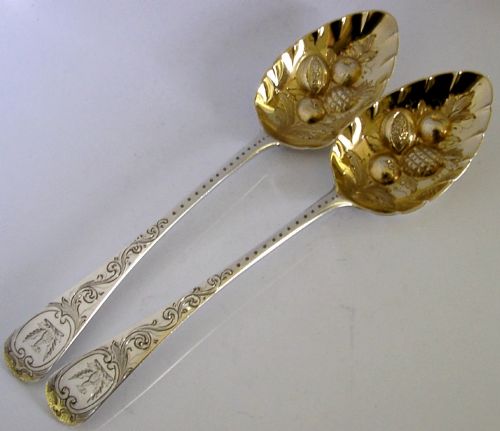
In silver and Old Sheffield plate, the integrity of the base metal, the clarity of engraved family crests, and the sturdiness of applied handles or lampstands distinguish finer production. Heavier weight and balanced proportions indicate superior manufacture during the formation of the dish.
Mason's Ironstone·Spode·Coalport·Flight Barr and Barr·Dan Holy
The Regency Serving Bowl Glossary
- Ironstone
- A dense, durable type of earthenware patented in the early nineteenth century to rival true porcelain. It withstands heavy table use whilst taking bright enamels.
- Old Sheffield Plate
- A composite material made by fusing a thin sheet of silver to a thicker copper core. It allows silver tableware to be produced at a broader scale.
- Entrée Dish
- A shallow covered vessel designed for serving intermediate courses at formal meals. They frequently appear paired with warming stands or lampstands.
- Felspar Porcelain
- A ceramic body incorporating feldspar, developed by porcelain manufacturers to improve durability and whiteness. It provides a smooth surface for botanical painting.
- Tureen
- A deep covered bowl used for serving soups, sauces, or vegetables at the table. They typically feature two side handles and a matching lid.
Regency Serving Bowl: Frequently Asked Questions
How were these bowls used?
These vessels held soups, vegetables, sauces, and principal courses during formal nineteenth-century dining. Servants brought them to the table filled from the kitchen, often keeping contents warm over lampstands or hot water bases.
At the conclusion of the meal, the dishes returned to the sideboard or pantry. Their decorative patterns ensured they contributed to the visual splendour of the dining room while remaining functional.
Are these pieces safe for food?
Many historical ceramics and silver items contain materials like lead in their glazes or rely on old solders. Modern collectors generally treat them as decorative objects rather than items for daily consumption.
Hand washing in lukewarm water with mild soap protects the fragile enamels and thin gilding. Dishwashers and harsh detergents cause permanent damage to nineteenth-century surfaces.
What is Old Sheffield plate?
Old Sheffield plate is an early form of plated metal created by fusing silver to a copper ingot and rolling them together into sheets. Craftsmen then shaped these sheets into tureens and serving dishes.
Under close inspection, tiny lines of exposed copper appear where the edges meet or where heavy polishing has worn the silver layer. This technique predated nineteenth-century electroplating.