
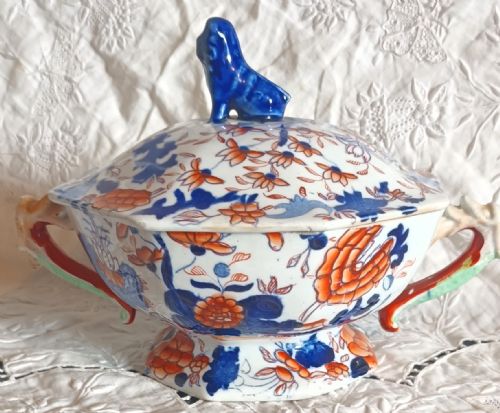


Imari Pattern Vegetable Dish
An imari pattern vegetable dish brings rich palette and historic weight to the dining table, offering traditional ceramic artistry from the Georgian and Regency eras.
Imari Pattern Vegetable Dish
When you search for an imari pattern vegetable dish, you are looking at serving vessels designed for the formal dining table during the Georgian, Regency, and nineteenth-century periods. These objects take the form of tureens, covered bowls, and serving dishes created to hold vegetables or sauces for guests.
You are most likely to meet pieces produced in ironstone ceramic and porcelain, often featuring traditional English Chinoiserie or Japanese-inspired basket and bamboo motifs. Makers from Worcester and Staffordshire dominate these forms, offering substantial covered tureens complete with matching lids.
The serving dishes range from large soup tureens to smaller sauce tureens with ladles, reflecting the elaborate dining practices of the nineteenth century. Each item combines utilitarian function with decorative painted schemes intended to impress dinner guests.
How they were made
Potters shaped these wares from ironstone ceramic, earthenware, and soft-paste porcelain before applying hand-painted enamel colours and gold leaf highlights. The ceramic bodies were fired to provide a durable foundation for rich decorative schemes.
Craftspeople applied rich iron red, cobalt blue, and enamel glazes over the ceramic body, frequently incorporating gilded handles and borders. The surface decoration often drew upon English Chinoiserie traditions, combining oriental motifs with British ceramic techniques.
Some nineteenth-century sauce tureens survived with their original ceramic ladles intact, dodging generations of clumsy dinner guests.
What varies in quality
The refinement of the hand-painted enamel and the preservation of the gold leaf across the surface separate standard examples from finer works. Crispness in the moulding of handles and covers also indicates the care taken during production.
Completeness alters the standing of a piece, particularly the presence of original matching covers, ladles, and undisturbed gilding. Finer factories like Worcester demonstrated greater precision in their porcelain bodies and intricate palette application.
Mason·Flight Barr And Barr·Chamberlain Worcester·Coalbrookdale
The Imari Pattern Vegetable Dish Glossary
- Imari
- A decorative style inspired by Japanese export wares featuring iron red, cobalt blue, and gold. This palette became immensely popular among English ceramic factories during the Georgian period.
- Ironstone
- A patented ceramic body developed in the nineteenth century for durability and strength. It provided an ideal heavy-duty base for large tureens and serving dishes.
- Chinoiserie
- A European interpretation of Chinese and East Asian artistic traditions. It appears frequently on early nineteenth-century table ceramics.
- Soft-paste porcelain
- A ceramic composition fired at lower temperatures than hard-paste porcelain, producing a warm translucent body. Factories such as Worcester utilised this material for high-status tableware.
- Tureen
- A deep covered bowl designed for serving soups, sauces, or vegetables at the table. These vessels often rest on fixed or separate stands.
Imari Pattern Vegetable Dish: Frequently Asked Questions
What is an imari pattern vegetable dish?
An imari pattern vegetable dish is a covered ceramic serving vessel decorated in the distinctive red, blue, and gold palette inspired by Japanese wares. These pieces were produced by English factories during the Georgian and nineteenth-century periods for formal dining.
They combine practical serving functions with rich hand-painted ornamentation, making them focal points on historic dining tables.
How were these tureens used originally?
These tureens served to keep vegetables, soups, or sauces warm at the table before being transferred to individual plates by diners or servants. Their heavy ironstone and porcelain bodies helped retain heat during long multicourse meals.
Matching ladles and covers ensured that food could be served cleanly and efficiently during formal nineteenth-century dinner parties.
How do I care for antique ironstone?
Antique ironstone and porcelain require gentle hand washing in warm water with mild soap to preserve their delicate enamels and gold leaf. Dishwashers and harsh abrasives must be avoided because they can damage the historic glaze.
Storing pieces with adequate support prevents chipping on the rims and handles of heavy ceramic covers.