


Regency Scroll Armchairs
Regency scroll armchairs combine elegant neoclassical lines with robust timbers, offering a distinguished seating option for studies, libraries and drawing rooms.
Regency Scroll Armchairs
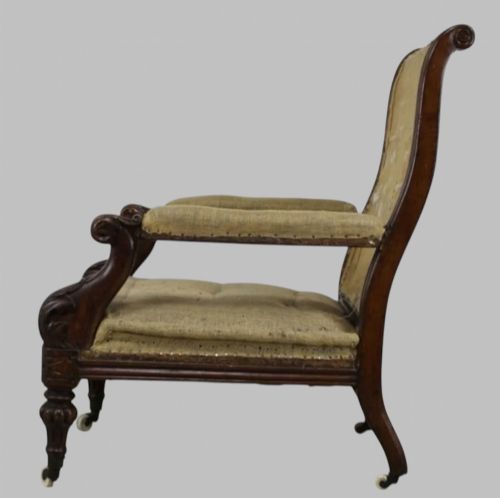
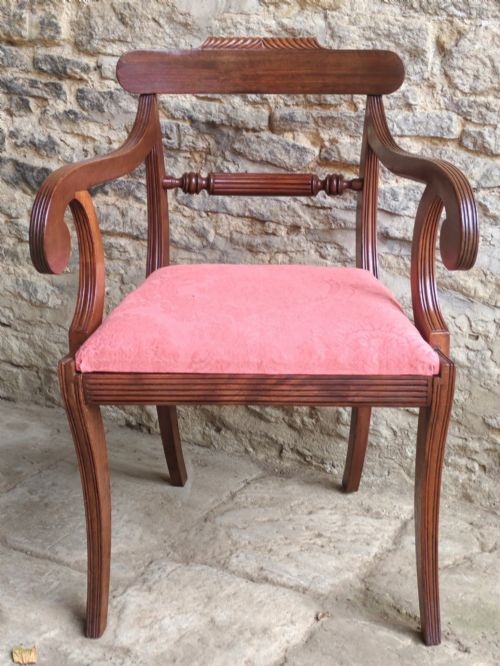
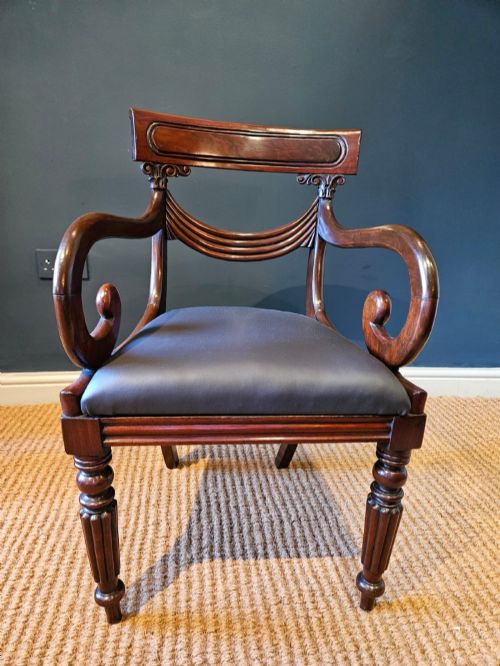
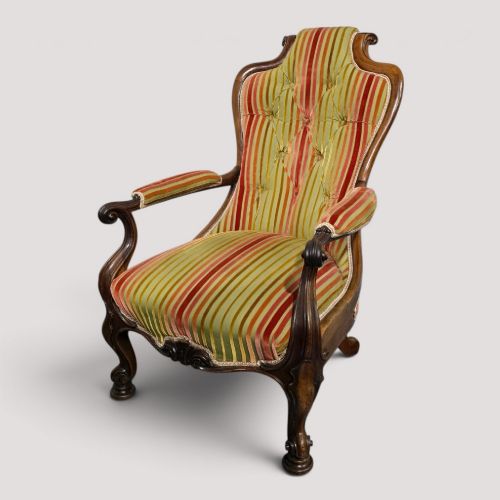
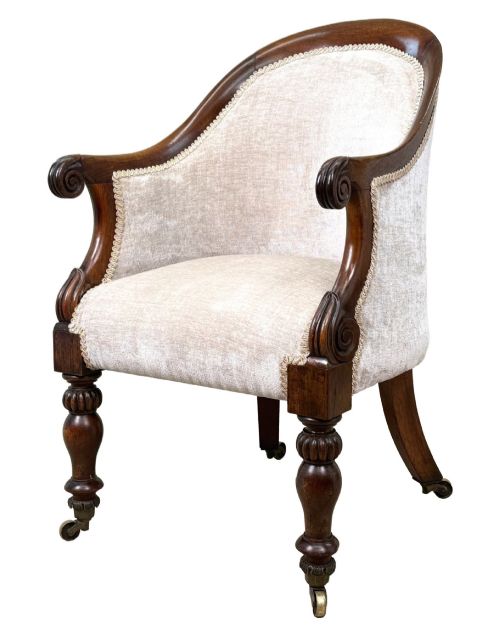
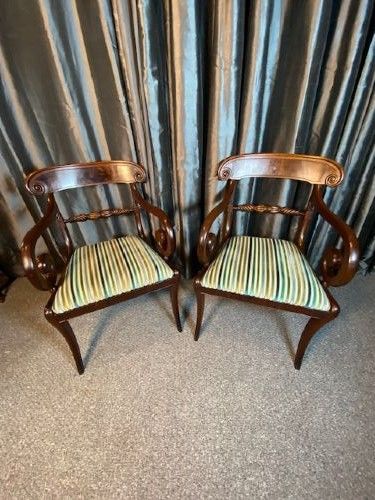
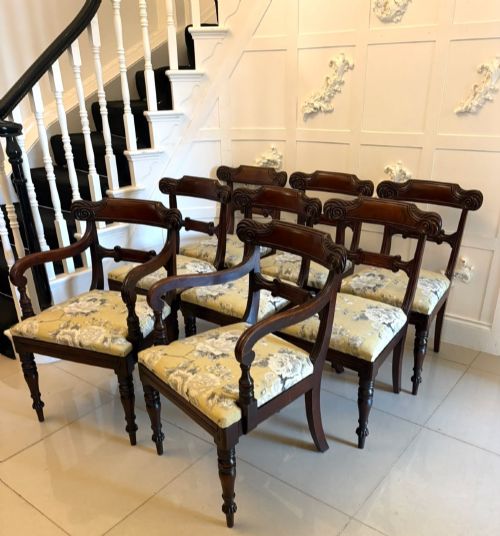
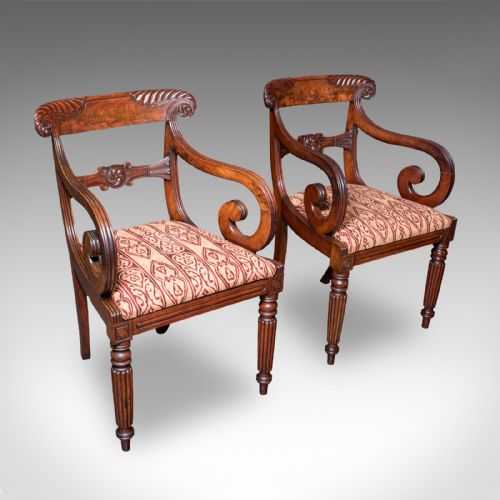
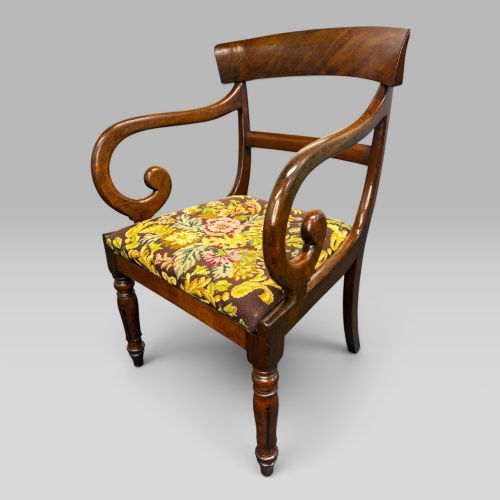
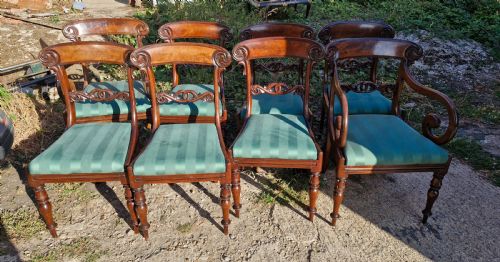
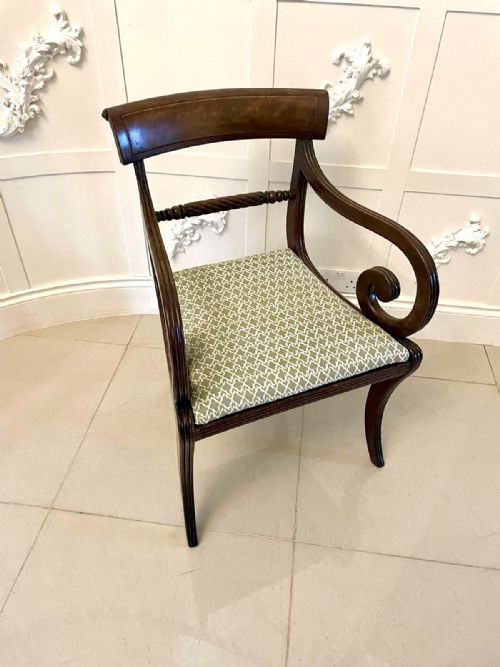
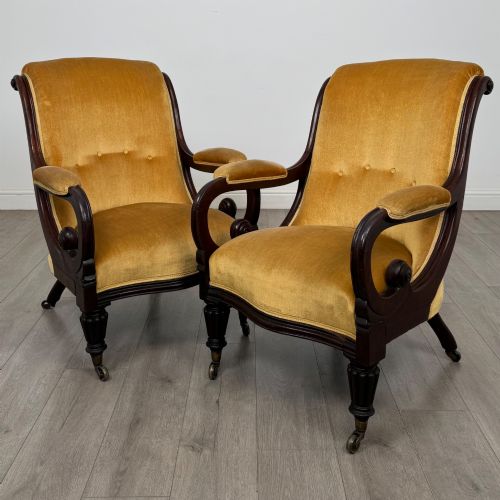
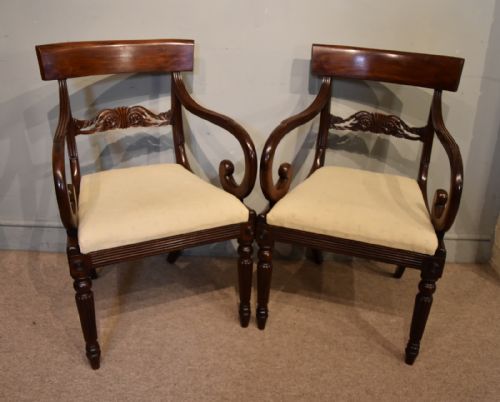
When you search for regency scroll armchairs, you are looking at seating shaped by the distinct aesthetic of the early nineteenth century and the subsequent William IV period. The pieces gathered here span formal library armchairs, desk chairs, dining carvers and elbow chairs that share characteristic sweeping arm supports.
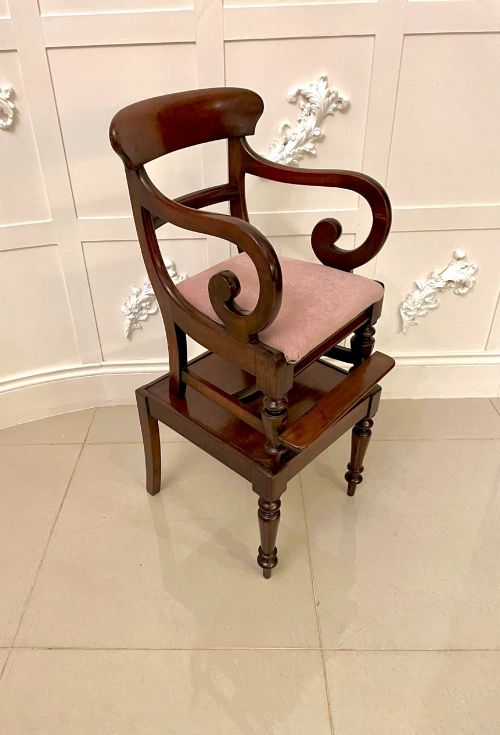
Mahogany and rosewood dominate the selection, frequently paired with sabre legs, brass inlays or turned supports. You will encounter single carvers alongside matched pairs, ranging from straightforward dining chairs to complex metamorphic library steps and reclining designs.
The aesthetic bridges the refined classical forms of the late Georgian era with the heavier proportions of the mid-nineteenth century. Pieces emerge in styles described as Regency, Grand Regency, William IV and Late Georgian, reflecting a continuous tradition of British cabinet making.
Materials and Construction
Makers relied principally upon dense tropical hardwoods like mahogany and rosewood, often enhanced with ebonised details or brass inlay along the framing. These durable timbers allowed craftsmen to fashion slender, curved sabre legs and fluid, scrolling arm terminals without compromising structural integrity.
Upholstery materials recorded in the archive and current listings include leather, velvet, needlepoint and various traditional fabrics secured over sprung or padded seats. The joinery combines concealed dowels, tenons and precise turning to support the continuous weight placed upon library and desk variants.
Regency Scroll Armchairs Retail Price Guide 2026
Typical asking prices for regency scroll armchairs among the pieces listed under this phrase on Sellingantiques today, from the lower quarter to the upper quarter. They describe what is for sale here now, not the wider market.
Some industrious nineteenth-century readers could magically unfold their armchair into a set of library steps when the books reached the top shelf.
Judging Quality and Craftsmanship
The distinction between ordinary and exceptional examples lies in the crispness of the carved scrollwork and the selection of the timber grain. Superior chairs display tightly figured mahogany or richly polished rosewood where the natural patterns follow the curve of the arms and back rail.
Constructional depth also separates the tiers, seen in whether a desk chair or library armchair retains its original mechanical action, brass castors or inlaid brass detailing. The integration of structural elements, such as smoothly operating sliding mechanisms or sturdy sabre legs, defines the standard of the workshop.
The Regency Scroll Armchairs Glossary
- Sabre leg
- A concave-tapered furniture leg that curves outward like a cavalry sword, characteristic of neoclassical and Regency seating. This form provides a stable, elegant stance without heavy stretcher rails.
- Bergere
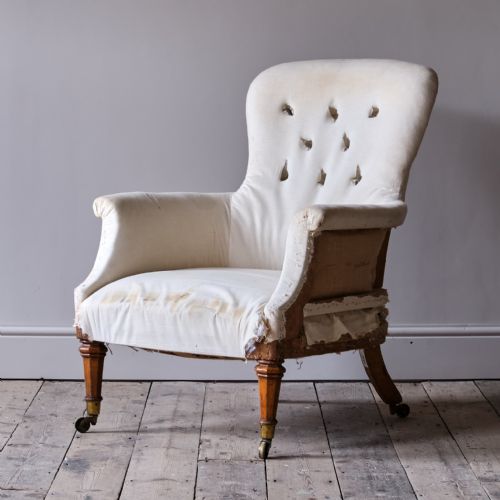
- An enclosed upholstered armchair featuring cane or fabric panels enclosed within a wooden frame. They often appear in libraries and drawing rooms from the Regency period.
- Elbow chair
- A traditional term for an armchair with low armrests, frequently used at desks or in morning rooms. These pieces accommodate varied seating postures while remaining compact.
- Metamorphic furniture
- Pieces designed to transform into secondary items, such as an armchair converting into library steps. Such ingenuity highlights the clever functional mechanics of the era.
Regency Scroll Armchairs: Frequently Asked Questions
How do I spot a true Regency chair?
Authentic Regency seating typically exhibits classical neoclassical proportions, including characteristic sabre legs, reeded framing and scroll-carved arm terminals. The timbers used are dense and dark, aligning with the aesthetic preferences of the early nineteenth century.
Examining the construction methods underneath provides further confirmation. Hand-cut joints and period-appropriate fixings distinguish genuine examples from later revivals.
Were these chairs used at desks?
Many examples on this page are specifically designated as desk chairs or library chairs. Their low elbow height and supportive backs suited long hours of reading and administrative work.
Some variants incorporate revolving mechanisms or leather-upholstered seats designed for comfort in a study. Dining carvers were also drafted into service around writing tables.
What is the difference between Regency and William IV?
Regency designs generally favour lighter, restrained neoclassical lines inspired by ancient Greek and Roman forms. Sabre legs and delicate brass inlays are common signatures of this phase.
William IV pieces, which follow closely, tend to display heavier proportions, bolder scrollwork and more robust turnings. Both styles nevertheless share the defining scroll arm motif.
How should I care for antique upholstery?
Leather and fabric surfaces require gentle, regular dusting and protection from direct sunlight to prevent fading. Conditioning leather periodically maintains its flexibility and prevents cracking along the creases.
Wooden frames benefit from occasional application of quality wax polish. Avoid placing these chairs near heat sources that might dry out the ancient timber and joints.