



Regency Sabre Leg Seat
Regency sabre leg seat designs combine sweeping backward curves with solid timber frames, offering collectors enduring elegance and practical dining seating.
Regency Sabre Leg Seat
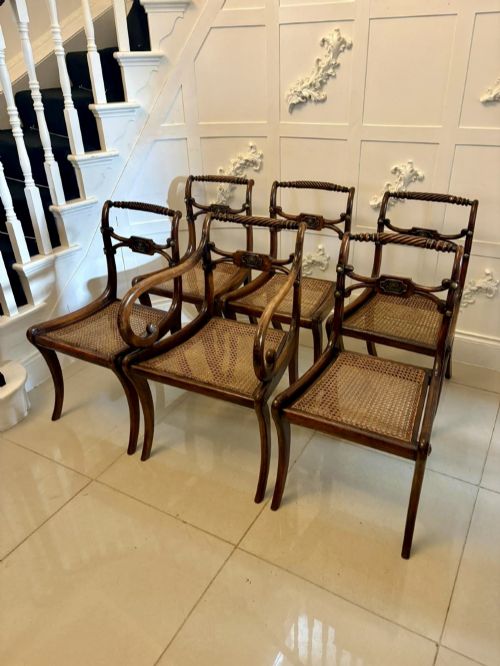
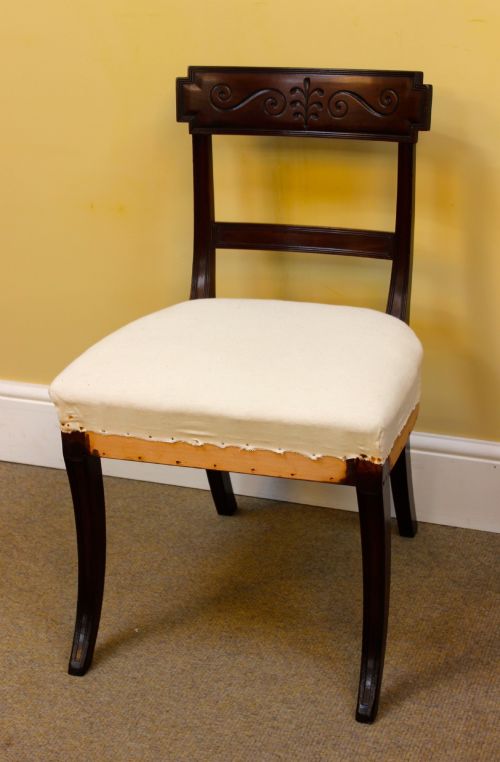
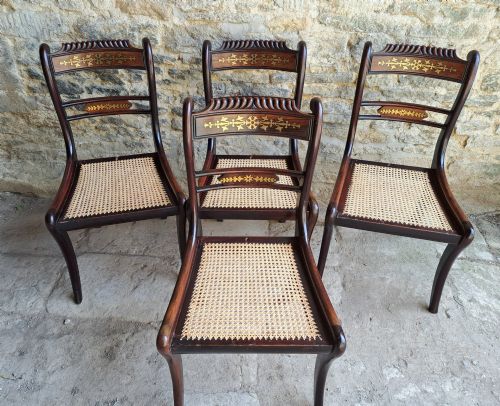
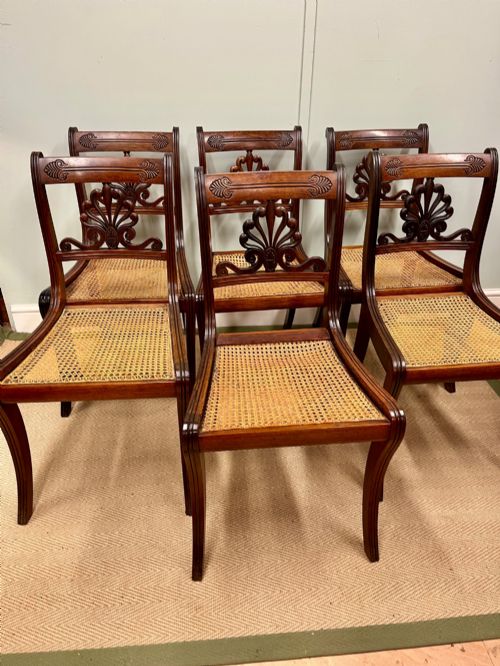
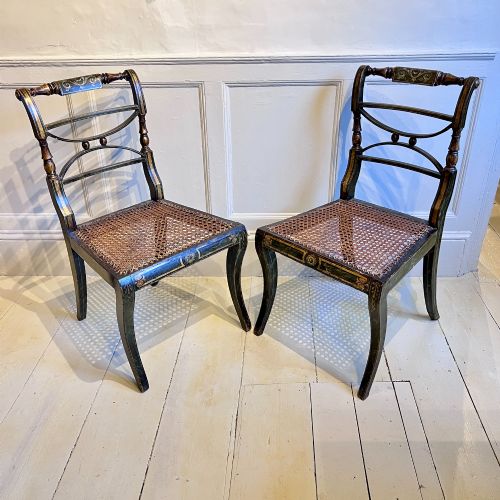
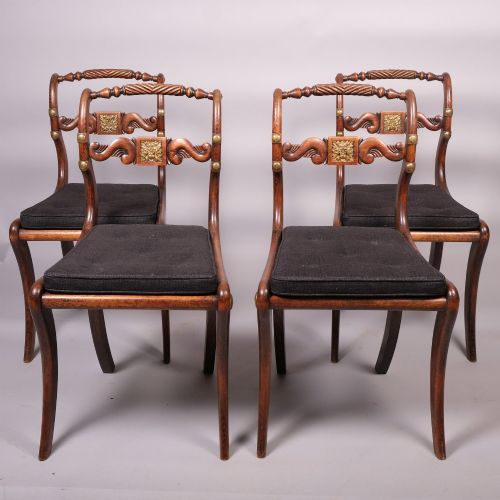
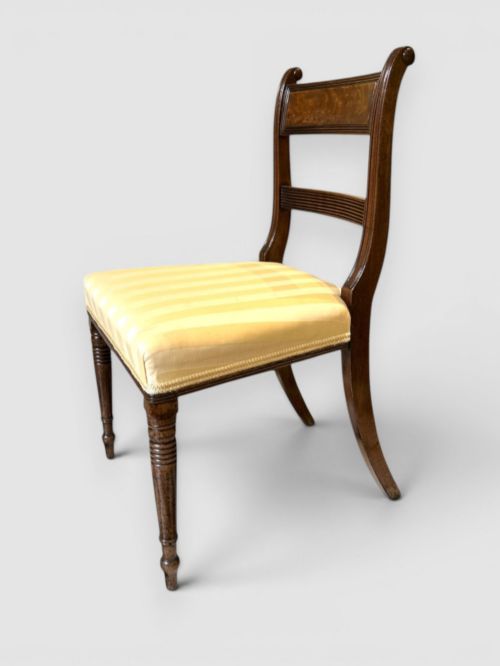
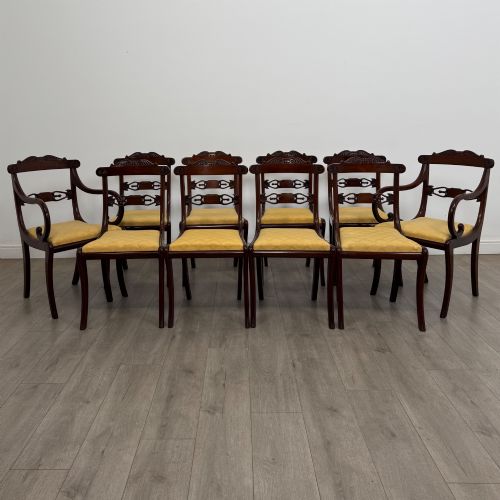
A regency sabre leg seat brings distinct early nineteenth-century character to a room through distinctive curving supports that taper outward from the frame. The forms available range from single side chairs and carver armchairs to pairs and larger matched sets suited for dining spaces.
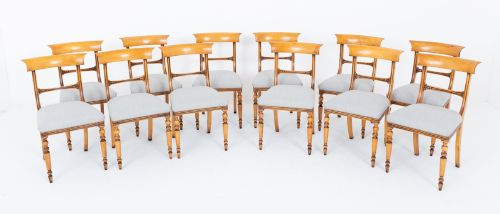
Dining chairs and open armchairs dominate the selection, often appearing in sets of four, six, or more pieces. Buyers also encounter occasional daybeds, hall chairs, and library armchairs sharing the signature curved leg profile.
Originating primarily from the Regency and Georgian periods, these seats also surface in later nineteenth and early twentieth-century revival interpretations. Solid mahogany and simulated woods form the backbone of the available selection.
Distinguishing Quality in Construction
The refinement of the carving and the crispness of the sabre curve determine the visual success of the piece. Well-drawn proportions and harmonious joinery separate finer cabinet work from simpler output.
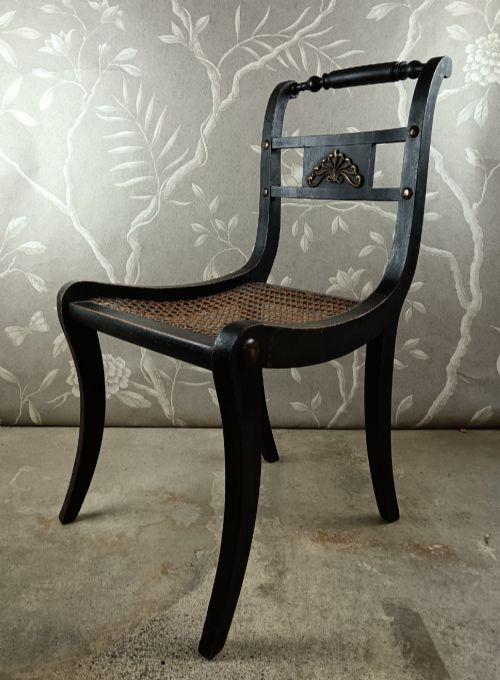
Original elements such as brass stringing, intact cane panels, and integrated structural pegging elevate a piece above later replacements or heavy restorations.
Several sets include an uneven count of single chairs and carvers, reminding us that nineteenth-century hosts arranged their dining tables with singular flair.
Gillows·Henry Maxwell
The Regency Sabre Leg Seat Glossary
- Sabre leg
- A chair leg that curves outward and backward from the seat in a continuous, graceful sweep modelled after a cavalry sword. This form provides inherent stability while lightening the visual weight of the frame.
- Carver
- An armchair designed with open elbows, traditionally placed at the head of a dining table or used alongside matching single chairs. These pieces often mirror the detailing of the smaller side chairs in a set.
- Cane
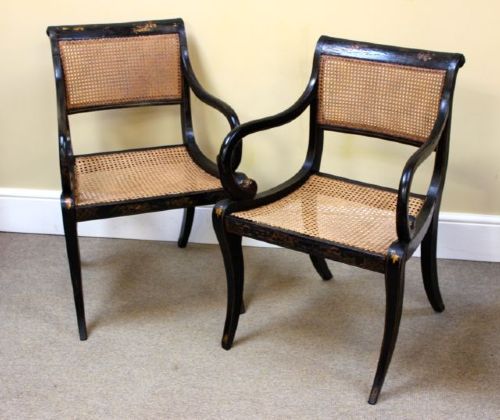
- Woven rattan material used to form resilient, breathable seat panels. Artisans stretch the woven strands across an open wooden frame.
- Ebonised
- Timber treated with a dark finish to imitate expensive ebony wood. This technique appears frequently on Regency frames to create stark visual contrast.
- Faux rosewood
- A painted surface treatment mimicking the rich grain patterns of genuine rosewood. Craftsmen applied fine brushwork over a lighter wood base to achieve the decorative effect.
Regency Sabre Leg Seat: Frequently Asked Questions
How do I identify a genuine period sabre leg seat?
Examine the timber colour and construction methods beneath the seat frame for signs of age, such as hand-cut joints and genuine patina.
Compare the sweep of the leg and the carving detail against documented examples from the early nineteenth century.
Can I use antique dining chairs every day?
Solid mahogany and robust joinery allow these seats to withstand regular domestic use when handled with reasonable care.
Periodic checks of the leg joints ensure the framework remains stable under daily weight.
What is the difference between a side chair and a carver?
Side chairs feature a backrest and seat without armrests, designed to tuck neatly around a dining table.
Carvers include open elbow rests and generous proportions, traditionally serving as host seating at the table ends.
How should I care for cane seats?
Maintain adequate room humidity to prevent the natural rattan material from drying out and becoming brittle.
Clean the woven surface gently with a damp cloth and avoid placing heavy, concentrated loads on the mesh.