
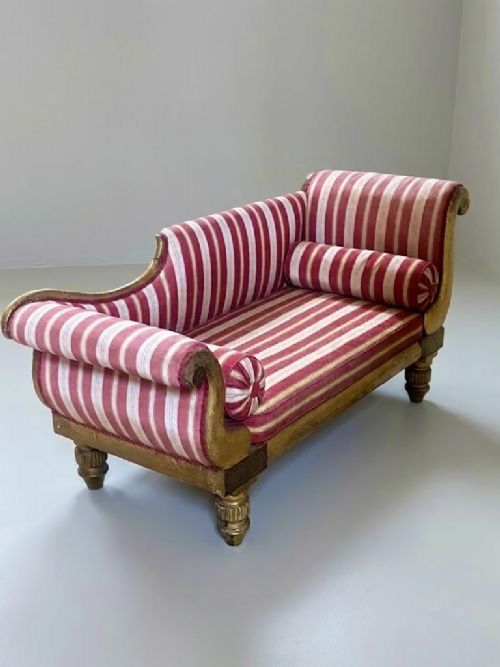
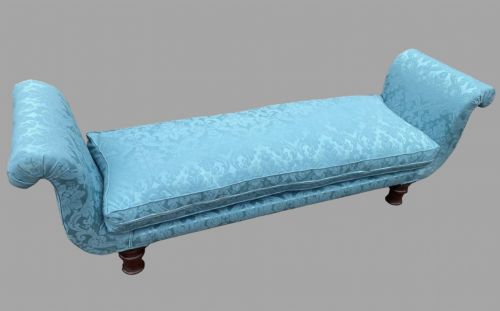


Recamier Bench Sofa
These pieces known as a recamier bench sofa combine the classical form of a daybed with curved ends, offering a seat for reclining.
Recamier Bench Sofa
A recamier bench sofa represents a distinct form of seating designed for reclining, drawing upon classical daybed and chaise longue traditions. When searching for a recamier bench sofa, buyers encounter pieces that bridge the gap between chairs and full beds.
The versions most likely to be met on this page span the nineteenth century, including specific periods such as Regency, William IV, and Victorian eras. These items manifest as chaise longues, daybeds, and French lit bateaux.
Origins and styles recorded in the evidence range from English Regency and William IV to French Empire and Louis XVI style. Makers and designers drew inspiration from classical antiquity to produce these architectural seating forms.
How they were made
Timbers form the primary structural support, with mahogany, rosewood, and simulated rosewood appearing alongside giltwood and general wood. Carved details often accent the wooden frames of these daybeds and benches.
Upholstery defines the upper portions, utilising silk, damask upholstery, and various decorative fabrics. Brass elements sometimes provide structural or decorative highlights to the wooden and gilded frameworks.
Simulated rosewood allows a humble timber to masquerade as an exotic import with painted grain.
What varies in quality
The refinement of the carved woodwork and the choice of primary timber set individual pieces apart. Solid mahogany and finely gilded surfaces indicate a higher tier of production compared to simpler wooden frames.
Textiles chosen for the upholstery, ranging from antique striped silk to damask, influence the overall presentation. The harmony between the frame design and the textile treatment determines the visual success of each piece.
The Recamier Bench Sofa Glossary
- Chaise Longue
- A long chair for reclining, typically featuring an upholstered seat with one or two raised ends. This form serves as both a seat and a daybed.
- Daybed
- A couch that can be used for lounging or sleeping during the day. These structures share characteristics with both benches and beds.
- Giltwood
- Wood that has been covered with a thin layer of gold leaf or gesso and gold paint. This finish creates a bright decorative surface.
- Lit Bateau
- A French bed style featuring scrolled ends resembling a boat. It appears frequently in nineteenth-century French furniture design.
Recamier Bench Sofa: Frequently Asked Questions
What is a recamier bench sofa?
A recamier bench sofa is a form of daybed or chaise longue designed for reclining, typically featuring one or two raised ends. These pieces draw on classical nineteenth-century designs.
They function as decorative seating and lounging furniture within period interiors, combining wooden frames with upholstered surfaces.
How do I date a daybed?
Dating relies on observing the stylistic markers, timber choices, and decorative motifs present in the piece. Regency and William IV examples exhibit specific classical proportions.
Comparing the carved woodwork and upholstery styles to known period pieces helps establish the likely decade of manufacture.
Which materials were used?
Construction materials primarily include timber such as mahogany and rosewood, alongside giltwood and brass accents. Frames are built from solid woods.
Upholstery materials feature silk, damask, and patterned fabrics stretched across the seats and scrolled ends.
Where were these pieces made?
Origin styles point towards English Regency and William IV traditions, alongside nineteenth-century French Empire designs. Workshops in Britain and France produced these variations.
Stylistic influences often derive from classical French and English cabinet-making traditions of the eighteen-hundreds.