
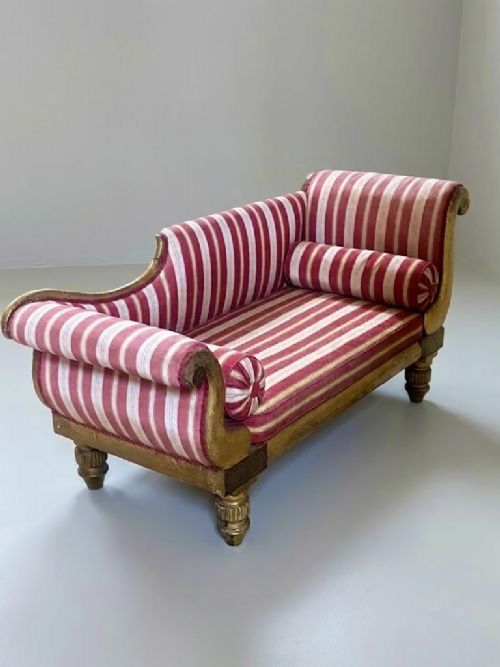
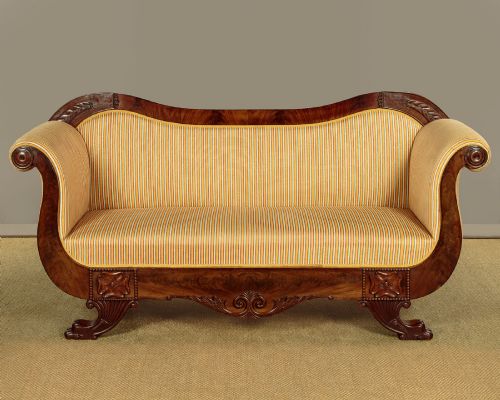
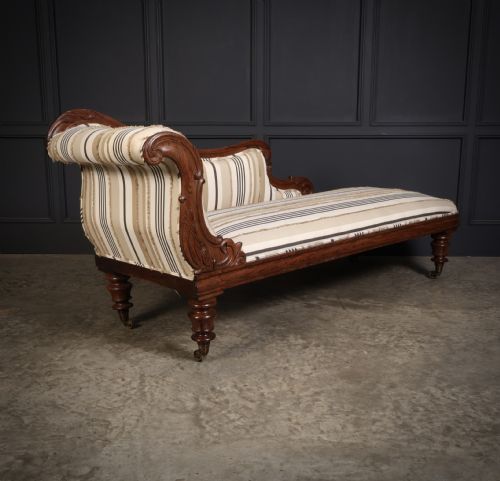


Striped Upholstered Daybed
A striped upholstered daybed brings architectural grace to a room, offering a long seat designed for daytime reclining.
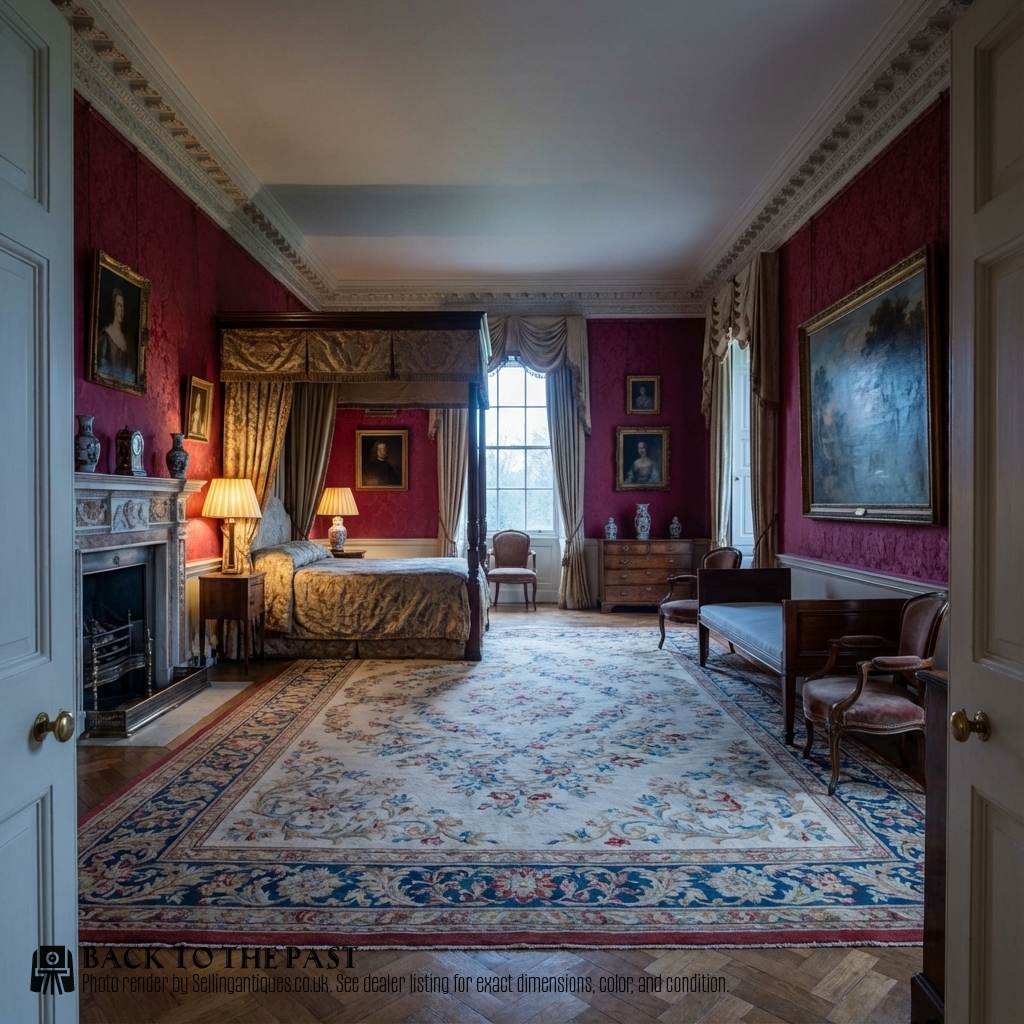
Striped Upholstered Daybed
When you search for a striped upholstered daybed, you are looking at nineteenth-century seating designed for reclining during the day, combining the form of a sofa with the length of a bed. These pieces serve as both decorative centrepieces and functional furniture for sitting or lying down.
The versions you are most likely to meet on this page date from the Regency and Victorian periods, with mahogany, simulated rosewood, and giltwood frames. They frequently appear as scroll-end couches, chaise longues, and settees upholstered in antique striped silk or patterned fabric.
What varies in quality
Quality rests upon the crispness of the timber carving and the sophistication of the frame proportions, particularly around the scroll ends and arm supports. Pieces executed in simulated rosewood or giltwood demonstrate different levels of decorative ambition compared to standard mahogany examples.
The integrity of the structural joinery and the historical appropriateness of the textile selection dictate the standing of an individual piece. Finer examples retain their original structural lines without clumsy timber repairs or unsympathetic re-upholstery.
Listings feature nineteenth-century seating spanning the Regency, William IV, and Victorian eras, utilising mahogany, simulated rosewood, and giltwood.
The Striped Upholstered Daybed Glossary
- Simulated rosewood
- A painted or stained wood finish designed to imitate the appearance of true rosewood. Cabinetmakers utilised this technique on nineteenth-century frames.
- Scroll end
- A curved terminal styling found on the arms or back of Regency and Victorian seating. This detail defines the silhouette of many couches from the period.
- Giltwood
- Wood that has been treated with gold leaf or gold paint for decorative effect. This finish appears on high-status Regency sofas.
Striped Upholstered Daybed: Frequently Asked Questions
What is a striped upholstered daybed used for?
These pieces were originally designed for daytime resting, reading, and receiving visitors in formal reception rooms. Today, they function as elegant statement seating in living rooms, bedrooms, or studies.
Their elongated form allows for comfortable reclining without taking up the full footprint of a standard bed. They provide both architectural presence and a practical place to sit during the day.
How do I date a Regency daybed?
Regency pieces typically date from the early nineteenth century, displaying characteristic classical revival motifs such as scroll ends and carved mahogany frames. Cabinetmakers of this era favoured clean architectural lines and rich timber grains.
Examining the construction methods beneath the upholstery and the style of any brass mounts helps confirm the period. Simulated rosewood finishes and giltwood accents also point directly to this design epoch.
Are these daybeds comfortable to lie on?
Comfort depends on the firmness of the traditional padding and the length of the seating platform. Most historical examples feature a raised scroll end that supports the head while reclining.
Because they were built for daytime lounging rather than night-time sleeping, the support is firmer than a modern mattress. Cushions can be added to adjust the seating depth to personal preference.