



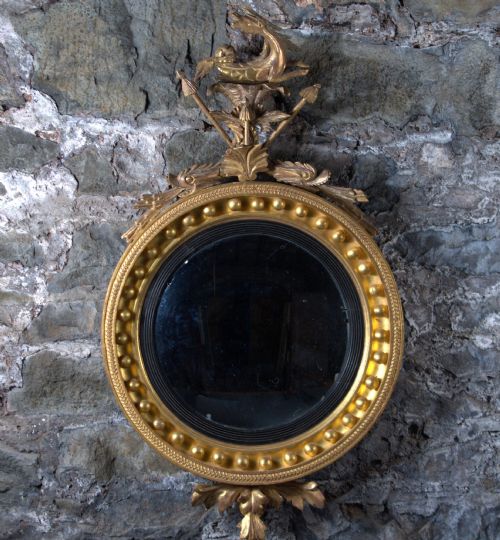
Regency Round Mirror
These pieces are a regency round mirror, bringing curved convex glass and giltwood frames together to catch the light in any room.
Regency Round Mirror
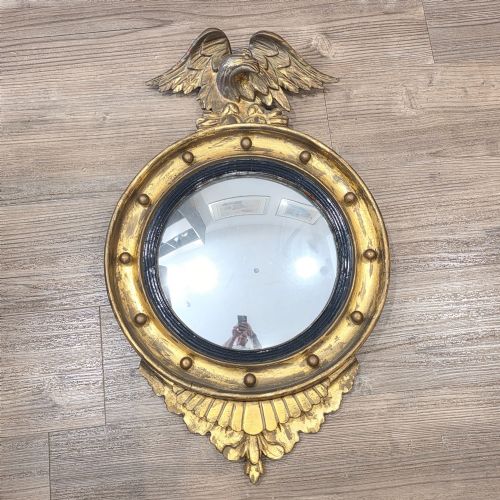
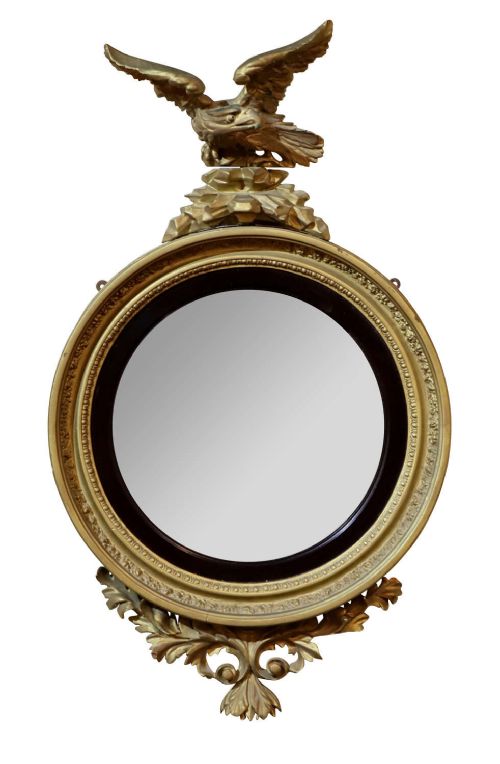
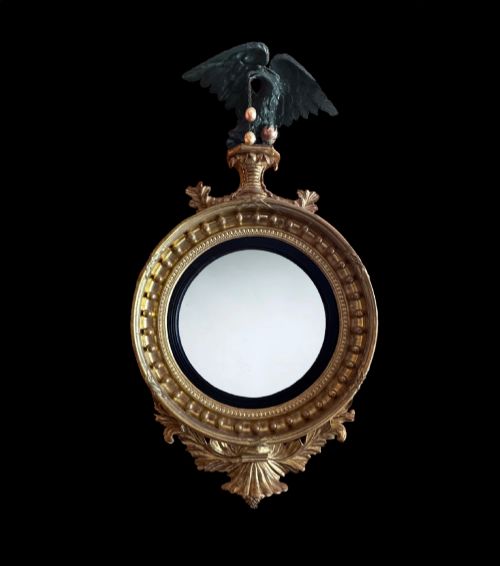
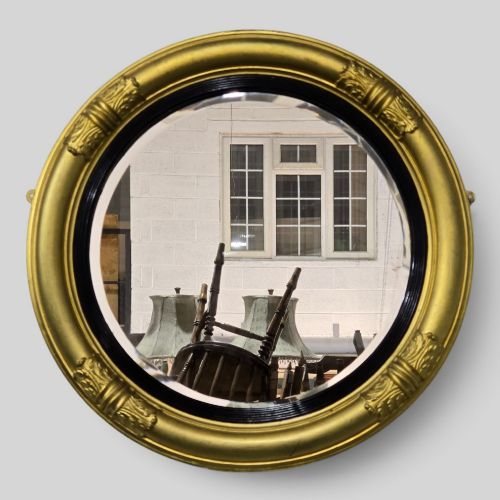
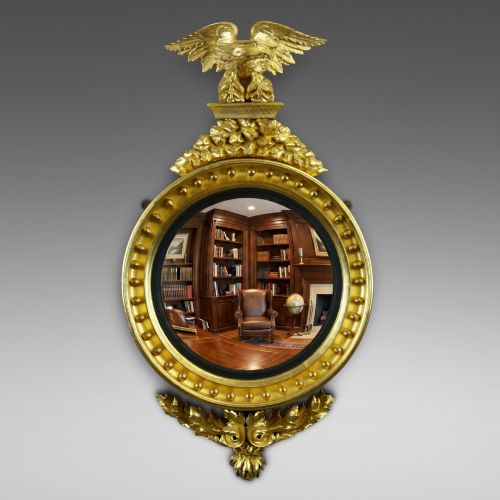
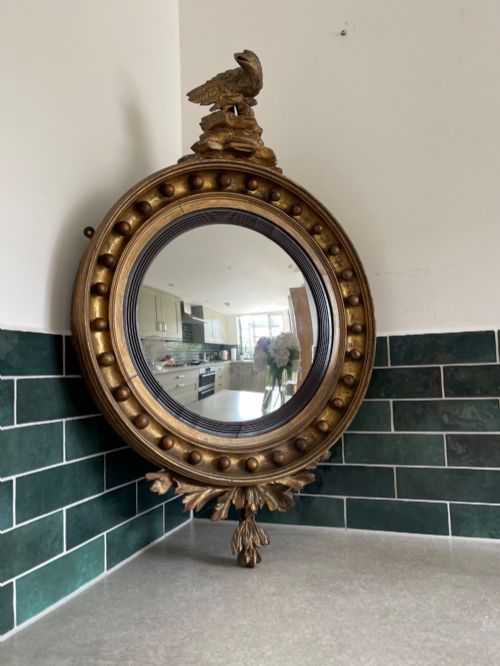
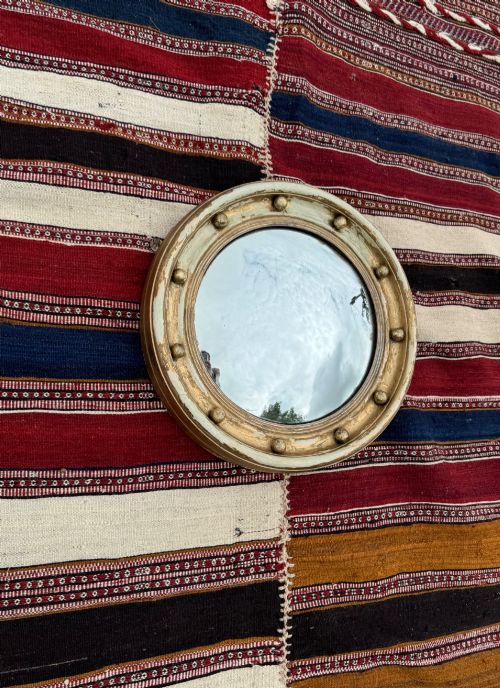
A regency round mirror centres on circular convex glass set within a sturdy wooden frame, often known historically as a butler's mirror or a convex mirror. The form spans genuine Regency periods through to later Victorian and twentieth-century revivals.
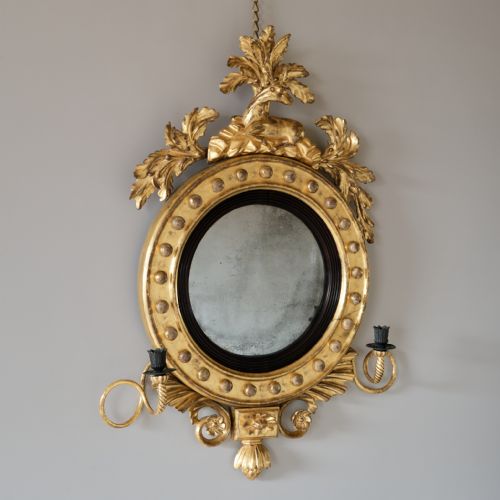
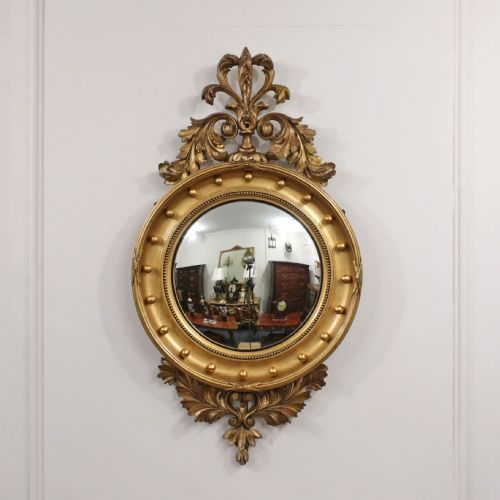
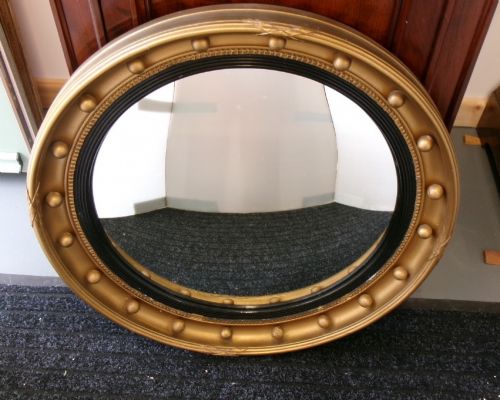
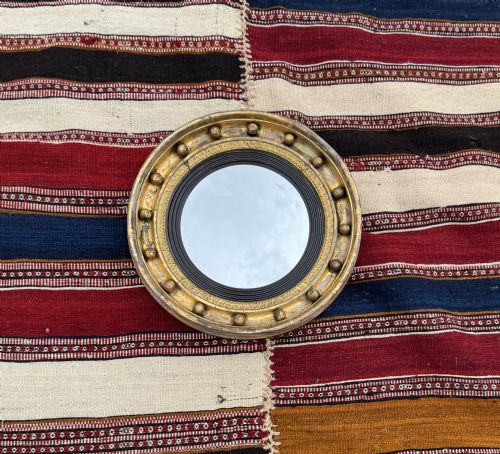
Most examples found here present a giltwood finish, frequently complemented by an ebonised slip near the glass or carved details such as an eagle surmount at the top. Scale varies from small portable pieces to large wall-hung formats spanning several feet in diameter.
Materials and construction
Makers shaped these frames from timber, applying layers of gesso before gilding the surface with gold leaf or paint. The curved mirror glass itself creates a wide, distorted reflection of the interior space.
Details such as ebonised wood slips and carved crests like dragons or spread eagles were applied to enhance the circular profile of the frame.
Materials recorded across these mirrors include giltwood, ebonised wood, brass, gesso, and mirror glass.
Distinctions in quality
Quality rests in the crispness of the gesso carving and the depth of the gilding applied to the wood. Stronger examples display finely detailed bird or dragon mounts and well-preserved convex glass without heavy degradation.
Subtlety of proportions separates standard utilitarian frames from grander decorative pieces designed for formal reception rooms.
The Regency Round Mirror Glossary
- Convex glass
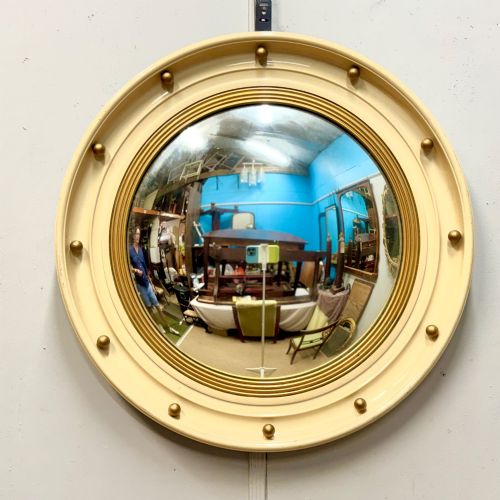
- Curved mirror glass that bulges outward to project a wide-angle, distortion-heavy reflection of the room. It was historically believed to allow staff to monitor a dining room.
- Giltwood
- Timber coated with gold leaf over a prepared gesso base. This finish provides a bright reflective surface that catches natural daylight.
- Ebonised slip
- A dark, black-painted inner moulding positioned directly around the mirror glass. It creates visual contrast against the surrounding gilt frame.
- Eagle surmount
- A carved wooden bird figure mounted at the very top of the mirror frame. Such ornaments were popular during the Regency period.
- Butler's mirror
- An alternative name for a convex wall mirror. These were traditionally hung in domestic service areas or reception spaces.
Regency Round Mirror: Frequently Asked Questions
Where should I hang a convex mirror?
These pieces work best on principal walls in reception rooms, halls or dining spaces where the curved glass can capture and reflect the entire room.
Because the optical glass shrinks the reflection, hanging them opposite a window or light source maximises their brightness.
How do I identify a Regency period piece?
Authentic Regency examples typically date from the early nineteenth century and feature hand-carved giltwood frames with specific classical motifs like ball-bearing borders and eagle crests.
Later Victorian and twentieth-century revivals often utilise similar forms but show distinct timber preparation and modern backing materials upon closer inspection.
What is an ebonised slip?
The slip is the narrow inner ring of the frame immediately touching the mirror glass, painted black to resemble ebony wood.
This dark band frames the reflection and visually separates the glass from the outer gilt ornamentation.
Why do these mirrors have curved glass?
The curved surface creates a panoramic reflection of the entire interior space within a compact circular frame.
Historically, this optical effect helped overseers monitor large rooms from a single vantage point.