

Regency Round Dining Table
A regency round dining table brings classical proportion and rich timber into a room, serving as both a practical dining surface and a grand centrepiece.
Regency Round Dining Table
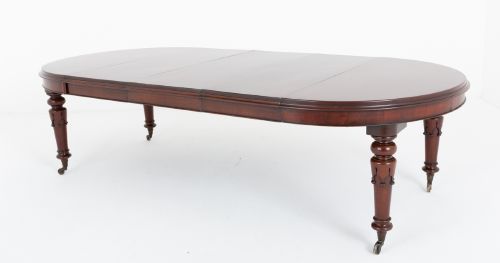
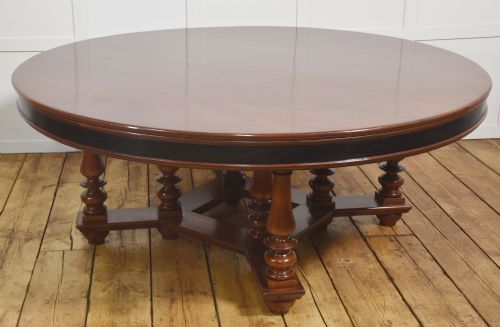
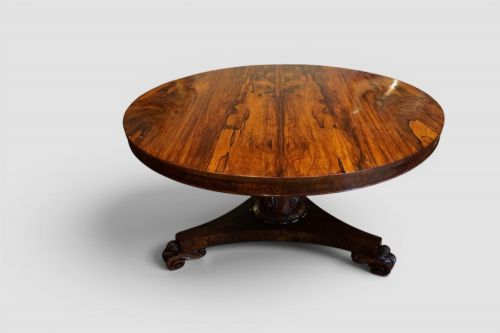
A regency round dining table encompasses circular dining tables, centre tables, and breakfast tables originating predominantly from the nineteenth century. Buyers searching for a regency round dining table will find substantial timber constructions spanning periods from the Georgian era through to William IV and the Victorian age.
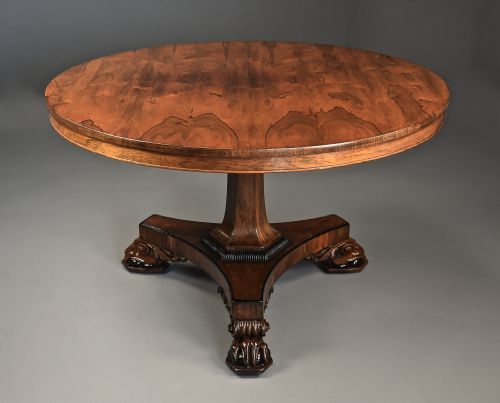
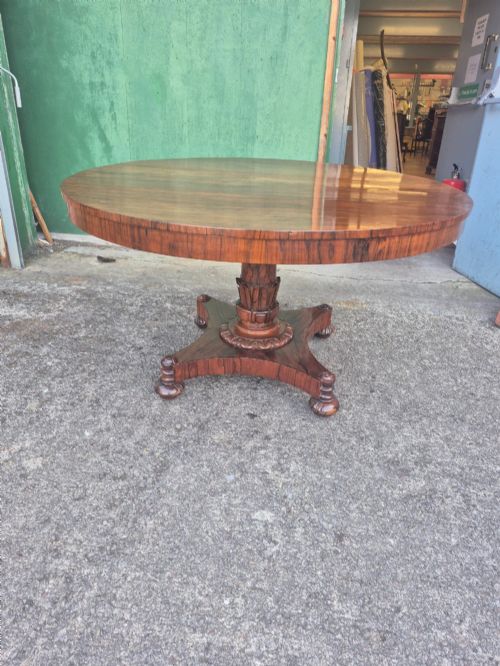
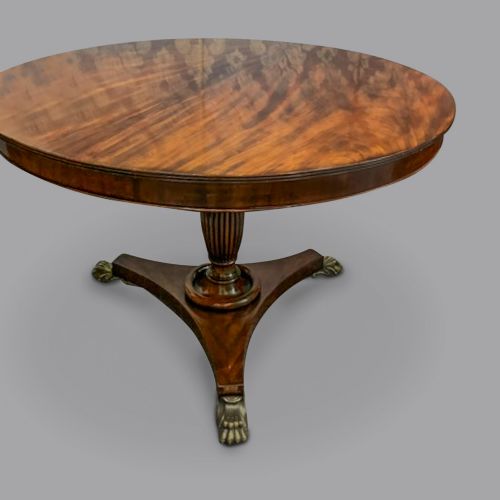
The most common formats on this page are pedestal tables with circular tops, frequently designed with tilt mechanisms or supported by triform bases. These tables bridge the gap between formal dining requirements and flexible daily placement in a hall or reception room.
What varies in quality
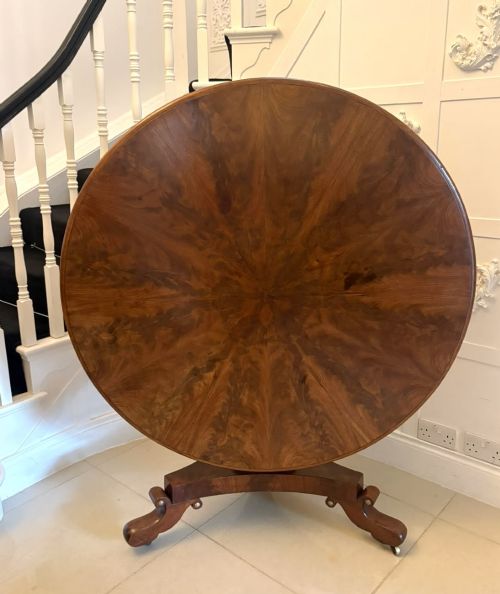
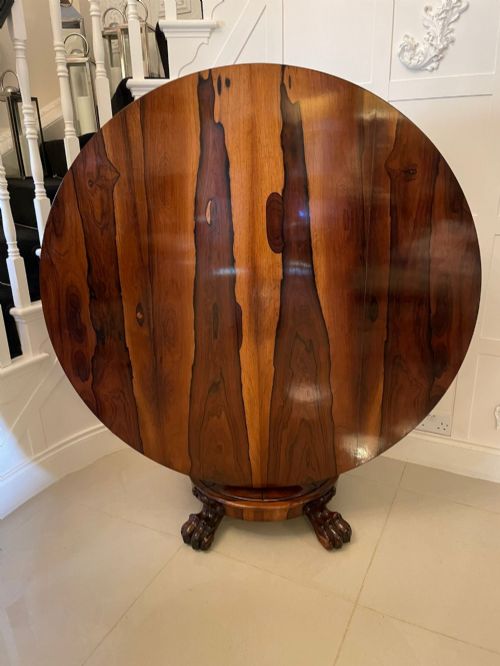
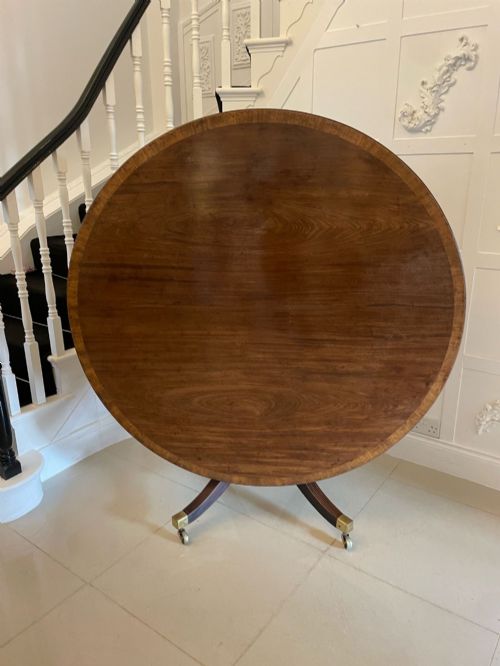
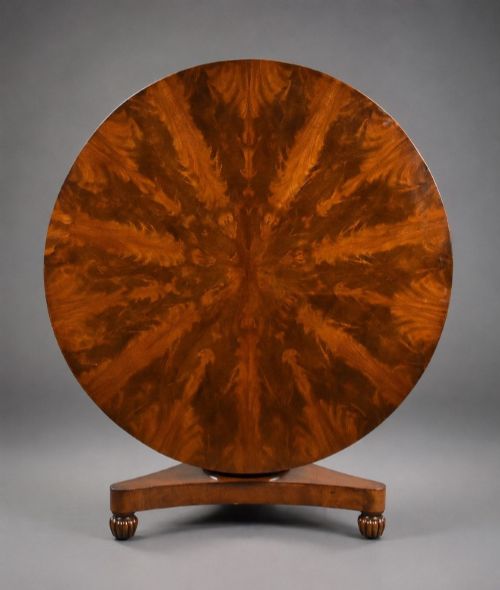
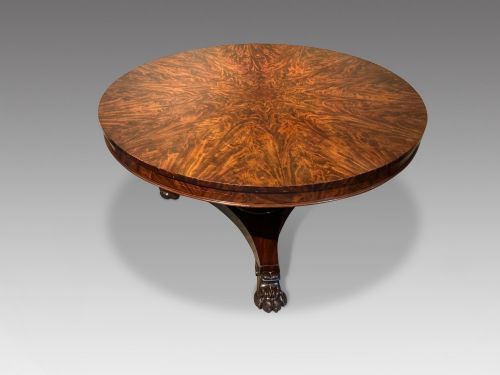
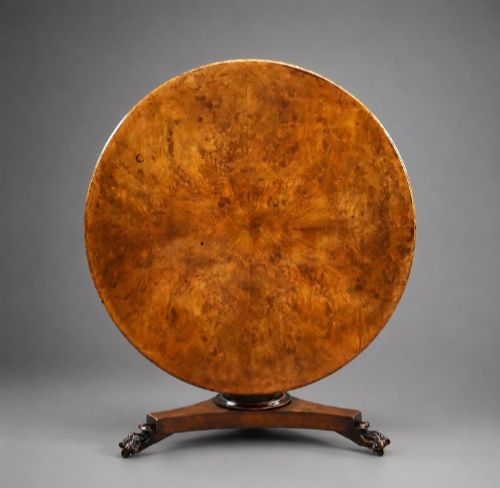
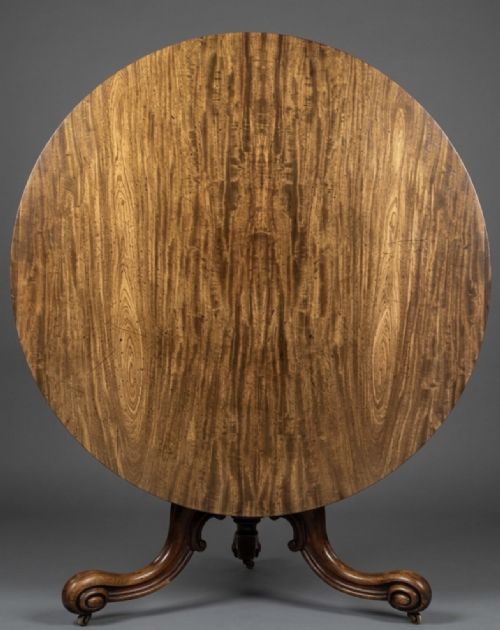
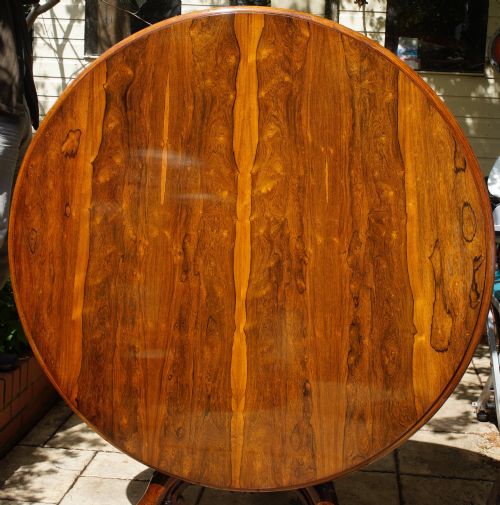
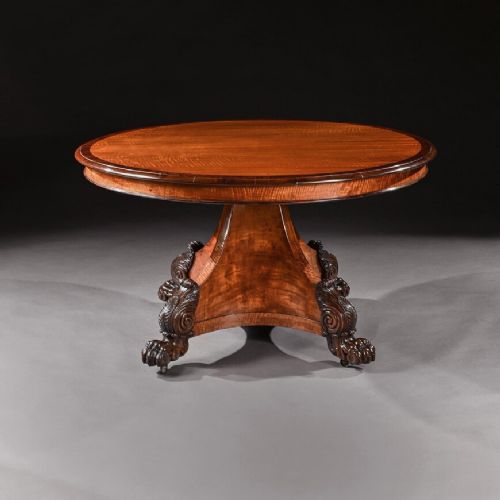
The standard of a regency round dining table depends heavily on the choice and handling of the timber veneers, where book-matched figure and careful crossbanding elevate the visual depth of the surface. Master craftsmanship is visible in the crispness of carved pedestal details and the seamless integration of tilt-top mechanisms that lock true without movement.
Proportion and the architectural harmony of the central pillar and base dictate the piece's overall presence, distinguishing standard provincial workshops from premier cabinet makers.
Listings feature mahogany, rosewood, satinwood, pollard oak, and burr elm across nineteenth-century periods.
Gillows·Peters of Genoa·Walker-Lancaster
The Regency Round Dining Table Glossary
- Tilt-top
- A hinged tabletop mechanism that allows the surface to tilt vertically when not in use, saving space and easing transport. This construction requires precise engineering to maintain a flat, stable surface when lowered.
- Crossbanding
- A decorative border of veneer laid perpendicular to the main grain of the tabletop. It frames the central panel and highlights the geometric shape of the circular top.
- Triform base
- A three-sided pedestal support resting on feet, commonly used on heavy dining and breakfast tables. It provides a wide footprint for stability beneath a central pillar.
- Flame mahogany
- A veneer cut from the fork of a mahogany tree where the branch meets the trunk. The resulting grain pattern resembles flickering flames of fire.
- Centre table
- A freestanding table designed to be viewed from all sides rather than pushed against a wall. These pieces often anchor the middle of a large entrance hall or principal room.
Regency Round Dining Table: Frequently Asked Questions
How do I seat six people around a round table?
Circular pedestal tables lack corner legs, which naturally frees up legroom and allows chairs to tuck underneath smoothly. A diameter of sufficient size accommodates six seats comfortably without crowding.
When arranging chairs, ensure the pedestal base or triform feet do not obstruct the placement of chair legs. Selecting a design with a central pillar provides maximum flexibility for guests.
What is the difference between a breakfast table and a dining table?
Breakfast tables traditionally featured tilt-top mechanisms to allow them to be stored against a wall when morning dining concluded. They served versatile functions in private chambers before being brought down for communal use.
Standard dining tables of the period were typically fixed-top designs built for heavier, permanent use. However, many circular tables listed today bridge both descriptions interchangeably.
How do I care for rosewood and mahogany surfaces?
Protect the polished timber from direct sunlight and excessive heat fluctuations to prevent the natural veneer from drying or fading. Regular dusting with a soft, dry cloth preserves the lustre of the polish.
Avoid using silicone-based polishes or harsh chemical sprays, which can penetrate historic finishes. Occasional applications of traditional beeswax nourish the wood and maintain its depth.
Can these tables be used in modern interiors?
The balanced proportions of circular tables make them exceptionally adaptable for breaking up the hard lines of contemporary rooms. They introduce warmth and texture through historic timber grains.
Pairing a classical pedestal table with modern seating creates a striking focal point in open-plan spaces or large kitchens. Their freestanding nature allows them to act as central hubs for dining or working.