





Regency Rosewood Shelving
Regency rosewood shelving combines rich tropical timbers with architectural proportions, offering functional display space for books and decorative objects in period interiors.
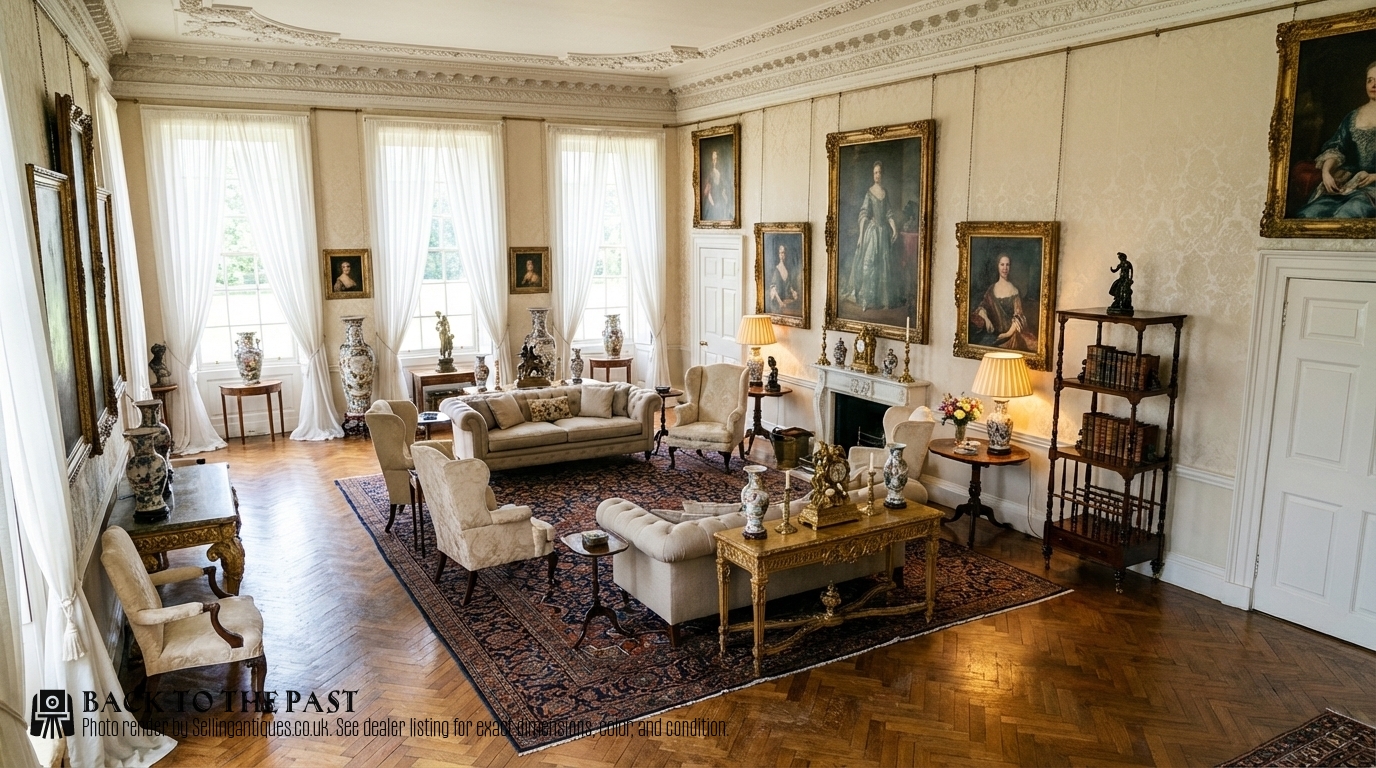
Regency Rosewood Shelving
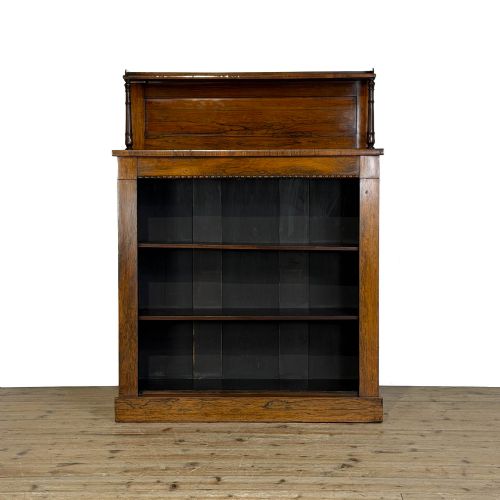
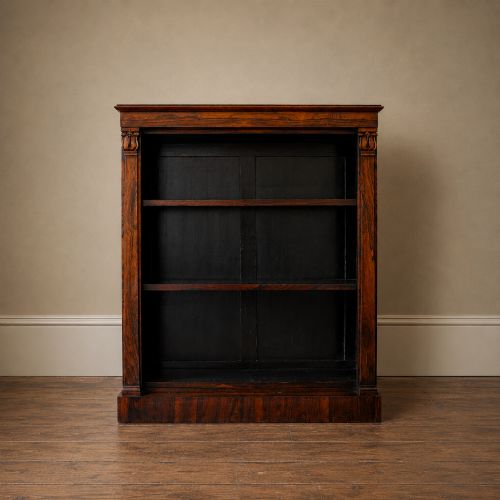
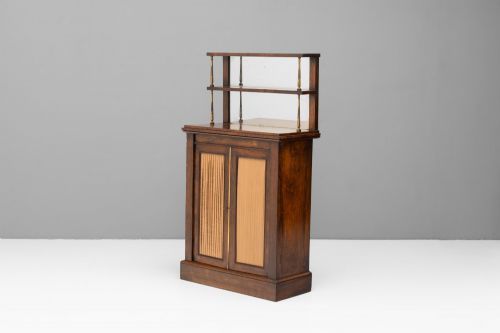
Regency rosewood shelving primarily comprises open bookcases, multi-tiered whatnots, wall shelves, and chiffoniers dating from the nineteenth century. These pieces reflect the neoclassical tastes of the Regency, George IV, and William IV periods, alongside later revival interpretations.
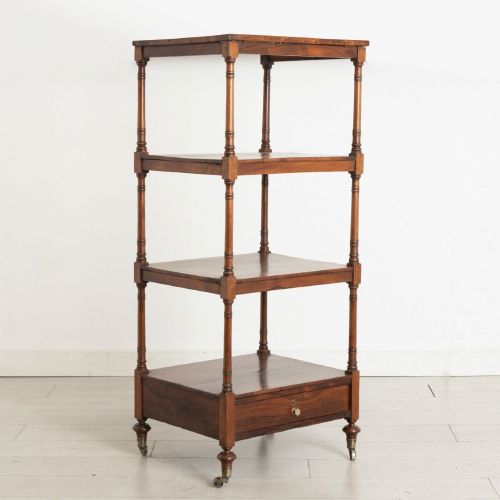
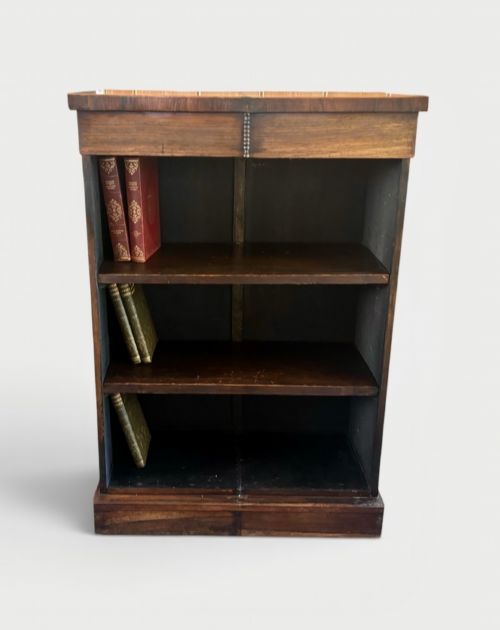
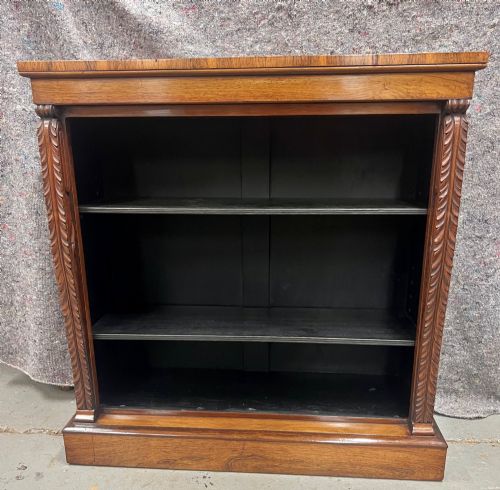
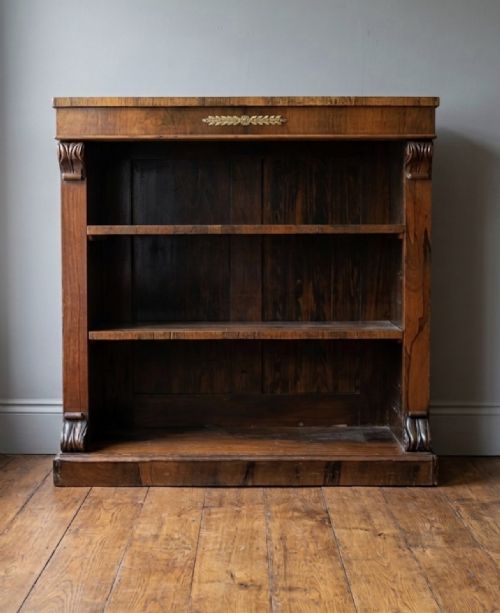
Open bookcases and standing whatnots dominate the available selection, frequently featuring adjustable tiers or graduated shelves. Examples range from compact single-bay units to larger breakfront configurations designed to stand against drawing-room walls.
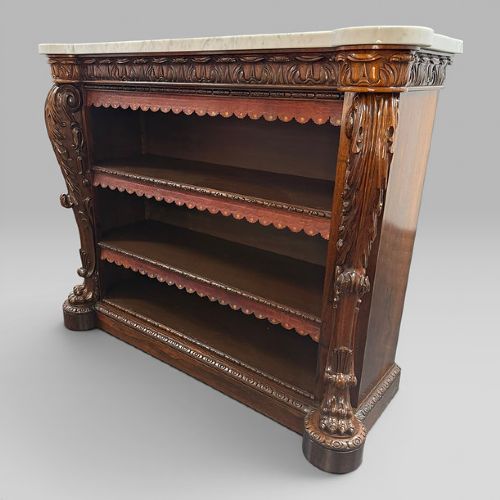
Makers utilised dark timber to create substantial yet elegant storage furniture that served both utility and display. The inventory includes specialised forms such as waterfall bookcases, etageres, and pieces with integrated side cabinets or marble tops.
Materials and Construction
Construction relies heavily on rosewood veneers applied to secondary woods such as pine, complemented by solid timber for structural elements. Workshops frequently enhanced these surfaces with brass inlay, parcel gilding, or simulated paint finishes to achieve high-status decorative effects.
Craftsmanship and Proportion
Distinction across the range lies in the selection of rosewood veneers, where striking grain figures and rich colouration elevate a piece. Finer examples display meticulous brass inlay and crisp architectural mouldings rather than plain surfaces.
Structural integrity and proportion separate standard items from superior works, particularly in breakfront bookcases and multi-tiered whatnots. Refined pieces maintain balance through slender uprights, precise joints, and well-integrated secondary materials like marble or glass.
Gillows
The Regency Rosewood Shelving Glossary
- Whatnot
- A freestanding piece of furniture consisting of multiple open shelves for displaying ornaments or books. These tier-based units became popular during the Regency period for parlour and drawing-room use.
- Breakfront
- A cabinet or bookcase whose central section projects forward from the flanking wings. This architectural arrangement creates depth and visual interest in larger library pieces.
- Chiffonier
- A low cabinet featuring shelving or a superstructure on top, evolved from sideboard designs. They often incorporate enclosed lower storage alongside upper display tiers.
- Waterfall bookcase
- A set of open shelves that steps back progressively from the bottom to the top. The tiers resemble descending water cascades.
- Parcel gilt
- Partially gilded decoration applied to carved wooden details or brass mounts. This technique highlights specific architectural motifs against dark rosewood surfaces.
Regency Rosewood Shelving: Frequently Asked Questions
What is a rosewood whatnot?
A rosewood whatnot is a multi-tiered open shelving unit designed for displaying small decorative items, porcelain, or books in nineteenth-century interiors. The stepped tiers are supported by slender turned columns or uprights.
These pieces typically stood against drawing room walls or in corners, offering accessible surface area without the visual weight of enclosed cabinetry.
How do I identify Regency shelving?
Regency shelving is characterised by classical architectural proportions, dark rosewood veneers, and understated ornamentation such as brass inlay or parcel gilding. Dating generally spans the early to mid-nineteenth century.
Look for construction methods typical of the period, including hand-cut dovetails, pine secondary woods, and adjustable shelf ratchets found in bookcases.
Were these shelves used for books?
Many examples function as open bookcases with adjustable shelves to accommodate varying octavo and folio volumes. Some pieces also served dual purposes for general display alongside libraries.
Bookcases of this era frequently sat in libraries, studies, or formal parlours where homeowners kept leather-bound volumes accessible for daily reading.
What does simulated rosewood mean?
Simulated rosewood refers to painted wood finishes created to imitate the dark grain and warm tones of genuine tropical timber. Craftsmen used this technique on secondary woods to achieve an expensive aesthetic economically.
These painted surfaces display artistically rendered grain patterns that mimic natural rosewood while utilising available domestic timber stocks.