


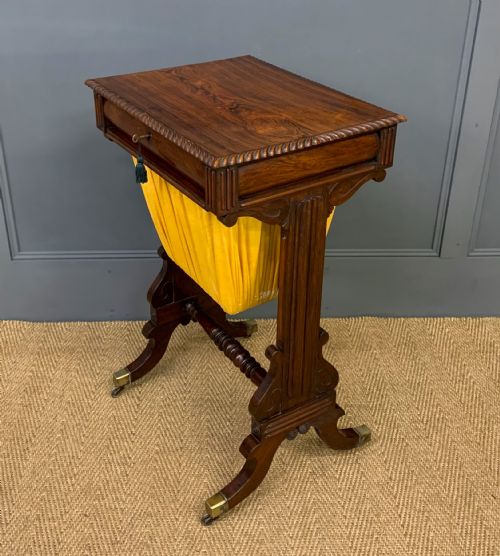

Regency Rosewood Sewing Box
A regency rosewood sewing box brings finely grained timber and fitted compartments together to keep needlework tools organised in style.
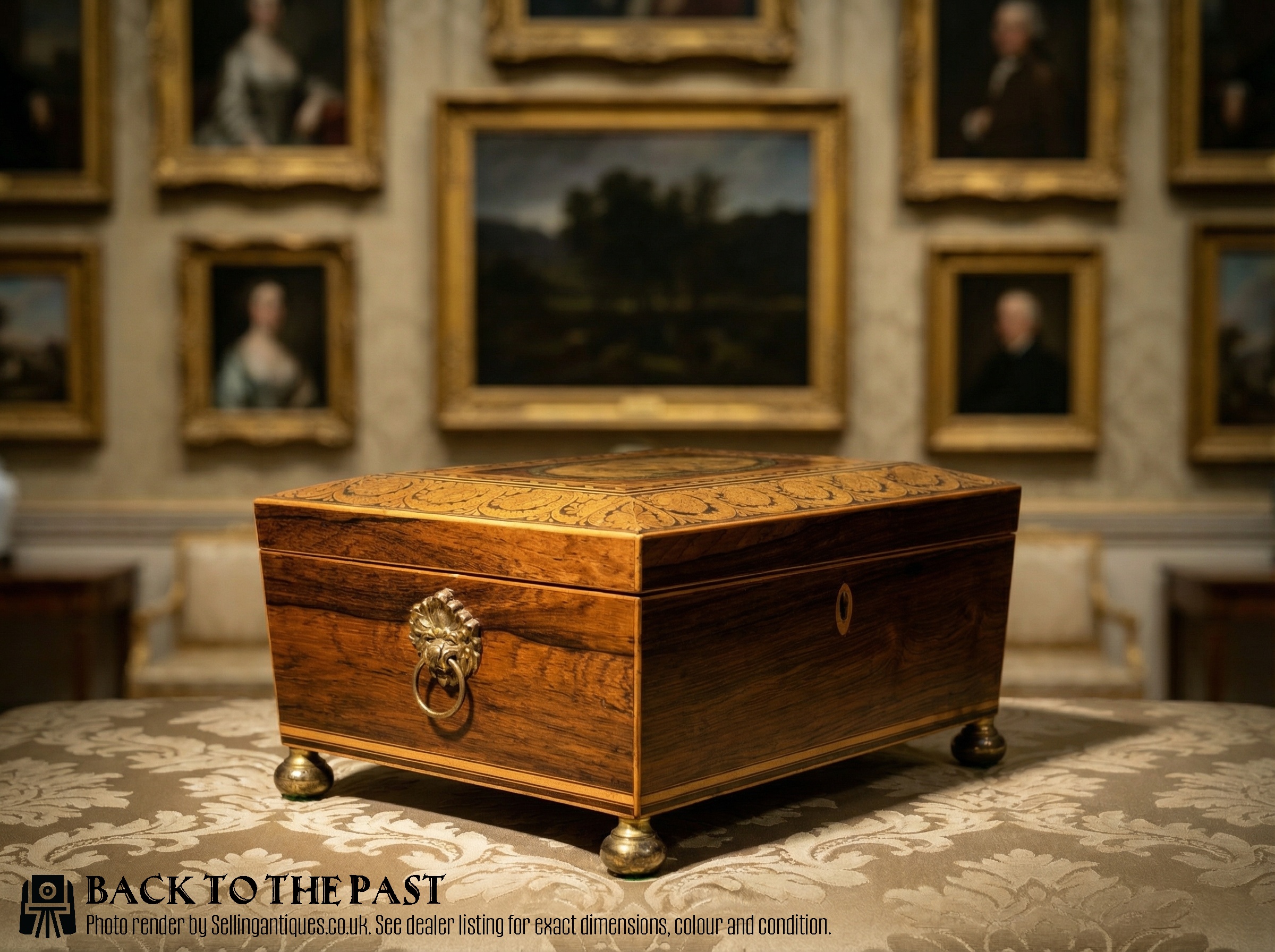
Regency Rosewood Sewing Box
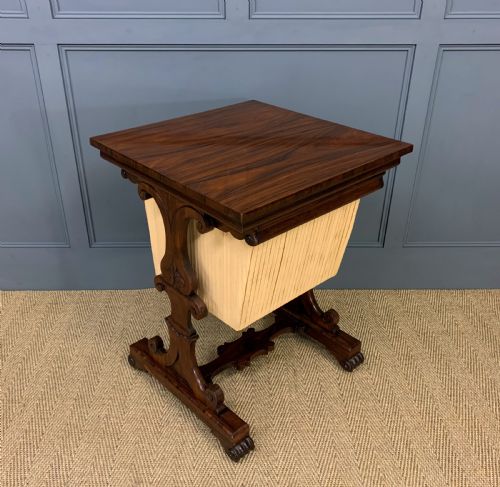
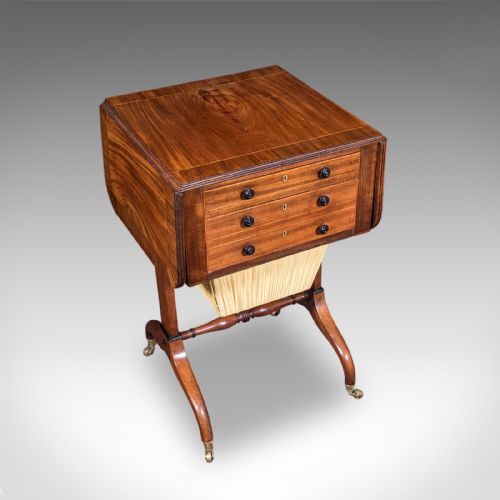
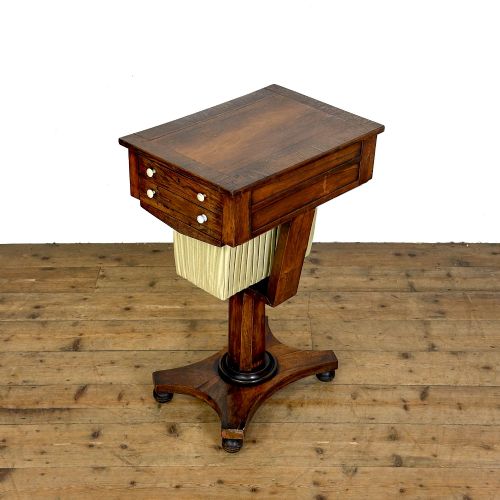
When you search for a regency rosewood sewing box, you encounter compact tabletop boxes as well as larger freestanding work tables designed for domestic needlework. The tabletop versions appear frequently, often featuring fitted interiors with small compartments and lids.
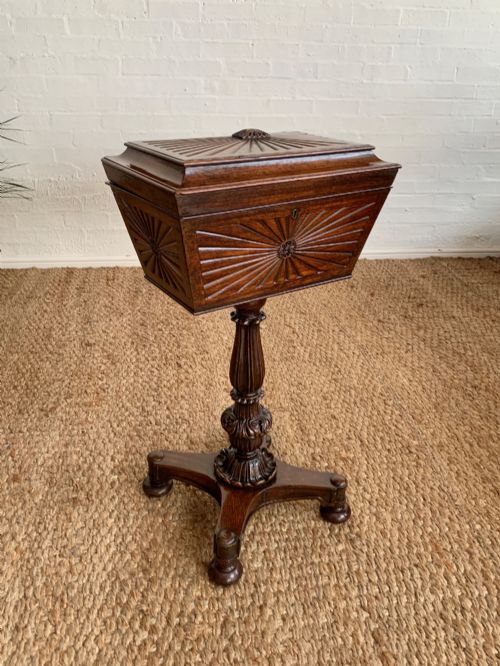
The pieces span the Regency, George IV, and William IV periods, extending into early Victorian production. Alongside standard box forms, the selection includes drop leaf tables, occasional tables, teapoys, and specialised sewing baskets.
Makers utilised rich timbers and decorative accents to create pieces that functioned as both practical sewing companions and elegant household furniture. Most examples combine timber construction with textile linings and internal compartments intended for threads, needles, and pins.
Materials and construction
Makers constructed these pieces primarily using rosewood, supplemented by secondary timbers such as mahogany and boxwood. Brass inlay, mother of pearl, and wood inlay frequently embellish the exterior surfaces.
Interiors typically incorporate fabric and silk linings to protect delicate sewing implements and contents. Specialised techniques such as Tunbridge Ware decoration and sunburst carving appear on specific examples.
A tiny surviving pincushion tucked inside an eighteenth-century box proves that historic domestic tasks involved serious miniaturisation.
Distinctions in quality
Quality rests upon the precision of the inlay work, the richness of the rosewood grain, and the preservation of the internal silk or fabric fittings. Pieces featuring intricate mother of pearl or brass stringing demonstrate greater artisanal skill.
Structural integrity of the drop leaves, caddy tops, and fitted compartments separates standard production from finer examples. The survival of original interior components and internal trays enhances the integrity of the piece.
Gillows of Lancaster
The Regency Rosewood Sewing Box Glossary
- Rosewood
- A dense, heavily figured timber prized for its dark grain and polished finish. It served as the primary material for high-status cabinet work during the early nineteenth century.
- Tunbridge Ware
- A type of decorative woodwork characterised by mosaic patterns built from tiny wood blocks. Artisans applied this technique to small boxes and baskets.
- Teapoy
- A small freestanding table or box designed to hold tea canisters, which occasionally shares forms and internal arrangements with sewing boxes.
- Work Table
- A freestanding table incorporating drawers, drop leaves, or fabric bags for storing sewing materials and needlework.
- Mother of Pearl
- An iridescent inner layer of mollusc shell used for decorative inlay work on box lids and escutcheons.
Regency Rosewood Sewing Box: Frequently Asked Questions
What was inside a sewing box?
These boxes typically contained fitted compartments for spools, needles, pins, and small scissors. Many retained silk-lined sections designed to keep delicate sewing tools secure.
Internal trays often lifted out to reveal deeper storage space below for larger fabrics and patterns.
How do I date a rosewood box?
Dating relies on stylistic markers such as brass inlay patterns, foot designs, and structural proportions. Pieces from the Regency period often display crisper carving and more restrained classical motifs than later Victorian variants.
Secondary woods and construction methods inside the box also help establish the approximate period of manufacture.
Were these boxes used for sewing only?
While primarily built for needlework, many boxes served multiple domestic purposes including letter writing and jewellery storage. Some incorporated games boards or chess tables into their lids or folding tops.
Freestanding work tables often functioned as occasional side tables in drawing rooms when not in active use.
Why is rosewood common on these pieces?
Rosewood offered a dark, heavily figured surface that took a high polish, making it fashionable for formal domestic furniture. Its density allowed cabinet makers to create durable small boxes and intricate veneer patterns.
Imported timber trades during the early nineteenth century made this material widely available to English workshops.