
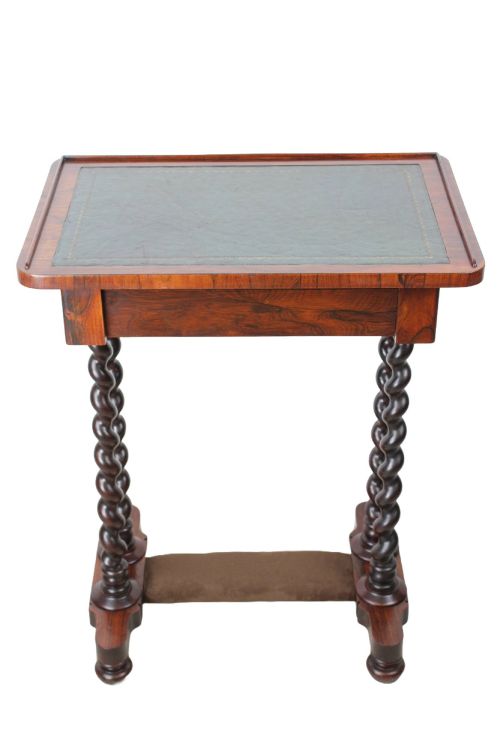
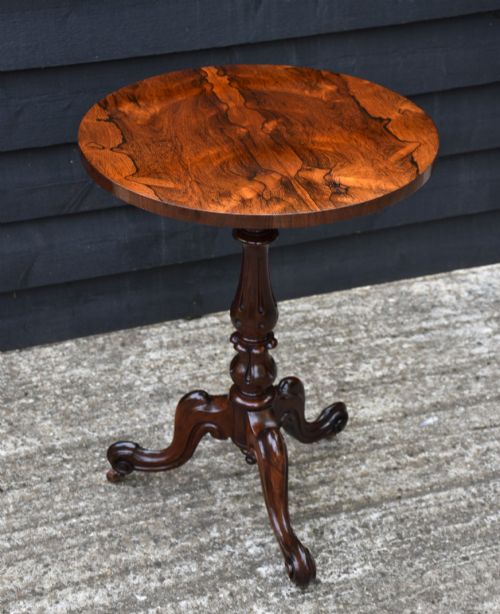
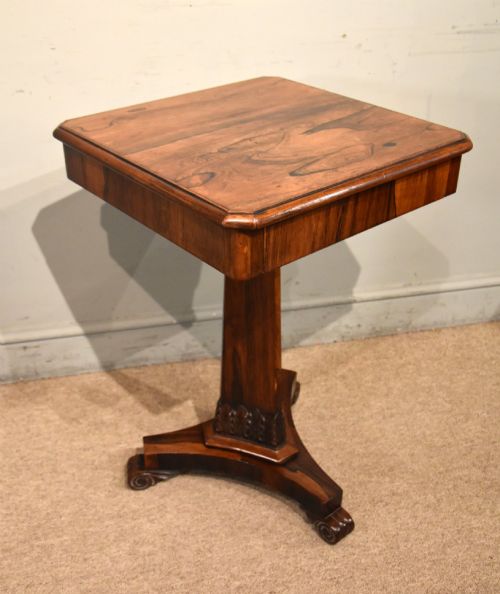
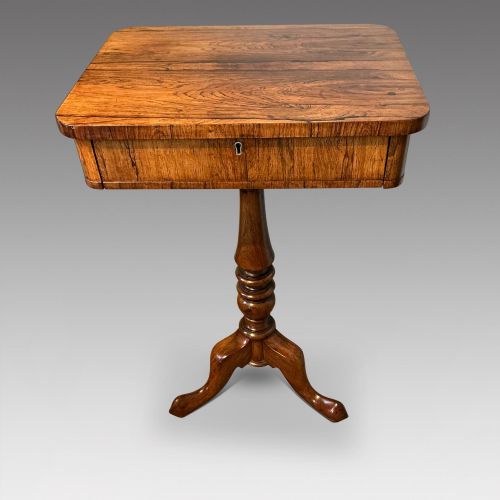



Regency Rosewood Lamp Table
A regency rosewood lamp table offers refined dark timber surfaces and elegant proportions designed to hold a candle or oil lamp beside an evening seat.

Regency Rosewood Lamp Table
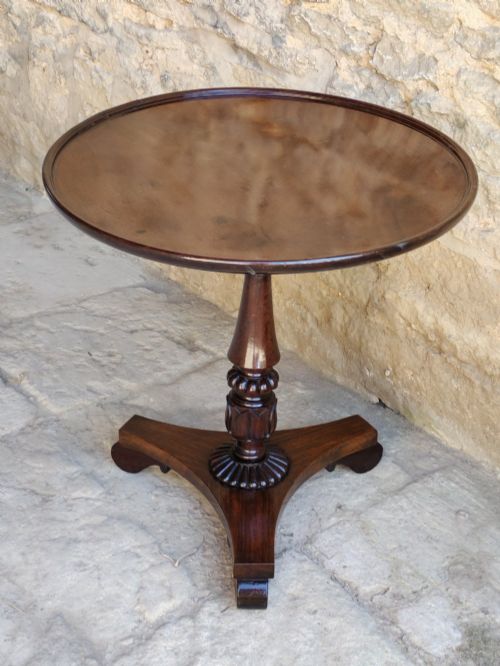
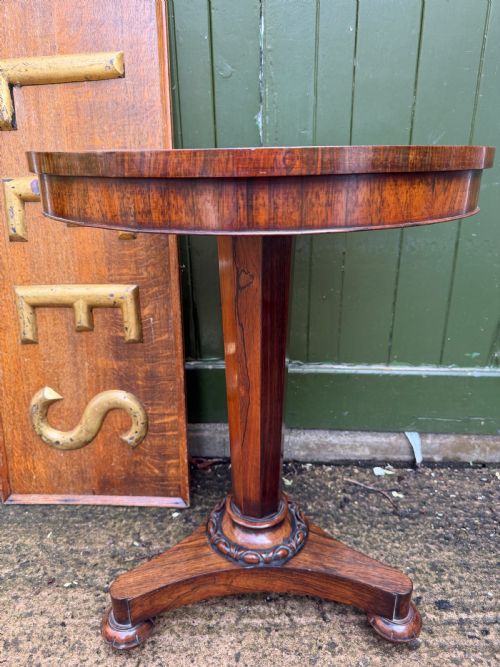
A regency rosewood lamp table is a small, versatile piece of nineteenth-century furniture designed primarily to support illumination in a principal room. The form appears across the Regency, George IV, and William IV periods, alongside later nineteenth-century pieces.
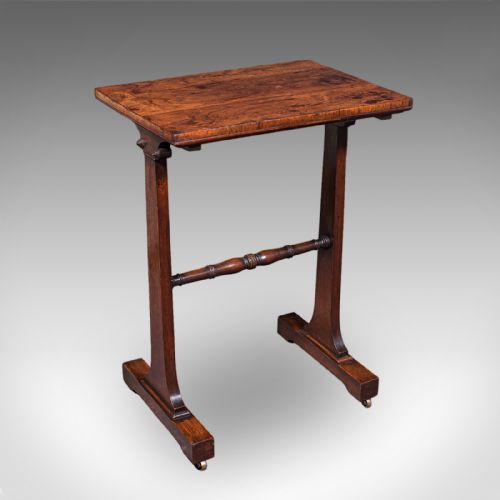
The evidence shows these tables functioning in multiple capacities, including as side tables, occasional tables, wine tables, and sewing tables. Circular, rectangular, and square top variants dominate the selections recorded in the archives.
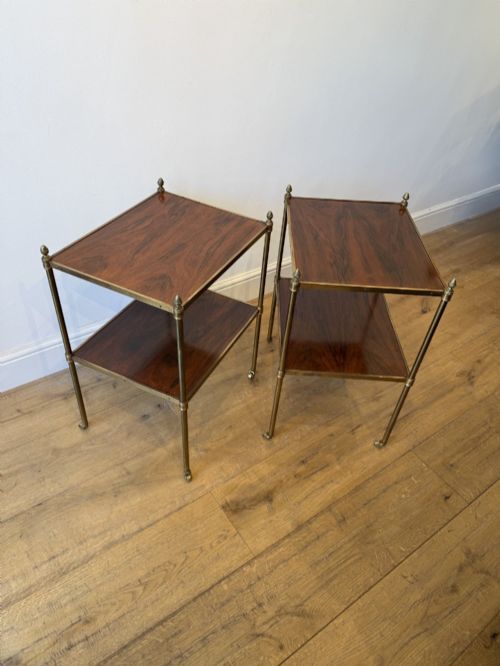
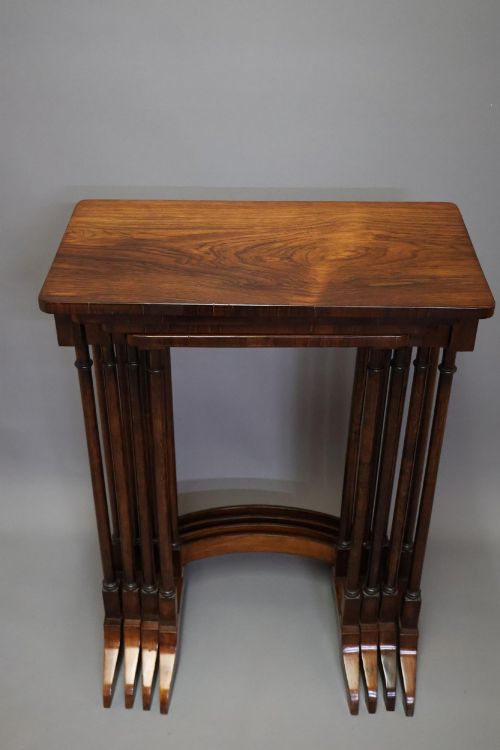
Makers and workshops adapted the domestic interior by producing nests of tables, two-tier etageres, and drop-leaf formats. These pieces ground a room with deep timber tones and traditional craftsmanship.
How They Were Made
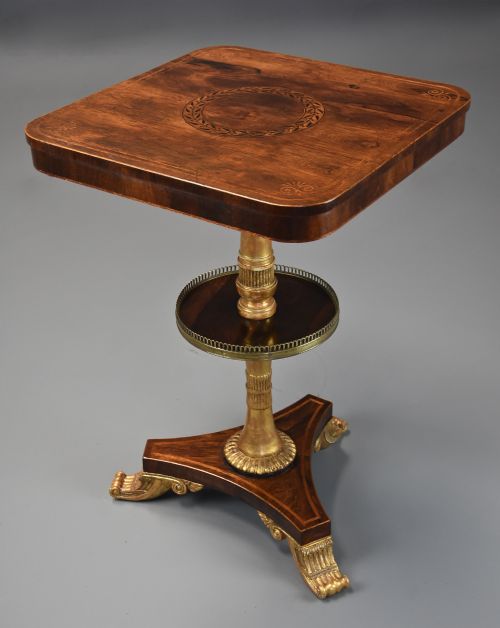
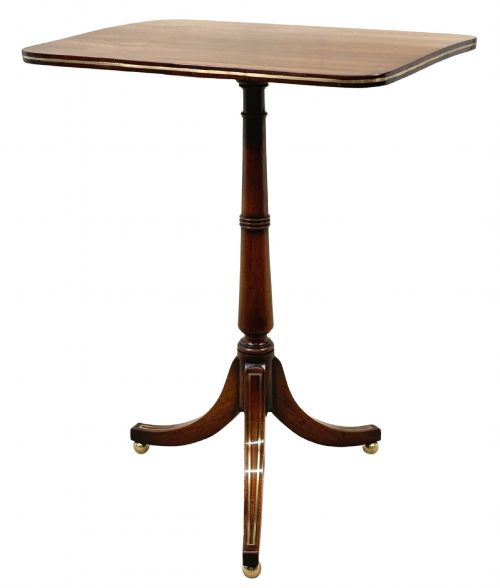
Cabinet makers utilised dense, richly figured rosewood veneers applied to supportive secondary timbers, often accented with contrasting brass stringing and inlay. Polished surfaces highlight the natural grain patterns characteristic of the period.
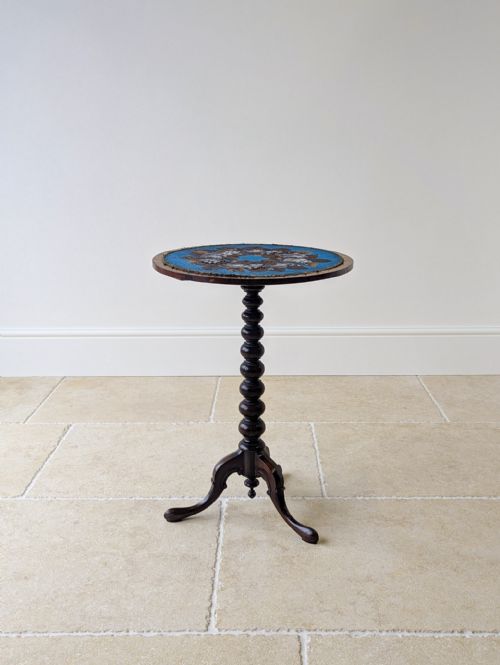
Structural supports vary from slender tripod bases to robust pillar columns and pedestal designs. Selected examples incorporate specialised compartments for sewing or drop leaves supported by hinged brackets.
Several tables doubling as sewing repositories hint at nineteenth-century evenings spent darning socks by candlelight.
What Varies in Quality
Excellence in these pieces rests upon the choice of timber figure, the precision of brass inlay, and the crispness of turned or carved supports. Finer examples display harmonious proportions and seamless integration of functional elements like drawers or compartments.
Secondary detailing, such as the quality of the pedestal base or the joinery of the table top, separates standard workshop production from pieces attributed to notable cabinet makers.
Gillows·George Bullock·George Smith·Mallett·Freemans Norwich·Druce And Co London
The Regency Rosewood Lamp Table Glossary
- Rosewood
- A heavy, durable tropical timber prized for its dark colour and dramatic contrasting grain. This wood forms the primary visual identity of the furniture listed.
- Brass Inlay
- Thin strips or motifs of brass embedded flush into the timber surface to create geometric or classical patterns. This technique defines the more decorative Regency items.
- Tripod Table
- A small occasional table supported by a central pillar resting on three spreading feet. This construction allows stability on uneven floors.
- Quartetto
- A matched set of four graduating tables designed to slide one beneath another. They serve a space-saving function in a drawing room.
- Teapoy
- A small box table on a pillar stand originally used for storing tea leaves. These often double as lamp tables in modern settings.
Regency Rosewood Lamp Table: Frequently Asked Questions
What is a regency rosewood lamp table?
A regency rosewood lamp table is a compact nineteenth-century stand built to hold lighting near a chair or sofa. These tables feature rich dark timber and compact proportions suited to various living spaces.
They appear in circular, rectangular, and drop-leaf formats, often incorporating single drawers or multiple tiers for storage.
How were they used historically?
These tables served primarily to support candles, argand lamps, or oil lamps in principal reception rooms. Their movable nature allowed servants to reposition them as evening illumination required.
Many examples also incorporated facilities for needlework, writing, or serving light refreshments during social gatherings.
How do I live with one today?
A regency rosewood lamp table functions well beside a modern sofa or as an accent piece in a hallway. Their rich timber tones complement both traditional and contemporary interiors.
Care should be taken to protect the polished surface from direct moisture and strong sunlight to preserve the finish.
How can I tell the periods apart?
Regency and George IV pieces tend to feature refined neoclassical lines, delicate brass inlay, and slender pillars. William IV examples often display heavier proportions, bolder pedestal bases, and robust carved details.
Later nineteenth-century revivals borrow these earlier motifs while employing slightly different construction techniques and secondary woods.