

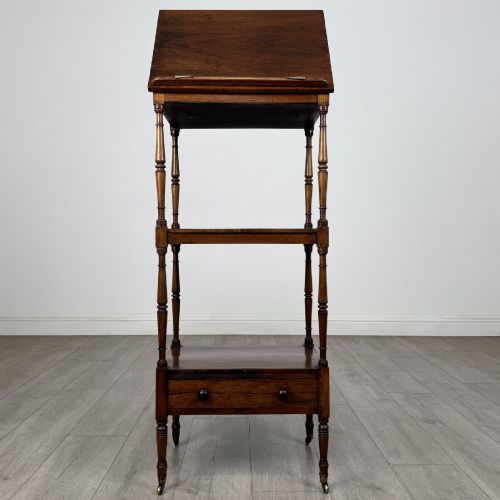
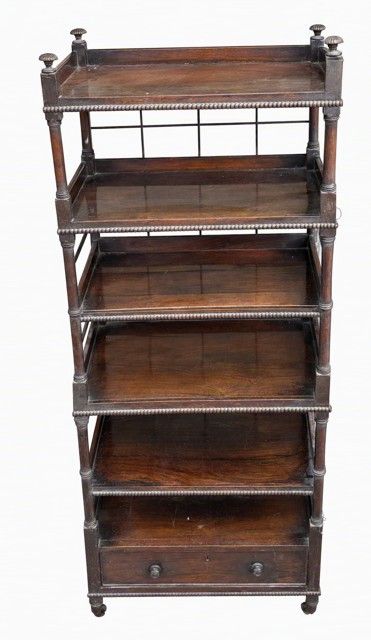
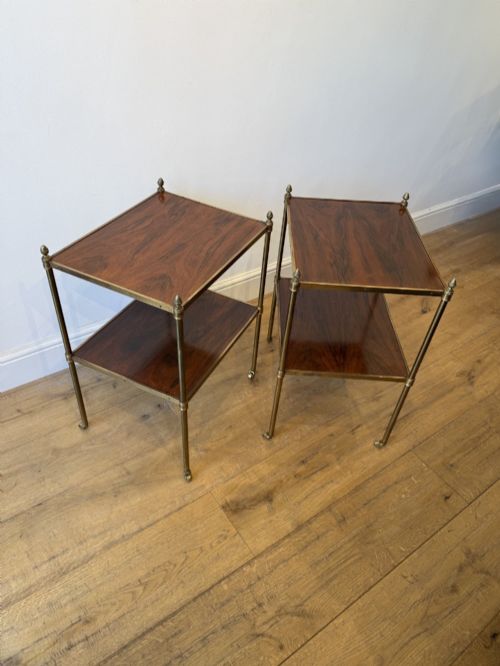
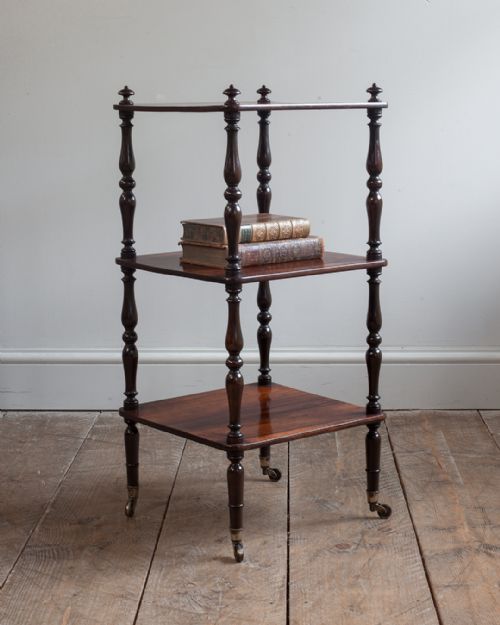


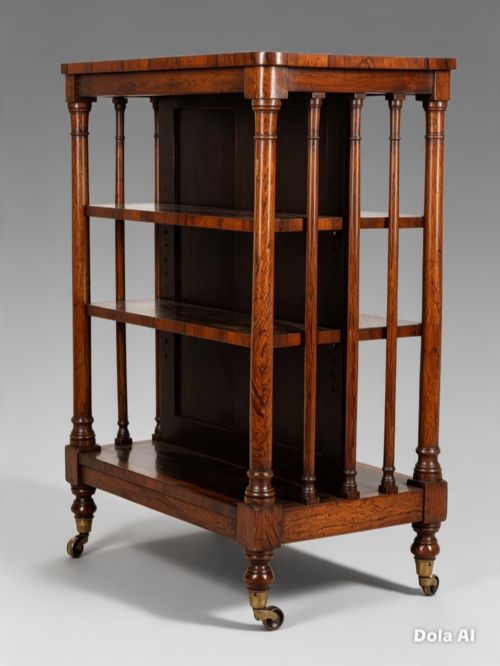


Regency Rosewood Etagere
Regency rosewood etagere pieces are tiered open display furniture prized for their figured grain and elegant architectural profiles.
Regency Rosewood Etagere
A regency rosewood etagere provides open tier shelving designed for the display of books, folio collections, and decorative objects. These open display pieces span the Regency, William IV, and George IV periods, alongside later nineteenth century and nineteen-twenty interpretations.
The form appears frequently as a multi-tier whatnot or tiered display stand, often incorporating lower drawers or music compartments. Variants range from compact small tables and metamorphic three tier tables to double sided bookcases and drinks trolley formats.
Makers and workshops of the period utilised rich timber reserves to construct these tiered structures for prominent placement within domestic interiors. Surviving examples demonstrate the versatility of open shelving across diverse room settings.
Materials and Construction
Makers built these pieces primarily from rosewood, selected for its deep colour and distinct grain patterns, occasionally combining it with walnut or mahogany in multi-form items. Brass components, including gilt brass mounts and structural details, appear frequently across the documented items.
Additional material integration involves mirror glass backings, leather surfaces, and giltwood accents to enhance the visual depth of the shelving. Construction methods support multi-tier stacking, drawer integration in bases, and occasional metamorphic mechanical movement.
Regency Rosewood Etagere Retail Price Guide 2026
Typical asking prices for regency rosewood etagere among the pieces listed under this phrase on Sellingantiques today, from the lower quarter to the upper quarter. They describe what is for sale here now, not the wider market.
Recorded materials combine rosewood and mahogany with brass, giltwood, mirror glass, and leather.
Assessing Quality and Execution
Quality rests upon the selection of rosewood veneers and the precision of the joinery connecting the supporting uprights to the open shelves. Finer execution shows in balanced proportions across multiple tiers, refined brass detailing, and the integration of functional elements such as frieze drawers.
Mallett
The Regency Rosewood Etagere Glossary
- Etagere
- A piece of furniture consisting of a set of open shelves for displaying small objects or books. The form developed during the eighteenth century and remained popular through the nineteenth.
- Whatnot
- A multi-tiered shelving unit used for storage and display. It serves a similar function to the etagere and the terms frequently overlap in period descriptions.
- Canterbury
- A low stand with partitioned vertical sections, originally designed for holding sheet music or folios. This feature occasionally integrates into the lower section of an etagere.
- Metamorphic
- Furniture designed to transform from one form into another, such as a table that converts into tiered shelving. These pieces utilise concealed hinges and folding leaves.
- Gilt brass
- Brass treated with a gold wash or gilding technique to impart a bright metallic finish. It highlights structural joints and decorative mounts on rosewood frames.
Regency Rosewood Etagere: Frequently Asked Questions
What is a regency rosewood etagere used for?
These pieces provide open shelving for displaying books, ceramics, and decorative objects in principal rooms.
Historically, they also accommodated folios, sheet music, and occasional drinks service depending on the specific tier configuration.
How do you style an etagere at home?
Place the unit against a principal wall or use a double-sided version as a room divider.
Balance the open shelves with books, small sculptures, and framed works to let the rosewood grain remain visible.
How do I tell a Regency etagere from a Victorian one?
Regency and George IV examples generally display restrained neoclassical lines, crisp brass mounts, and well-figured rosewood timbers.
Later Victorian and William IV iterations often feature heavier proportions, bolder turning on the upright supports, and alternative decorative carving.