





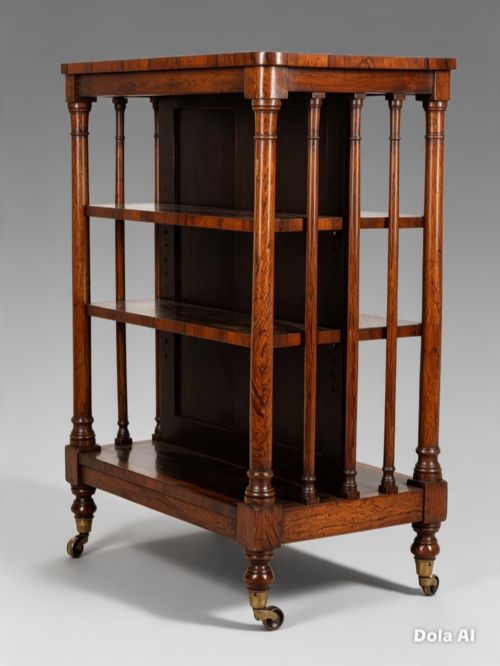


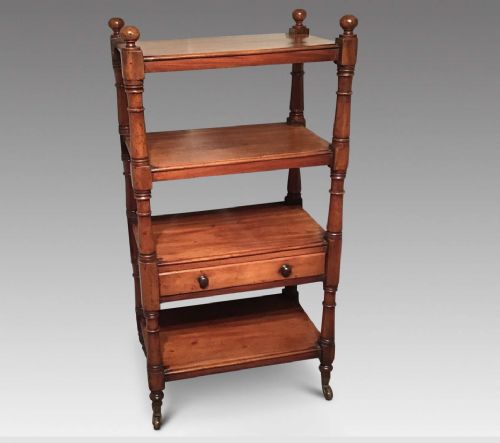
Etagere on Castors
An etagere on castors is a tiered shelving piece built for mobility, offering useful surface space across multiple open levels.
Etagere on Castors
An etagere on castors is a tiered shelving piece built for mobility, appearing alongside related forms such as whatnots, side tables, and occasional tables across the inventory. These multi-level pieces serve as versatile display and storage surfaces that can be easily moved across a room.
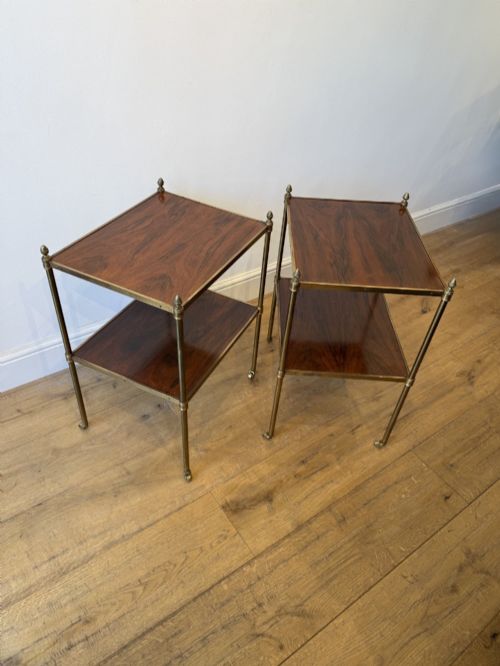
Forms vary from compact two-tier occasional tables to taller shelving stands, music stands, and double-sided bookcases equipped with castors. This selection provides flexible options for organising books, displaying decorative objects, or supplementing surface space in domestic interiors.
Materials and construction methods
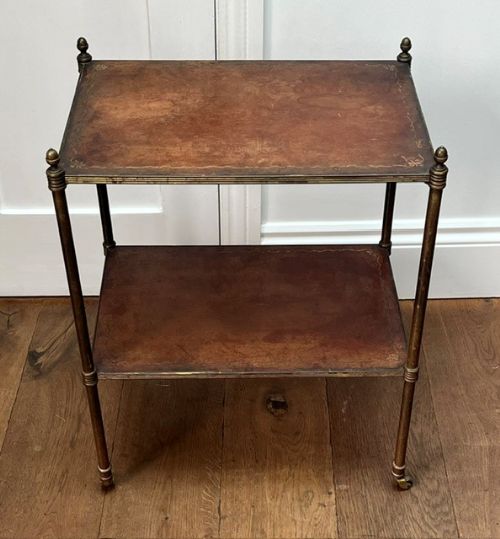
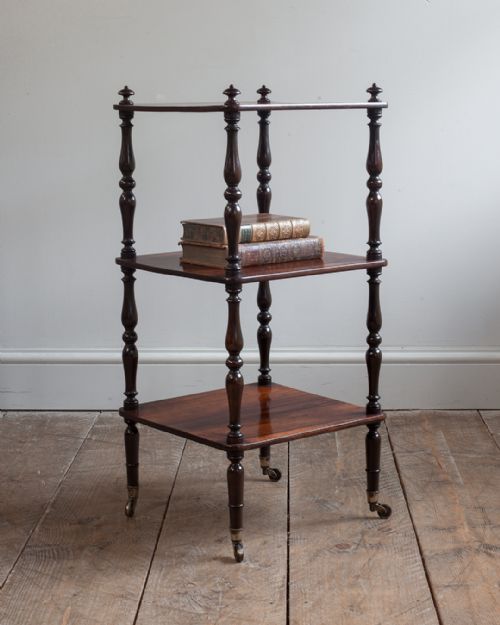
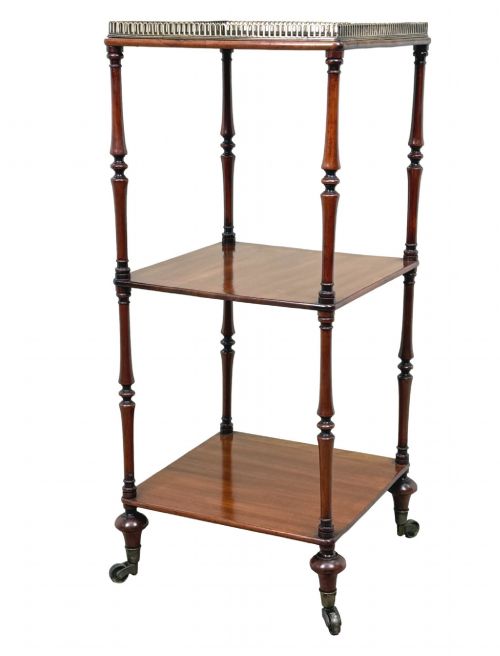
Construction techniques focus on tiered platform designs supported by turned feet, pillars, or upright columns that carry multiple open shelves. Secondary elements incorporate tooled leather surfaces and lacquered brass finishes to enhance both the utility and appearance of the furniture.
Etagere on Castors Retail Price Guide 2026
Typical asking prices for etagere on castors among the pieces listed under this phrase on Sellingantiques today, from the lower quarter to the upper quarter. They describe what is for sale here now, not the wider market.
Several pieces include the reassurance of original castors, proving that nineteenth-century furniture was built to roll with the demands of the household.
Distinctions in quality
Quality in an etagere on castors rests upon the selection of timber and the sophistication of its grain, where highly figured veneers like burr elm and birdseye maple elevate the piece. The crispness of the turning on the upright supports and the integration of original castors indicate the level of care taken by the cabinet-maker.
Proportion and scale distinguish superior examples, particularly in diminutive or unusually designed pieces from the Georgian and Regency periods. The structural integrity of the tiered platforms and the precision of the joinery determine how well the piece maintains its stability over time.
Mallett
The Etagere on Castors Glossary
- Etagere
- A piece of furniture consisting of a set of open shelves for displaying small objects or books. These tiered stands are designed for accessibility and visual display.
- Whatnot
- A multi-shelved open cabinet or stand used for storing or displaying ornaments, books, and curiosities. This term is frequently used interchangeably with etagere in period listings.
- Castors
- Small wheel attachments fixed to the feet of furniture to allow easy rolling and repositioning. They are commonly made of brass and turned wood in older pieces.
- Birdseye maple
- A figured timber showing small, characteristic circular markings resembling bird eyes within the grain. Cabinet-makers used this veneer on decorative surfaces.
- Burr walnut
- A distinctive wood grain harvested from tree growths, yielding intricate swirling patterns. It was favoured for high-status furniture during the nineteenth century.
Etagere on Castors: Frequently Asked Questions
What is an etagere on castors used for?
An etagere on castors provides movable open shelving for displaying decorative objects, holding books, or serving as an occasional surface. Its tiered design maximises vertical space while remaining easy to reposition across a room.
Historically, these pieces functioned as flexible furniture for drawing rooms, boudoirs, and libraries where additional surface space was needed temporarily. Today, they serve a similar role in domestic interiors for organised display.
How do I date a Regency etagere?
Dating a Regency etagere involves examining the timber species, construction methods, and stylistic cues characteristic of the early nineteenth century. Regency pieces frequently employ mahogany or rosewood with restrained classical lines and turned supports.
Comparing the turned feet, joinery style, and hardware against documented pieces from the period helps narrow down the decade of manufacture. Original castors and traditional finishing techniques also provide reliable indicators of age.
What is the difference between an etagere and a whatnot?
An etagere and a whatnot are closely related open-shelved furniture forms that often overlap in historical listings and descriptions. While etagere originates from the French term for a tiered stand, whatnot is a traditional English name for a similar shelving unit.
Both pieces feature multiple open levels supported by pillars or columns, though individual examples may vary in height, shape, and the inclusion of drawers or panels.
How should I care for a wood and brass etagere?
Caring for a wood and brass etagere requires maintaining stable indoor humidity levels to protect delicate veneers like burr walnut or birdseye maple. Regular dusting with a soft, dry cloth preserves the polished timber surface without causing moisture damage.
Brass castors and fittings can be cleaned gently with a dedicated metal polish if required, taking care to avoid contact with the surrounding wood. Periodic checks ensure that the structural joints and wheel fixtures remain secure.