



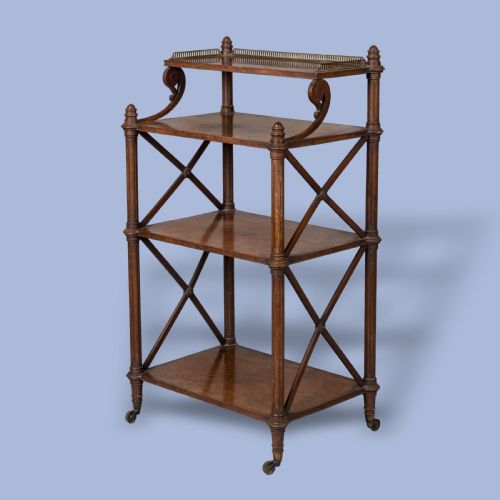
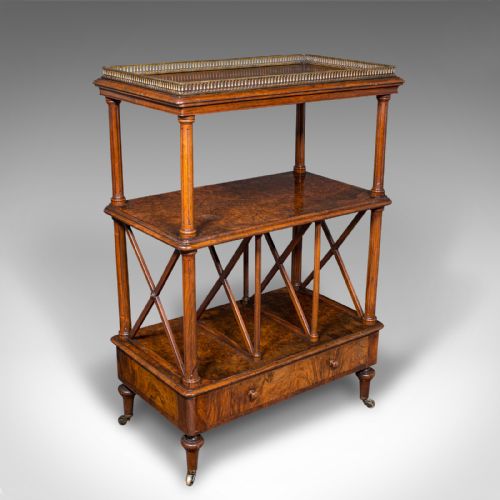
Regency Three Tier Etagere
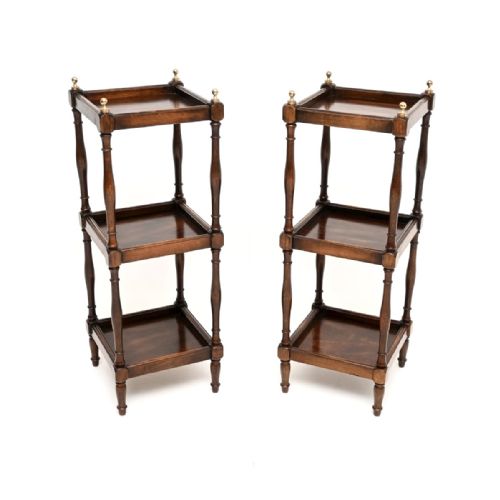
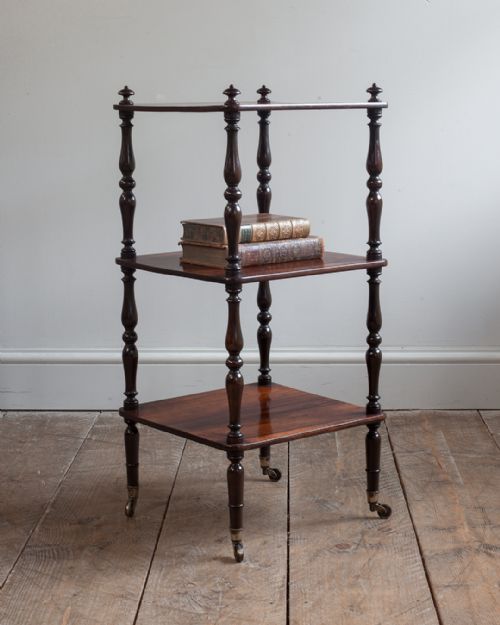
A regency three tier etagere provides tiered open shelving for books and display, uniting architectural proportion with practical utility.
Regency Three Tier Etagere
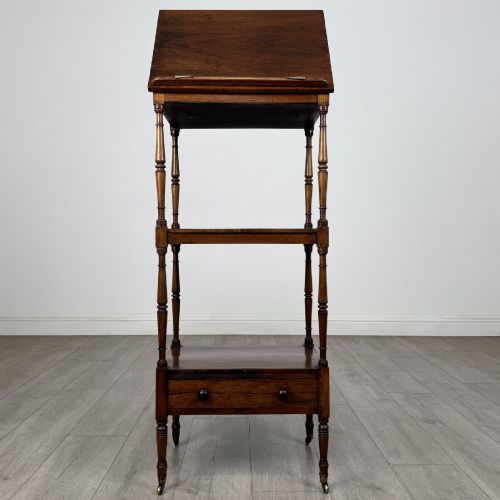
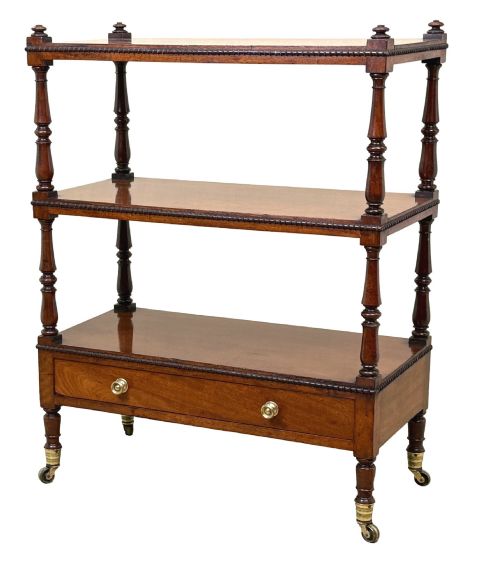
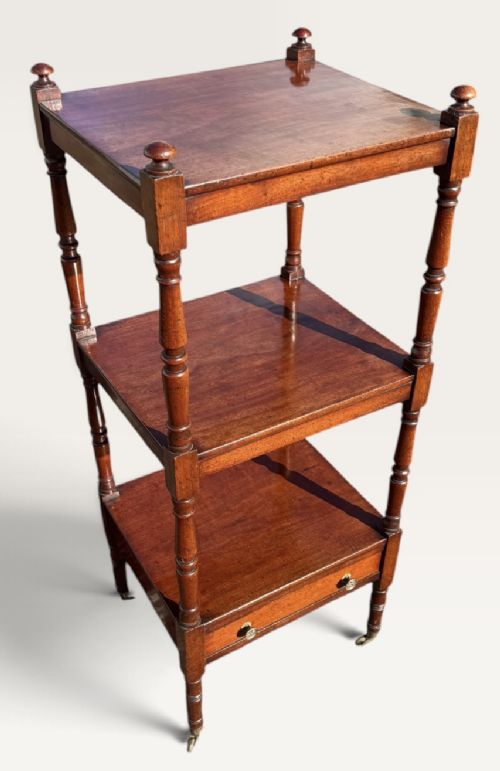
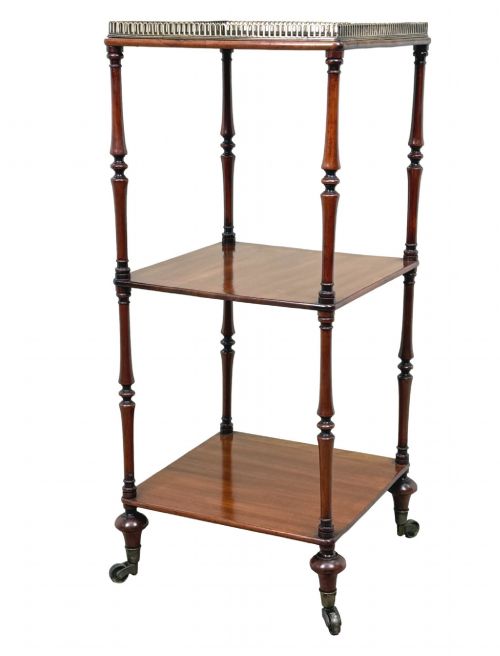
A regency three tier etagere is an open display stand built with multiple stacked platforms supported by upright columns or slender legs. These pieces emerge predominantly from the Regency, Georgian, and William IV periods, alongside later nineteenth century interpretations.
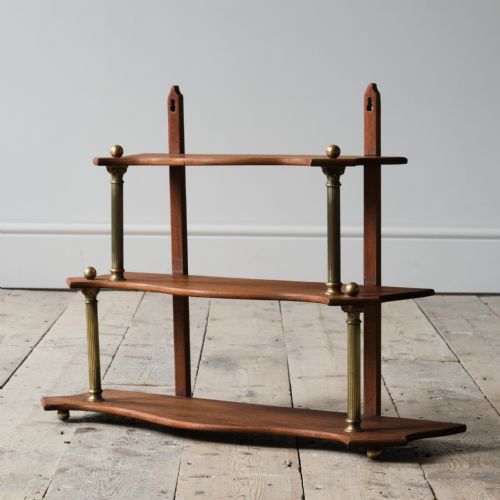
Most examples appear in mahogany, rosewood, or walnut, sometimes incorporating burr walnut, birdseye maple, burr elm, or oak. The primary forms include traditional three tier whatnots, side tables, wall hanging shelves, and portable bookshelves.
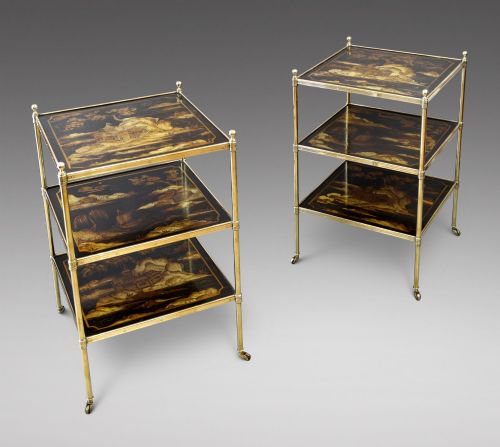
Buyers selecting a regency three tier etagere encounter both single items and matched pairs designed for symmetrical placement. The format serves diverse interior functions, functioning variously as an end table, display stand, or compact buffet.
Materials and construction
Cabinetmakers constructed these tiered units primarily using dense timbers such as mahogany and rosewood, selected for their structural stability and rich grain patterns. Secondary decorative woods like birdseye maple, burr walnut, and burr elm provided contrast on specific surfaces.
Metal components, notably brass fittings, gallery rails, and castors, added both functional mobility and decorative punctuation to the woodwork. Joinery methods relied on precise turning for upright supports and secure jointing for the graduated shelves.
Regency Three Tier Etagere Retail Price Guide 2026
Typical asking prices for regency three tier etagere among the pieces listed under this phrase on Sellingantiques today, from the lower quarter to the upper quarter. They describe what is for sale here now, not the wider market.
Some versatile nineteenth century tables even adapted as metamorphic pieces, shifting forms to suit changing domestic needs.
Assessing quality in tiered stands
Quality rests upon the selection of timber veneers and the crispness of turned supports, distinguishing standard production from superior workshops. Finer pieces demonstrate careful attention to grain alignment across multiple tiers and refined finishing of brass mounts.
Proportion and scale dictate the success of the design, with smaller, more versatile examples often commanding greater appreciation among collectors. The integrity of the original joints and the preservation of surface patination further define the standing of individual pieces.
Gillows
The Regency Three Tier Etagere Glossary
- Whatnot
- An open shelving unit with multiple tiers used for displaying ornaments, books, or china. This form gained popularity during the Georgian and Regency eras.
- Étagère
- A French term for a tiered piece of furniture designed for display or storage. It functions interchangeably with the English whatnot.
- Tier
- An individual horizontal shelf or level within a multi-level structure. These platforms typically graduate in depth from top to bottom.
- Dumb waiter
- A multi-tiered freestanding piece used for serving food or holding tableware without servant assistance. Certain nineteenth century variations share structural traits with etageres.
- Canterbury
- A low, open-framed stand fitted with partitions for sheet music, books, or portfolios. Examples often incorporate lower drawers or tiered upper shelving.
Regency Three Tier Etagere: Frequently Asked Questions
What is a regency three tier etagere used for?
These tiered stands served historically for displaying books, ceramics, and small decorative objects in principal rooms. Today, they function effectively as side tables, bedside surfaces, or open display units in compact spaces.
The open shelving design allows for visible arrangement from multiple angles within a room.
How do I distinguish Regency pieces from later copies?
Examination of timber density, hand-cut joinery, and the patination of the wood helps indicate period authenticity. Regency and Georgian examples exhibit construction methods and hardware consistent with early nineteenth century cabinetmaking.
Later nineteenth century pieces often display heavier proportions or different secondary woods compared to their earlier counterparts.
Are these etageres sturdy enough for everyday use?
The initial construction relied on solid hardwoods and stable frame joints designed to support books and display items safely. Proper placement away from direct heat sources helps maintain the integrity of the antique wood and glue joints.
Routine care involves dusting with dry cloths and avoiding excessive weight distribution on upper tiers.
What woods were commonly used for these stands?
Mahogany and rosewood appear most frequently in the surviving record, valued for their durability and deep colour tones. Cabinetmakers also utilised walnut, birdseye maple, burr elm, and oak for specific regional or stylistic variations.
Brass elements frequently supplemented these timbers as decorative mounts and structural castors.