



Regency Rosewood Armchair
A regency rosewood armchair brings profound warmth and architectural grace to a room, offering deep comfort shaped by the early nineteenth century.
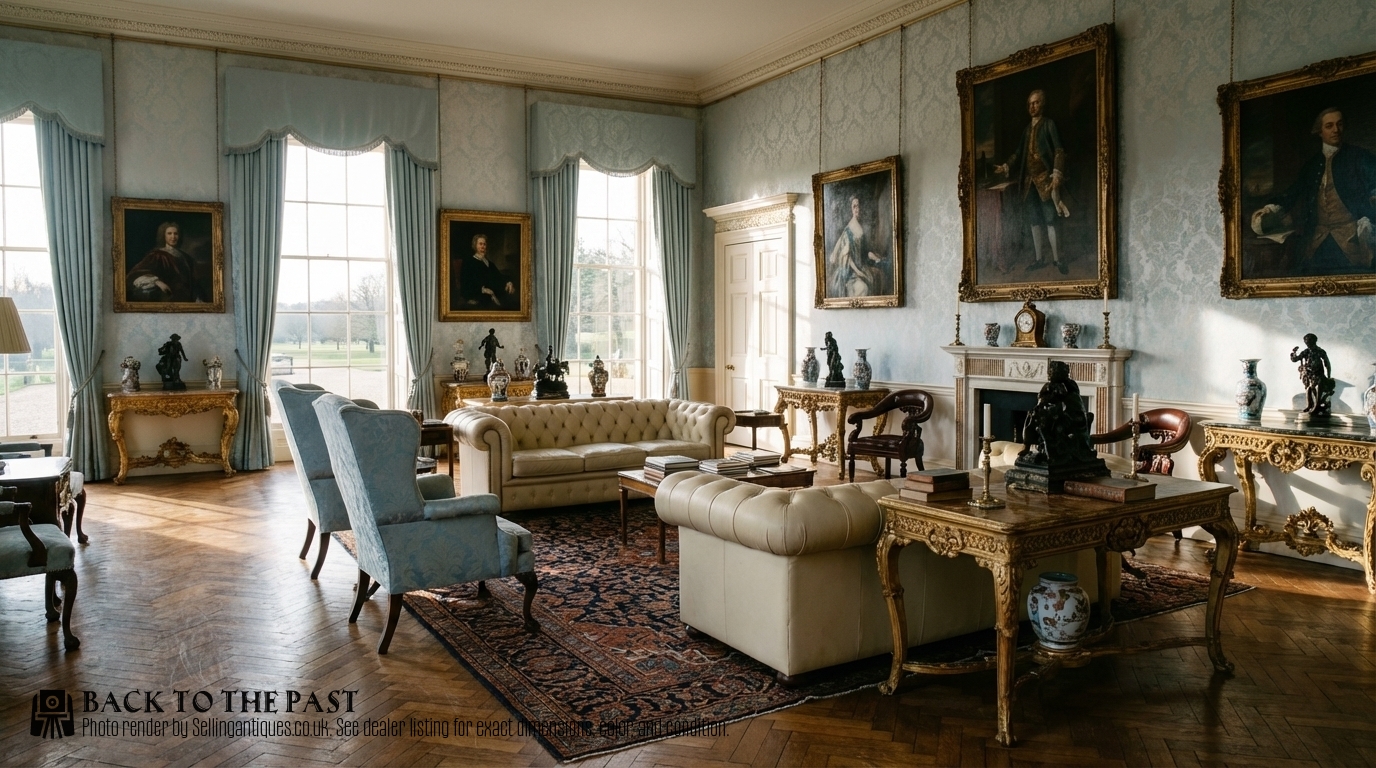
Regency Rosewood Armchair
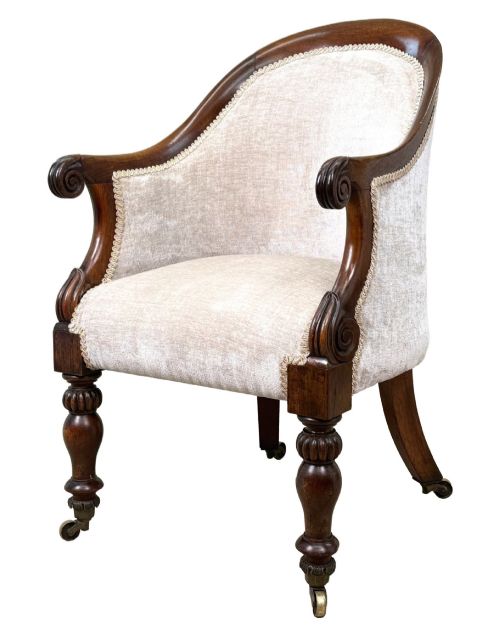
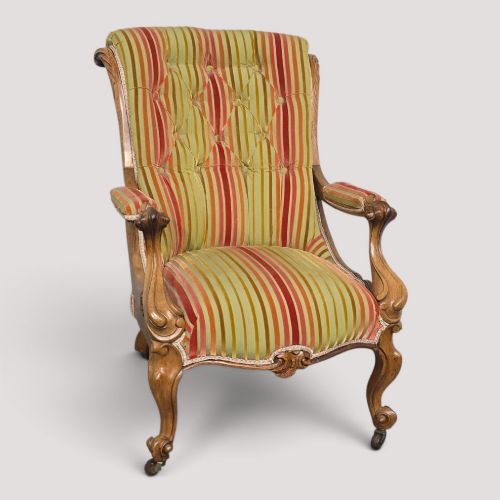
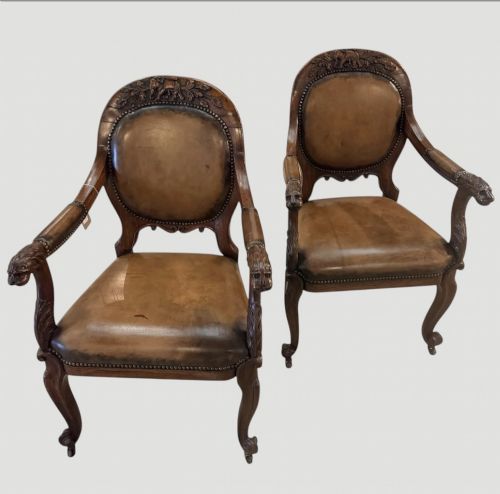
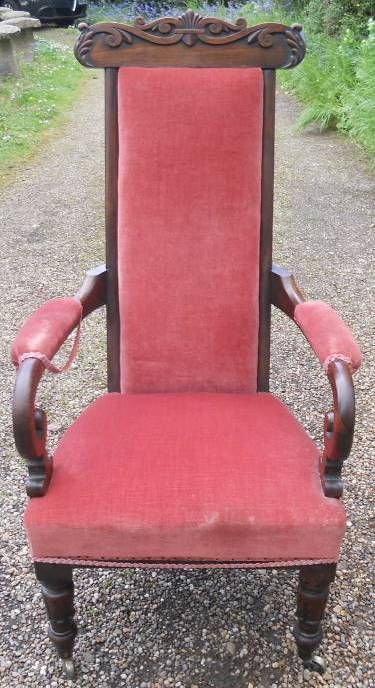
A regency rosewood armchair encompasses library chairs, bergères, tub chairs, and desk chairs produced primarily during the Regency and William IV periods, alongside related George IV and Anglo-Indian variants. These seating forms served studies, libraries, and principal reception rooms, evolving from formal seating into deeper, library-focused lounging chairs.
The versions most commonly met on this page include open armchairs, solid rosewood library chairs, and caned bergères, alongside simulated or faux rosewood painted frames. Pieces often feature upholstered seats in leather, velvet, or textile, sometimes complemented by cane or rattan seating panels.
Makers and workshops of the era drew upon Regency, William IV, and George IV design idioms, producing both solid timber constructions and painted or grained faux finishes. The geographical origins span English workshops as well as Anglo-Indian production centres, reflecting global trade patterns of the period.
Materials and construction
Makers utilised dense tropical rosewood alongside hardwood timbers for simulated finishes, applying graining techniques to mimic the rich figure of genuine rosewood when solid timber was not deployed. Brass inlay was frequently set into the wood to accentuate structural lines, particularly on top rails and front crossbars.
Frames relied on traditional joinery methods, housing caned panels of rattan for bergères or webbed foundations for leather and textile upholstery. Turned framing, spindle backs, and parcel gilt highlights completed the structural vocabulary of these library and desk chairs.
Materials documented across these listings include solid rosewood, hardwood, brass, cane, rattan, leather, velvet, and textile.
Distinctions in quality
The upper tier of these chairs is distinguished by the crispness of brass inlay, the precision of turned or carved elements, and the integrity of the original rosewood timber figure or high-grade simulated graining. Superior examples retain substantial framing weight and balanced proportions across the arms and backrest.
Lower-tier or heavily altered pieces often show losses to brass work, compromised cane panels, or replacement under-frames that diminish the historical coherence of the seating form.
Robert Daws·Gillows
The Regency Rosewood Armchair Glossary
- Bergère
- An enclosed upholstered armchair with cane or solid sides, popular during the Regency period for library use. These chairs frequently incorporate loose seat cushions.
- Simulated rosewood
- A painted or grained surface treatment applied to a lesser hardwood to imitate the appearance of true rosewood. This technique was widely utilised during the Regency era.
- Tub armchair
- A comfortable seating form featuring a continuous curved back and armrest rail enclosing the sitter. They were frequently employed as library or study chairs.
- Brass inlay
- The technique of embedding thin strips of brass into recesses carved within the rosewood surface. It defines many formal Regency library chairs.
- Anglo-Indian
- Furniture produced in the Indian subcontinent under British colonial rule, often utilising native rosewood carved with regional motifs. These pieces date to the early nineteenth century.
Regency Rosewood Armchair: Frequently Asked Questions
What is a regency rosewood armchair?
A regency rosewood armchair is a nineteenth-century seating form designed for libraries and reception rooms, constructed from dense rosewood or simulated wood.
These pieces reflect the stylistic shifts of the Regency and William IV periods, ranging from open armchairs to caned bergères.
How were these armchairs used historically?
They served as comfortable seating in private libraries, studies, and drawing rooms for reading and correspondence.
Library bergères and desk chairs were specifically engineered to support long periods of sitting amidst collections of books.
How do I care for rosewood and leather?
Keep wooden surfaces away from direct sunlight and extreme temperature fluctuations to prevent timber splitting.
Condition leather upholstery periodically with appropriate balms to maintain flexibility and prevent the material from drying out.
How do I distinguish Regency from William IV?
Regency pieces tend to display lighter, more restrained neoclassical lines with delicate brass inlay and slender supports.
William IV examples generally feature heavier proportions, bolder turning, and more robust structural members.