
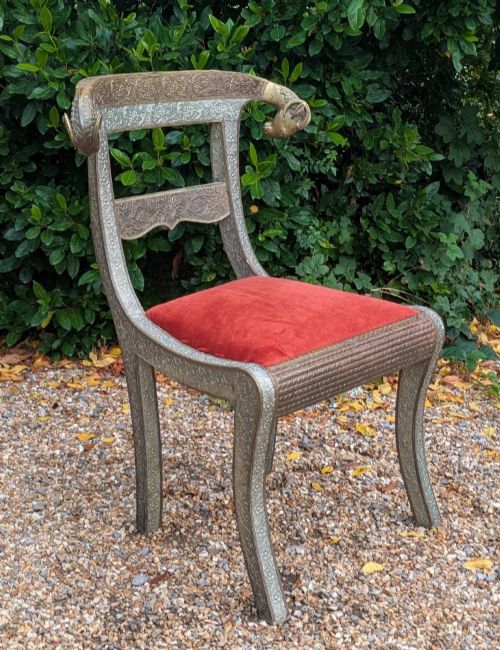
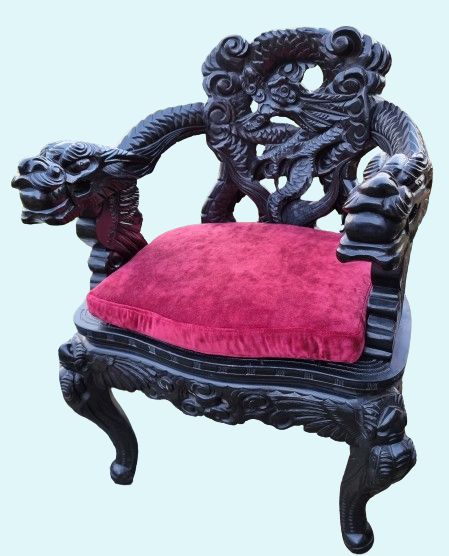
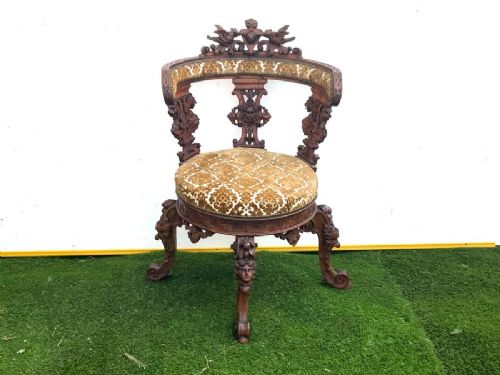
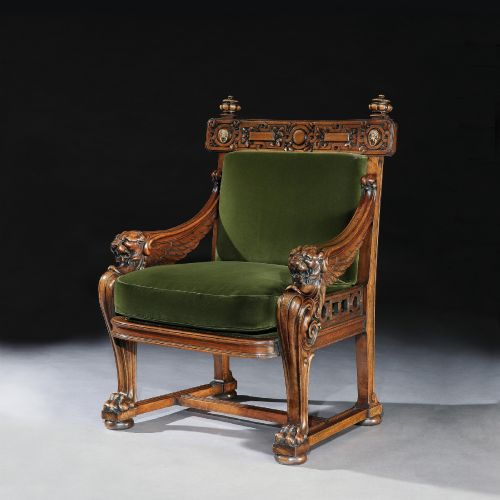



Antique Velvet Throne Chair
An antique velvet throne chair commands the room with historic presence, offering heavy timber frames and rich textile upholstery for a stately seat.
Antique Velvet Throne Chair
An antique velvet throne chair combines substantial timber construction with plush textile upholstery to create an imposing seat of authority. Buyers seeking an antique velvet throne chair encounter heavy armchairs designed with high backs and commanding proportions.
The selections span from seventeenth-century wainscot forms to Victorian revivals, incorporating stylistic echoes of the Jacobean, Gothic, and Carolean eras. Walnut, oak, and hardwood frames provide the structural foundation for deep piled velvet and fringe details.
Italian Renaissance, French gilt, and Anglo Indian interpretations appear alongside British revival pieces, showing diverse regional expressions of status seating. Most examples function as grand armchairs, hall seats, or audience chairs intended for prominent placement.
How they were made
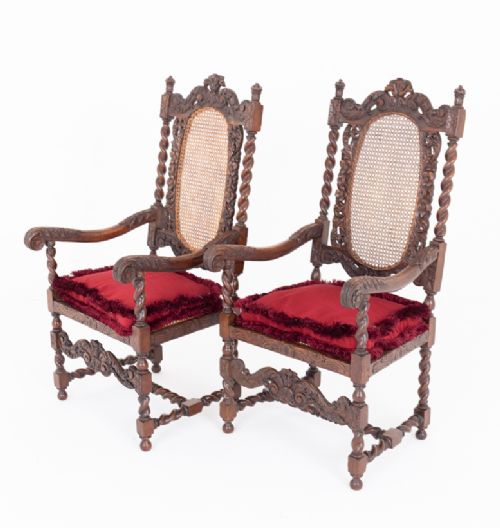
Carpenters and joiners built the timber frames using structural hardwoods such as oak and walnut, often employing elaborate hand carving on legs, arm terminals, and crest rails. Barley twist turnings and monopodia supports demonstrate the range of historic joinery techniques utilised by makers.
Textile upholstering involved securing velvet over padding, frequently finished with decorative textile fringe along the seat rails or borders. Giltwood accents and brass elements enhanced the visual weight of these large armchairs.
Several armchairs arrive with brass details and textile fringe, ready to preside over the room with undeniable theatrical flair.
What varies in quality
The depth and crispness of the hand carving on the timber frame set finer examples apart from simpler production pieces. Sharp relief work on walnut or oak surfaces indicates skilled hand tool execution.
The integration of the timber structure with the velvet upholstery dictates the overall success of the piece. Substantial framing that supports high backs without looseness shows superior historical craftsmanship.
The Antique Velvet Throne Chair Glossary
- Monopodia
- A decorative furniture support resembling a single animal leg, often terminating in a paw or hoof. This classical motif appears on revival armchairs.
- Fauteuil
- An open-armed upholstered armchair with exposed wooden framing around the back and armrests. French examples frequently feature gilt finishes.
- Wainscot
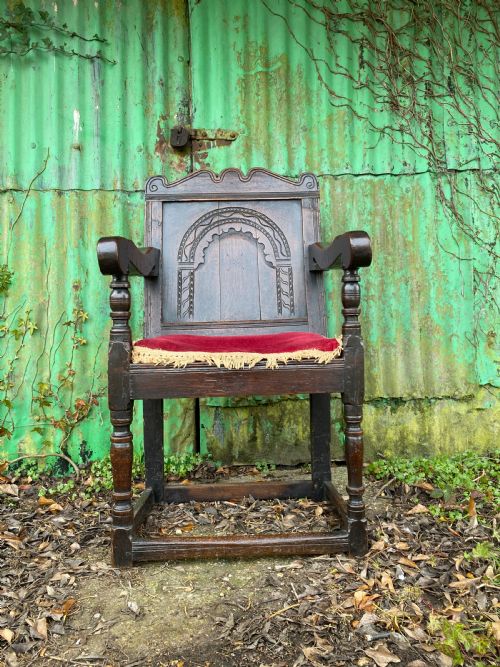
- An early form of wooden armchair constructed with panelled backboards and solid timber seats. These sturdy chairs predate soft upholstery.
- Carolean
- A seventeenth-century English stylistic period characterised by rich carving, scrollwork, and high backs. Revival versions appeared frequently during the Victorian era.
Antique Velvet Throne Chair: Frequently Asked Questions
Where should I place a throne chair?
These imposing armchairs suit large reception rooms, hallways, or studies where their high backs and rich velvet can anchor the space.
Their substantial scale requires adequate floor area to prevent overcrowding smaller residential layouts.
How do I identify a revival piece?
Revival chairs borrow decorative vocabulary from earlier centuries, such as seventeenth-century scrollwork or Gothic tracery, executed with nineteenth-century timber methods.
Examining the underside and joinery helps distinguish nineteenth-century interpretations from original seventeenth-century seating.
Are these chairs comfortable for daily use?
Historic armchairs prioritize upright posture and formal presence over modern lounging ergonomics.
Deep velvet padding softens the solid timber frames, though the high backs encourage an upright seating position.
What woods were commonly used?
Oak, walnut, and exotic hardwoods form the structural framework for these grand armchairs.
Softer woods rarely supported the heavy carving and structural demands required for high-backed throne seating.