

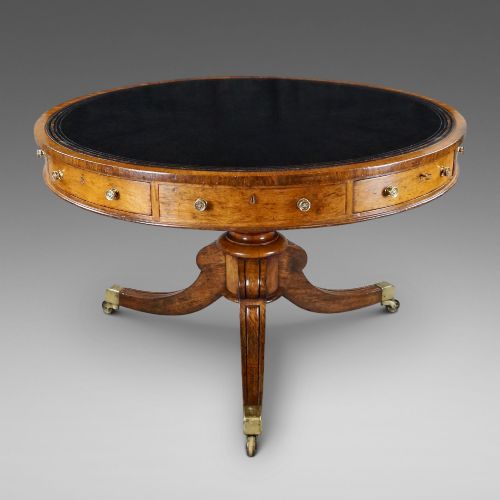


Regency Revolving Desk
A regency revolving desk is a circular library table designed to spin smoothly, bringing every book and writing implement within arm's reach.
Regency Revolving Desk
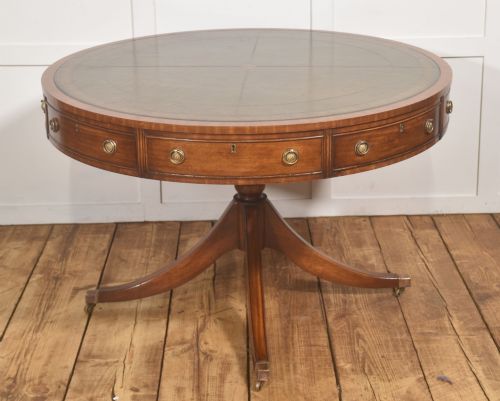
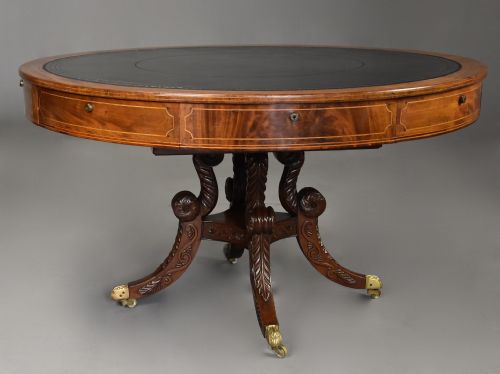
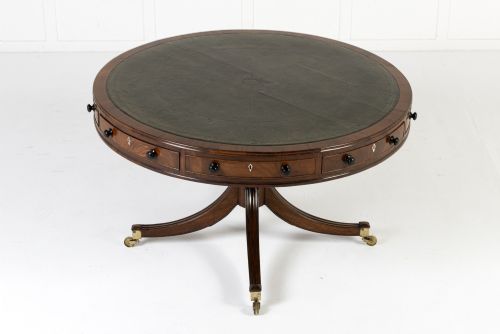
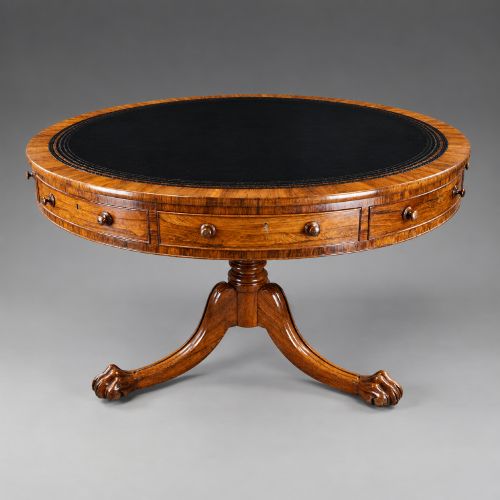
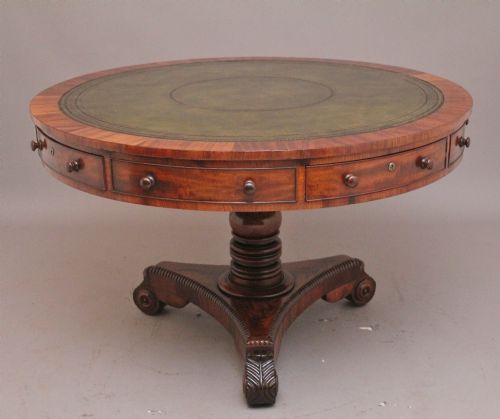
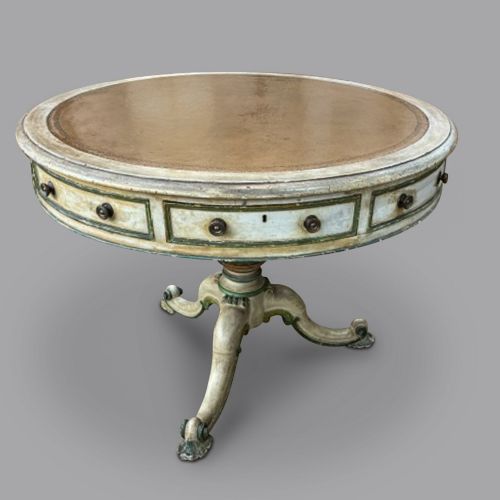
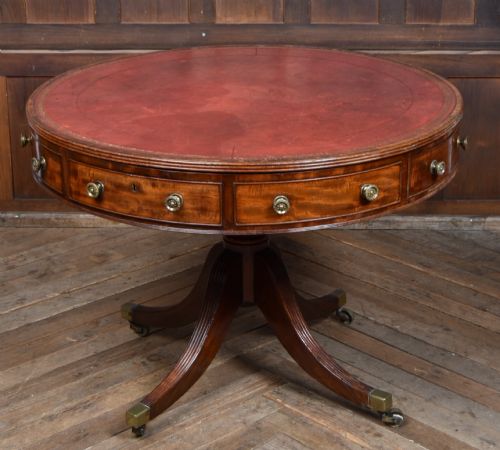
A regency revolving desk typically takes the form of a drum table, featuring a circular top that rotates on a central pillar. These pieces appear in mahogany, rosewood, oak, and burr maple, often inset with leather writing surfaces.
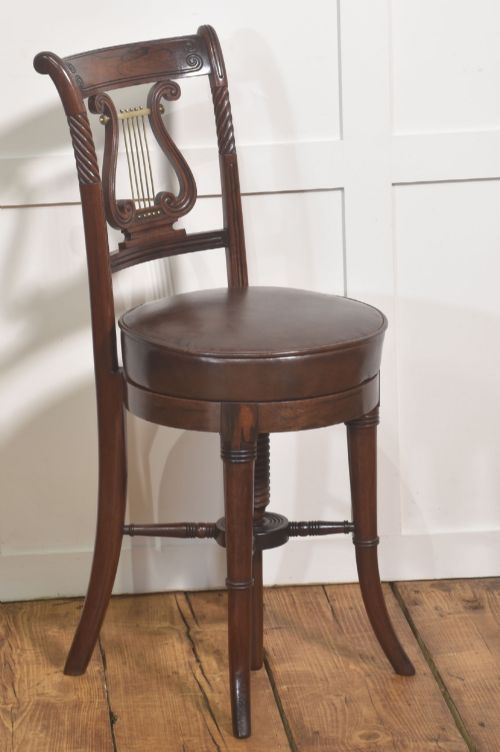
Makers of the period favoured pedestal designs supported by tripod or platform bases, sometimes incorporating drawers around the circular frieze. The listings also show related rotating seating, including adjustable dressing table chairs and music chairs.
How they were made
Cabinet makers utilised dense timbers such as mahogany and rosewood, frequently selecting flame mahogany veneers for the circular tops. Brass inlays and leather working surfaces added refined detail to the construction.
The revolving mechanism required precise carpentry to ensure the heavy circular top spun evenly on its central pillar without wobbling.
Regency Revolving Desk Retail Price Guide 2026
Typical asking prices for regency revolving desk among the pieces listed under this phrase on Sellingantiques today, from the lower quarter to the upper quarter. They describe what is for sale here now, not the wider market.
Even music chairs manage to revolve, proving the era took spinning very seriously indeed.
What varies in quality
The choice of timber creates a clear distinction, with figured flame mahogany and exotic rosewood achieving a richer visual depth than plain oak or painted wood. The execution of the brass inlay and the smoothness of the internal rotating mechanism also define the standard of the piece.
Proportion and scale separate standard examples from pieces of unusual size or sophisticated Scandinavian neo-classical design. The integrity of the original leather writing surface and the stability of the pedestal base further influence the standing of each table.
The Regency Revolving Desk Glossary
- Drum table
- A circular library table with a deep frieze resembling a drum, often containing drawers and supported on a central pillar. These tables form the majority of the revolving desk selections.
- Flame mahogany
- A veneer cut from the fork of the mahogany tree, producing a distinctive flame-like pattern. Cabinet makers used this figure extensively on top surfaces.
- Frieze
- The horizontal band beneath the top edge of a table, which on these pieces frequently houses small drawers for writing implements. It provides structural depth to the revolving top.
- Pedestal base
- A central support column resting on splayed legs or a platform, allowing the table to stand firmly while housing the rotation mechanism.
Regency Revolving Desk: Frequently Asked Questions
What is a regency revolving desk used for?
These pieces functioned primarily as library tables and writing desks where readers needed access to multiple volumes. The rotating top allowed the user to spin the surface to reach different papers without moving from the seat.
Today, they serve equally well as freestanding centre tables in studies or living spaces, providing a practical writing surface with built-in storage drawers around the circular top.
How do I identify the Regency period?
Regency pieces date roughly from the early nineteenth century and display classical influences derived from Greek and Roman design. Look for clean architectural lines, rosewood or mahogany timbers, and restrained brass details rather than heavy carving.
Pieces from this era often feature pedestal supports and flame mahogany veneers that highlight the natural grain of the wood without excessive ornamentation.
Are all revolving desks round?
The examples recorded here predominantly take a circular drum shape, which facilitates the revolving mechanism on a central pillar. The rotating top allows smooth movement in any direction.
While oval variations appear in Georgian furniture, the classic revolving format relies on a symmetrical circle to balance the weight evenly over the central pivot.
How do I care for the leather top?
Leather writing surfaces require gentle cleaning with a slightly damp cloth followed by dry buffing, avoiding harsh modern chemical cleaners. Natural beeswax applied sparingly helps maintain the suppleness of older leather.
Keep the table away from direct sunlight and heat sources to prevent the leather from drying out and the underlying timber veneers from shrinking.