
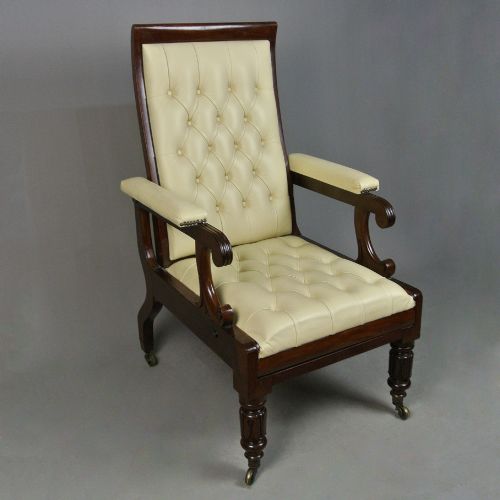


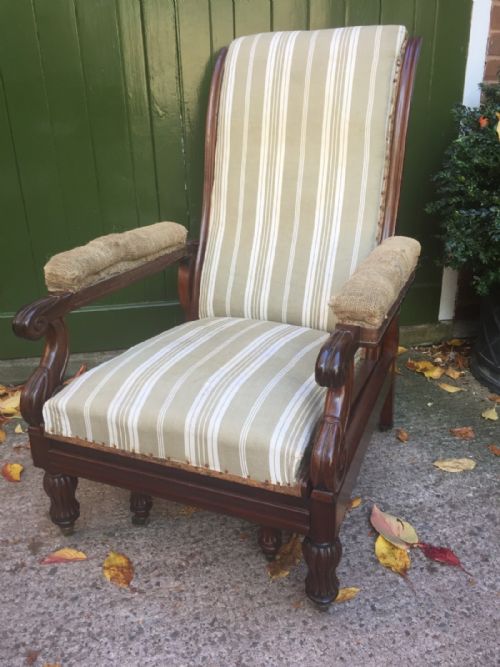
Regency Reclining Armchair
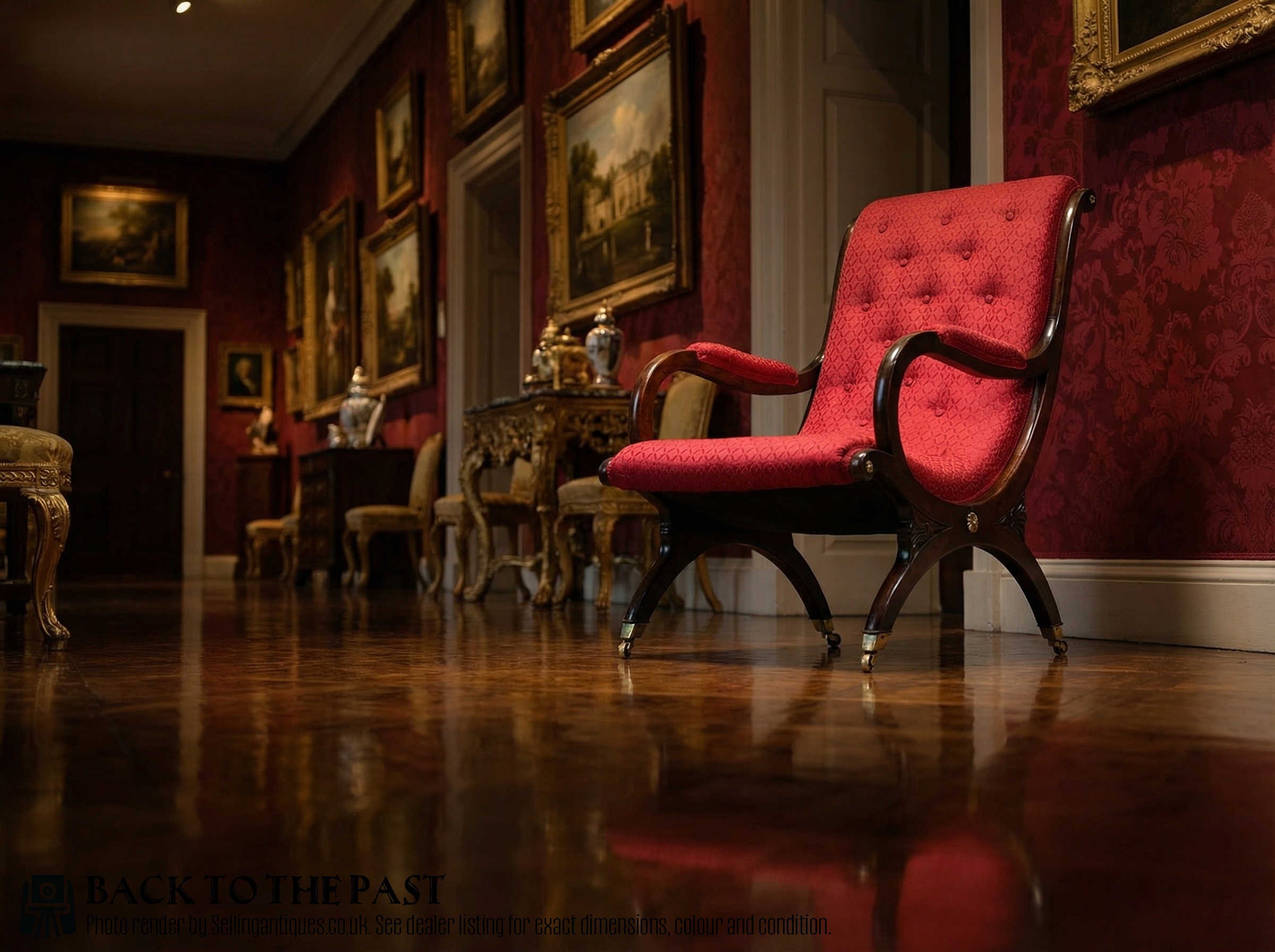
A regency reclining armchair is a sturdy mahogany or rosewood seat built for comfort, and buyers choose one to bring a mechanical ingenuity to a study.
Regency Reclining Armchair
When you search for a regency reclining armchair, you encounter heavy library chairs and reading seats originating from the nineteenth century, including the Regency, George IV, and William IV periods. These pieces serve as functional study furniture designed to adjust for the reader.
The versions you meet most often on this page are mahogany or rosewood armchairs with patent reclining mechanisms. They frequently appear as library chairs or reading chairs intended for long hours of study.
How they were made
Cabinet makers built these frames using solid mahogany or rosewood, often incorporating brass hardware for the adjustable mechanisms. Upholstery relied on traditional stuffings like horsehair and hessian beneath outer coverings of leather, fabric, or velvet.
Makers utilised X-frame structures and patent mechanisms to allow the backrest to tilt, demanding precise joinery to bear weight while moving.
Regency Reclining Armchair Retail Price Guide 2026
Typical asking prices for regency reclining armchair among the pieces listed under this phrase on Sellingantiques today, from the lower quarter to the upper quarter. They describe what is for sale here now, not the wider market.
Nineteenth-century readers enjoyed patent reclining seats so much they essentially invented the Victorian nap.
What varies in quality
The distinction between standard and superior pieces rests on the presence of documented patent makers and the richness of the timber selected. Chairs bearing attribution to specific makers command greater interest than anonymous workshop productions.
Quality also shows in the complexity of the reclining mechanism and the original choice of materials, such as figured rosewood paired with fine brown leather.
Robert Daws·Gillows·Minter
The Regency Reclining Armchair Glossary
- Patent chair
- A seat featuring a mechanical adjustment system protected by a period patent. These devices allowed the user to alter the angle of the backrest.
- X-frame
- A structural furniture base formed by intersecting diagonal timbers shaped like the letter X. This configuration provided robust support for heavy library seating.
- Horsehair
- A traditional upholstery stuffing material woven from animal hair. It offered firm resilience beneath leather or fabric covers.
- Hessian
- A coarse woven fabric utilised as an inner foundation layer for upholstery support. It held the stuffing material securely within the frame.
- Library chair
- A heavy, comfortable armchair designed specifically for reading rooms and studies. These forms often incorporated reading aids or reclining actions.
Regency Reclining Armchair: Frequently Asked Questions
What is a regency reclining armchair?
A regency reclining armchair is a nineteenth century seat built with an adjustable backrest for a library or study.
These pieces utilise timber frames of mahogany or rosewood fitted with leather, velvet, or fabric upholstery over horsehair stuffing.
How do patent reclining mechanisms work?
Period patent mechanisms employ brass hardware and hinges that allow the user to alter the tilt of the backrest.
Inventors such as Robert Daws and Minter developed specific actions to lock the chair into various reclining positions.
Which woods are most common?
Mahogany and rosewood form the primary timbers utilised across these nineteenth century seating examples.
Makers selected these dense hardwoods to ensure the frames could support complex moving parts and heavy daily use.
How do I identify a library chair?
Library chairs appear as substantial armchairs designed for reading rooms during the Regency and William IV eras.
They often feature padded armrests, reading attachments, and robust X-frame or four-leg mahogany structures.