




Regency Piano Chair
A regency piano chair is a seating piece built for the keyboard, combining adjustable height with period elegance for daily use.
Regency Piano Chair
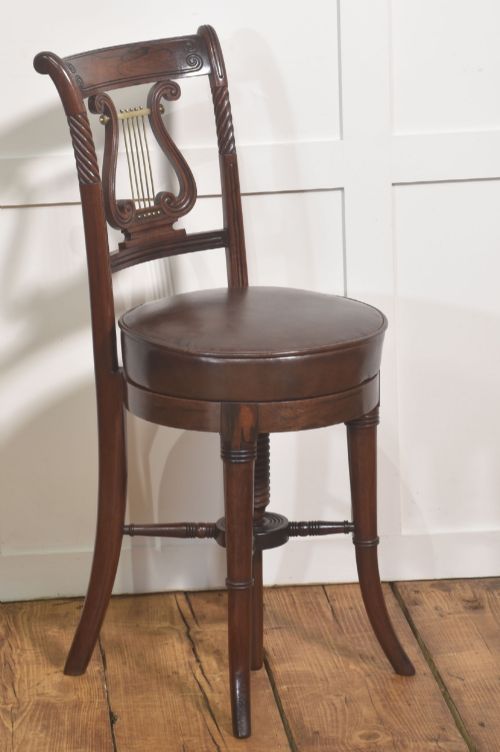
When you search for a regency piano chair, you are looking at nineteenth-century seating designed specifically for musicians at the keyboard, though many examples cross over into dressing tables and studies. The versions you are most likely to meet on this page span the Regency, Georgian, and William IV periods, taking the form of piano stools, music chairs, and revolving seats.
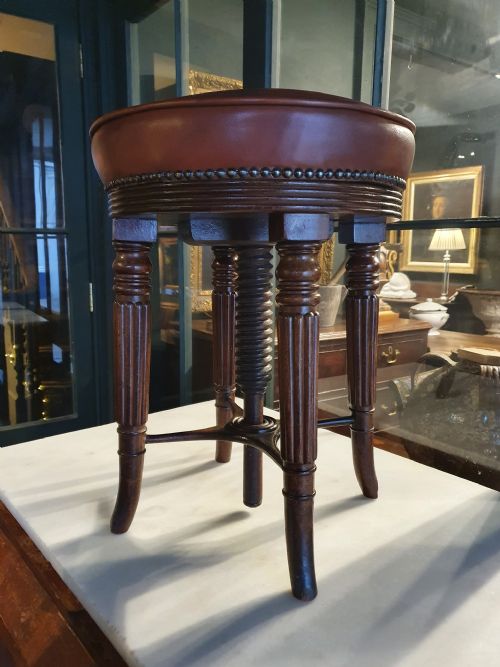
The objects appearing here include square-top variants, revolving designs, and pieces featuring adjustable screw tops or lifting mechanisms. Object types recorded in the evidence range from music stools and accent chairs to dressing chairs and harpist chairs.
Originating predominantly within the nineteenth century, these pieces reflect the domestic music-making habits of the era. Makers such as Gillows contributed to this tradition, producing specialised seating that combined mechanical utility with refined cabinet-making.
How they were made
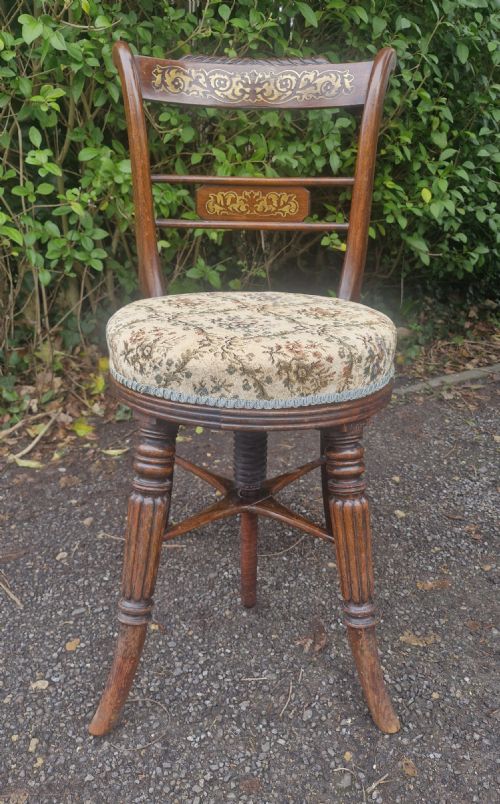
The woodwork relies heavily on mahogany and rosewood, often enhanced by decorative elements such as brass inlay, simulated rosewood graining, or gilt paint. Cabinet-makers constructed these frames to house internal swivel or screw mechanisms that allowed players to alter their seating height.
Upholstery formed an essential part of the construction, utilising fabric, velvet, leather, and tapestry over padded seats. Frames reflect distinct stylistic phases, including Empire and Sheraton Revival influences alongside classic Regency and William IV forms.
Listings feature nineteenth-century seating constructed primarily from mahogany and rosewood, incorporating leather, velvet, and brass inlay.
What varies in quality
Quality in these seating pieces lies in the sophistication of the timber selection and the precision of the brass inlay work. Pieces displaying figured mahogany or rich rosewood sit at a different level from those utilising simulated finishes or simpler secondary woods.
The mechanical execution of the height adjustment mechanism further divides the range. Smoothly functioning screw tops and stable revolving pivots demonstrate superior workshop practice compared to stiff or loose joints.
Gillows
The Regency Piano Chair Glossary
- Revolving
- A seat construction allowing the top to turn fully on a central pivot or threaded screw. This enabled players to adjust height or turn towards other instruments easily.
- Lyre Back
- A chair back shaped in the form of a classical lyre, frequently found on music and harpist chairs of the period.
- Screw Top
- An adjustable seating mechanism operated by turning the seat pad on a central wooden or metal threaded shaft. It raised or lowered the sitter.
- Simulated Rosewood
- A painted or stained surface treatment applied to a cheaper timber to imitate the dark grain and figure of genuine rosewood.
- Brass Inlay
- The technique of embedding thin strips or geometric motifs of brass directly into the wood surface for decorative contrast.
Regency Piano Chair: Frequently Asked Questions
What is a regency piano chair?
A regency piano chair is a nineteenth-century seat built for musicians, typically featuring an adjustable mechanism to suit different keyboard players.
These pieces combine decorative cabinet-making in timbers like mahogany and rosewood with functional height-changing designs.
How do adjustable piano stools work?
Adjustable piano stools generally use a central wooden or metal screw mechanism that raises or lowers the seat when turned.
Other examples use revolving pivots or mechanical ratchets enclosed within the wooden frame beneath the upholstered pad.
Where were piano chairs used?
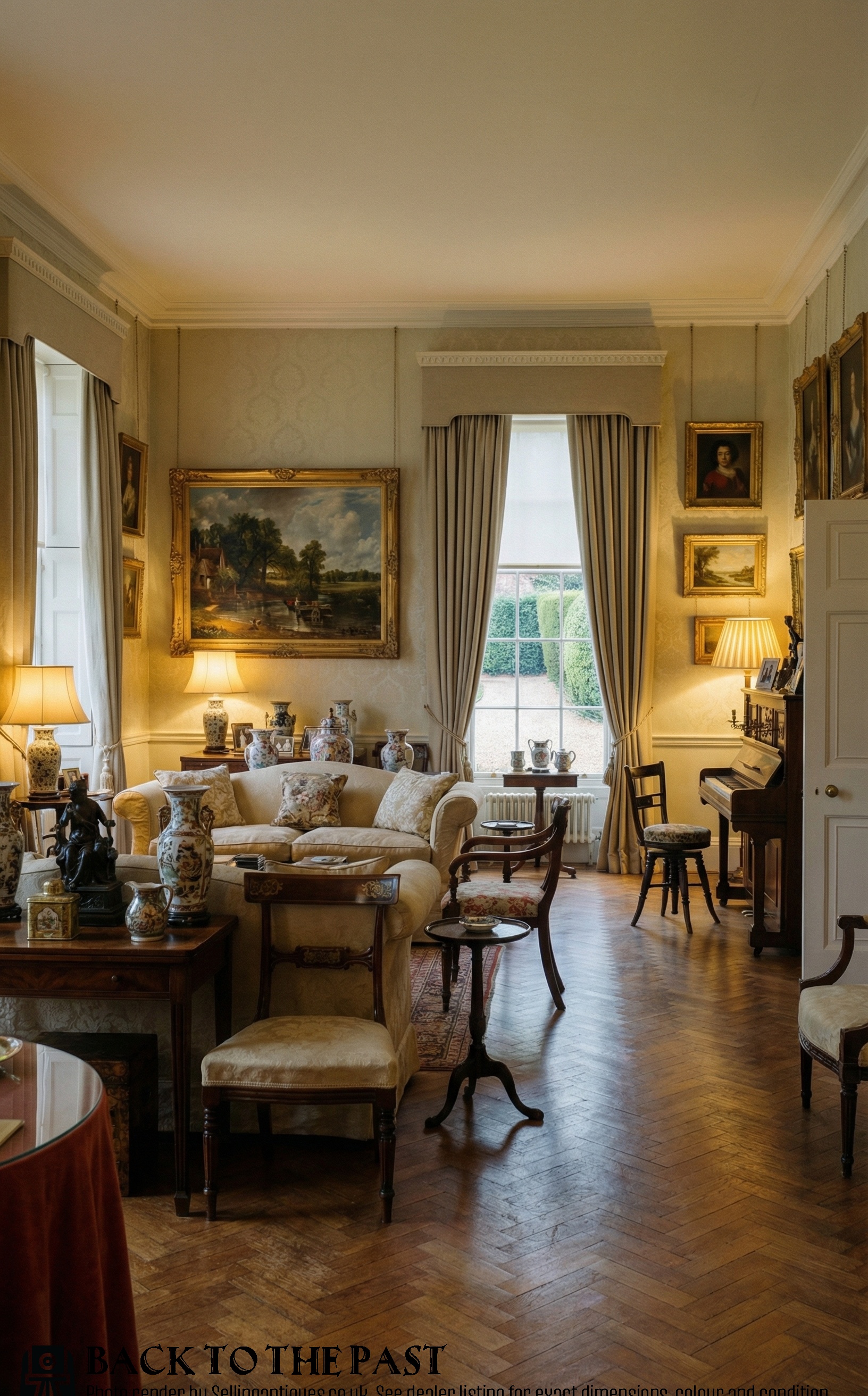
Piano chairs were placed in domestic drawing rooms and music rooms beside pianos and harps for seated performance.
Because of their adjustable height and comfortable proportions, many also served as dressing table chairs or desk seating.
How do I identify a William IV piano stool?
William IV piano stools often display heavier proportions and bolder classical revival carving than earlier Regency examples.
They frequently feature robust mahogany frames combined with revolving tops or square upholstered seats dating from the second quarter of the nineteenth century.