



Regency Rosewood Seating
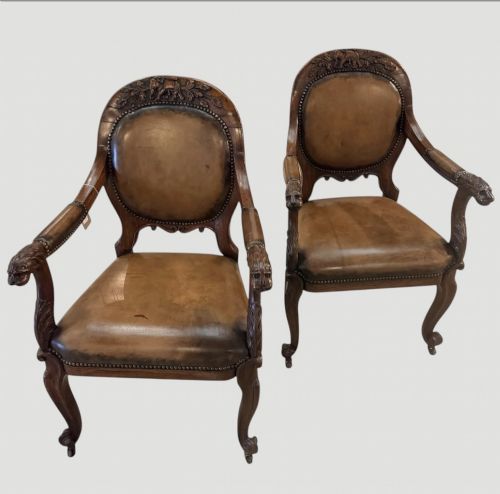
Regency rosewood seating brings dense grain and sharp brass inlay to formal rooms through dining chairs, armchairs, and stools.
Regency Rosewood Seating
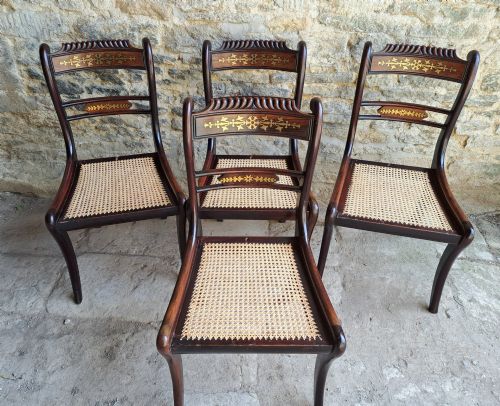
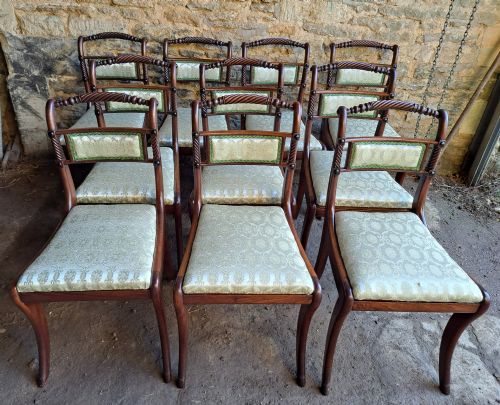
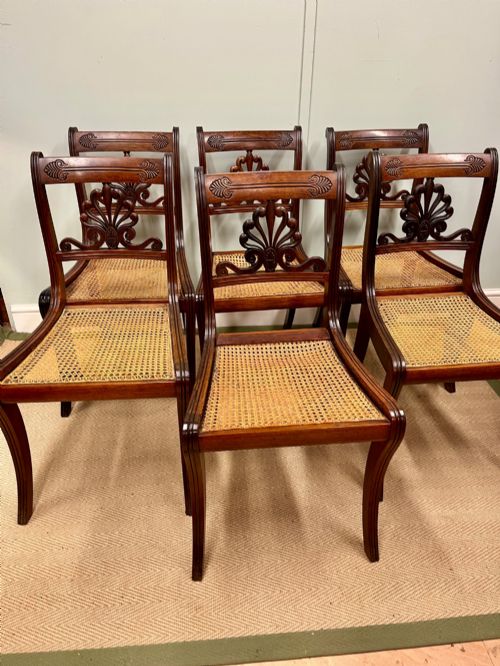
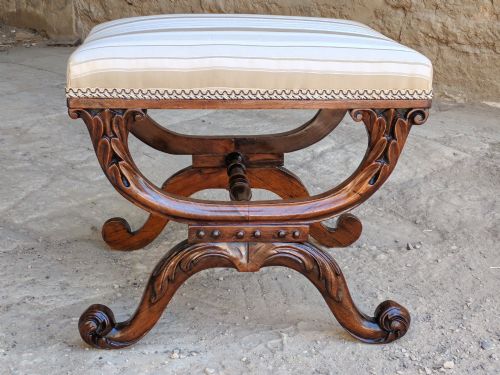
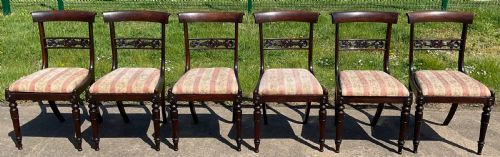
Regency rosewood seating encompasses dining chairs, armchairs, stools, sofas, and chaise longues produced during the early nineteenth century and the subsequent William IV and George IV periods. Dining chairs appear frequently as sets ranging from four to ten pieces, alongside individual library armchairs and piano or music stools.
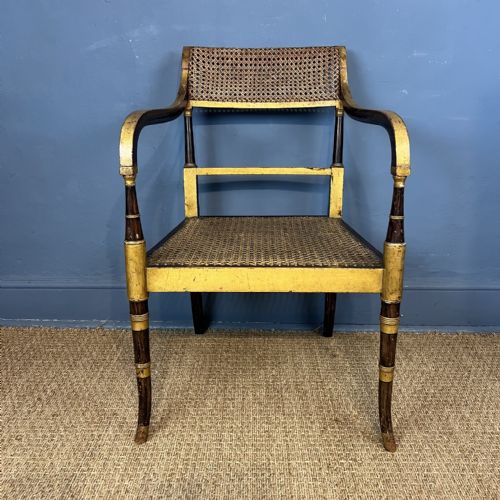
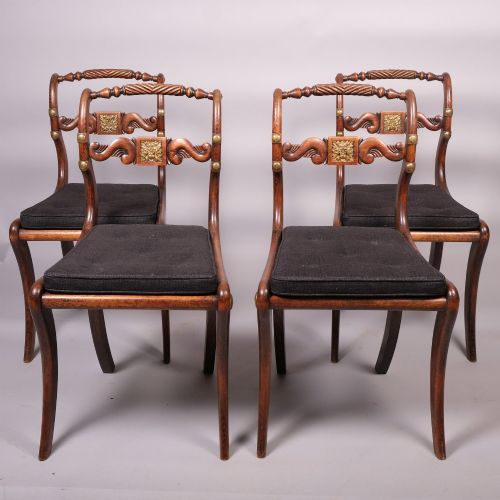
The forms span strict Regency lines, late Regency adaptations, and Gothic Revival or Anglo-Indian influences. Makers utilised both solid Rio rosewood and simulated or faux rosewood finishes, sometimes pairing the timber with parcel gilding.
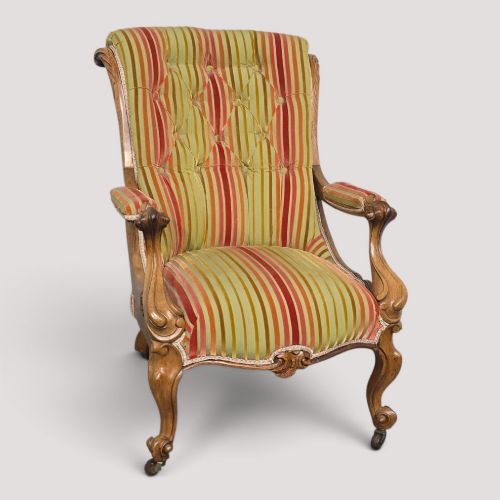
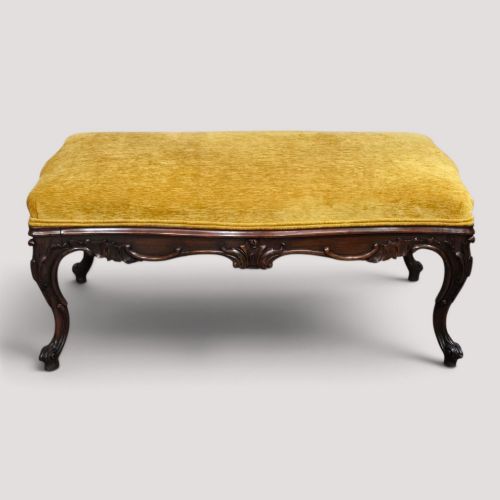
Seating arrangements include cane panels, leather pads, and upholstery in fabric and velvet. Buyers encounter matching pairs and larger matched sets designed for formal dining rooms and libraries.
Materials and Construction
Cabinetmakers constructed these forms using solid rosewood or prepared simulated rosewood surfaces on alternative timbers. Brass inlay featured heavily across rail backs and splats, often routed directly into the dense wood.
Seating tiers integrated cane work for elasticity or webbed frames supporting leather, horsehair, and velvet upholstery. Turned and carved elements utilised dense tropical hardwoods capable of holding crisp architectural detail.
Listings feature dining chairs, armchairs, stools, and chaise longues created across the Regency, Georgian, and William IV eras.
Standards of Execution
Quality rests upon the crispness of carved details, the depth of the rosewood grain or the fidelity of the simulated finish, and the integration of brass inlay. Sets demonstrate greater value when the timbers match uniformly across every chair.
Structural integrity depends on the original joinery within the frame, particularly where legs meet seat rails on heavily loaded library armchairs and dining sets.
Gillows
The Regency Rosewood Seating Glossary
- Rosewood
- A dense, dark timber featuring pronounced figuring and deep reddish-brown tones. It takes a high polish and formed the primary material for high-status furniture.
- Simulated Rosewood
- A painted or grained finish applied to a lighter domestic timber to mimic the appearance of true rosewood. It offered an alternative aesthetic during the period.
- Bergère
- An enclosed upholstered armchair with closed sides, frequently outfitted with cane panels or loose squab cushions. These pieces provided comfortable seating for libraries and drawing rooms.
- Chaise Longue
- An elongated seated item designed for reclining, combining elements of a chair and a day bed. Examples feature scrolled ends and cane or upholstered decks.
- Parcel Gilt
- A decorative treatment where specific carved details or mouldings receive a partial application of gold leaf. This technique highlighted classical motifs against dark timber.
Regency Rosewood Seating: Frequently Asked Questions
How do I care for antique rosewood seating?
Keep wooden surfaces away from direct sunlight and sudden temperature shifts to prevent the dense timber from splitting.
Apply a microcrystalline wax periodically and maintain stable indoor humidity to preserve leather, cane, and fabric upholstery.
Were these chairs used only for dining?
Dining chairs formed the largest output, but workshops built specific forms for distinct domestic spaces.
Libraries held heavy armchairs and bergères, while music rooms utilised adjustable stools and harpists' chairs.
What is simulated rosewood?
Simulated or faux rosewood is a painted surface finish applied to alternative woods to imitate the grain and colour of genuine tropical timber.
Craftsmen used pigments and glazes to replicate dark figuring when solid rosewood was too costly or heavy.
How do I distinguish Regency from William IV seating?
Regency pieces typically display leaner classical proportions with delicate brass inlay and restrained reeding.
William IV examples generally introduce heavier carved scrolls, broader proportions, and plainer mahogany or rosewood surfaces.