


Regency Period Watercolours
Regency period watercolours are paper works capturing the refined tastes of the early nineteenth century through delicate washes and portraits.
Regency Period Watercolours
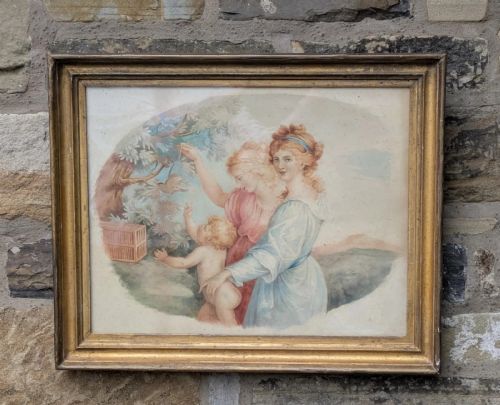
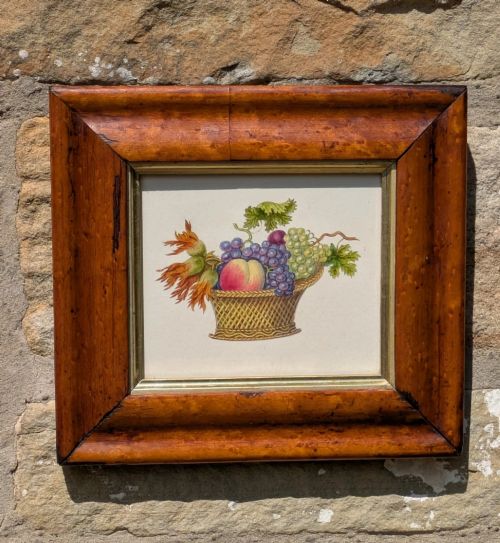
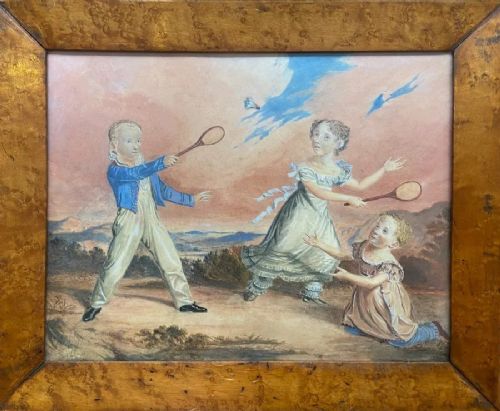
Regency period watercolours encompass delicate miniature portraits, lively caricatures and classical scenes executed on paper during the opening decades of the nineteenth century. These works capture the likenesses of Georgian families, gentlemen and young girls alongside everyday domestic scenes and architectural studies.
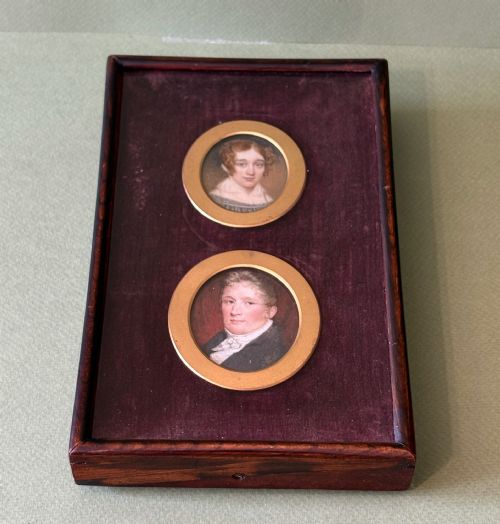
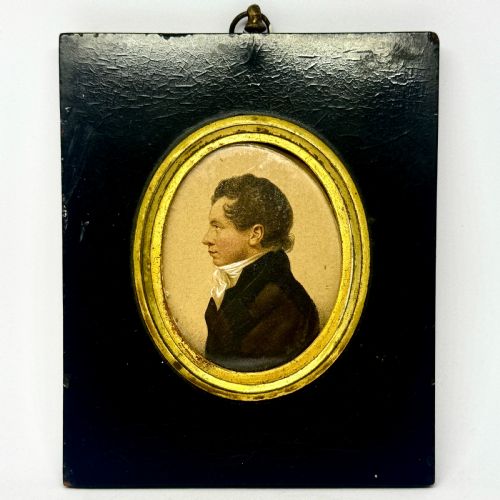
The versions most commonly met on this page include intimate portrait miniatures housed in brass, giltwood or ebonised frames, alongside landscape studies and figure paintings. Artists worked within the Regency, Georgian and Neoclassical styles, recording the dress and interiors of the era.
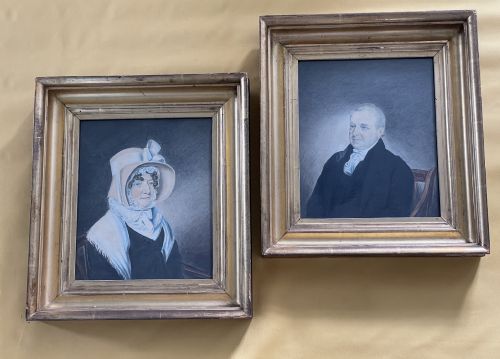
Works attributed to known hands sit alongside pieces by the English School, offering a broad view of artistic production from the early nineteenth century. Collectors encounter both paired portraits and individual framed artworks showing subjects ranging from children with blue sashes to builders and game players.
What Sets the Best Apart
The condition of the paper and the integrity of the original framing elements contribute significantly to the standing of a piece. Works retaining their period ebonised frames, glass and gilt mounts hold greater integrity than those altered over time.
The selection spans the Georgian, Regency, William IV, and Victorian periods across the nineteenth century.
Henry Travis·George Kilburne·John Augustus Atkinson·Thomas Woolnoth·Emma Kendrick·Thomas Rowlandson
The Regency Period Watercolours Glossary
- Watercolour
- A painting method where paint is made of pigments suspended in a water-based solution. It allows for translucent washes and delicate layering on paper.
- Portrait Miniature
- A small-scale painting depicting a specific person, popular during the Regency period. These were frequently housed in protective cases or small wall frames.
- Giltwood
- Wood that has been treated with a thin layer of gold leaf or gilt finish. It appears commonly on the frames surrounding nineteenth-century art.
- Gouache
- An opaque water-based paint often used alongside watercolour to add highlights and solid areas of colour. It creates greater density in specific details of the composition.
Regency Period Watercolours: Frequently Asked Questions
How should I display regency watercolours?
Keep these works away from direct sunlight to prevent the watercolour pigments and paper from fading over time. Maintain stable humidity levels in the room to protect both the paper support and the antique framing materials.
Use professional framing services that utilise acid-free backing and UV-filtering glass if re-framing becomes necessary. Hang them at eye level on interior walls where environmental conditions remain consistent.
What defines a portrait miniature?
Portrait miniatures are small-scale paintings created to record the likeness of an individual with intimate detail. During the Regency period, artists used watercolour on paper or ivory, housing the results in protective pocket cases or small wall frames.
These pieces often depict family members or notable figures of the Georgian era. Their compact scale required high technical skill from the painter to capture facial expressions precisely.
How do I identify a genuine regency piece?
Examine the paper stock, pigment characteristics and framing materials to assess the age of the artwork. Regency watercolours often utilise handmade paper stocks and framing components consistent with the early nineteenth century, such as ebonised wood or gilt brass.
Look for stylistic markers typical of the period, including Regency dress, neoclassical motifs and the characteristic palette used by artists of that decade. Signatures or inscriptions on the reverse can also provide helpful context.
What is the difference between watercolour and gouache?
Watercolour relies on transparent pigments that allow the white of the paper to shine through the washes. This creates a luminous quality characteristic of nineteenth-century landscape and portrait studies.
Gouache includes an added white pigment binder that makes the paint opaque. Artists frequently combined both mediums on the same sheet to achieve contrast between translucent shadows and solid highlights.