





Regency Period Sarcophagus Cooler
A regency period sarcophagus cooler brings monumental neoclassical presence to a dining room while keeping wine perfectly chilled.
Regency Period Sarcophagus Cooler
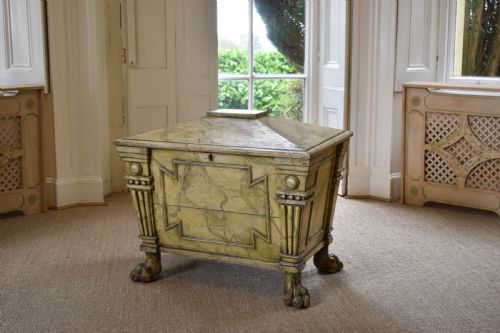
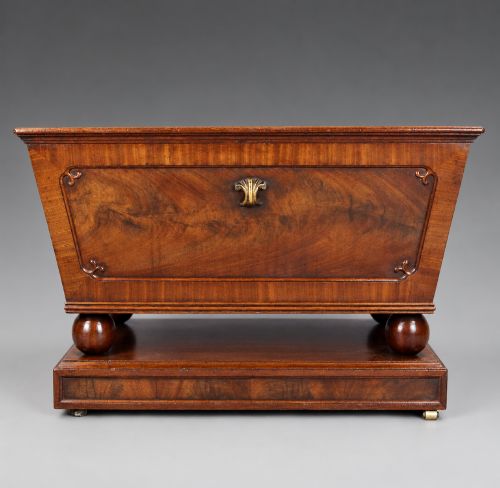
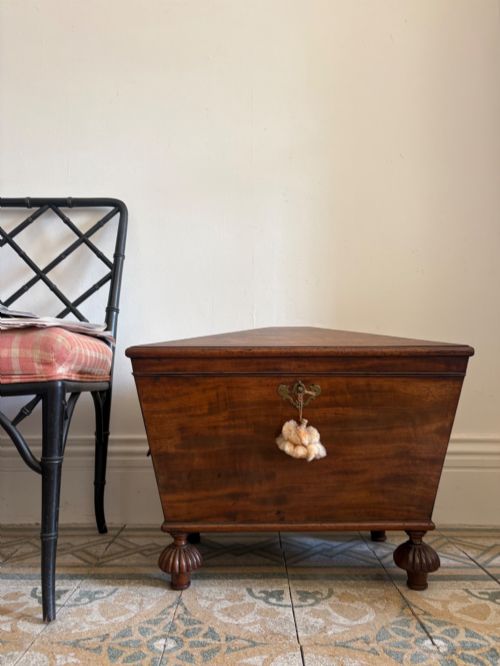
A regency period sarcophagus cooler takes the architectural form of a classical burial chest, adapted for dining room service. These substantial vessels were designed to stand beneath sideboards or in window recesses, holding ice and bottles ready for the table.
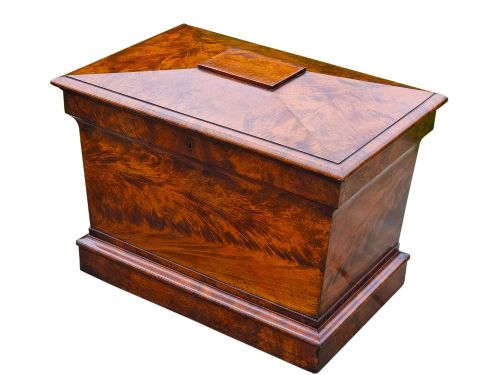
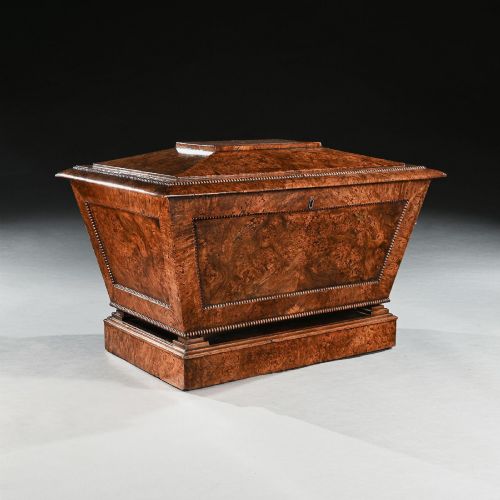
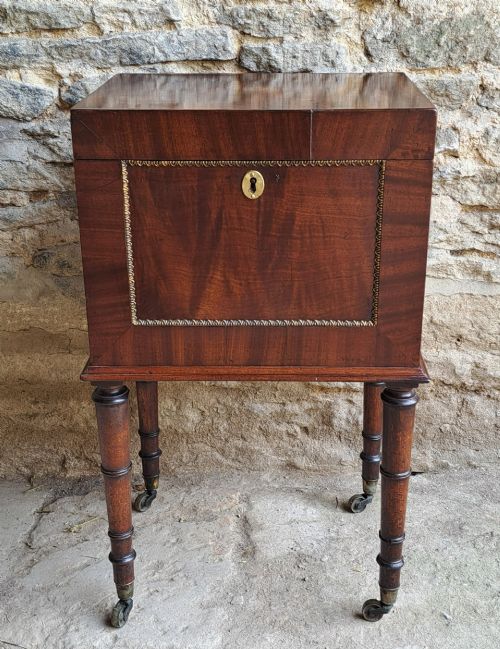
The version most commonly met on this page is constructed from figured mahogany, often with flame veneers, standing upon low feet or castors. Alongside standard sarcophagus boxes, variations include open wine coolers, jardiniere forms, and examples fashioned from pollard oak, burr elm, or padouk.
Materials and construction
Cabinetmakers built these heavy frames using solid timbers and decorative veneers over robust secondary woods. Flame mahogany veneer and pollard oak provided dramatic grain patterns across the sweeping curves of the sarcophagus shape.
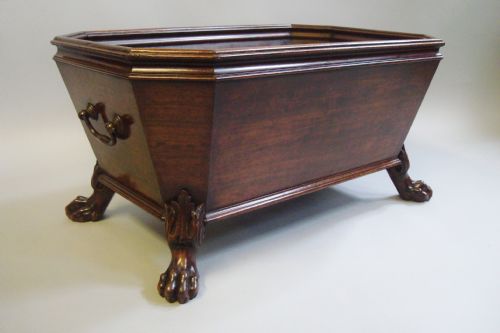
Interiors were lined with lead or zinc to hold melting ice without damaging the surrounding timber structure. Cast bronze, brass handles, or ormolu mounts finished the exterior, alongside carved details such as paw feet.
Regency Period Sarcophagus Cooler Retail Price Guide 2026
Typical asking prices for regency period sarcophagus cooler among the pieces listed under this phrase on Sellingantiques today, from the lower quarter to the upper quarter. They describe what is for sale here now, not the wider market.
Several examples stand on carved paw feet, as if the heavy wine chest might suddenly pad across the dining room floor.
Judging the execution
Quality rests upon the selection of timber veneers and the crispness of classical mouldings or carved mounts. Finer examples display carefully matched flame mahogany figures across every visible surface and retain their original metal liners.
Proportion and scale dictate the visual success of the piece, as heavier timber requires precise balance in the curve of the lid and the profile of the base. The integration of brass handles, paw feet, and ormolu details separates standard workshop production from exceptional cabinet work.
The Regency Period Sarcophagus Cooler Glossary
- Sarcophagus cooler
- A large, lidded wine cooler shaped like a classical stone coffin, popular during the early nineteenth century for dining room use.
- Cellarette
- A lockable container used to store wine bottles near the dining table before service.
- Flame mahogany
- A timber veneer displaying a distinct torch-like pattern created by cutting through the bough of a mahogany tree.
- Pollard oak
- Oak timber harvested from trees that have been pollarded, producing dense clusters of decorative growth rings.
- Ormolu
- Gilded bronze applied as decorative mounts and feet upon fine cabinet furniture.
- Jardiniere
- A decorative container, often metal-lined, designed to hold potted plants or flowers.
Regency Period Sarcophagus Cooler: Frequently Asked Questions
What is a sarcophagus cooler?
A sarcophagus cooler is a large, lidded storage box fashioned in the neoclassical style of a stone coffin, specifically built to hold ice and wine bottles in a formal dining room.
These pieces emerged during the early nineteenth century as part of elaborate dining room furnishings, often designed to complement large sideboards and serving tables.
How were these coolers used?
Servants filled the interior lead or zinc lining with ice and water to chill wine bottles before or during dinner service.
When not holding wine, some larger examples functioned as jardiniere stands for displaying indoor plants within grand reception rooms.
Where should I place one?
These substantial boxes sit naturally against dining room walls, beneath large sideboards, or positioned within wide window bays.
Because of their finished proportions and decorative brass or ormolu mounts, they also serve as striking focal points in hallways and drawing rooms.
How do I spot a true period piece?
Look for authentic construction methods, such as hand-cut dovetails, heavy secondary timber frames, and period veneers like flame mahogany or pollard oak.
Original interior lead or zinc liners, alongside heavy brass carrying handles and period castors, further confirm the nineteenth-century origins of the piece.