
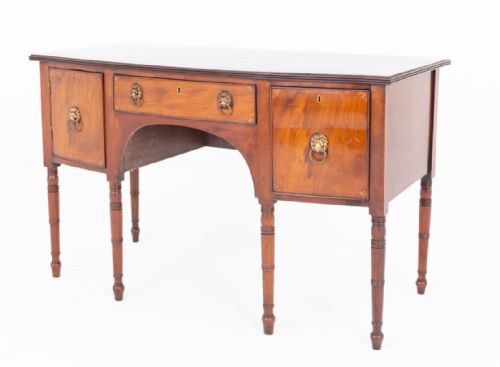
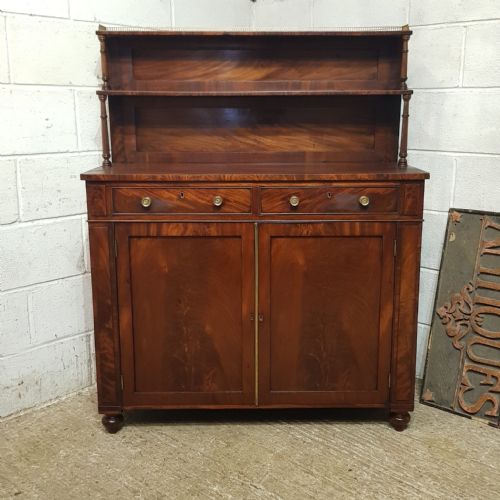


Regency Period Dining Buffet
These regency period dining buffet pieces offer solid mahogany craftsmanship and architectural restraint that anchors a formal dining room.
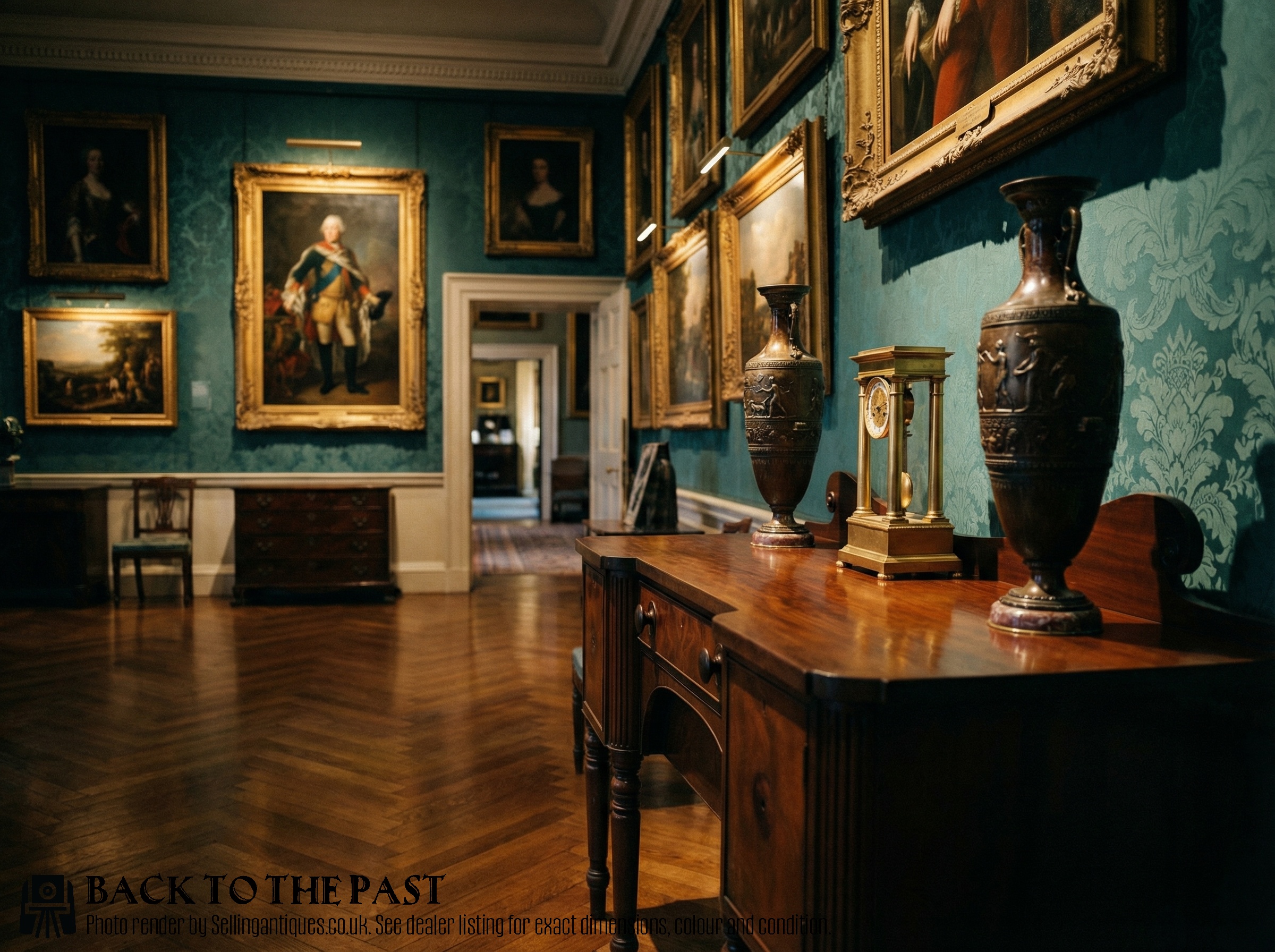
Regency Period Dining Buffet
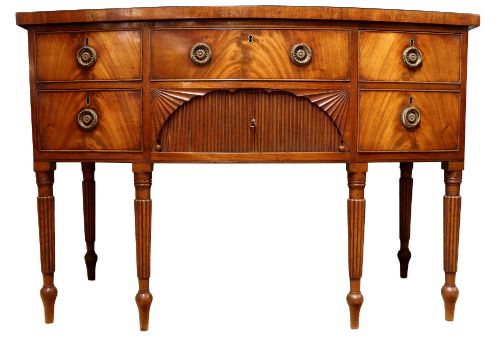
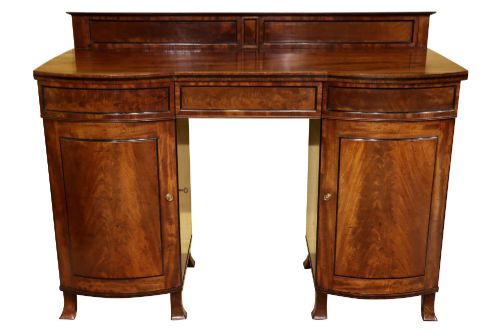
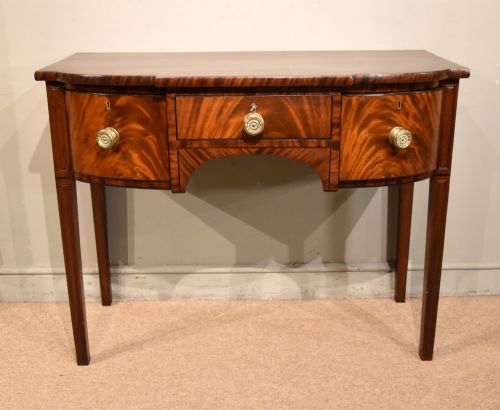
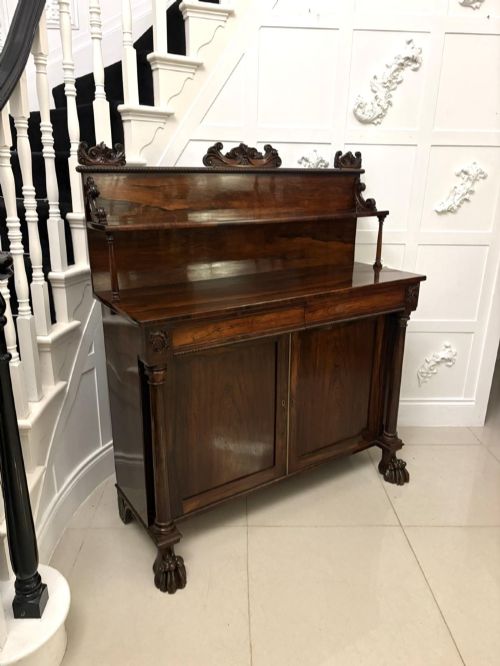
A regency period dining buffet stands as a substantial serving piece designed for formal dining rooms during the early nineteenth century. When you search for a regency period dining buffet, you encounter forms such as pedestal sideboards, bow front sideboards, serving tables, and chiffoniers. These items provide surface space for food and drink alongside enclosed storage for dining silver and linens.
The pieces appearing on this page span the Regency, George IV, and William IV styles, alongside broader nineteenth century and Georgian designations. The most frequent forms utilise bow front profiles or twin pedestals to structure the dining room wall. Mahogany forms the backbone of these listings, often enriched by flame veneer or rosewood.
Makers and workshops of the period produced these dining boards to serve functional needs during grand meals. Sideboards and serving tables emerge as the primary object types meeting this description. Each version brings characteristic proportions suited to dining spaces of the era.
Materials and construction
Cabinet makers of the era relied upon solid mahogany and flame mahogany veneer to construct the primary carcasses of these dining pieces. Oak often appears in secondary framing and drawer linings, providing structural stability beneath the polished exterior surfaces. Boxwood stringing and brass details frequently accent the mahogany and rosewood timber.
Makers manipulated timber grain by selecting figured flame mahogany veneer for drawer fronts and cabinet doors. Brass fittings, including gallery rails and lion mask ring handles, complete the hardware scheme on select pieces. Cabinet construction involves dovetailed drawers and panelled doors built to withstand heavy daily use.
Periods represented span Georgian, Regency, William IV, and the wider nineteenth century.
Distinctions in construction and timber
Quality separates pieces through the selection of timber figure and the precision of inlaid details. Top tier examples display highly figured flame mahogany veneers matched symmetrically across doors and drawers. Finer cabinet work shows tight dovetailing in drawer construction and original brass hardware remaining intact.
Proportion and architectural balance dictate the upper tier of these dining boards. Pieces attributed to workshops like Gillows exhibit sharper carving and heavier pedestals compared to standard provincial work. The integration of brass galleries and satinwood stringing demonstrates higher workshop execution.
Gillows
The Regency Period Dining Buffet Glossary
- Pedestal sideboard
- A dining board featuring distinct end cabinets or pedestals flanking a central section, common in Regency design.
- Bow front
- A convex curved cabinet front that projects outward, frequently seen on Regency sideboards.
- Flame mahogany
- A veneer cut from mahogany timber that produces a flamy, mottled pattern resembling tongues of fire.
- Chiffonier
- A low cabinet with doors enclosing shelves, often utilised alongside sideboards for serving purposes.
- Stringing
- Thin lines of contrasting timber inlaid into the surface of furniture to create geometric borders.
Regency Period Dining Buffet: Frequently Asked Questions
How do I style a regency period dining buffet?
Position the buffet against the main dining room wall to anchor the space and provide a surface for serving dishes during meals. Utilise the internal cupboards and drawers to store table linen, cutlery, and glassware.
Pair the piece with mahogany dining chairs and complement the timber tones with traditional brass candlesticks or table lamps placed on the top surface.
What is the difference between a sideboard and a buffet?
Sideboards typically feature a longer surface with a combination of drawers and cupboards arranged horizontally across the base. Buffets often incorporate tiered shelving or distinct pedestal cabinets suited for displaying and serving food.
Both forms served dining rooms during the nineteenth century, though buffet terminology often applies to pieces with specialised serving tiers or enclosed pedestal ends.
How do I identify a genuine Regency piece?
Examine the secondary woods, such as oak drawer linings, and the hand-cut dovetailing methods typical of early nineteenth century cabinet making. Look for characteristic design motifs including brass galleries, flame mahogany veneers, and bow front proportions.
Check for construction consistency and signs of period wear that align with manufacture dates around eighteen hundred to eighteen twenty.
What wood was used for these dining pieces?
Mahogany serves as the primary timber across the majority of these dining boards, often enhanced by flame mahogany veneer for decorative impact. Rosewood and satinwood also appear as feature timbers for specific surface accents.
Secondary timbers such as oak support the interior framing, drawers, and structural backboards of the cabinetry.