




Regency Pedestal Server
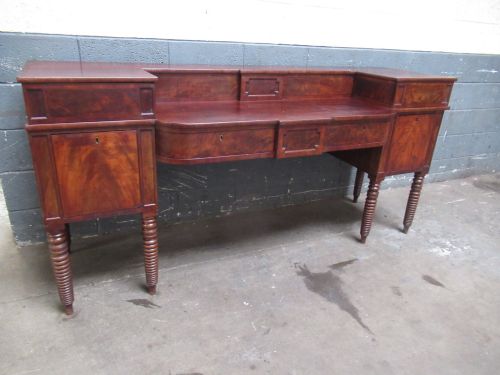
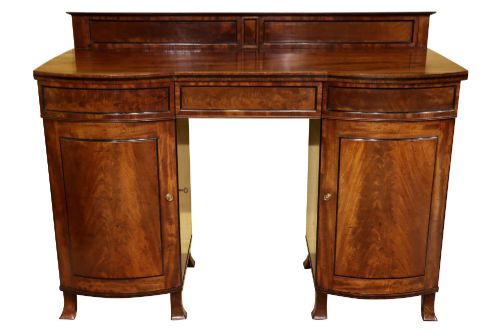
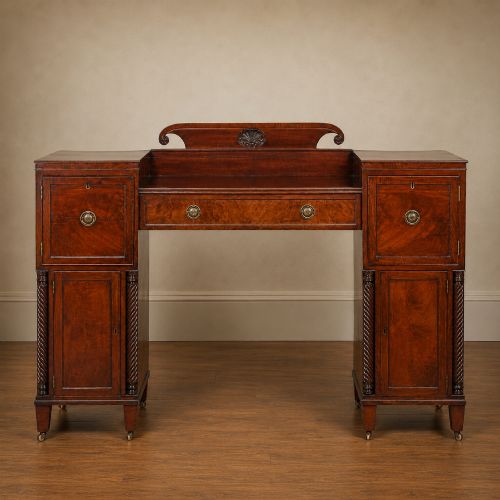
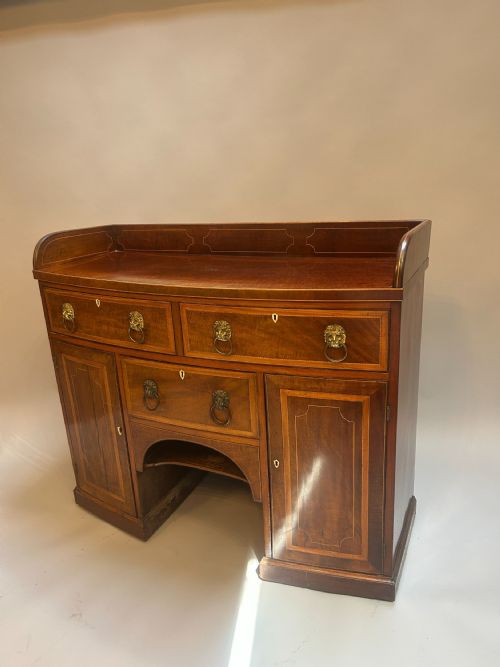
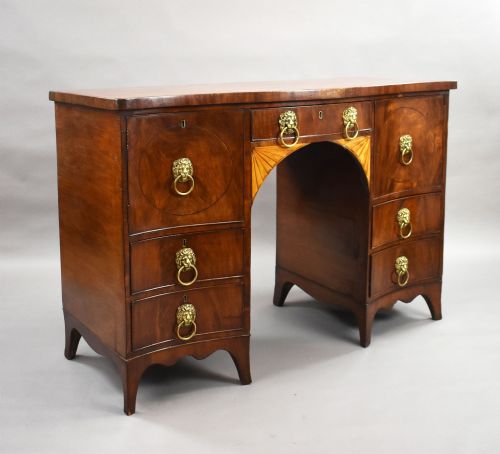
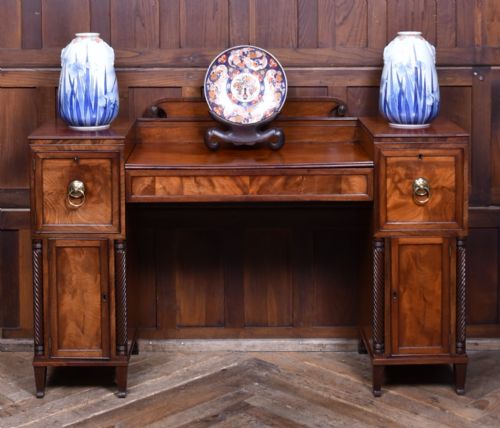
A regency pedestal server anchors a dining room with substantial mahogany timber and classical proportions.
Regency Pedestal Server
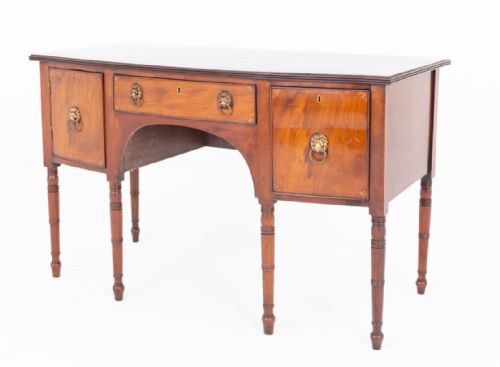
When searching for a regency pedestal server, a buyer looks for a grand dining room piece designed to hold silver, linen, and wine during service. These items usually take the form of substantial sideboards, serving tables, and twin pedestal units made during the early nineteenth century.
The versions most commonly met on this page date from the Regency, George IV, and William IV periods, constructed in rich mahogany with distinct cupboard pedestals flanking a central section. Many incorporate brass galleries, drop wells, or stage backs to assist with the display of plate.
Originating in formal dining spaces, these servers provide deep storage and broad top surfaces for serving dishes. Scottish variants and pieces influenced by makers such as Gillows appear alongside English examples, showing regional variations in timber selection and carving.
How they were made
Cabinetmakers constructed these servers primarily from solid mahogany and flame mahogany veneer, often accentuating the grain with boxwood and satinwood stringing or inlay. Timber selection governed the visual weight, with fiddleback and figured mahogany chosen for the most prominent surfaces.
Metalwork played a structural and decorative role, with cast brass galleries, handles, and pedestal feet fitted to secure glassware and support heavy use. Joinery techniques included deep mahogany drawer linings and robust pedestal carcases designed to bear the weight of heavy serving vessels.
Some pedestals contained clever zinc-lined compartments designed to hold melting ice and keep claret bottles chilled during lengthy banquets.
What varies in quality
The grade of a regency pedestal server depends heavily on the choice of mahogany veneer and the symmetry of its grain patterns across the pedestals and central drawers. Superior examples display carefully matched flame veneers that flow naturally across the front elevation.
Carved detail and hardware integration also set apart the finer pieces, with crisply executed acanthus leaves, reeded columns, and original brass galleries marking higher workshop standards. Plain secondary timbers and poorly aligned door panels separate standard production items from grand country house commissions.
Gillows·James Mein of Kelso·Holland and Sons·H Mower & Stephenson
The Regency Pedestal Server Glossary
- Pedestal
- A foundational cupboard unit positioned at either end of a server, providing deep interior storage for bottles or plates.
- Brass gallery
- A metal rail mounted on the upper rear surface of a sideboard, designed to prevent serving dishes from sliding off.
- Flame mahogany
- A veneer cut from the branch forks of the mahogany tree, creating a distinctive rippling flame pattern.
- Drop well
- A depressed central section in the top surface of a sideboard, intended to accommodate large joints of meat or deep platters.
- Stringing
- Thin inlaid lines of contrasting timber, such as boxwood or satinwood, used to edge drawer fronts and panels.
Regency Pedestal Server: Frequently Asked Questions
What is a pedestal server used for?
These servers provided practical storage and surface space for formal dining rooms during the nineteenth century. Cupboards within the pedestals held heavy ceramics, wine bottles, and silver service items.
The wide top surface allowed servants to plate food and stage dishes during large banquets. Brass galleries kept serving platters secure while the household entertained.
How do I tell Regency from William IV?
Regency pieces dating from the early nineteenth century generally favour restrained classical lines, delicate brass inlay, and elegant reeded or sabre legs. Proportions tend to remain lighter and more strictly neo-classical.
William IV examples from the 1830s and 1840s introduce heavier carving, bolder scrollwork, and massive paw feet. The timber choice shifts toward darker, heavily figured mahogany with a more imposing architectural presence.
Where were these servers placed?
They stood against the main dining room wall, usually directly opposite or flanking the primary dining table for easy access during meals. Their considerable length required large, open rooms to accommodate their scale.
Positioning them near doorways allowed servants to bring dishes in and out efficiently. The flat top surface also served as a display area for silver tea urns and decorative tazzas.