
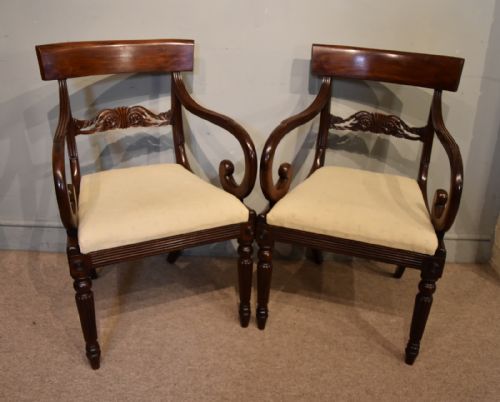
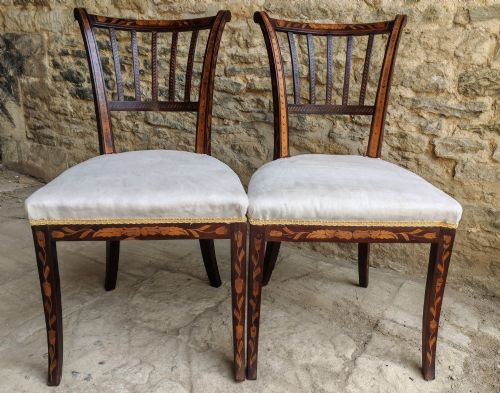
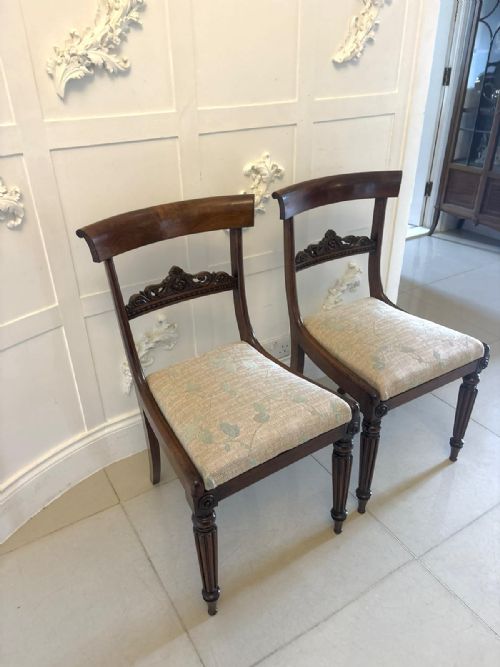
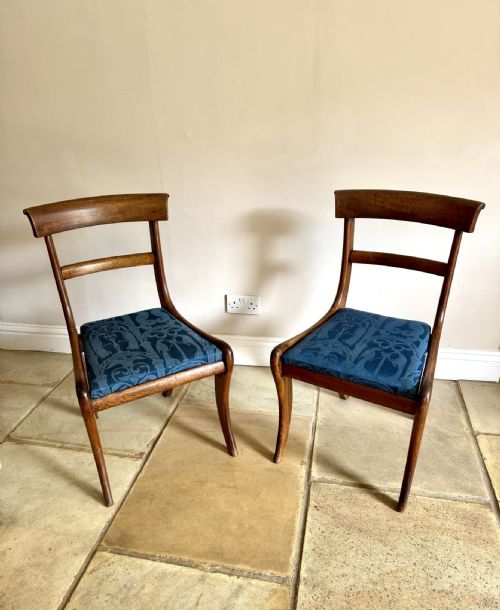


Regency Period Chair Pair
A regency period chair pair brings classical elegance and balanced proportion to a room, combining architectural restraint with fine cabinetwork.
Regency Period Chair Pair
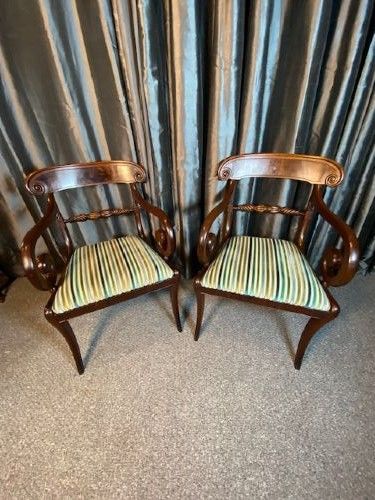
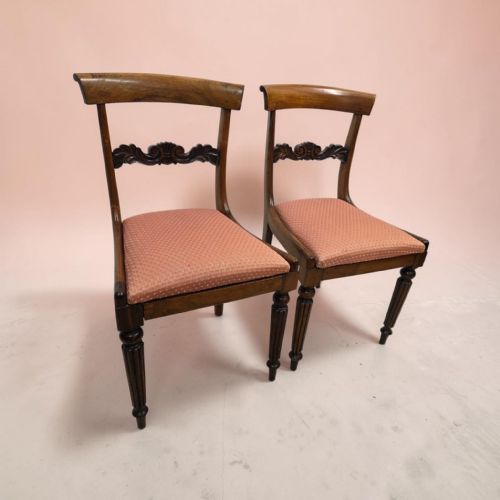
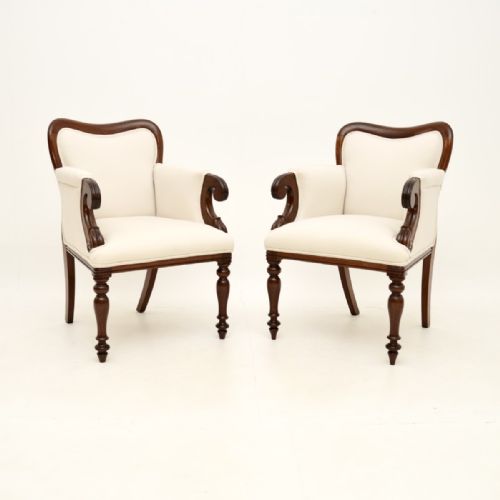
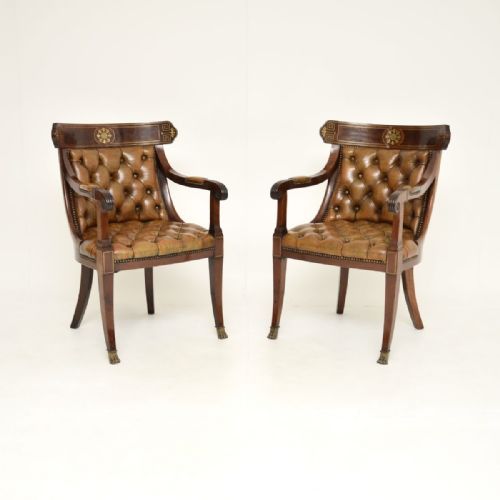
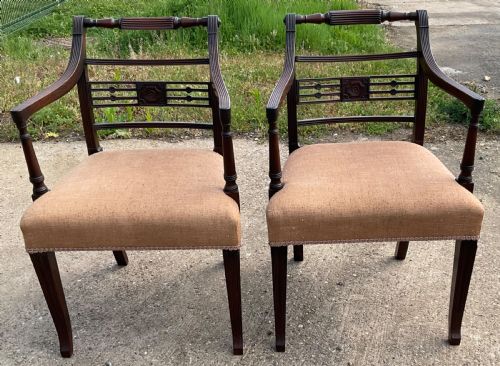
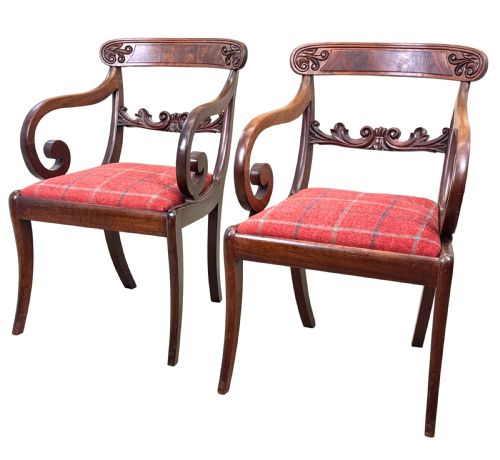
A regency period chair pair comprises matched seating from the early nineteenth century, predominantly taking the form of armchairs, side chairs, or hall chairs. These pieces originate from the Regency, George III, and William IV periods, reflecting the classical revival tastes of the era. Buyers frequently encounter mahogany examples alongside variants in rosewood, oak, elm, and painted finishes.
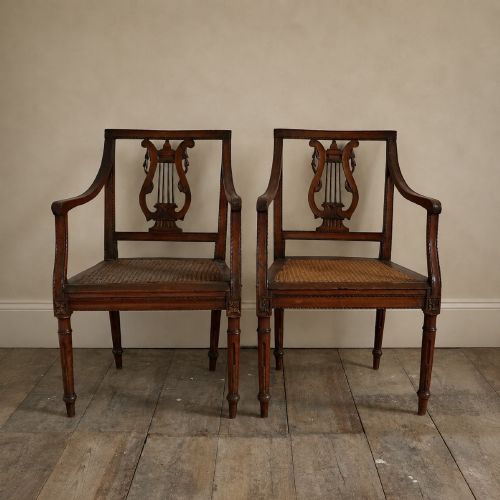
The configurations span from dining and library seating to specialised hall and footman's chairs. Dining chairs and side chairs offer compact silhouettes, while library armchairs and carvers provide structural elbow rests. Examples range from caned seats and leather upholstery to solid wood panels.
Materials and construction
Cabinetmakers utilised solid timbers including mahogany, rosewood, oak, and maple, often shaped with curved back splats and sabre legs. Surface enrichment frequently involved brass inlay, marquetry, bobbin turning, and painted bamboo effects or period paint.
Seating portions incorporated canework, leather, fabric upholstery, and caned bergere panels. Joinery techniques supported classical Grecian-revival motifs, including lyre backs, shell backs, and lambrequin splats.
Footman's chairs offered sturdy seating by the hearth, ensuring boots stayed dry while warming toes.
Evaluating distinction
The distinction between tiers rests upon the precision of cabinetmaking, the selection of timber grain, and the integrity of brass inlay or carved detail. Superior pairs demonstrate crisp execution in motifs like lyre backs and lambrequin splats, whereas simpler examples rely on plain timber surfaces.
Original matching matters significantly for pairs, as does the retention of period components such as brass mounts, cane seats, and original upholstery materials.
Henry Maxwell·Gillows of Lancaster
The Regency Period Chair Pair Glossary
- Carver chair
- An armchair designed for use at the head of a dining table or as a desk chair. These pieces feature integrated armrests to support the sitter.
- Bergere chair
- An enclosed upholstered armchair with a wooden frame and cane panels lining the back and sides. This form gained popularity during the classical revival.
- Sabre leg
- A concave, outwardly curving furniture leg that tapers toward the foot. This form draws direct inspiration from classical Greek furniture.
- Hall chair
- A stiff-backed wooden seat intended for an entrance hall, usually featuring a solid timber seat and a carved or painted back panel. These items often display family crests or decorative shell motifs.
- Lyre back
- A chair back featuring an open splat shaped in the precise outline of a classical lyre instrument. Cabinetmakers utilised this motif frequently during the early nineteenth century.
Regency Period Chair Pair: Frequently Asked Questions
Where were these chairs placed originally?
These chairs served multiple rooms within a nineteenth-century home, including formal dining spaces, libraries, and drawing rooms. Hall chairs stood in entranceways for brief seating while visitors waited.
Library and desk chairs provided functional seating for reading and writing. Bedroom and occasional variants filled private quarters where lighter woods and painted finishes suited domestic spaces.
How do I distinguish Regency from William IV?
Regency pieces generally exhibit leaner, lighter proportions influenced by direct classical Grecian and Roman models. Brass inlay, delicate sabre legs, and reeded frames characterise this earlier phase.
William IV pieces tend to be heavier and more robust in their construction. They feature bolder carvings and wider proportions while maintaining classical revival lines.
Are pairs always identical?
Pairs from the nineteenth century were constructed together to match in timber, form, and decorative detail. Minor natural variations in wood grain remain normal for items shaped by hand from solid timber.
Over decades of use, some matching pieces experienced different restoration histories. Examining the construction underneath helps confirm that both chairs originated from the same workshop batch.