
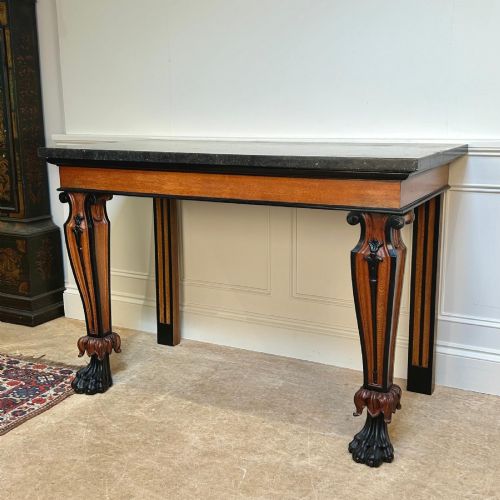
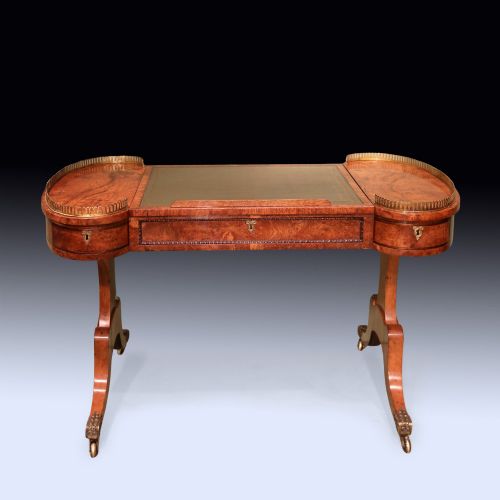
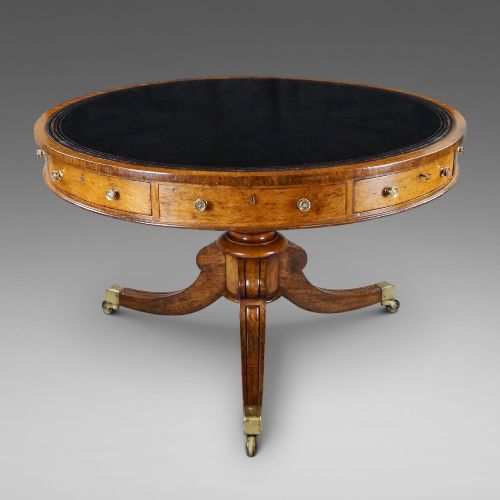
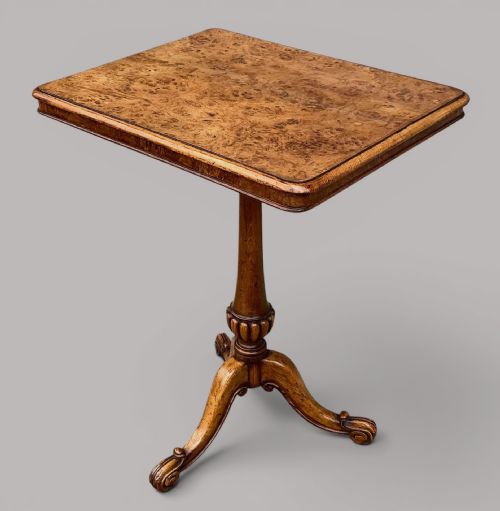


Regency Oak Table
When you search for a regency oak table, you encounter robust dining, drum, and occasional furniture showcasing rich timber figuring.
Regency Oak Table
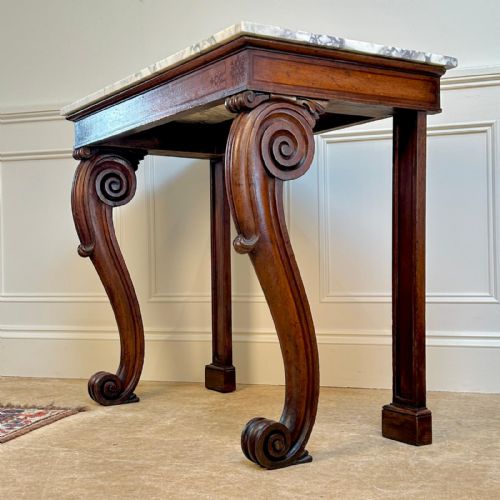
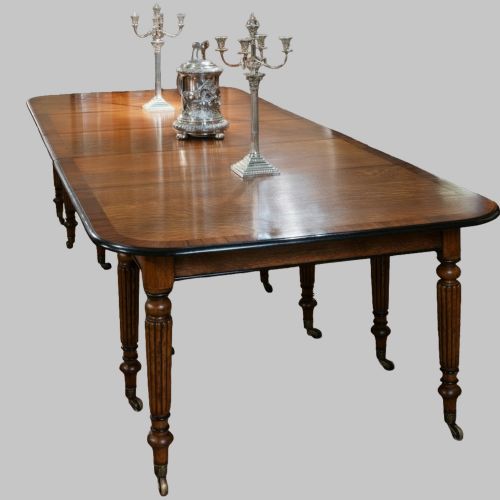
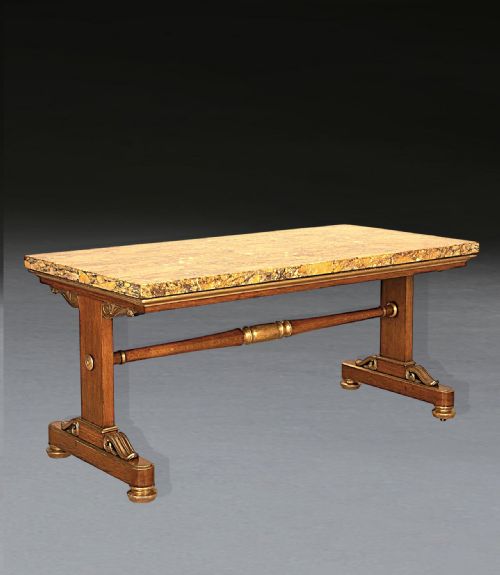
A regency oak table encompasses a broad variety of forms designed for domestic utility and display, ranging from large extending dining tables to compact lamp tables and writing desks. On this page, you frequently encounter centre tables, breakfast tables, and occasional tripod tables stemming from the nineteenth century.
Makers of the period utilised domestic timber alongside exotic veneers to create functional objects for libraries, drawing rooms, and country houses. The surviving inventory reflects both formal dining pieces and smaller occasional furniture tailored to specific household tasks.
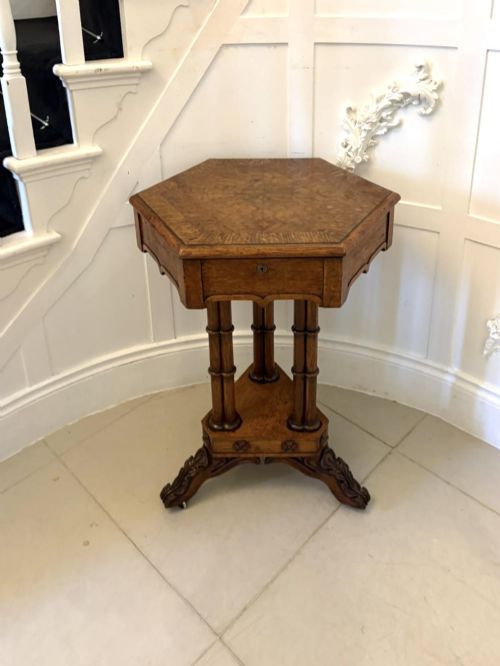
The selection bridges the Georgian era through to the William IV period, capturing a shift towards heavier proportions and dramatic pedestal bases. Buyers searching for a regency oak table generally look for solid construction combined with the distinct grain patterns found in pollard or burr oak.
Materials and construction techniques
Cabinet makers constructed these tables using solid oak frames overlaid with highly figured pollard oak or burr oak veneers to achieve striking surface patterns. Secondary woods such as pine or mahogany often appear in drawer linings and internal framing.
Advanced joinery methods, including segmented tops, tilt-top mechanisms, and twin fusee movements on associated clock pieces, demonstrate the technical ambition of nineteenth-century workshops. Brass fittings, leather inserts, and ebonised wood details frequently accent the primary timber structure.
Materials recorded in the inventory include solid oak, pollard oak, burr oak, leather, marble, and giltwood.
Distinguishing quality in period tables
The distinction between standard examples and superior pieces rests largely upon the selection and matching of the veneer. Tables featuring continuous burr or pollard oak grain across segmented tops command greater attention than those with plain, unfigured timber.
Proportion and stability define the upper tier of surviving furniture, particularly in tripod bases and pedestal dining tables where balanced carving and substantial scale indicate master craftsmanship. Attribution to known workshops or documented makers further elevates the standing of an individual piece.
The Regency Oak Table Glossary
- Pollard oak
- Timber taken from trees that have been pollarded, producing dense, knotted growth rings and highly decorative figuring. Cabinet makers prized this wood for table tops and cabinet fronts during the Regency period.
- Drum table
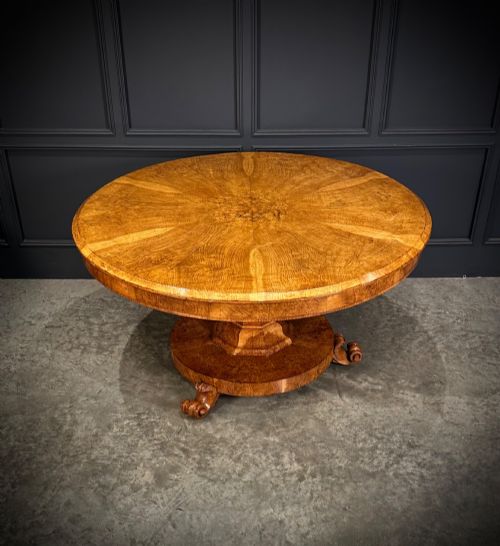
- A round library or centre table featuring a deep top encircled by drawers or dummy drawers. These pieces typically stand on a central pedestal with splayed legs.
- Tripod table
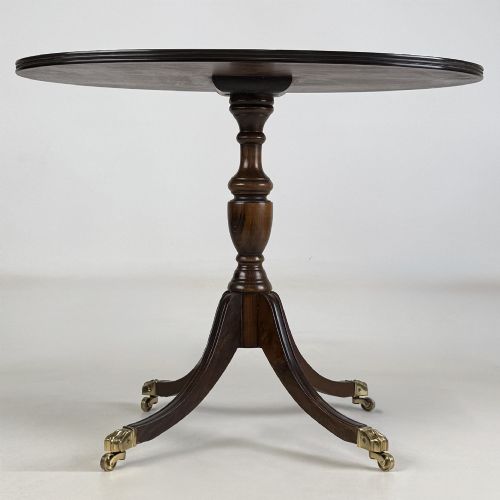
- A small occasional table supported by a pillar above three spreading legs. Many examples include a tilt-top mechanism allowing the surface to fold vertically when not in use.
- Cross-banded
- A border technique where thin strips of veneer are laid perpendicular to the main grain of the table top. This method frames the central panel and provides a contrasting decorative edge.
- Pembroke table
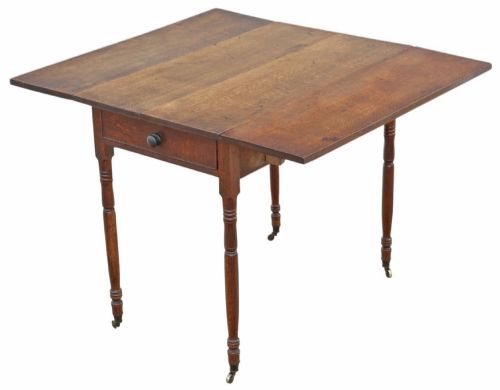
- A small drop-leaf table fitted with hinged flaps on opposite sides. It served versatile functions as a breakfast or writing table in smaller rooms.
Regency Oak Table: Frequently Asked Questions
How do I use a drum table?
A drum table works effectively as a central piece in a study or library, providing a stable surface for lamps and reading material. The built-in drawers allow for the discreet storage of stationery and small items.
Positioning the table away from direct sunlight and heat sources preserves the polished burr oak veneer. Regular dusting with a dry cloth maintains the natural lustre of the timber without building up excess residue.
Were tilt-top tables common?
Tilt-top tables served a practical space-saving function in nineteenth-century homes, allowing servants to fold the surfaces down and store them against walls when the room was needed for other activities. The mechanism relies on a catch and pivot block beneath the top.
In modern interiors, these pieces function well as lamp or wine tables where the tilt feature remains an interesting mechanical detail. Operating the catch requires care to protect the original brass or wooden pivots from unnecessary strain.
What is pollard oak?
Pollard oak comes from trees pruned above the height of grazing animals, a process that forces branching and creates tight, clustered knots in the grain. This distinctive growth pattern yields dramatic decorative surfaces ideal for prominent furniture.
Because of its irregular nature, veneer cutters sliced pollard oak into matched segments to create symmetrical patterns on table tops. This labour-intensive preparation marks the material out as a marker of high-status Regency cabinet work.
How do I date a Regency table?
Dating relies on observing structural proportions, timber choices, and hardware styles that shifted between the Georgian, Regency, and William IV periods. Heavy pedestal bases and ebonised details often point towards the later Regency or 1830s William IV era.
Comparing the construction methods of secondary woods, such as drawer linings, provides further chronological context. Examining how legs attach to pedestals reveals transitional design phases across the nineteenth century.