


Regency Music Rack
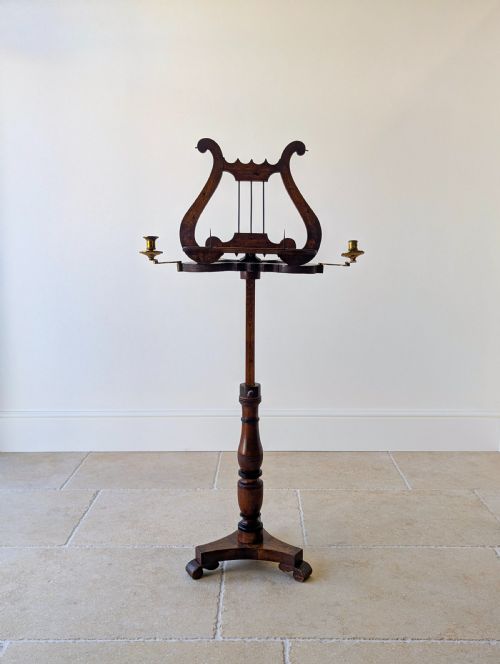
A regency music rack is a sturdy timber stand designed to hold scores and folios close to the instrument.
What They Are
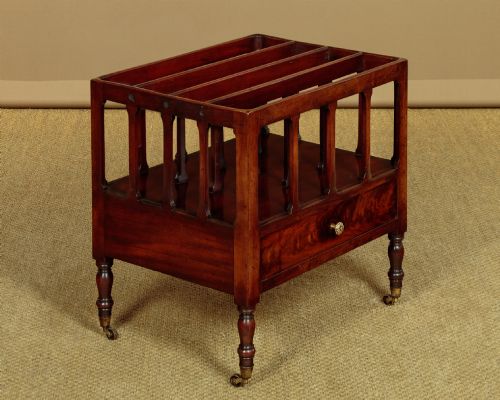
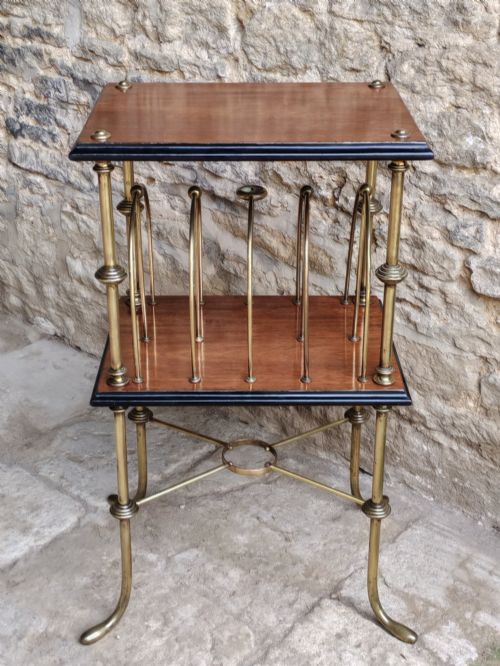
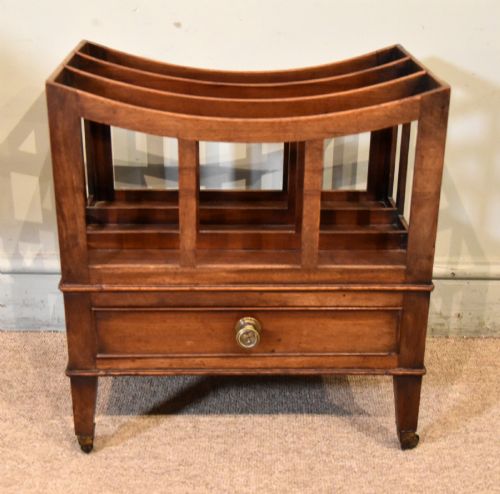
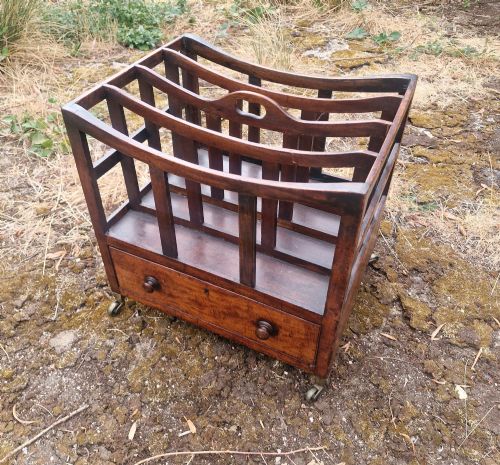
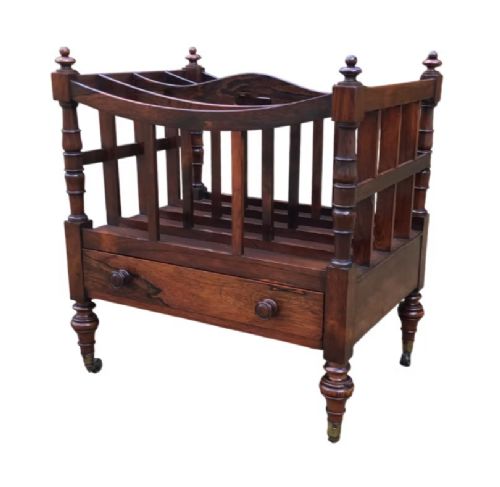
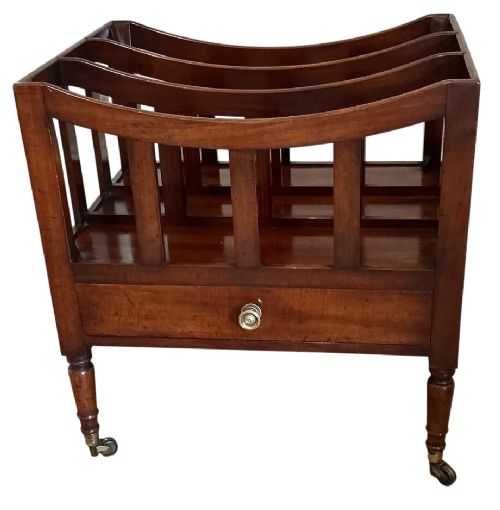
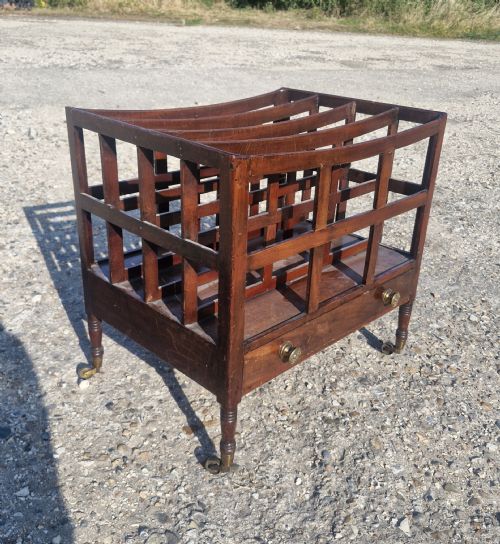
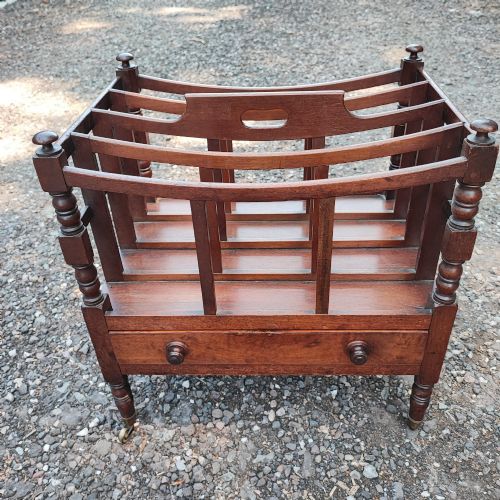
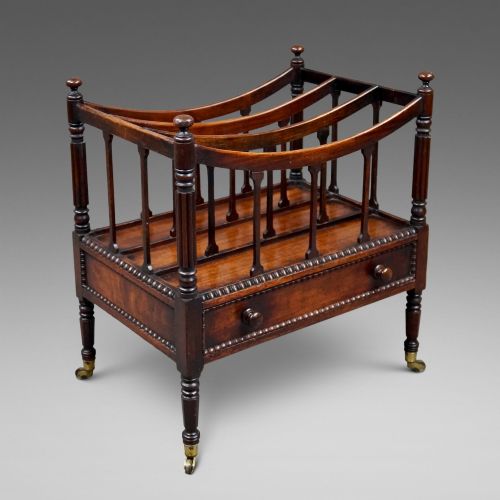
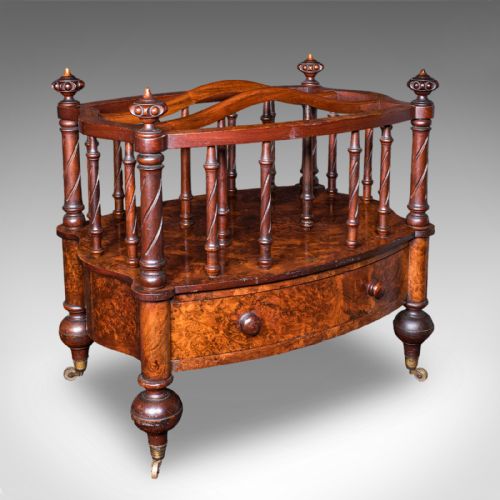
A regency music rack appears on this page primarily as a mahogany or rosewood canterbury or magazine rack. These pieces trace back through the nineteenth century, including the regency and georgian eras.
The primary forms found here are boat-shaped canterburys alongside three-division stands. Makers of the period engineered these open-sided compartments to keep sheet music and folios sorted and accessible.
Most examples date to the nineteenth century, with specific pieces recorded from around eighteen hundred through to eighteen thirty, plus later twentieth-century iterations from nineteen thirty.
How They Were Made
Craftsmen built these canterburys using dense tropical hardwoods, predominantly solid and veneered mahogany and rosewood. These timbers provided the structural strength needed for upright dividers and heavy folio storage.
Metalwork played a functional role, incorporating brass fixtures and mounts where appropriate. Joinery methods relied on traditional cabinet-making techniques to secure the slatted divisions and upright framing.
Retail Price Guide 2026
Typical UK retail prices for regency music rack, calculated from the Sellingantiques database of over a million retail prices indexed since 2003. This retail price guide relies exclusively on Sellingantiques data; no external sources or auction records are used, so the figures do not describe the wider market.
Early nineteenth-century musicians clearly possessed an impressive appetite for sheet music, requiring sturdy mahogany partitions to keep their scores from sliding onto the drawing room floor.
What Varies in Quality
Material selection divides the standard production from the finer examples, with rich rosewood veneers commanding greater visual weight than basic mahogany. The choice of timber dictates the overall elegance and presence of the stand.
Structural complexity also separates the tiers, seen in boat-shaped profiles and three-division layouts versus simpler rectilinear frames. The finesse of the turned supports and the integrity of the dividers reveal the maker's hand.
The Regency Music Rack Glossary
- Canterbury
- A low open-framed stand with vertical divisions used for holding music scores, newspapers, and folios. This form remains the predominant object type associated with the phrase.
- Regency
- An architectural and decorative style spanning the late eighteenth and early nineteenth centuries. It is characterised by classical restraint and refined proportions.
- Rosewood
- A heavy, dark timber with distinct grain patterns frequently utilised in fine nineteenth-century cabinet work. Its rich colouring marks out the more ambitious pieces.
- Mahogany
- A durable reddish-brown hardwood standard to furniture of the georgian and regency periods. It takes a high polish and provides stable framing for slatted racks.
Frequently Asked Questions
What is a regency music rack used for?
These pieces served as dedicated stands for organising sheet music, songbooks, and folios near a piano or music desk. The partitioned sections kept scores upright and sorted for daily practice.
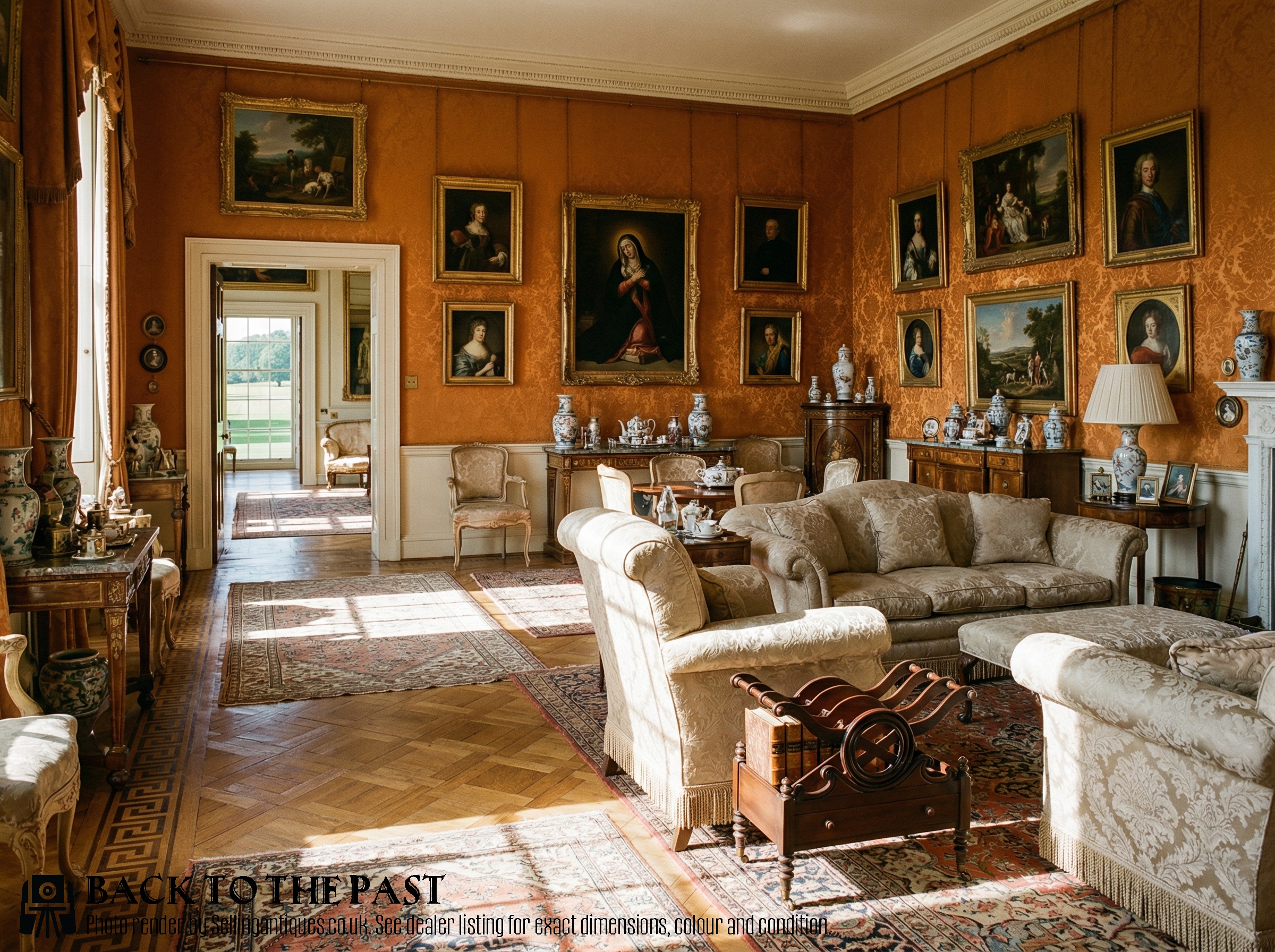
Today they function similarly in a home, holding magazines, newspapers, or modern music folios while maintaining period character in a room.
How do I tell a canterbury from a music rack?
In historical terms, a canterbury and a music rack or magazine stand overlap significantly in form and function. Both utilise vertical timber divisions to keep paper items upright.
Listings often group these terms together because nineteenth-century makers designed the same open-framed compartment style to hold sheet music as well as periodicals.
What woods are typical for these stands?
Mahogany and rosewood dominate the material record for these pieces, appearing across both solid sections and decorative veneers. These dense hardwoods provided the necessary weight and durability.
Brass elements occasionally appear as structural or decorative accents, complementing the dark tones of the primary timbers.
How do I date a regency piece?
Dating relies on observing construction methods, timber choice, and stylistic cues such as boat-shaped profiles and turned supports. Pieces span the georgian and regency eras through to the early nineteenth century.
Evidence also records twentieth-century examples, meaning detailed inspection of the joinery and timber age is essential for establishing exact periods.