

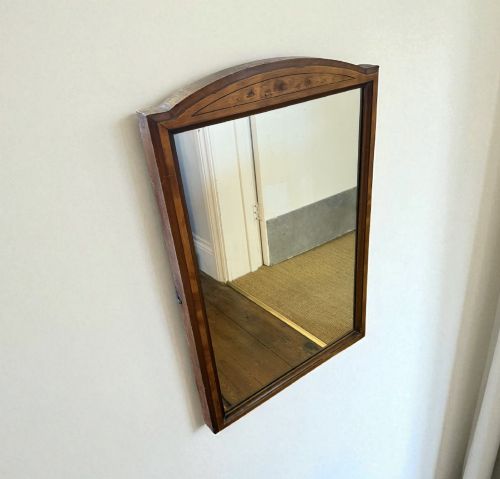
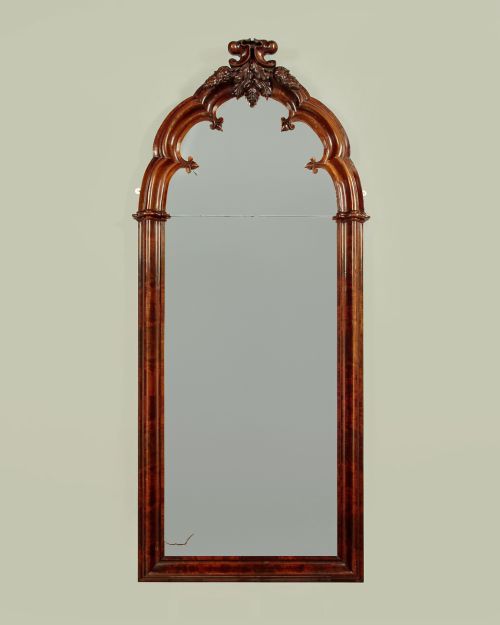
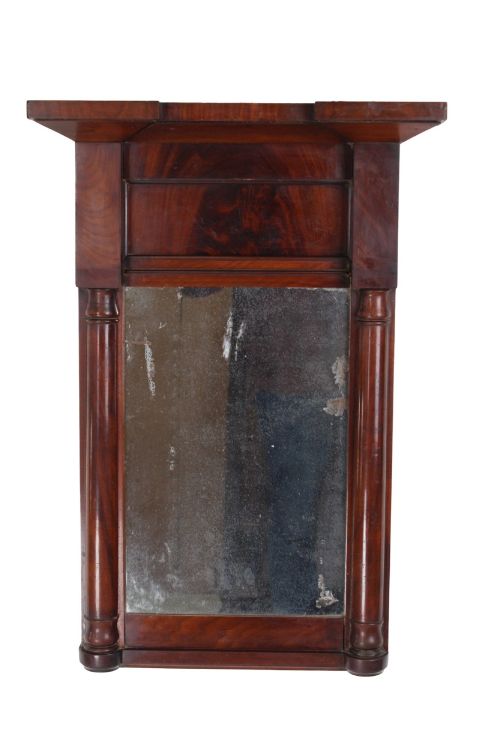
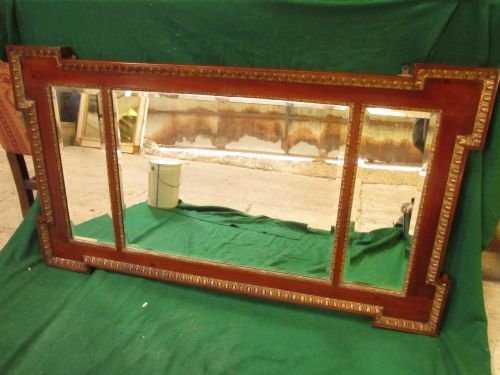
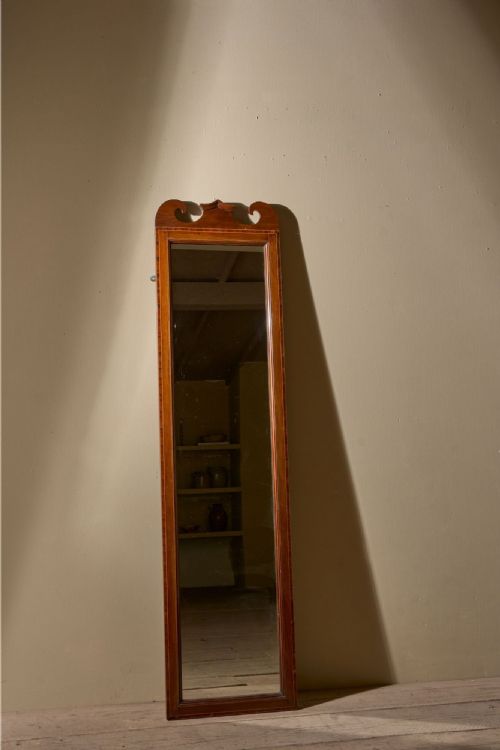
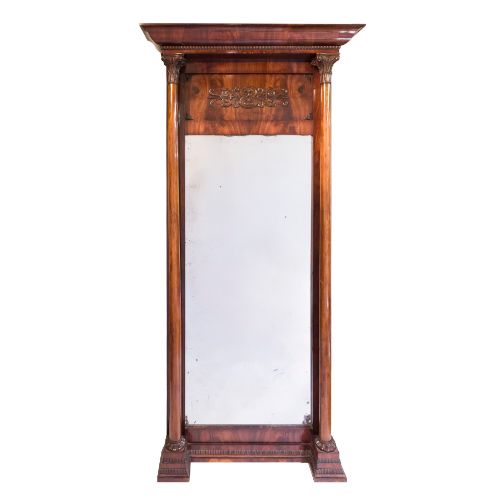
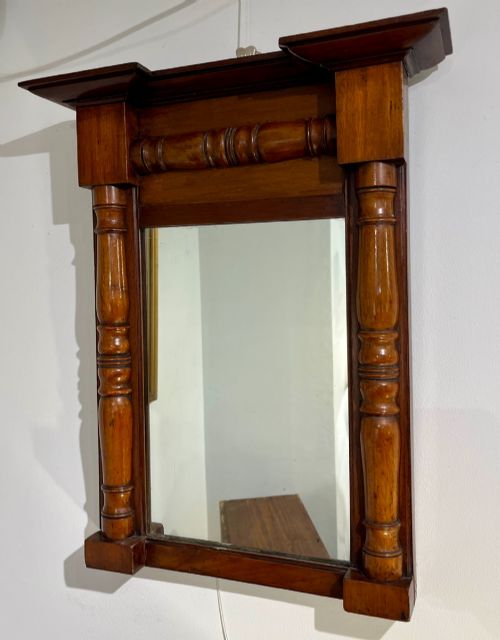


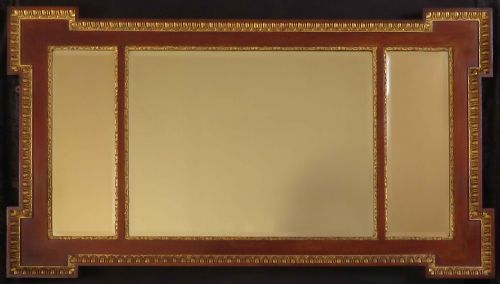
Regency Mahogany Wall Mirror
These pieces are a regency mahogany wall mirror, combining dark timber and reflective glass to bring depth and light into a room.
Regency Mahogany Wall Mirror
A regency mahogany wall mirror combines rich timber frames with reflective glass, designed to hang in reception rooms and hallways. These objects serve both a practical purpose and a decorative function, reflecting natural light from windows.
Most examples found here date from the nineteenth century, including the Regency and George IV periods alongside later Victorian and revival interpretations. Pier mirrors and overmantel mirrors appear frequently among the listed forms.
Buyers encounter smaller pier glasses alongside taller architectural pieces meant for placement above mantlepieces. The selection also includes convex mirrors and flame mahogany variants showing distinct grain patterns.
How they were made
Frames rely on solid mahogany and flame mahogany veneer applied to a supportive timber carcase. Cabinetmakers selected timber for deep reddish-brown tones and striking grain movement.
Makers integrated brass elements, ormolu mounts, and parcel gilt highlights to contrast against the dark wood. Mercury plate glass provides the reflective surface in period pieces.
Regency Mahogany Wall Mirror Retail Price Guide 2026
Typical asking prices for regency mahogany wall mirror among the pieces listed under this phrase on Sellingantiques today, from the lower quarter to the upper quarter. They describe what is for sale here now, not the wider market.
Sorcerer mirrors warp the entire parlour into a single curved lens, making every visitor look like they live inside a glass bubble.
What varies in quality
The choice of timber grain defines the visual impact, with figured flame mahogany sitting at the upper end of the scale. Plain timber frames rely on proportion and carving rather than surface pattern.
Gilt wood and brass accents reveal the maker's hand through crisp detailing and secure application. The clarity and preservation of the original mirror plate further separate standard examples from finer pieces.
The Regency Mahogany Wall Mirror Glossary
- Pier mirror
- A tall mirror designed to hang on the wall space between windows. These pieces often matched console tables placed directly below them.
- Overmantel mirror
- A wide mirror intended for placement above a fireplace mantel. Such pieces anchor the room's decorative scheme.
- Parcel gilt
- A decorative technique where selected carved areas of the wood frame receive a gold leaf finish. This contrasts with the dark mahogany body.
- Convex mirror
- A circular mirror featuring a curved glass surface that reflects a wide-angle view of the interior. These often incorporate gilt frames and eagle crests.
- Flame mahogany
- A veneer cut from the fork of the mahogany tree to produce a flickering, flame-like pattern. Cabinetmakers used this on prominent surfaces.
Regency Mahogany Wall Mirror: Frequently Asked Questions
Where should I hang a pier mirror?
Pier mirrors work best on narrow wall spaces between windows or above matching console tables. Their vertical proportions draw the eye upward and bounce natural light across the room.
Ensure the wall fixings match the weight of the timber frame and glass plate securely. Keeping them out of direct, harsh sunlight protects the timber and gilt finish over time.
How do I identify a Regency period mirror?
Regency mirrors typically display classical architectural motifs such as half columns, gilt enrichments, and bold mahogany grain. The proportions remain balanced and restrained, drawing on classical Greek and Roman design.
Examinations of the backboards, fixings, and glass plate help distinguish genuine nineteenth-century examples from later revival pieces.
How do I care for antique mahogany frames?
Dust the timber gently with a soft, dry cloth to prevent surface build-up. Avoid using modern silicone polishes that can damage the antique finish over time.
Keep the mirrors away from damp environments and extreme temperature fluctuations to protect the wood joints and the backing of the glass.