

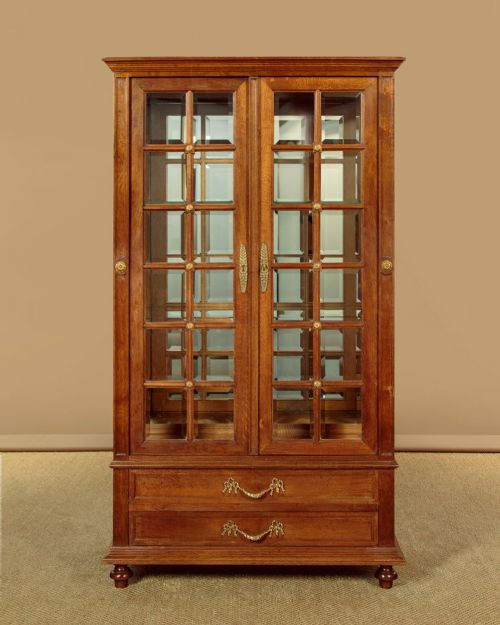


Antique Gilt Mount Mirror
When you search for an antique gilt mount mirror, you find striking decorative surfaces shaped by nineteenth-century tastes.
Antique Gilt Mount Mirror
An antique gilt mount mirror brings together reflective glass and ornamental metal or gilded wood, often appearing within broader categories of nineteenth-century furniture. When buyers search this phrase, they encounter wall-hanging plates, overmantles, and dressing pieces.
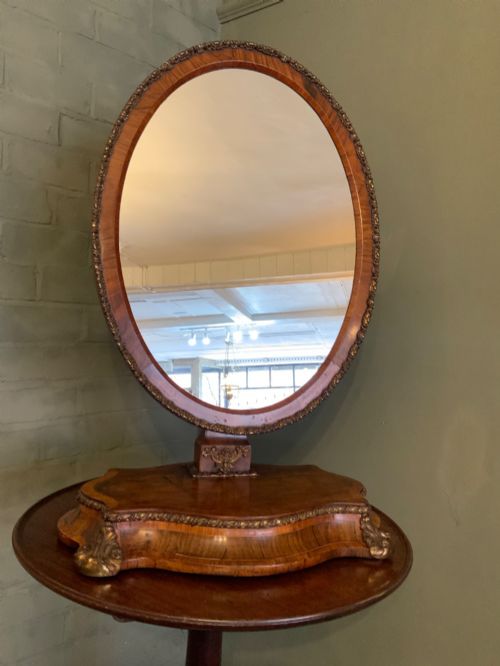
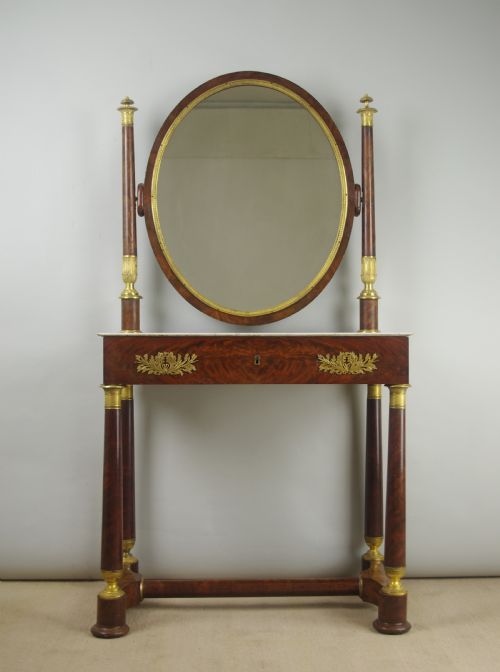
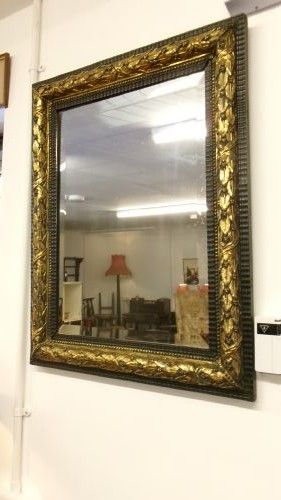
The versions most frequently met on this page combine wooden frames in walnut, mahogany, or burr walnut with cast metal ornamentation. These objects reflect nineteenth-century and revival aesthetics, including Victorian, Regency, and French Empire styles.
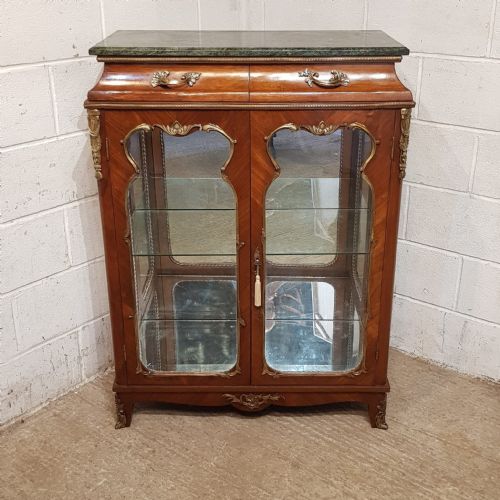
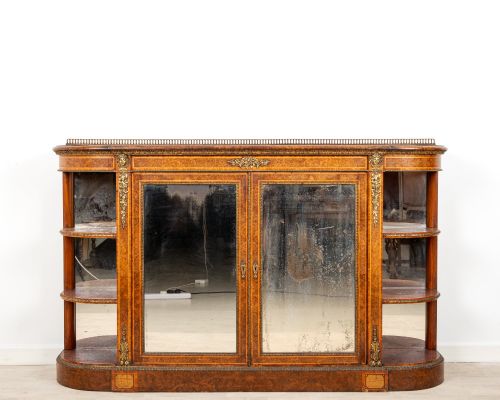
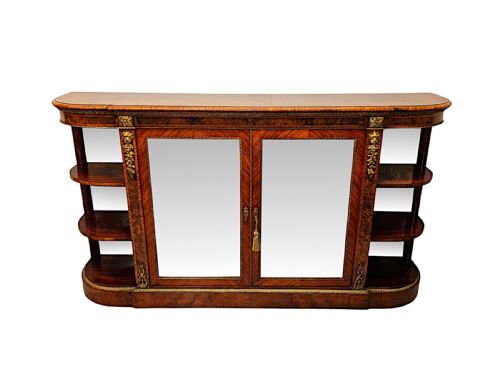
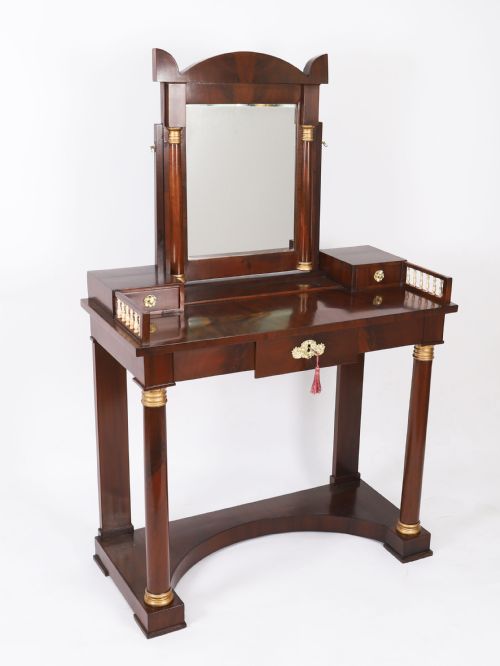
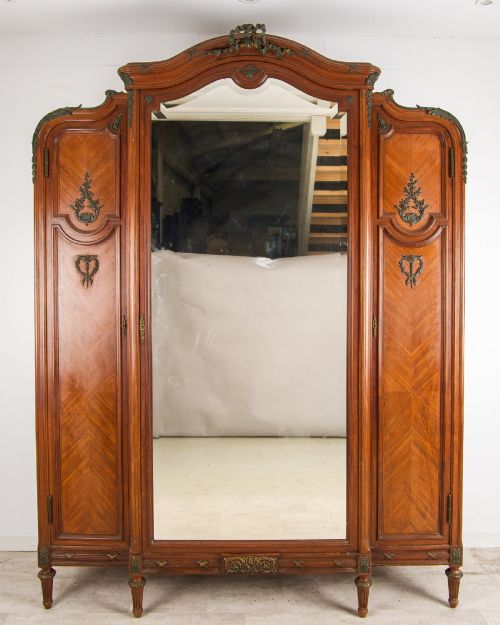
Many examples integrate mirrors into larger furnishing forms such as credenzas, wardrobes, and display cabinets rather than existing as standalone wall plates. This domestic context shows how makers used reflective surfaces and metal mounts to brighten period interiors.
Materials and Construction
Makers utilised dense timbers such as mahogany, walnut, and kingwood as the structural foundation for these pieces. Veneers like burr walnut were frequently applied to create patterned surfaces around the glass and metal mounts.
Gilt bronze, ormolu, and giltwood provide the characteristic metallic highlights recorded in the evidence. These decorative mounts were cast, chased, and secured to wooden frames or applied directly to cabinet doors and mirror surrounds.
Mirror glass was set within carved wooden mouldings or held by metal clips, occasionally accompanied by porcelain plaques or marble tops. Joinery combined traditional cabinet-making techniques with the precise placement of cast brass and gilt elements.
Several circular mirrors feature vigilant wooden eagles perched on top, keeping watch over nineteenth-century parlours.
Judging Quality
The refinement of the cast metal mounts distinguishes superior examples from standard production. Finely chased ormolu or gilt bronze displays crisp detail and secure attachment to the timber carcass, whereas lesser pieces show softer casting and simpler brass fittings.
Timber selection and veneer matching reveal the standard of the workshop. Pieces utilising carefully chosen burr walnut, kingwood, or carved giltwood demonstrate greater cabinet-making skill than those relying on plain, unfigured secondary woods.
The integrity of the integration between the mirror glass, the frame, and any supporting furniture influences overall success. Harmonious proportions between the reflective surface and the surrounding woodwork or mounts mark the better examples.
Gillows·G. Durand·Town and Emanuel
The Antique Gilt Mount Mirror Glossary
- Ormolu
- Gilt bronze ornamentation applied to furniture and mirror frames. The technique involves a mercury-gilding process common in nineteenth-century French and English workshops.
- Giltwood
- Timber that has been coated with a thin layer of gold leaf or gesso and gold paint. It is frequently seen on Regency and Victorian convex and wall mirrors.
- Credenza
- A sideboard or cabinet form popular in the nineteenth century. These pieces often incorporate mirrored doors, marble tops, and gilt metal mounts.
- Burr Walnut
- Wood cut from walnut tree growths that produces intricate swirling grain patterns. Cabinet-makers prized this veneer for high-status Victorian furniture.
- Convex Mirror
- A circular mirror with a curved glass plate that provides a wide-angle reflection. They typically feature giltwood frames with eagle surmounts.
Antique Gilt Mount Mirror: Frequently Asked Questions
What periods do these mirrors come from?
The pieces listed on this page originate predominantly from the nineteenth century. Specific styles point towards Regency, Victorian, and French Empire periods.
Craftsmen working across these decades produced both wall-hanging mirrors and furniture incorporating mirrored elements. The dates span from the early nineteenth century through to later revival periods.
How were gilt mount mirrors used originally?
These items served functional and decorative purposes in period domestic interiors. Wall mirrors were placed above fireplaces or console tables to reflect light around rooms.
Other examples functioned as components of larger dressing tables, armoires, or credenzas. Their reflective surfaces helped brighten nineteenth-century parlours and bedrooms.
What is the difference between ormolu and gilt bronze?
Ormolu refers specifically to gilded bronze mounts used extensively on nineteenth-century French and English furniture. The term describes the finished appearance of mercury-gilt metal.
While both terms describe gold-finished metallic decoration, descriptions vary by regional cataloguing traditions. Both methods created the bright metallic highlights seen on these frames and cabinets.
How do I care for antique mirror glass and frames?
Preserving these objects requires careful handling of both the reflective plate and the surrounding timber or metal mounts. Avoid harsh chemical cleaners that might damage nineteenth-century gilding or original mirror silvering.
Dust wooden frames and gilt mounts gently with a soft dry cloth. Keep pieces away from direct sunlight and damp environments to protect the timber and veneers.