
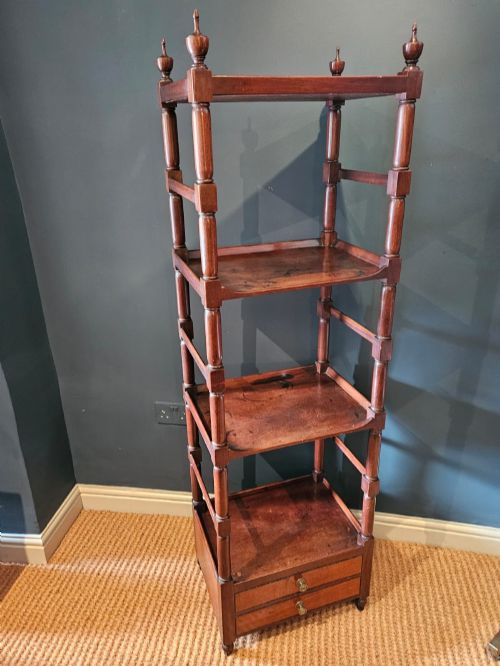
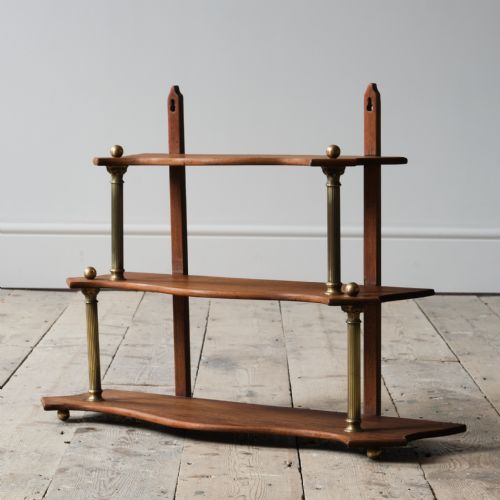
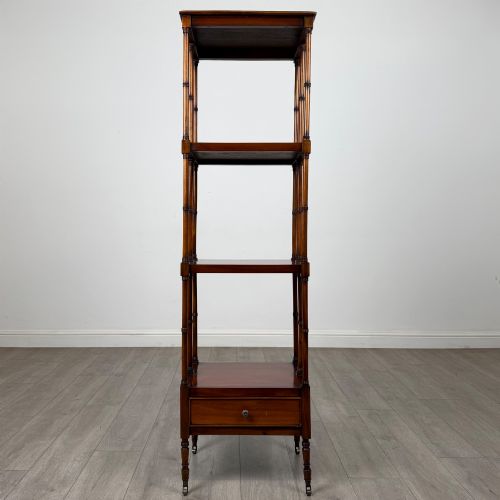
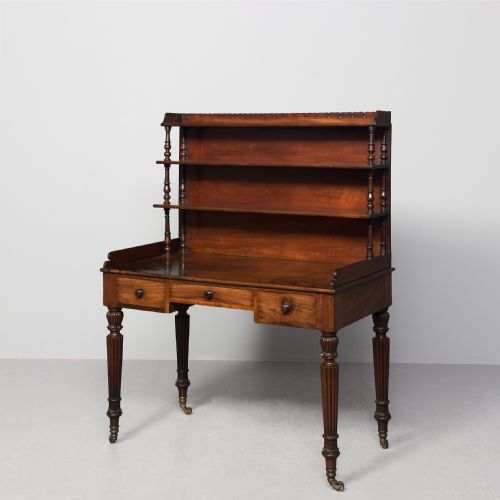
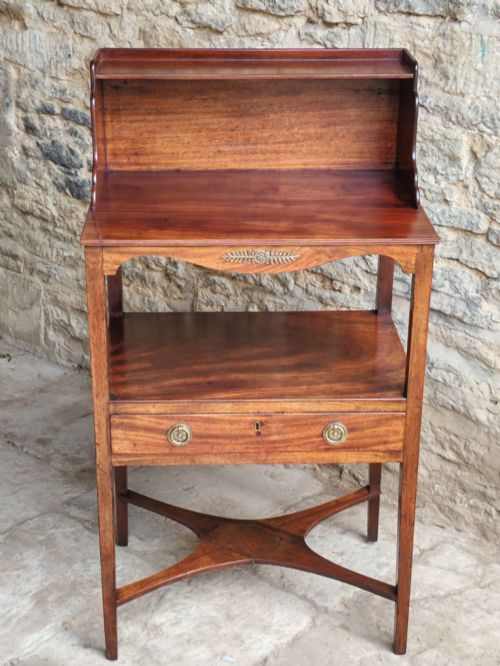
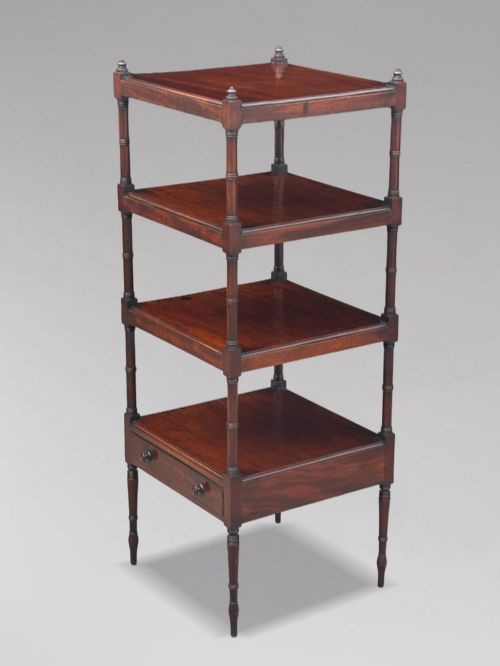
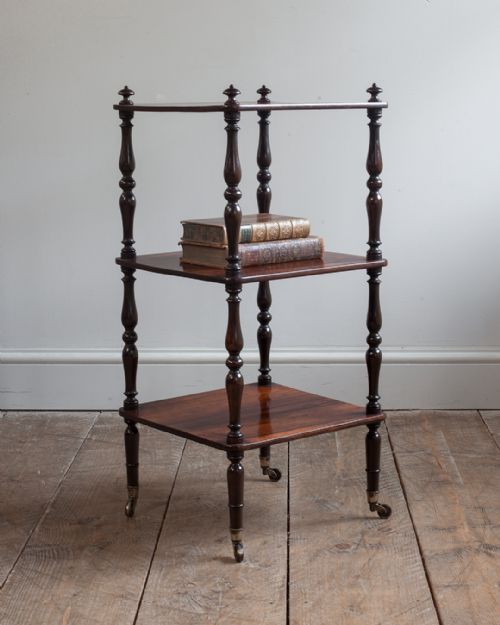
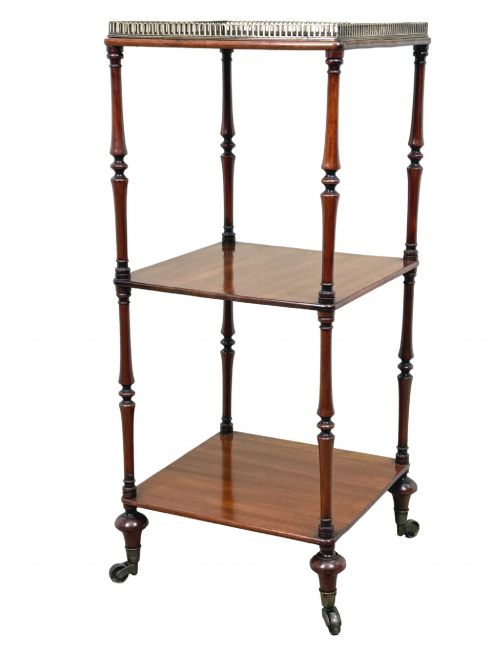
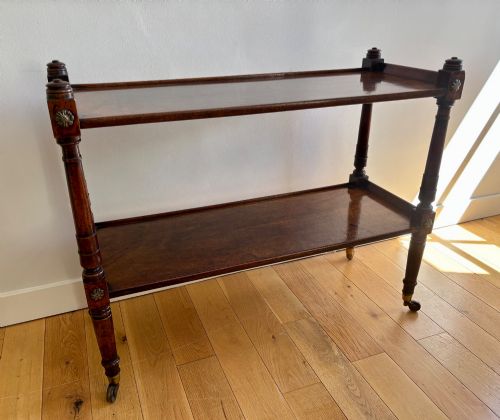
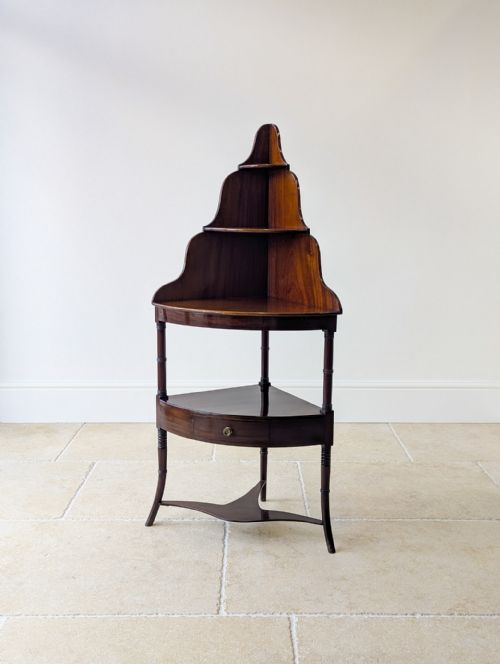


Regency Mahogany Etagere
A regency mahogany etagere brings tiered open display and practical surface space into a room, prized for its slender architectural silhouette.
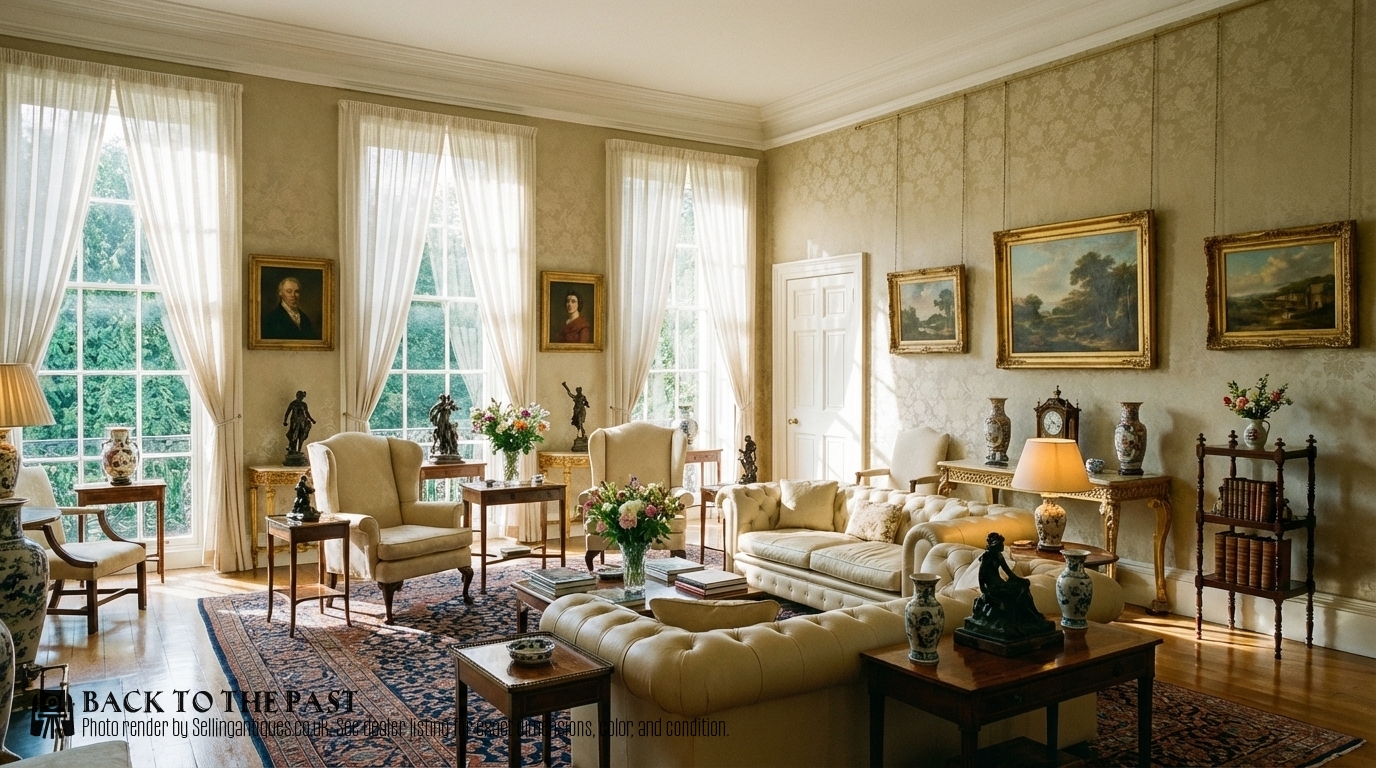
Regency Mahogany Etagere
A regency mahogany etagere functions as a multi-tiered open display stand, bookcase, or serving piece designed for domestic utility. These tiered pieces appear alongside related forms like what-nots, dumb waiters, and buffets.
The pieces on this page span the Regency, Georgian, and William IV periods, alongside later revival interpretations. They take freestanding forms, corner stands, and hanging configurations.
Makers and workshops of the period, including Gillows, produced these functional items to organise books, music, and tableware across multiple levels.
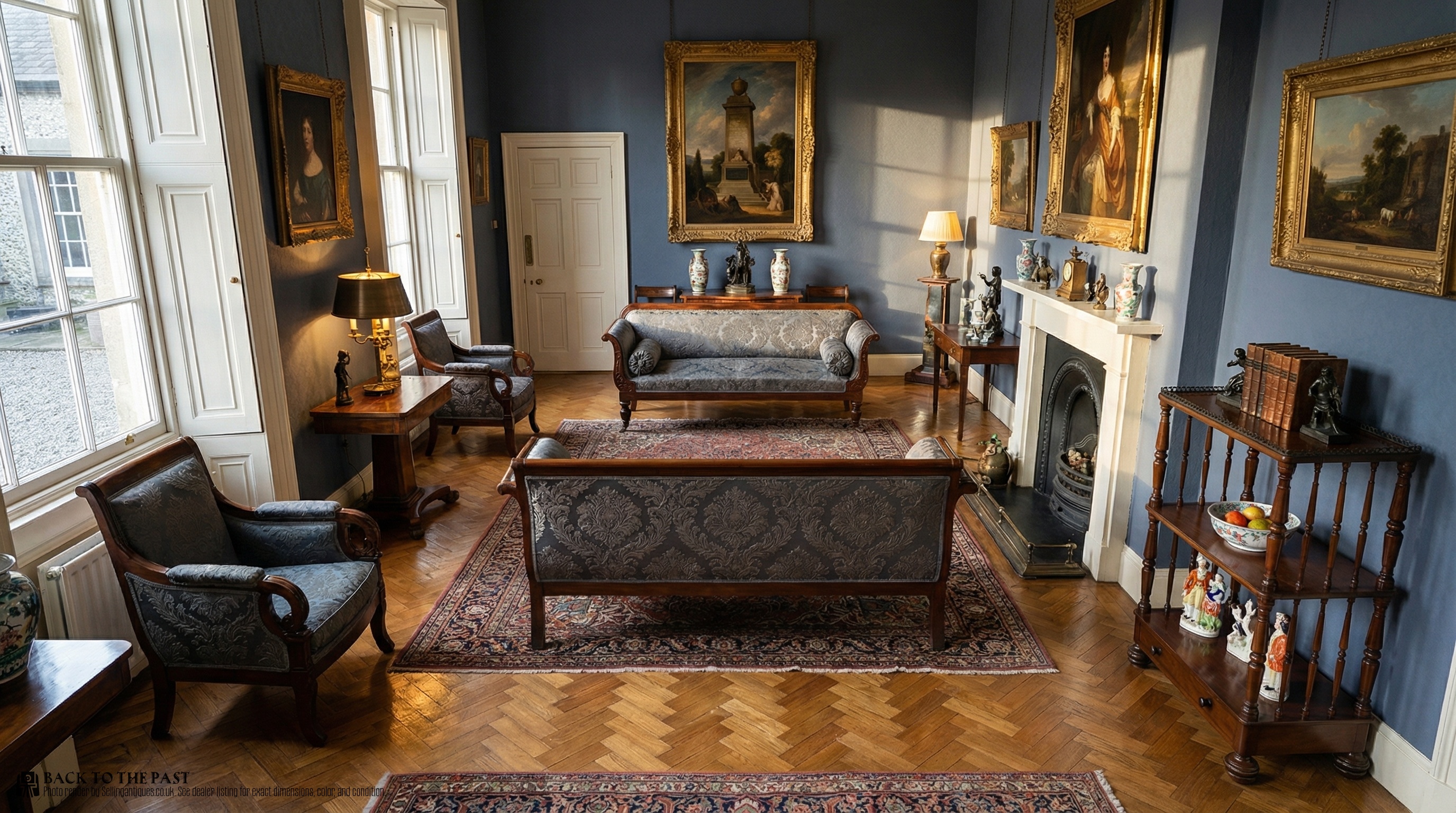
Materials and construction
Constructed primarily from mahogany and Cuban mahogany, these pieces frequently incorporate brass fittings, castors, and rosewood details. Wood veneer and cane also appear across the shelving and support structures.
Cabinet makers built these tiered units using turned supports, slender uprights, and graduated shelves. Metal components such as brass framing and castors provide structural support and mobility.
Listings feature mahogany, Cuban mahogany, brass, rosewood, cane, leather, and glass across 18th, 19th, and 20th-century periods.
Distinctions in quality
Quality rests in the choice of timber and the crispness of the turning on the upright supports. Pieces attributed to prominent workshops display superior timber selection and refined joinery.
Proportion and utility separate standard examples from finer specimens. Refined pieces maintain structural balance across multiple tiers without heavy or clumsy framing.
James Mein of Kelso·Gillows
The Regency Mahogany Etagere Glossary
- Etagere
- A set of open shelves for displaying small objects or serving food. It provides tiered storage across multiple levels.
- What-not
- A multi-shelved piece of furniture used for books, ornaments, or collections. The term arose because people stored miscellaneous items upon it.
- Cuban mahogany
- A dense, richly figured timber native to the Caribbean. It was utilised extensively in high-status furniture of the Georgian and Regency periods.
- Dumb waiter
- A tiered freestanding piece used in dining rooms for holding dishes and bottles. It allows service without the constant presence of servants.
- Buffet
- A side table or shelving unit designed for displaying plate and serving food. It shares an open format with related etageres.
Regency Mahogany Etagere: Frequently Asked Questions
What is a regency mahogany etagere used for?
These tiered shelving units served various domestic purposes, from holding books and music stands to displaying ornaments in reception rooms.
Their open construction made them versatile for temporary storage and display across different rooms of the house.
How do you style an etagere at home?
Place freestanding pieces against walls or in corners where their multiple tiers can hold books, ceramics, or small collections.
Keep the weight distributed sensibly across the shelves, placing heavier volumes on the lower tiers and lighter decorative objects above.
How do I date a mahogany etagere?
Dating relies on observing construction methods, timber choice, and stylistic markers associated with the Regency, Georgian, and William IV periods.
Turned supports, brass castors, and the grain of the mahogany help distinguish early nineteenth-century examples from later revival pieces.
What is the difference between an etagere and a whatnot?
While both terms describe multi-tiered open shelving units, etagere often leans towards display, whereas whatnot traditionally accommodated miscellaneous items.
In period listings, makers and contemporary writers used these terms interchangeably for similar tiered furniture forms.