

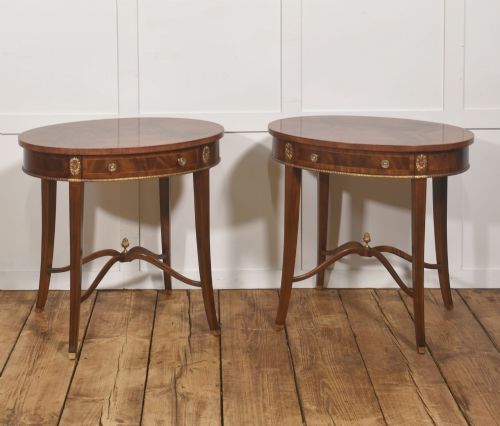
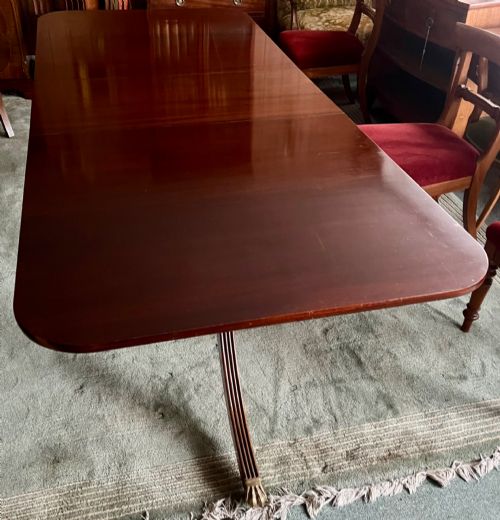
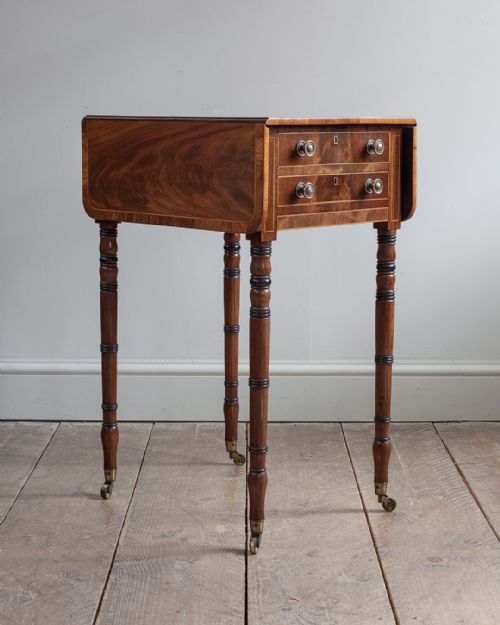
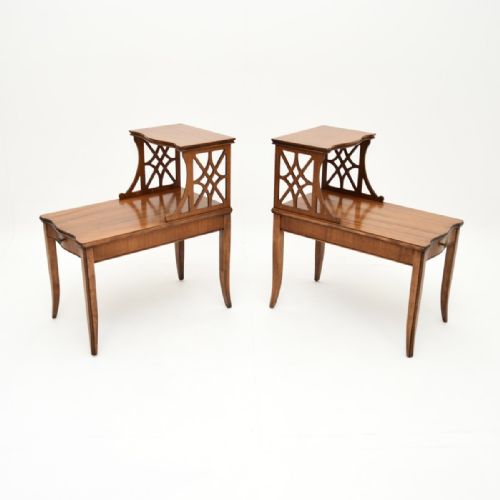

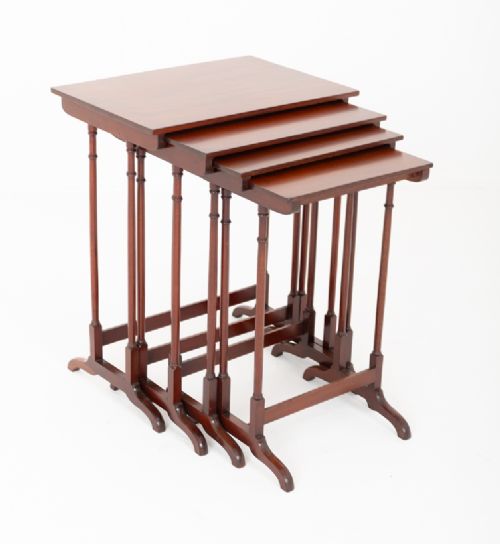
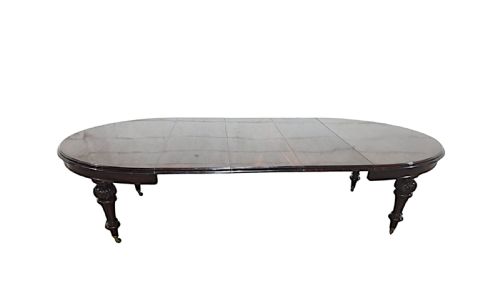
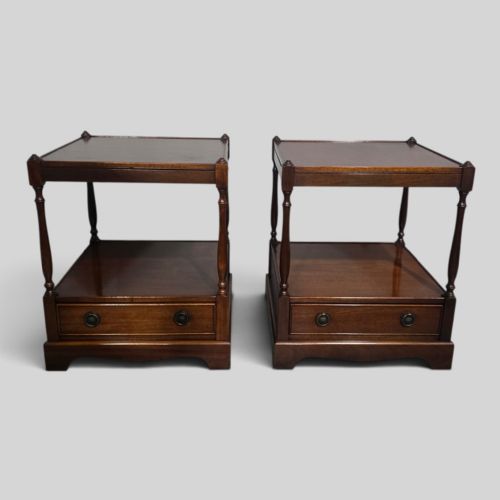
Regency Mahogany End Table
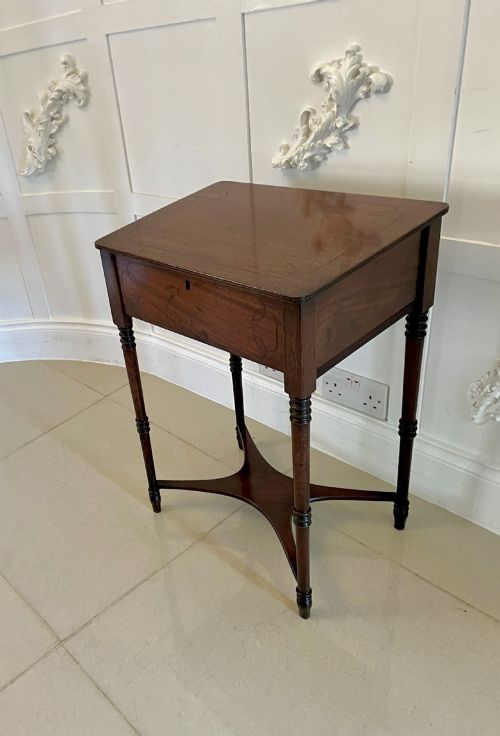
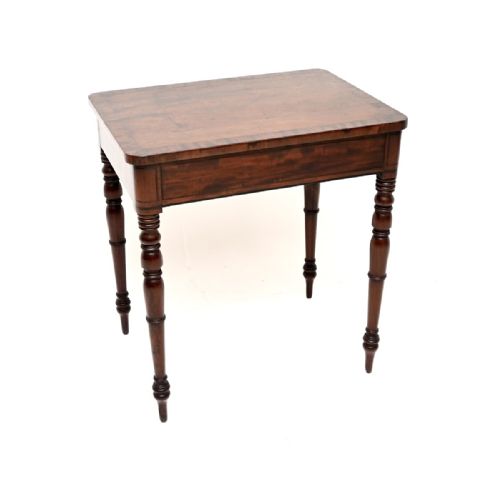
When you search for a regency mahogany end table, you are looking for compact, adaptable tables designed to sit beside seating or against walls.
Regency Mahogany End Table
A regency mahogany end table sits within a broad family of occasional, lamp, and side tables that emerged during the early nineteenth century. These pieces served practical functions in domestic rooms, holding books, lamps, or writing materials.
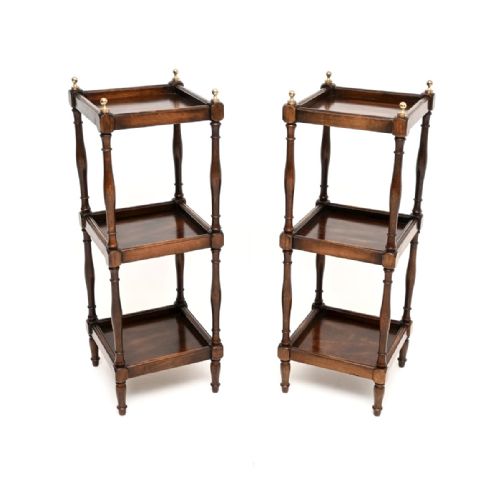
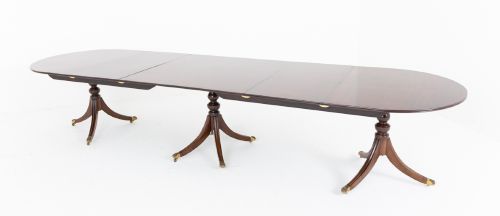
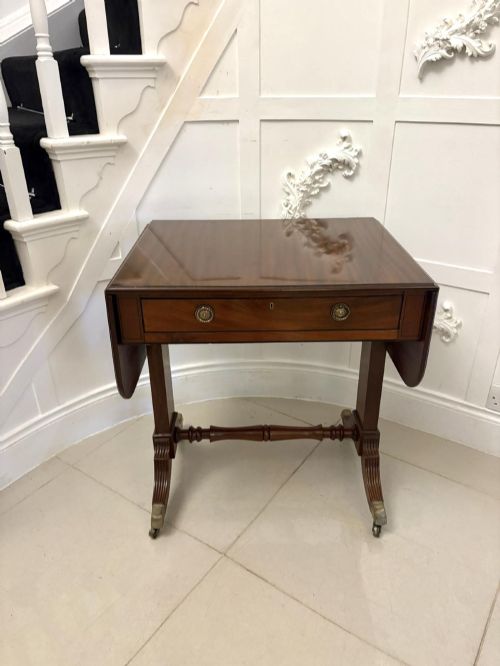
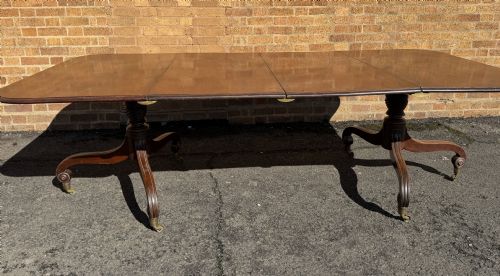
While many examples date directly from the Regency and Georgian periods, the listings also include later nineteenth-century interpretations alongside twentieth-century revival pieces. Forms vary from small single-drawer lamp tables and drop-flap designs to console and work tables.
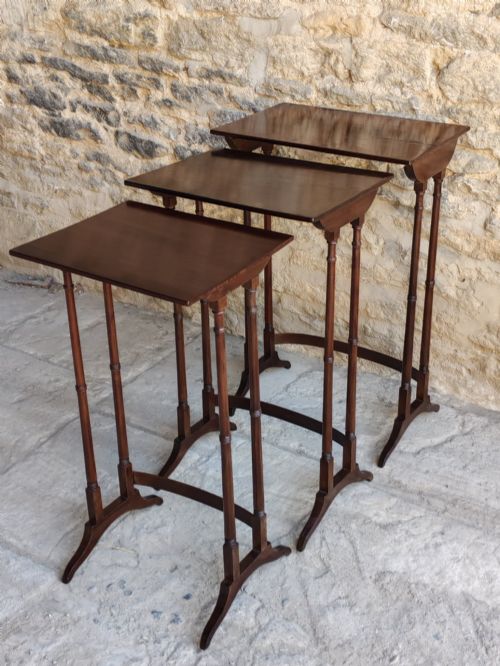
Makers working in Ireland and England produced these items, sometimes incorporating drop leaves or tier structures to maximise utility in smaller spaces.
Materials and Construction
Makers relied primarily on mahogany, often chosen for its rich grain and stability, frequently pairing it with secondary woods and decorative veneers.
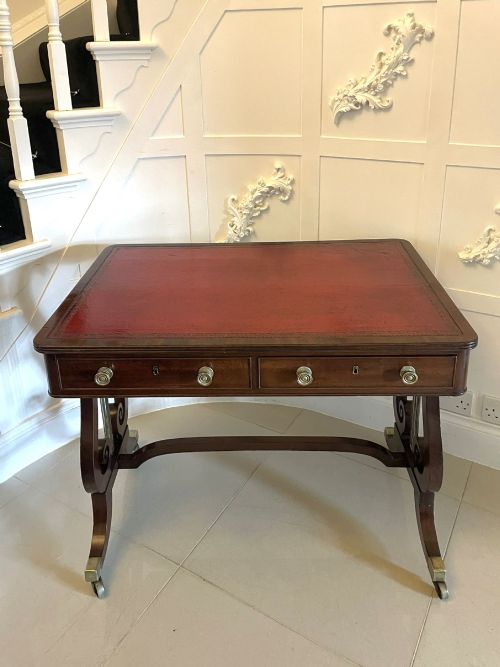
Construction details often incorporated brass hardware, such as castors or inlay, alongside contrasting stringing in boxwood, ebony, or satinwood.
Certain specialised tables utilised leather inset surfaces for writing or ceramic components for specific domestic tasks.
Regency Mahogany End Table Retail Price Guide 2026
Typical asking prices for regency mahogany end table among the pieces listed under this phrase on Sellingantiques today, from the lower quarter to the upper quarter. They describe what is for sale here now, not the wider market.
Listings feature mahogany combined with brass, rosewood, boxwood, satinwood, leather, and ceramic across the nineteenth and twentieth centuries.
Assessing Quality and Execution
The distinction between ordinary and superior pieces rests on the choice of timber and the precision of the cabinetmaker's joinery. Figured mahogany displays a deeper, more animated grain pattern that elevates the visual weight of a small table.
Refinement shows in secondary details, such as the crispness of turned pedestal columns, the neatness of dovetail joints in drawers, and the integration of brass or inlaid accents.
Williams and Gibton·Cope and Collinson·Gillows
The Regency Mahogany End Table Glossary
- Pembroke table
- A small occasional table featuring two hinged drop leaves on opposing sides, often fitted with a single drawer.
- Sofa table
- A rectangular occasional table traditionally designed to stand in front of a sofa, equipped with drop leaves and often twin pedestal supports.
- Console table
- A wall-mounted or freestanding table designed to stand flat against a room's perimeter, frequently used in pairs.
- Drop-flap
- A hinged section of a tabletop that raises to extend the surface area and lowers when space is required.
- Stringing
- Thin inlaid lines of contrasting timber used to outline panels and drawers on finer items of furniture.
Regency Mahogany End Table: Frequently Asked Questions
Where should I place an end table?
These compact pieces fit naturally beside armchairs, sofas, or beds where surface space is needed for lamps or books.
Their restrained proportions also allow them to sit flush against walls in hallways or morning rooms as console surfaces.
How do I identify a true Regency piece?
Examine the timber selection, construction methods, and hardware to determine the period of manufacture.
Genuine pieces from the early nineteenth century display hand-cut joinery and native timber patination distinct from later twentieth-century revivals.
Did these tables include drawers?
Many occasional and lamp tables incorporate a single small drawer beneath the surface for storage.
Others rely on an open frame or multiple tiers without enclosed compartments.
Can I use these tables for writing?
Certain specialised variants, such as work tables or writing desks, feature fitted compartments or leather-insets specifically for correspondence.
Standard lamp and end tables provide a stable surface suitable for casual reading or holding writing materials.